






 | ||
| ||
| ||
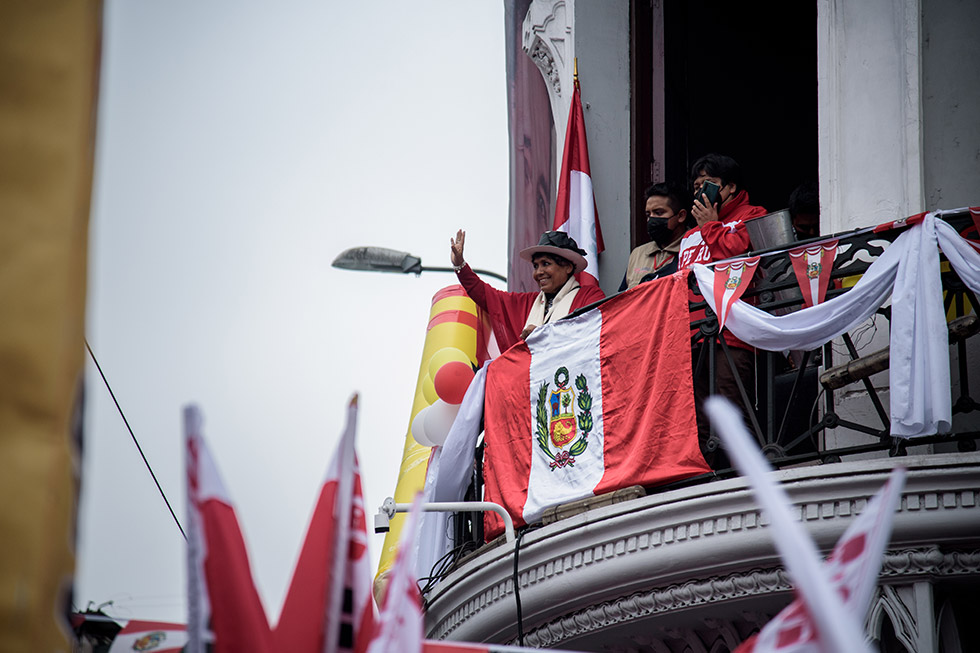
Dear FO° Reader, Greetings from North Central Pennsylvania and Northern California. This week, we turn to Peru, where a turbulent presidential election is unfolding amid political instability. The first round, marked by logistical failures, disputed ballots and delayed results, has exposed the fragility of the country’s democratic institutions. At the same time, rising crime, corruption and public distrust are shaping a race in which voters appear less focused on candidates than on whether the system itself can function. Here is what happened, and what comes next. Peru is having elections. What does this mean for the country? Peru held its general election on April 12, 2026, and they did not go smoothly. Electoral authorities extended the vote by a day after failing to deliver ballots to voting centers across Lima. The logistical failure rattled investors and deepened public distrust in state institutions. The head of Peru’s electoral authority resigned under intense pressure from a conglomerate of business leaders, certain media outlets, and notably, the current second-place contender, Aliaga. Though irregularities were documented, critics made unsubstantiated claims of fraud in an attempt to oust an official who had not committed any criminal offense.
via Shutterstock Conservative Keiko Fujimori leads the polls, with leftist Roberto Sánchez and ultraconservative former Lima mayor Rafael López Aliaga locked in a tight battle for second place. The margin between the latter two candidates remains extremely narrow, and the outcome may depend on disputed ballots still under review. That said, all signs point to Sanchez making the cut. Under Peru’s electoral system, a candidate must secure more than 50% of the vote to win outright, making a second-round runoff election on June 7 all but certain. The election comes as a surge in violent crime and corruption has fueled widespread discontent among voters, who largely view candidates as dishonest and unprepared for the presidency. A December 2025 Ipsos study found that the Peruvian electorate’s top concern is security and the effects of organized crime. The next president will inherit all of it — a weakened institutional framework, rising insecurity and a deeply skeptical electorate. Sources: Outcome of Peruvian presidential election unknown after voting is extended | NPR Pressure mounts on Peru’s election authorities amid presidential race delay | Al Jazeera Peru reviews disputed election ballots with final result likely stalled until May | Reuters Historical context: A place where democracy simply hasn’t worked To understand Peru’s elections, you need to understand its history. Democracy in Peru has been fragile and frequently disrupted. The pattern repeats: elected governments fall, military juntas step in and the cycle starts again. In October 1968, the military overthrew Fernando Belaúnde Terry. The junta imprisoned opposing politicians and suspended constitutional liberties. That military government lasted more than a decade. When civilian rule returned in the 1980s, the country faced a new threat. The Shining Path insurgency, a Maoist guerrilla movement, waged a campaign of violence that killed tens of thousands of Peruvians throughout the decade. The 1990s brought Alberto Fujimori — and a new kind of authoritarianism. Fujimori won the presidency in 1990, then, in 1992, dissolved Congress, suspended the constitution and seized emergency powers. He governed autocratically for the rest of the decade before fleeing to Japan amid a massive corruption scandal. The authorities later extradited him, tried him and imprisoned him. Since Fujimori’s fall in 2000, Peru has rapidly cycled through presidents. Peru has now had six presidents since 2016. Several of those presidents either removed themselves, resigned under pressure or faced arrest. Politicians have repeatedly overpowered the institutions designed to hold them accountable. The result is a political system that formally remains democratic but struggles to produce stable governance. Sources: Pedro Castillo: Peru’s leader ousted over ‘rebellion attempt’ | BBC Peru’s President Has Been Impeached and Arrested Following a Coup Attempt | Time Dictatorship, coup attempts and failed coup attempts The most recent chapter is perhaps the most instructive. Pedro Castillo, a rural schoolteacher and union leader, won the presidency in 2021 on a platform of radical left-wing reform. He survived multiple impeachment attempts in Congress before making a dramatic and chaotic move in December 2022. He announced he was dissolving Congress and installing an emergency government. The announcement lasted hours. His own cabinet refused to back him. Congress impeached him the same day, and authorities arrested him while he was trying to seek asylum at the Mexican embassy. Castillo’s vice president, Dina Boluarte, took over — and her presidency proved no more stable. Protests against her government turned violent. Dozens of demonstrators were killed. She faced her own impeachment proceedings and survived only to preside over a country with some of the lowest approval ratings for any leader in the region. The Peruvian public’s mistrust in governmental institutions, then, is understandable: The country has impeached presidents, seen a president flee the country and watched another attempt to stage a self-coup live on television. The 2026 election unfolds amid this long history of political instability and voter disillusionment. urther political fragmentation will only deepen uncertainty about the electoral outcome. Delayed results, disputed ballots and institutional strain have reinforced those concerns in real time. For many Peruvians, the question is not which candidate they believe in. It is whether the system itself can deliver a government that functions at all. Sources: Peru elections chief resigns as vote count continues nine days after poll | Financial Times Peru at present Today, Peru, like many nations, is struggling with economic inequality. With nearly 30% of citizens below the national poverty line, the real crisis lies at the heart of politics: a seemingly endless cycle of political corruption and counter-corruption, real and manufactured, among a swath of political parties that has wholly alienated many ordinary citizens. Over the years of political turmoil, crime has risen dramatically. By November 2025, nearly 70 bus drivers had been murdered because they refused to pay extortion dues. Rates of intimidation have risen nearly 600% according to police data, and are even being leveraged against transportation companies as a whole instead of individual drivers, sending threatening messages over WhatsApp and leaving ammunition in buses to send a message. Lima’s transportation sector his hardly the only industry suffering from this explosion of crime. Shops of every kind are also extorted, sometimes well past the breaking point. Armonía 10, a musical group, performed a show in bulletproof vests, partially as an artistic statement and partially as a practical reality, because in 2025, one of their band members was murdered while returning home from a performance. Criminal gangs appear to be infiltrating Peruvian society, taking root in core issues such as inequality, limited access to public education and healthcare, and institutionalized racism, which only intensifies the cycle. Sources: Peru’s Political Instability Enters a New Chapter Under Balcázar | Americas Quarterly Hitmen terrorize drivers, shopkeepers, and artists in Peru | El Pais Peru’s artists demand protection following Paul Flores’ murder | Freemuse Polling the future As with many countries caught in a downward spiral, Peru’s future is uncertain. If Fujimori and her party win, she may repeat many of the authoritarian steps her own father took to solve the crises of his day. However, it is uncertain if she will be met with the same success he did, or if things will continue to spiral thanks to different circumstances. Time will tell what exactly happens, no matter who wins the second round of elections. The only thing that is clear is that whoever comes out on top of this most recent political struggle, and even if they manage to break the recent cycle and survive for a full term, will have a hard time addressing the host of issues plaguing the nation. Liam Roman and Casey Herrmann Assistant Editors Related readings | ||
We are an independent nonprofit organization. We do not have a paywall or ads. We believe news
must
be free for everyone from Detroit to Dakar. Yet servers, images, newsletters, web developers and
editors cost money.
So, please become a recurring donor to keep Fair Observer free, fair and independent. 
| ||
| ||
| About Publish with FO° FAQ Privacy Policy Terms of Use Contact |





Explore More FO° Spotlight

Support Fair Observer
We rely on your support for our independence, diversity and quality.
For more than 10 years, Fair Observer has been free, fair and independent. No billionaire owns us, no advertisers control us. We are a reader-supported nonprofit. Unlike many other publications, we keep our content free for readers regardless of where they live or whether they can afford to pay. We have no paywalls and no ads.
In the post-truth era of fake news, echo chambers and filter bubbles, we publish a plurality of perspectives from around the world. Anyone can publish with us, but everyone goes through a rigorous editorial process. So, you get fact-checked, well-reasoned content instead of noise.
We publish 3,000+ voices from 90+ countries. We also conduct education and training programs
on subjects ranging from digital media and journalism to writing and critical thinking. This
doesn’t come cheap. Servers, editors, trainers and web developers cost
money.
Please consider supporting us on a regular basis as a recurring donor or a
sustaining member.
Will you support FO’s journalism?
We rely on your support for our independence, diversity and quality.





Comment