




 | ||||||
| ||||||
Dear FO° Reader, Greetings from North Central Pennsylvania and Northern California. This week, we are looking at one of the most consequential shifts in global energy policy. The US and EU have pulled back on clean energy commitments, most notably in the automotive sector. Under the Trump administration, US policy has pivoted away from clean energy and more towards oil and natural gas. Meanwhile, the EU has eased its 2035 plan to eliminate internal combustion cars. China is moving in the opposite direction, investing in clean energy at a scale the world has not seen before. Here is what that means and why it matters. The evolution of China’s energy sector China built its modern energy system on coal. Economic reforms and export-led growth in the late 20th century drove a surge in energy demand. Domestic coal production met most of it. By the early 2000s, China had become the world’s largest energy consumer and carbon emitter, and coal accounted for the majority of its energy mix. That dependence created structural vulnerabilities. Heavy coal use contributed to severe air pollution and public health concerns. It also drew rising international pressure over emissions. China’s increasing dependence on imported oil and gas also made it vulnerable to geopolitical risks.
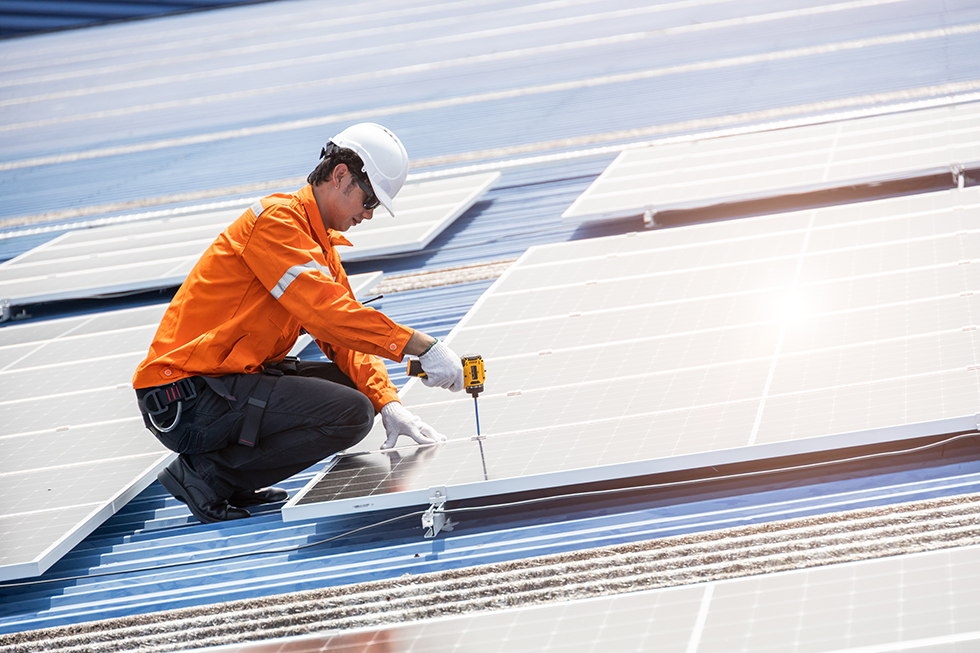
via Shutterstock Beijing responded by diversifying its energy portfolio. It expanded hydroelectric power, nuclear energy and renewables. Over the past decade, China has emerged as a global leader in renewable energy production, but it has not abandoned its use of fossil fuels. Sources: Global and regional effects China’s energy strategy carries far-reaching global implications. Its dominance in clean energy manufacturing, particularly solar panels, batteries and electric vehicles, has reshaped global supply chains. It has also driven down costs, accelerating the adoption of renewables worldwide. China leverages energy investment as a geopolitical tool. Through infrastructure financing in South America and beyond, it builds long-term economic and political influence. These projects have created durable partnerships that extend well beyond energy. China’s domestic energy decisions ripple across global markets. Changes in its demand for coal, oil or critical minerals move global prices. Its renewable expansion continues to shape the pace of the global energy transition. Clean energy investments and key initiatives The country’s energy transition is now entering a more complex phase. Renewable capacity is expanding rapidly. Overall energy demand is also growing. Fossil fuels — especially coal — remain deeply embedded in the system, but China is investing heavily in next-generation technologies. Energy storage, grid modernization and electric vehicles are being deployed domestically and exported internationally. Another kind of challenge has emerged in China’s waste-to-energy sector. With the rapid growth of Chinese cities, China has turned to incineration as a means to dispose of waste and convert it into energy. China has been heavily investing in incineration plants, leading to overcapacity in some regions. Regions that do not have enough waste are even buying it from other regions to keep their high-tech furnaces running at optimal temperatures. Improved waste sorting and recycling have reduced the volume of burnable waste. Some facilities are now underutilized. Despite these bumps in the road, China’s clean energy push is operating at an unprecedented scale. Investment in solar and wind has surged, backed by strong state policy and industrial strategy. China now leads the world in both the production and deployment of clean energy technologies. Investments in infrastructure and clean energy projects reinforce the country’s global influence. Sources: Why China’s waste incinerators are running out of trash | Think China China’s Energy Transition at a Crossroads | Bloomberg NEF Xinhua Headlines: Chinese cities turn waste into resources for greener future | Xinhua US backpedaling and EU reorganizing For years, the US and EU framed electric vehicles (EV) as the inevitable future of the automotive industry. That conviction is now unraveling rapidly. In the US, Congress eliminated the $7,500 federal EV tax credit effective September 30, 2025, through President Trump’s “One Big Beautiful Bill.” EV sales fell 24% in October, the first full month without the credit, and by the fourth quarter of 2025, year-over-year EV sales had collapsed 36%. The retreat is not limited to balance sheets. A growing number of automakers are now canceling, delaying or scaling back electric vehicle (EV) plans in the United States, including major brands such as Ford, Honda, Porsche and Bentley. Several companies have cited weakening demand, high production costs and shifting policy incentives as key reasons for pulling back. Ford has postponed major EV projects and redirected investment toward more affordable models. At the same time, General Motors has also scaled back its ambitions, signaling a broader industry shift toward hybrids and conventional vehicles. Across the sector, automakers are reassessing timelines and investment strategies as expectations for rapid EV adoption cool. The European Commission has moved to scale back its planned 2035 phaseout of combustion-engine vehicles, shifting instead toward a more flexible framework that would require roughly a 90% emissions reduction rather than a full ban. The revised approach would allow continued use of some hybrid and low-carbon-fuel vehicles, reflecting mounting pressure from automakers and concerns about industrial competitiveness. The EU, meanwhile, adopted a new Clean Energy Investment Strategy in March 2026, backed by €75B in European Investment Bank (EIB) financing. The EU isn’t abandoning clean energy — it’s struggling with implementation gaps, a funding cliff when the “Recovery and Resilience Facility” expires in 2026, permitting bottlenecks, and political fragmentation. China is moving in the opposite direction. In 2025, China exported 2.65 million EVs, doubling its 2024 exports, and BYD, a Chinese battery and EV manufacturer, surpassed Tesla as the world’s largest EV maker. BYD is deepening its global push, filling a void left by Western manufacturers that priced EVs as luxury goods. Politics rather than market forces are now the biggest obstacle to Chinese automakers’ expansion. With domestic saturation pushing margins lower, Chinese automakers are expanding aggressively overseas, opening factories in Egypt, the Middle East, Indonesia and other markets. Sources: Automakers’ 2026 EV Cancellations and Delays: A Running List of Who’s Pulling Back | EVXL Automakers Pull Back on EVs | Car And Driver EU drops 2035 combustion engine ban as global EV shift faces reset | Reuters China’s obstacles, natural and self-inflicted Of course, this does not mean China does not have hurdles in the way of its energy transition. While the government has made great strides in reducing its greenhouse gases, it remains heavily reliant on coal and other fossil fuels. As recently as 2023, over 86% of China’s grid relied on fossil fuels. By early 2026, clean energy capacity had crossed a historic threshold, surpassing fossil fuels for the first time — though coal generation still dominates actual power output. The numbers tell a complicated story. Even as China leads the world in renewable investment, it committed over $54 billion to coal in 2025, according to the IEA’s World Energy Investment 2025 report, and commissioned 78 gigawatts of new coal power capacity — the highest annual total in a decade. New coal proposals hit a record 161 gigawatts, and China now accounts for 71% of all coal power capacity under development globally. Beijing frames this as an energy security necessity, using coal as a backstop while its grid absorbs a massive and fast-growing renewable fleet. But critics warn that locking in this much new coal infrastructure could undermine China’s own 2030 climate targets and make a clean transition structurally harder to achieve. This ties a large amount of capital into fossil fuel production and creates financial incentives for political actors to delay the transition, beyond the straightforward need to keep thousands of people employed. With up to 290 gigawatts of coal power already scheduled for construction, the tension between energy security and decarbonization is not abstract — it is being built into the ground right now. Sources: Green energy sector drove more than 90% of China’s investment growth last year | The Guardian How China adds more renewable energy than any other economy | World Economic Forum Foreign investment, or extraction? This transition also affects how China interacts with other global partners. Several rare earth metals are required to build green technologies, such as lithium and cobalt. While China, as a massive country, has natural deposits of the minerals, it still requires more resources to fuel its transition. One of the most important relationships China has is to the Democratic Republic of Congo, which sits on vast rare earth mineral reserves. China has been happy to trade for the DRC’s minerals to grow its own expanding economy. In fact, the two countries recently deepened their trade ties even after the US signed a similar pact with Congo in December 2025 specifically to try and cut into China’s dominance in the region. All this is broadly good for both countries economically, but there are cracks beneath the surface. There are a number of credible reports of China operating mines illegally in the Congo while exploiting Congolese workers, many of whom are children, seemingly with Kinshasa’s tacit approval. This also spills over into the environmental impact of these operations, because due to the lack of government oversight, there are essentially no standards these mines are forced to meet. This can lead to deforestation, runoff pollution, and a host of other environmental problems in a jungle absorbing carbon emissions and that is home to millions of people and billions of other animals. In a sense, in order to help meet its growing energy demands, China is moving its problems abroad, destroying another nation’s resources to help buffer its own. And while China is hardly alone in this exploitation of African nations, it is clear that they could do much more than they currently are to prevent harm. India adds another layer to this shifting landscape. Now the world’s third-largest clean energy investor, India grew its clean energy investment 15% to $68 billion in 2025. As the US retreats from its climate commitments and Europe struggles to close its funding gaps, India is quietly emerging as a consequential actor — one that could either help fill the void left by Western backpedaling, or follow China’s dual-track model of expanding renewables and fossil fuels simultaneously. Which path India chooses may prove as consequential as anything happening in Washington or Brussels. Sources: Why China is making a big play for Congolese cobalt | South China Morning Post Congo, China deepen mining ties as US pushes rival minerals pact | Reuters China’s Illegal Mining Operations in the Democratic Republic of Congo | Harvard Kennedy School From Cobalt to Cars: How China Exploits Child and Forced Labor in the Congo | CECC Cooperate or die: evolution demands it In an increasingly warming world, both figuratively and literally, China’s moves to expand into green energy should be commended. It is on track to greatly reduce its carbon emissions in the coming decades while providing power to its citizens, but still has quite a ways to go, like every other country on earth. But in this make or break moment, with less than four years left to reach the under 1.5 degree goal for a livable world, this should not be a competition. This is the one issue that should unite all countries on earth, as failing to do so will lead to consequences only matched by nuclear war. Instead of competing, these countries should be uniting under this common cause more than ever before. And to an extent, we are seeing that ironically through competition: China continues to compete with the US and EU, filling gaps in the green energy market where the other countries have retreated. But more than that, more must be done to reduce the harm we cause our planet. Because even as we make progress, we cannot allow the costs of those gains to be foisted onto another country. In a truly interconnected world, we all share the consequences of everyone else’s actions, even if it takes a few centuries for the air around us to circulate around the world. So, even while China is pressing forward at an industrial scale, the race is still on. The US has introduced significant policy reversals, Europe is caught between ambition and execution, and China is struggling to balance fossil fuels and clean energy. The developing world is watching who offers the most reliable partnership — will it be a BRICS-led world, or a G7-led one? Whatever the answer is, the country that wins the clean energy competition will undoubtedly shape the energy system — and the wider geopolitical order — for decades to come. Sources: World Energy Investment 2025 – Analysis – IEA Built to peak: Coal power expansion runs out of room in China – Global Energy Monitor Liam Roman and Casey Hermann Assistant Editors Related readings
| ||||||
We are an independent nonprofit organization. We do not have a paywall or ads. We believe news
must
be free for everyone from Detroit to Dakar. Yet servers, images, newsletters, web developers and
editors cost money.
So, please become a recurring donor to keep Fair Observer free, fair and independent. 
| ||||||
| ||||||
| About Publish with FO° FAQ Privacy Policy Terms of Use Contact |







Support Fair Observer
We rely on your support for our independence, diversity and quality.
For more than 10 years, Fair Observer has been free, fair and independent. No billionaire owns us, no advertisers control us. We are a reader-supported nonprofit. Unlike many other publications, we keep our content free for readers regardless of where they live or whether they can afford to pay. We have no paywalls and no ads.
In the post-truth era of fake news, echo chambers and filter bubbles, we publish a plurality of perspectives from around the world. Anyone can publish with us, but everyone goes through a rigorous editorial process. So, you get fact-checked, well-reasoned content instead of noise.
We publish 3,000+ voices from 90+ countries. We also conduct education and training programs
on subjects ranging from digital media and journalism to writing and critical thinking. This
doesn’t come cheap. Servers, editors, trainers and web developers cost
money.
Please consider supporting us on a regular basis as a recurring donor or a
sustaining member.
Will you support FO’s journalism?
We rely on your support for our independence, diversity and quality.





Comment