





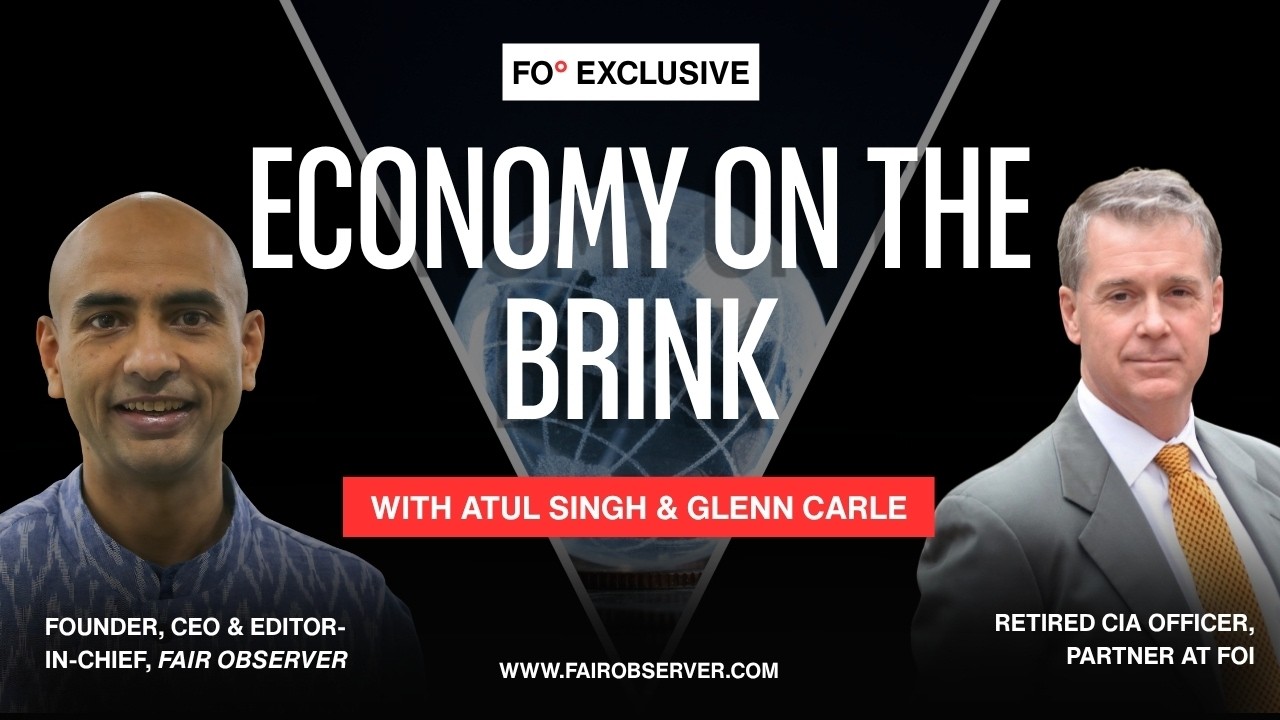
Editor-in-Chief Atul Singh and FOI Senior Partner Glenn Carle, a retired CIA officer who now advises companies, governments and organizations on geopolitical risk, examine the fiscal, monetary and financial pressures threatening the global economy. The United States has accumulated unprecedented debt while running deficits normally associated with wars or economic crises. Inflation continues to be a problem and essential expenses continue to squeeze American households.
Additionally, the Iran war, trade barriers, elevated asset prices and pressure on the Japanese yen are worsening strains on the international financial system. Atul and Glenn warn that these interconnected pressures could produce a polycrisis before governments undertake meaningful reforms.
America can no longer postpone its fiscal reckoning
Atul begins with the clearest measure of American fiscal deterioration. US national debt crossed $40 trillion in August 2026, exceeding the annual economic output of any country. Yet the headline figure alone does not capture the danger. Washington continues to borrow heavily even though the economy is not experiencing a conventional recession.
The Congressional Budget Office (CBO) projects a federal deficit of $1.9 trillion in fiscal year 2026, equivalent to 5.8% of gross domestic product. It expects the deficit to reach $3.1 trillion, or 6.7% of GDP, by 2036. Since 1946, the deficit has exceeded that proportion only in the aftermath of the 2007–2008 global financial crisis and during the Covid-19 pandemic.
Governments traditionally run enormous deficits during wars, recessions or national emergencies. Washington has normalized emergency-scale borrowing before the next emergency has arrived.
No single president created this problem. Successive Democratic and Republican administrations have cut taxes, expanded entitlements, fought wars and approved emergency spending without establishing a credible means of paying for them. US President Donald Trump has accelerated the deterioration, but it is important to remember that he inherited a structural problem decades in the making.
Rising US debt places upward pressure on interest rates because the Treasury must attract buyers for an ever-growing supply of securities. Government borrowing can also crowd out productive private investment in factories, housing, infrastructure and new businesses. Slower investment eventually means weaker economic growth.
The problem is becoming self-reinforcing. The government borrows more, pays more interest and then borrows again to meet those payments. The CBO expects net interest costs to exceed $1 trillion in 2026. Interest already costs more than every mandatory federal program except Social Security and Medicare. By 2036, annual net interest payments are projected to reach $2.1 trillion.
Social Security compounds the pressure. The ratio of workers financing each beneficiary has fallen dramatically as Americans live longer and birthrates decline. The CBO projects that the trust fund supporting retirement and survivors’ benefits will be exhausted in 2032.
That does not mean Social Security will disappear. Payroll taxes would continue financing most benefits. It does mean the program could no longer make every scheduled payment without Congressional action.
Washington has only unpleasant options. It can raise payroll taxes, reduce benefits, increase the retirement age, limit the number of beneficiaries or transfer additional general revenue into the program. The last option would merely move the burden elsewhere by requiring higher taxes, spending cuts or more borrowing.
Glenn identifies a fundamental failure of political incentives. Elected officials receive little reward for imposing immediate costs to prevent a future crisis. Each Congress therefore leaves the problem to its successor. The longer lawmakers wait, the more sudden and painful the eventual adjustment becomes.
Inflation falls a bit but fails to relieve American households
Prima facie, the monetary picture appears more encouraging. Annual consumer price inflation declined to 3.4% in July 2026. Core inflation, which excludes food and energy, fell to 2.5%. These rates remain above the Federal Reserve’s 2% target, but they are far below the peaks experienced earlier in the decade.
It is true that core inflation has been declining and the overall rate is not historically extraordinary. Yet national averages do not determine how people feel about the economy. Households experience inflation through rent, food, electricity, insurance, fuel and debt payments. These unavoidable expenses consume a much larger share of poor and middle-income families’ budgets than of wealthy households’ incomes. For the last few years, they have been experiencing an increasingly severe cost-of-living crisis.
Note that a lower inflation rate also does not reverse previous price increases. It merely means that already elevated prices are rising more slowly. Food costs remain around 20% higher than they were in 2021. Rents rose rapidly earlier in the decade, while high mortgage rates have pushed homeownership beyond the reach of many younger Americans.
Insurance has become another source of financial strain. Auto premiums increased sharply in many states as vehicles, repairs and medical claims became more expensive. Homeowners face rising premiums because of hurricanes, floods, wildfires and rebuilding costs. In some vulnerable areas, insurers have withdrawn coverage altogether.
Energy remains particularly volatile. The July inflation report showed energy prices 14.7% higher than a year earlier and gasoline prices up 24.6%. The continuing Iran war leaves consumers and businesses exposed to further shocks.
Americans increasingly use debt to bridge the gap between their earnings and expenses. Credit card balances reached $1.26 trillion in the second quarter of 2026. Because credit cards carry high interest rates, indebted households can quickly fall behind after a medical bill, car repair or temporary loss of income.
The above figures reveal a K-shaped American economy. Wealthier Americans own property and financial assets that have appreciated. They can earn interest on their savings. Poorer Americans are more likely to rent, borrow and spend most of their income on necessities.
Notably, many households lack sufficient savings to absorb a $400 emergency. This vulnerability is not historically unprecedented, but it helps explain the gap between relatively stable macroeconomic indicators and widespread economic anger. Glenn observes that these perceptions matter because they influence political behavior and shake confidence in the country’s institutions.
War and protectionism are disrupting global trade
Domestic economic weakness is colliding with a deteriorating international trading environment. The US/Israel–Iran War has disrupted energy supplies through the Strait of Hormuz for six months and has no end in sight.
Around 20% of global petroleum liquids consumption normally passes through the Strait of Hormuz. About one-fifth of international liquefied natural gas trade also travels through the strait. These are no longer passing through Hormuz. This disruption affects more than oil and gas. Gulf states are important producers and exporters of fertilizers and their raw materials. They have now been cut out of the global market. This supply shock is increasing fertilizer prices. In turn, higher fertilizer costs will eventually raise food prices around the world.
Even vessels that avoid Hormuz feel the consequences of the war. Insurers raise premiums, crews demand additional compensation and buyers compete for supplies from safer producers. Because energy is essential to production and transportation of food and all kinds of products, an oil shock raises costs throughout the economy.
Not only Hormuz, but also the Panama Canal has experienced a decline in ship traffic. The canal is experiencing a different problem, though. Its locks depend on freshwater from surrounding lakes, where water levels have been dropping because of sustained drought. Lower water levels have forced authorities to restrict vessel drafts and the number of daily crossings. Also, ships must carry less cargo, wait longer or bid more for priority passage.
Companies can reroute vessels around South America, but this increases journey times, fuel use and labor costs. The simultaneous pressure on Hormuz and Panama demonstrates the fragility of a global economy dependent on a handful of maritime chokepoints.
As if these disruptions were not enough, governments are adding deliberate barriers to these physical constraints. Trump has revived tariffs as a central instrument of US economic policy. His administration claims that tariffs protect industry, raise revenue and provide leverage over trading partners.
Canada has responded to Washington’s latest duties by announcing counter-tariffs as high as 50% on US products. The US and Canadian economies are deeply integrated. Components may cross the border several times before becoming finished products. Repeated tariffs multiply costs throughout North American supply chains, fueling already significant inflationary pressures.
Tariffs may protect selected producers while hurting companies that use imported materials. Steel tariffs help domestic steelmakers but raise costs for manufacturers of vehicles, machinery and appliances. Importantly, retaliation by other governments reduces exporters’ access to foreign markets.
There is another added risk when governments impose tariffs and engage in trade wars. Uncertainty rises. Businesses invest when rules are predictable. Uncertainty chills investment. Also, tariffs increase fragmentation. Repeated tariffs encourage companies to duplicate supply chains and choose political security over economic efficiency. This may reduce strategic dependence, but it also raises costs throughout the global economy.
Frothy markets are loaded up on debt and AI exuberance
Frothy financial markets present a troubling contrast to grim economic figures. US fiscal foundations are weakening, households remain strained and international trade faces repeated shocks. Yet American equities remain resolutely buoyant.
The exuberance of stock markets is deceptive, though. Much of the market’s growth depends on seven technology companies: Alphabet, Amazon, Apple, Meta Platforms, Microsoft, Nvidia and Tesla. These “Magnificent Seven” companies dominate cloud computing, digital advertising, semiconductors, social media, consumer electronics and electric vehicles.
Their commercial success is undeniable. Unlike many firms during the dot-com bubble, today’s technology giants generate enormous profits. Nevertheless, their dominance creates concentration risk. Investors purchasing an apparently diversified index may unknowingly place a large share of their money in the same small group of companies.
Artificial intelligence (AI) has intensified this concentration. Investors expect AI to transform medicine, education, finance, manufacturing and software. These expectations have pushed valuations higher for chip designers, cloud providers and companies believed capable of monetizing the technology. Yet many worry that expected revenue streams may not back sky-high valuations. Another bubble is brewing, which will soon burst.
In contrast to stock markets, bond markets are less optimistic. The yield on 30-year US Treasury bonds reached 5.33% in August, its highest level in 19 years. Investors are demanding greater compensation for inflation, rising government spending and the risk of lending to Washington for three decades.
Rising bond yields are bad news for the US. Higher yields reduce the value of existing bonds and increase borrowing costs for households, companies and governments. As older Treasury securities mature, Washington must replace cheap debt with more expensive obligations. The fiscal consequences keep worsening and appear gradually before accelerating.
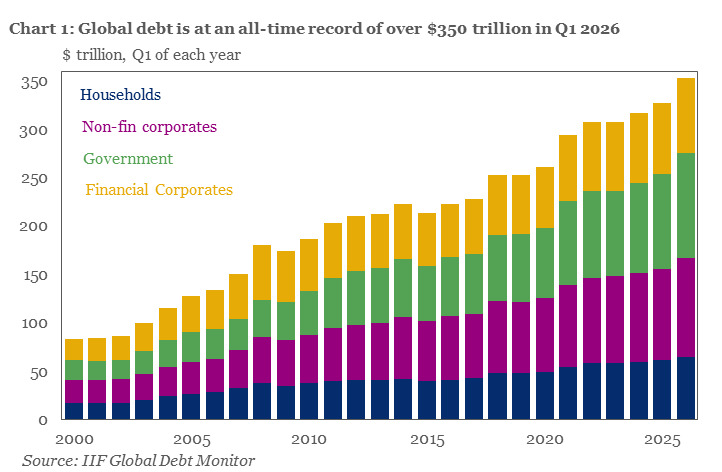
This vulnerability extends around the world. Global debt surpassed $350 trillion in early 2026, equivalent to approximately 305% of global GDP. Debt was easier to manage when interest rates were close to zero. At current rates, governments, corporations and households must devote more income to servicing old obligations.
Yen troubles may foreshadow a wider polycrisis
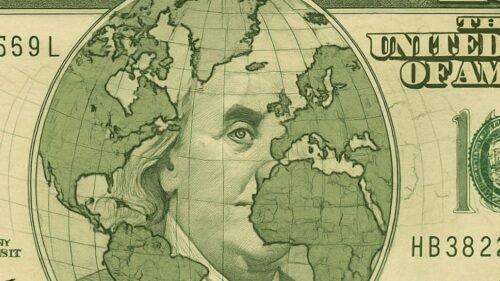
Those who have been following FOI on LinkedIn will know that none other than Mohamed El-Erian, formerly CEO of PIMCO and now professor of practice at the Wharton School, has pointed out that the yen has been “weakening gradually since the large joint Japan–US FX intervention.” Furthermore, JPMorgan Chase CEO Jamie Dimon has warned that the dollar could lose its global reserve-currency status within 25 years if the US fails to maintain its dominant economic and military edge.
Two top people in finance are warning about two key global currencies. Clever financial instruments and interventions will no longer work indefinitely. The economic engines of both Japan and the US are sputtering. We can expect a polycrisis before either country reforms.
US Treasury Secretary Scott Bessent’s announcement that the Foreign and International Monetary Authorities (FIMA) Repo Facility will support the yen opens the global financial system to massive hidden risks, similar to the derivatives that contributed to the Global Financial Crisis of 2007–08. In simple terms, the US will now help Japan borrow by using Tokyo’s own loans to the US as collateral.
FOI explained Bessent’s FIMA move earlier this month on LinkedIn. The Japanese yen was crashing. To shore up its currency, the Bank of Japan could have sold US Treasury bills and used the proceeds to buy yen. However, Tokyo’s sale of Treasury bills would make American borrowing more expensive. To prevent this, the US came up with a way for Japan to prop up the yen through the FIMA facility without selling its Treasury holdings. Tokyo can borrow against the $1.143 trillion in American debt that Japan held as part of its reserves at the end of May 2026.
Traditionally, the issuing authority, or central bank, conducts repo (repurchase agreement) operations involving sovereign debt rather than a foreign entity. It is a short-term form of borrowing in which one party sells an asset, usually bonds or Treasury bills, for cash and agrees to buy it back shortly afterward at a higher price. Japan can now use American debt as collateral and borrow against it.
Aiming to safeguard the dollar, Washington is sharing sovereign privilege with Tokyo. This rearguard action demonstrates the weakness not only of the yen but also, more importantly, of the dollar.
This mechanism is not identical to the opaque derivatives that caused the financial crisis. Repos backed by Treasury securities are standard financial instruments. Yet Atul warns that interventions designed to suppress visible stress can move risk into less visible parts of the system.
Note that Washington is not supporting the yen purely out of generosity. It wants to prevent Japanese Treasury sales from increasing American borrowing costs. This reveals the interdependence and weakness of the world’s two major economies.
The dollar does not face an obvious immediate replacement. The euro suffers from Europe’s lack of a fiscal union, China maintains capital controls and Japan has its own structural problems. Yet Dimon has warned that the dollar could lose its reserve-currency position within 25 years. Clearly, structural weaknesses are building up.
The greatest danger is the interaction among all these pressures. An energy shock raises inflation. Inflation prevents rate cuts. High rates increase debt-service costs. Rising yields weaken bonds, housing and corporate investment. Tariffs raise prices while damaging trade. A market correction reduces wealth and confidence. Currency intervention creates further financial strain.
This is a polycrisis. Each problem makes other problems more difficult to manage.
The US and Japan still possess immense wealth and institutional capacity. Yet both are using financial ingenuity to postpone political decisions. Repos can provide liquidity, central banks can support currencies and governments can refinance debt. None of these instruments creates workers, raises productivity or repairs public finances.
Atul and Glenn fear that meaningful reform will come only after a crisis makes inaction more painful than compromise. If they are right, the next global upheaval will not result from a single catastrophic mistake. It will occur when several deferred reckonings arrive at once.
[Lee Thompson-Kolar edited this piece.]
The views expressed in this article/video are the author’s own and do not necessarily reflect Fair Observer’s editorial policy.

































Comment