

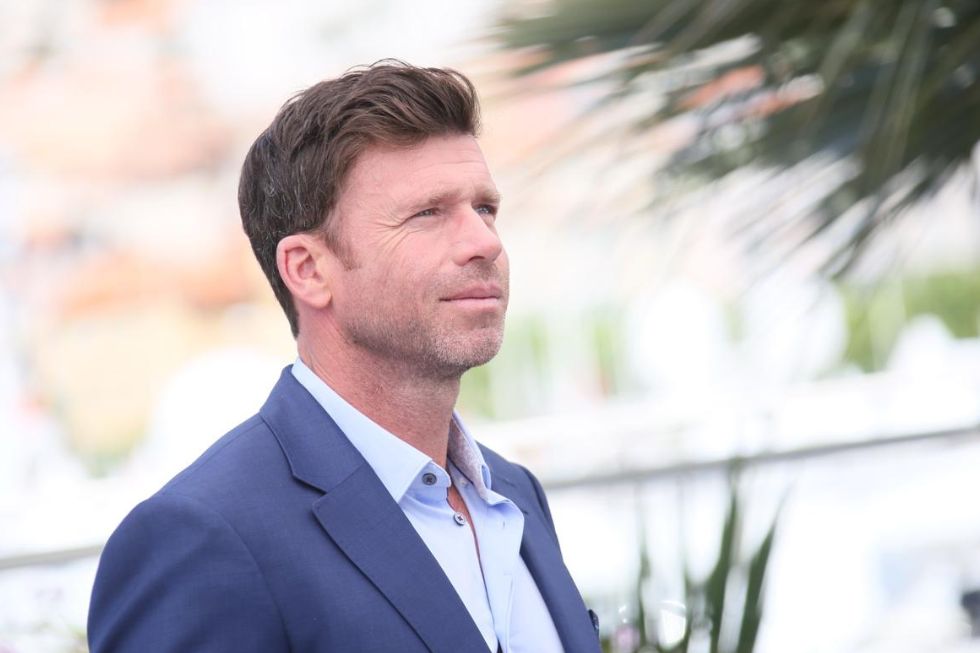



Growing up in Texas, Taylor Sheridan worked cattle before spending three decades struggling as an actor. That background is what separates his series Yellowstone from every other prestige drama on television. It’s a show built on the gap between what the American cowboy actually was and what a century of movies made him into — a man who worked land rather than speculated on it, who passed it down rather than sold it off, whose loyalties ran to people rather than institutions and whose sense of self was built on physical competence in a world that no longer needs it.
By the time Yellowstone premiered on Paramount Network in 2018, Sheridan had developed a deep resentment toward a way of life being devoured by money, convenience and people who had never held a rope in their hands. Yellowstone is his response to that loss. And it is, whatever else you want to call it, also a love story.
The Dutton ranch stands as Sheridan’s opening brief against the modern world. Sixty thousand acres of Montana, the Yellowstone River cutting through it, the Beartooth range in the distance. Sheridan lingers on this landscape the way other showrunners linger on dialogue, and he’s right to do so. There is something almost devotional about the way the show frames a rider moving through a valley at dusk, or cattle being worked in a morning that’s mostly fog. The landscape’s beauty isn’t a flourish. It’s the reason everything else matters. You cannot understand what the Duttons are fighting for until you understand what they’re fighting over, and Yellowstone makes you feel the land as something sacred before it asks you to feel anything about the people on it.
To understand what Sheridan is doing, though, one has to go back before the show. Before the myth.
Beyond John Wayne’s white hat: the cowboy’s journey from wage worker to violent icon to elegy
The cowboy was never quite what the movies made him out to be. The heyday of open-range ranching and long trail drives lasted only about 20 years, and the cowboys of that period were generally wage workers rather than independent operators hired hands, not heroes. Black cowboys accounted for nearly a quarter of all cattle workers in the nascent American West during the latter half of the 19th century, though they have been almost entirely excluded from the mythology.
Moreover, the vaquero tradition that gave American cowboys most of their vocabulary and technique — rodeos, broncos and lassos — came from Mexican and Spanish settlers who were ranching the Southwest long before Anglo settlers arrived. A typical cattle drive was anything but romantic: Ten to 12 cowboys might manage 2,500 head of cattle, working from dawn to dusk and beyond, in a careful hierarchy from trail boss to drag rider, eating dust at the back, urging stragglers forward. Which is why the cowboy belongs in the labor history of the West, not just in its mythology.
During the winter of 1886–87, thousands of cattle died when temperatures reached well below freezing across the West. Many scholars believe that devastating winter was the beginning of the end for the cowboy era. Barbed wire closed off the open range, and railroads made the long drives redundant. By 1890, the cattlemen had been forced onto fenced ranches, usually close to a railroad. The legendary era of the cowboys was over, but in the dime novels, nickelodeons and eventually the movie palaces of the 20th century, it was just getting started.
Hollywood invented the mythology of the cowboy, which could carry whatever freight the culture needed at any given moment. In this regard, actor John Wayne emerged as an iconic figure in the genre from American film director John Ford’s Stagecoach onward, elevating Westerns from B-movie status to critical acclaim. These early films often portrayed a romanticized view of the American frontier, emphasizing justice, individualism and the taming of the Wild West. Wayne’s cowboy was a moral absolute. The hat was white. The cause was right. The violence was clean. He became an icon of the traditionalist notion of the Old West, and he held on to it until his final moments.
Italian filmmaker Sergio Leone broke that open in the 1960s. His movie A Fistful of Dollars in 1964 — a remake of Japanese filmmaker Akira Kurosawa’s Yojimbo — marked the dawn of a new age of cowboy pictures, spearheaded by actors such as Clint Eastwood, Charles Bronson and Franco Nero. The spaghetti Western subgenre refuted the classic Western’s unending romanticism, and Wayne outright condemned its evolution, refusing to star alongside Eastwood even though Eastwood was eager to work with him.
However, Eastwood stood the test of time as a proper evolution of Wayne, one who could be an idealistic image of an American while simultaneously re-examining the kind of violence that the country was founded upon. By the time Eastwood made Unforgiven in 1992, the genre had begun dismantling its own mythology. The film began with a brutish cowboy disfiguring a sex worker’s face and getting a slap on the wrist as punishment, not an opening Wayne would have countenanced. The result was an Academy Award for Best Picture.
The frontier’s final evolution: myth, anti-myth and the hired guns of the Dutton Ranch
The genre’s deconstruction didn’t stop there. Greek-Italian film director and screenwriter George P. Cosmatos’ Tombstone (1993) gave the Western its most human antihero in years. American actor Val Kilmer’s Doc Holliday was a dentist-turned-gambler dying of tuberculosis in the Arizona desert. Beset by coughing fits, alcoholism and a healthy dose of self-loathing, Kilmer’s portrayal emphasized the human frailty of an Old West legend over masculine bravado. He says what he thinks to the point of offending almost everyone he meets, and he has a vocal disdain for any authority. Yet he proves himself to be the most loyal character in the movie. What Kilmer understood, and what the film understood, is that the cowboy myth works best when it’s inhabited by someone the myth is killing. Doc Holliday is not a conventional hero. He’s a man with nothing left to lose, which is the only kind of man the frontier could really use.
Then came Australian film director Andrew Dominik’s The Assassination of Jesse James by the Coward Robert Ford (2007), a Western about what happens when myth eats the men inside it. There’s no honor here, no grandiose dueling in the town square, no damsels in distress needing to be saved. Dominik takes his time, exploring the psychological depths of his characters, choosing complexity over cheap thrills, humanizing and therefore shattering the myth of a world that has been worshipped and lied about throughout the history of cinema. It is an epic allegory about the development of the American cult of celebrity and the effects of this obsession on the individuals caught in its web. The cowboy was always a projection. By 2007, cinema was honest enough to say so.
This is where Sheridan walks back in. Yellowstone is not naive about this history. The cowboy life it depicts is not romantic in any soft sense. Cowboys get branded with hot irons. They sleep in bunkhouses and follow orders and occasionally get beaten or killed for loyalty to an employer who may or may not deserve it. There’s a feudal quality to the Dutton ranch that Sheridan doesn’t try to dress up.
John Dutton, portrayed by American actor Kevin Costner throughout the first five seasons, is a powerful and complex man, guided by a primal code of frontier justice. He murders and manipulates in the name of preserving his family’s legacy, calling it stewardship. His daughter Beth, played by English actress Kelly Reilly in one of the great unhinged performances in recent television, is worse. She is a sociopath with a substance abuse problem who resorts to violence at the slightest provocation, and hates everyone except Rip, the ranch foreman played by American actor Cole Hauser, with whom she is besotted.
Where the franchise earns its depth is in the prequels, which flesh out the myth with actual history. The series 1883, set during the great cattle drive era, pulls no punches in its depiction of what made the wild frontier so dangerous, following a wagon train of German immigrants westward alongside James and Margaret Dutton. Sheridan hired a team of historians and was widely praised for the show’s historical accuracy and attention to detail. The violence isn’t stylized. The deaths aren’t heroic. This is the West before it became a myth — before anyone had a chance to clean it up.
The year 1923 moves the clock forward to a moment of ecological and economic collapse. The foundational American myth of the frontier as a land of infinite possibility is thoroughly dismantled. The promise of the Homestead Act has curdled into unpayable debt and despair. The land itself, once a generous benefactor, has become a hostile antagonist. Sheridan chose this moment because it was a time of great drought, Prohibition and all this expansion — the Wild West was truly becoming a relevant center of resources. The series tackled historical events such as the frontier sheep wars of the early 20th century and the existence of Catholic boarding schools for Indigenous Americans — the machinery by which the land was cleared, distributed and emptied of its original inhabitants.
The West was never won: Yellowstone ends by giving the land back and leaving the guilt
What the franchise is doing, across all three series, is narrating the full arc of the cowboy era from the inside. The Duttons are an accurate portrait of the West: people who built something on contested ground and slowly lost it to forces they couldn’t outrun, outspend or outshoot. Sheridan establishes early that Native people want power and money as much as white people do — which in his moral universe means everyone is playing the same game on land that was never anybody’s to own. Critics have noted that this framing can flatten a history that deserves more than equivalence. Sheridan seems to know it. He never resolves the tension; he simply learns to live within it, perhaps the most honest response the circumstances allow.
In 1883, a Native elder delivered a prophecy that his people would reclaim the land after seven generations. Kayce and Monica Dutton’s son Tate, with his Indigenous heritage on his mother’s side, is that seventh generation. The finale delivers on it: Kayce sells the Yellowstone ranch to Rainwater’s tribe, sealing the agreement with a blood pact.
Whether it is read as a genuine reckoning or a settler’s hope of absolution probably depends on what was brought to the show in the first place. What’s harder to argue is that Sheridan didn’t mean it. The whole franchise is organized around this ending. Yellowstone ends with the land returned, the Dutton family broken and the frontier myth brought to its natural conclusion. It leaves viewers with the question that the West has spent more than a century avoiding: Who did this land truly belong to, and what was the moral price of taking it?
[Ainesh Dey edited this piece.]
The views expressed in this article are the author’s own and do not necessarily reflect Fair Observer’s editorial policy.





Join the conversation
Share your perspective
Log in to share your thoughts and take part in the discussion.