

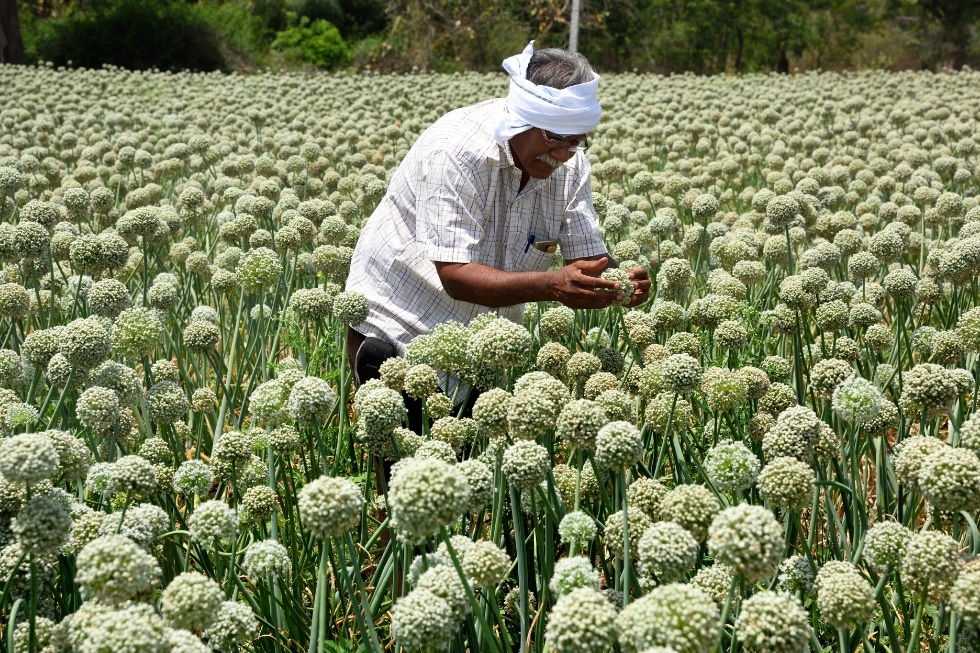




Strengthening farm incomes and building more resilient livelihoods should be central to India’s shift towards less water-intensive crops, as growing water scarcity and rising temperatures place increasing pressure on the country’s agricultural resources.
The Indian agricultural sector, along with its inherently vulnerable small and marginal farmers, is set to face the significant challenge of below-normal rainfall in the 2026–2027 crop year. The World Meteorological Organization (WMO) forecasts strong El Niño conditions to arrive in mid-2026, leading to a steady rise in temperatures. Furthermore, climate change may lead to increasingly erratic rainfall patterns, necessitating greater adoption of climate-resilient practices. Despite significant expansion in irrigated areas, quantity and distribution of rainfall remain crucial factors for agricultural production, as the share of rainfed cultivation still accounts for about 60% of total net sown area. Moreover, irrigated areas under tank systems and groundwater recharge rely on monsoon rainfall.
The problem is exacerbated by fertilizer shortages following the closure of the Strait of Hormuz. Against this backdrop, Indian authorities must nudge farmers to diversify their crops away from water and input-intensive crops like rice and wheat towards less resource-intensive crops such as nutri-cereals, pulses and oilseeds. Authorities should use this opportunity to promote farm income diversification and strengthen farmers’ long-term livelihood resilience.
The need for crop diversification
The monocrop cultivation of rice and wheat continues to dominate India’s agricultural sector, despite persistent efforts by authorities. Not only do such crops consume a great deal of water, but they also require large amounts of fertilizers and other inputs. Moreover, they demand significant procurement and input subsidies, including free electricity for pumping groundwater in many major producing states. Furthermore, the extensive cultivation of such water-guzzling crops is depleting and polluting groundwater and degrading soil resources.
Exacerbating these challenges is the fact that rice production continues to break new records annually, generating large surpluses. At the same time, the production of pulses and oilseeds remains insufficient to meet demand. Consequently, there is an urgent need to promote the diversification of crops and farm incomes by reorienting subsidies to enhance the resilience of the agricultural production system and farmers’’ livelihoods, while conserving rapidly depleting natural resources.
Ways to diversify farm incomes
Small and marginal farmers — those operating holdings of less than two hectares — accounted for about 89% of India’s farmers, according to the 2018–19 Situation Assessment Survey of Agricultural Households. The scope for raising their incomes through field crops alone remains limited due to lack of economies of scale and low margins. Under such circumstances, diversifying farm income through allied agricultural activities such as livestock rearing, apiculture, fisheries and poultry farming offers a viable pathway toward sustainable rural livelihoods.
Reviving certain traditional practices could also diversify farm incomes, while improving resource efficiency, restoring soil health and promoting more sustainable rural livelihoods. Traditionally, Indian farming households used their resources and labor efficiently, combining crop cultivation with livestock rearing for milk and poultry farming for meat. While straw and other crop by-products were used as livestock and poultry feed, manure was used to fertilize soils, supporting zero-waste natural farming.
Another promising avenue for farm income diversification is the promotion of the rice-fish farming system. Field studies have shown that rice-fish farming generated approximately 27% higher returns in Indonesia and increased rice yields by 10–26% in Bangladesh. Furthermore, planting fruit trees along field boundaries can provide an additional source of income. Activities such as beekeeping and mushroom cultivation can also be easily adopted by smallholder farmers, making productive use of household labor while generating additional employment and income, particularly during the offseason.
Where does India’s agricultural sector go from here?
Indian authorities must ensure the necessary infrastructure and logistical support to enable farmers to diversify their incomes. Facilitating direct integration into value chains through Farmer Producer Organizations (FPOs) and Self-Help Groups (SHGs) can improve marketing margins and create additional rural employment opportunities.
Furthermore, leveraging advances in weather forecasting to provide farmers with timely and advanced early warnings is essential. Such a system should provide alerts on weather events and their potential impacts on crops, accompanied by appropriate crop advisories and contingency plans. An efficient and advanced system can help minimize the adverse impact of such increasingly frequent weather events. India needs to develop drought-resistant and heat-tolerant crops and resilient farming practices to adapt to climate change. This will require greater investment in agricultural research and development. It is equally important to strengthen avenues for the rapid transfer of technology from laboratory farms to facilitate its successful adoption by farmers.
Policymakers must urgently promote a shift from water-and input-intensive crops towards drought-tolerant, resource-efficient alternatives to conserve scarce resources.. Addressing the inherent vulnerabilities of smallholder farmers by diversifying income sources, particularly through allied agricultural activities, can enhance farm incomes while strengthening the resilience of rural livelihoods.
[Sangeeta Mohanty edited this piece.]
The views expressed in this article are the author’s own and do not necessarily reflect Fair Observer’s editorial policy.






Join the conversation
Share your perspective
Log in to share your thoughts and take part in the discussion.