

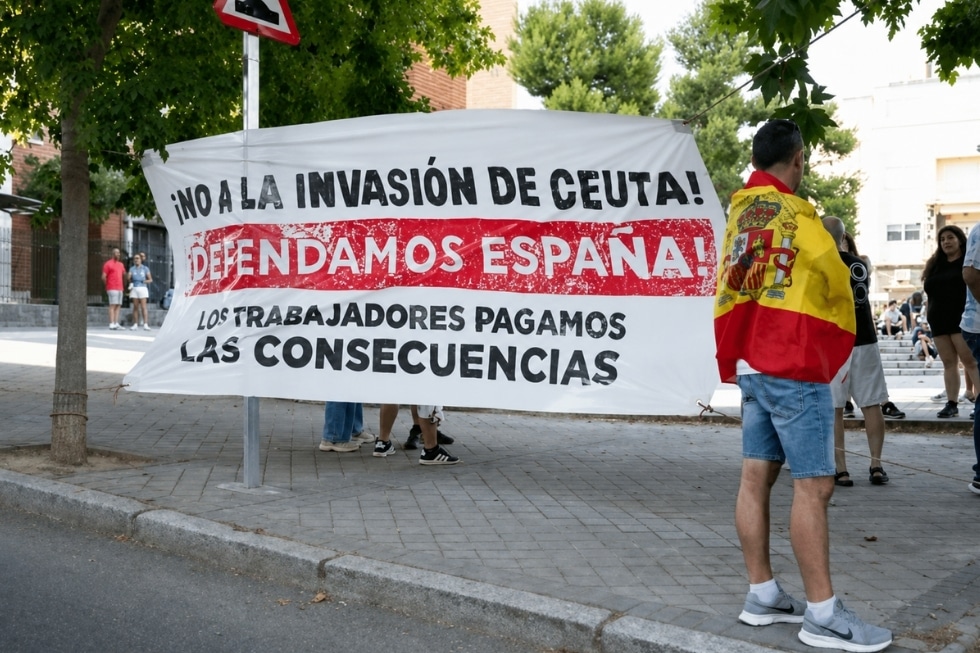



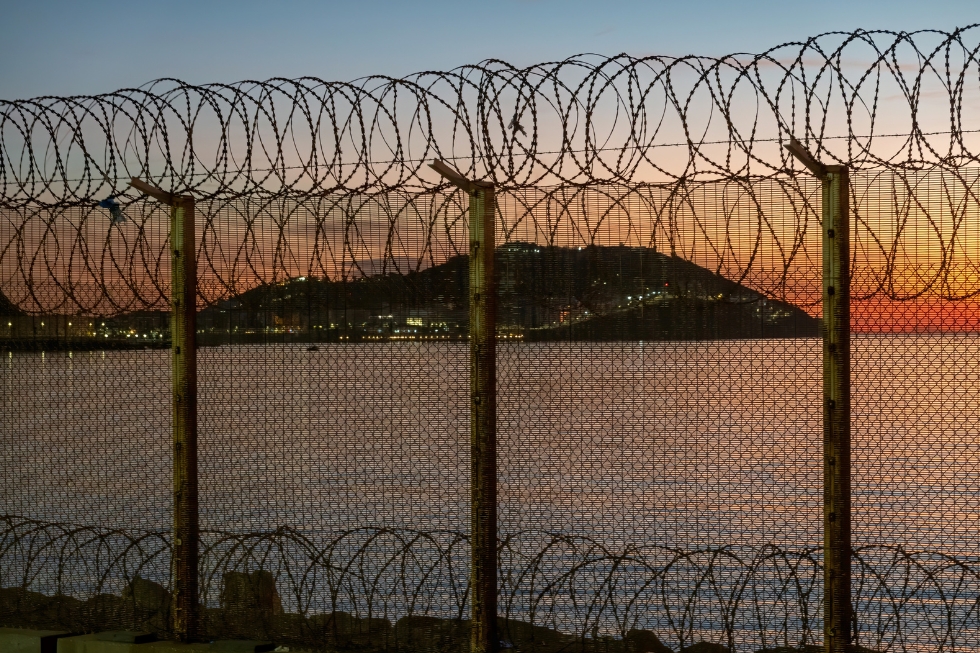
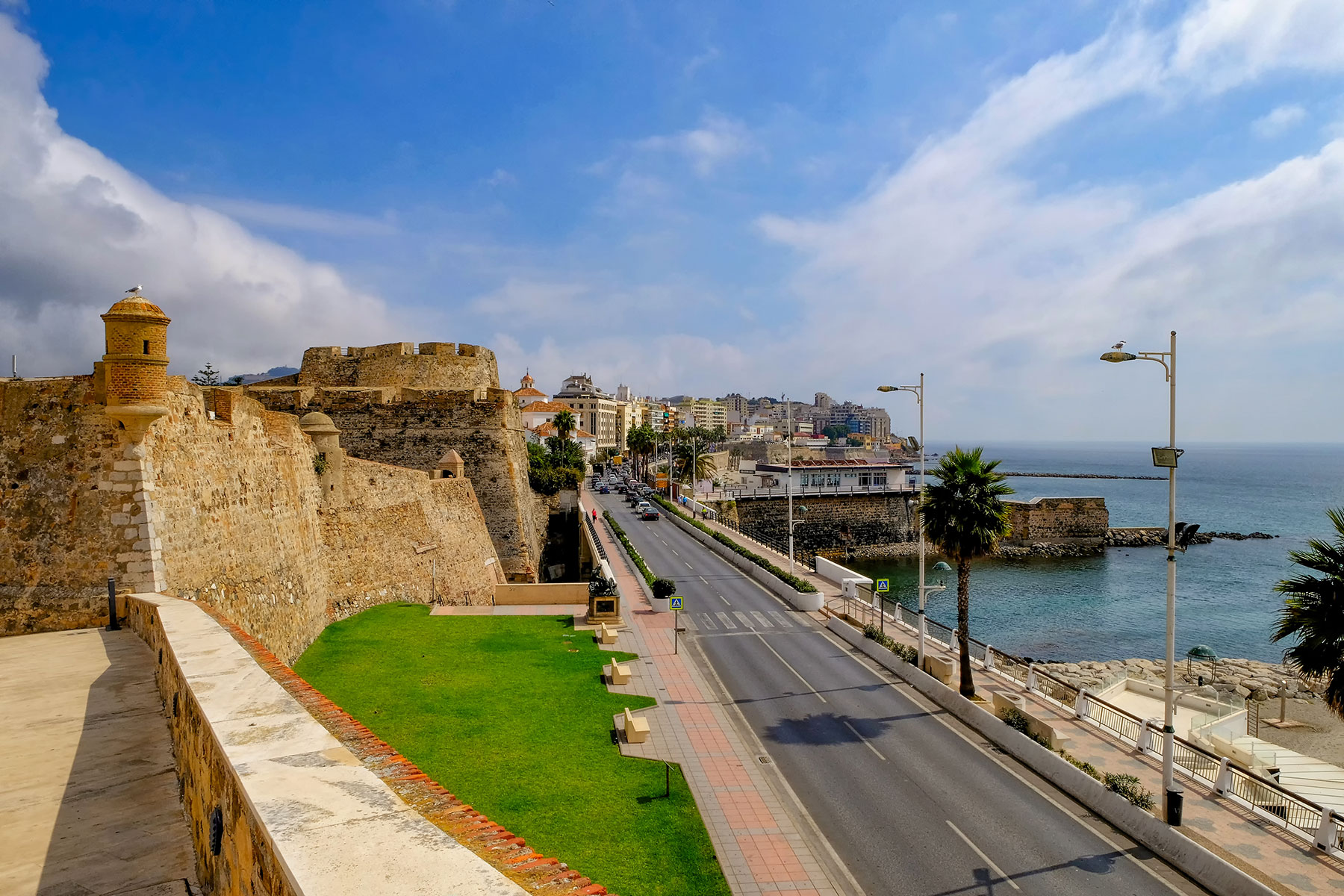
On July 30, tens of thousands of migrants illegally crossed the Spanish border in Ceuta, an autonomous Spanish enclave bordered by Morocco. International media has dramatized this event, framing it as a breakdown of EU border security. The imagery of youth swimming around the breakwaters and military deployments flooded the media, along with threatening promises from members of the union.
However, this angle remains reductive because it overlooks the domestic factors — both socioeconomic and logistical — and digital misinformation that created this crisis. Therefore, to build a comprehensive understanding of the crisis, the focus must shift from the mechanics of border control to the complicated backdrop through which the incident unfolded. To be specific, attention must first turn to the day this took place, because this was not a coincidental rendezvous.
Throne Day protocol
On July 30, Morocco was celebrating Eid al-Arsh (Throne Day). On this 27th anniversary of King Mohammed VI’s accession, the annual ceremonial speech countered pessimistic rhetoric by highlighting the country’s economic prosperity and progress across major sectors. During this major national holiday, most of the northern security apparatus was on royal visit protocol for two full days.
After the illegal crossing, rumors circulated that the state orchestrated or encouraged it as a political bargaining chip against Spain. However, King Mohammed VI’s and the Crown Prince’s physical presence in the northern region, residing less than 20 kilometers from the Ceuta border gate, challenged speculation.
Not only were these allegations false, but they are also incredibly out of touch. And news outlets’ favoring of rumors and clickbait-driven coverage has overshadowed the humanitarian crisis and failed to address the tangible — albeit digital — evidence that documents how events unfolded.
The mysterious digital spark
What has been established as the direct driver of the July–August surge is a digital hoax on irregular migration social media groups. On various platforms, these “tutorial” groups are meant to casually share any legal loopholes and caveats, tips, aspirational videos of successful crossing, equipment for sale and even do-it-yourselfs (DIYs) –– basically, an informal guide to illegally cross the Spanish enclaves’ borders. Interestingly, these online communities become a safe space, and a certain level of trust is established. That is why when these group members repost and play the interpreter of any official news, like a recent Spanish Supreme Court ruling, they are rarely met with objection or skepticism.
In late June, a Spanish Supreme Court ruling held that authorities cannot immediately reject irregular migrants arriving by sea who are intercepted at both Ceuta and Melilla. This ruling required authorities to process sea arrivals individually. In effect, irregular sea arrivals will have an individual procedure — with the right to a lawyer and a plea for protection — rather than being shipped directly back to Morocco by border patrol. The new ruling was then reposted on social media groups and blown way out of proportion.
The social media hoax gained traction by claiming that European authorities were offering residency papers. Arguably, it’s one of those cases where simplified disinformation turned into truth because it resonated more quickly than court and politicians’ language. Beyond this, when the matter concerns breaching the law through illegal migration, the trust will naturally shift to whoever advocates for it and makes it more accessible.
Notably, a similar event took place in September 2024, when social media campaigns, referred to as “movement 15-09,” orchestrated meetups in Fnideq on specific dates for a mass border crossing. Consequently, authorities arrested dozens of participants and deported non-Moroccan nationals who took part in the irregular border-crossing attempt.
What followed this year’s twisted “promises” of European residency was mass disappointment and the death of “at least 100 people.” This unprecedented surge, if anything, shows the growing influence of social media in facilitating hybrid smuggling through digital mobilization. In an age of algorithms, rumors of open borders spread like wildfire, and covert human smuggling has turned into a hype-driven online phenomenon. What international media further overlooked is an abrupt transformation in Northern Morocco’s local economy that somewhat triggered the crisis.
The collapse of the local informal economy in Fnideq
M’diq Fnideq is a prefecture in Tangier, bordering the Spanish exclave of Ceuta to the northeast. Due to its proximity to Europe, this passage supported an informal economy for many decades through the smuggling of goods (tráfico de estraperlo). The value of these smuggled goods from Ceuta is estimated between $620 and $800 million per year.
Because of heavy losses in duty fees, in late 2019 and early 2020 Moroccan authorities closed the border to subsistence smuggling, thereby halting tax evasion and protecting domestic manufacturing. The abrupt termination affected the families whose financial safety depends on the informal economy and lacked any formal backing or replacement. According to Le Desk, unemployment in the M’diq-Fnideq prefecture stood at 18% in 2019, approximately twice the national rate before the shock.
The regional economy was thereby affected heavily, and the domino effect followed through the loss of informal livelihoods at Bab Sebta (Ceuta’s gate) for households across the M’diq-Fnideq prefecture. To mitigate the fallout, the government launched initiatives to address unemployment, including the Fnideq Economic Activity Zone (FEAZ). Ultimately, it aimed to create 1,000 new direct jobs, which, in hindsight, is inadequate to absorb the shock. It ultimately failed to contain the thousands of newly unemployed workers displaced from the informal sector.
“Endless adolescence”
While formalizing trade and blocking illegal smuggling routes were necessary for national economic security, the vacuum this has created, along with ineffective responses to the consequences, has left local families, especially youth, vulnerable to alternative survival strategies.
Why are the youth especially susceptible? Well, the event is not an isolated border incident, but rather a reflection of broader national demographic and labor market dynamics. One of the major challenges facing Morocco is the number of people Not in Education, Employment, or Training (NEET). This classification describes the social and economic standing of young people. In 2026, Moroccan youth disengaged from the school system, job market and vocational training aged between 15 and 29 years old sits at 2.9 million.
This reality is what some observed to be what psychologists refer to as “endless adolescence.” The concept describes a mental state stemming from delayed financial independence and a lack of opportunities to integrate into the job market. The delay in achieving these milestones causes mental idleness and stretches the teen years into fully developed adulthood.
In this context, many youth view irregular migration as an escape from socioeconomic stagnation rather than a search for wealth. The migration motive for this section of the population has been further reinforced by a recent Spanish regularization initiative.
Why is Pedro Sanchez facing backlash now?
Spain, like many other European countries, faces labor shortages due to an aging population. In response, Spanish Prime Minister Pedro Sanchez approved the regularization of more than one million illegal migrants to redistribute them in these short-staffed sectors.
Despite the absence of any causal link between the two developments, Sanchez’s policy response drew immense criticism after the events in Ceuta, especially from some EU members, including Italian Prime Minister Giorgia Meloni. The criticism engulfed Spain’s economic growth-led regularization program. Especially since European skeptics think that it’s a “pull factor” and would incentivize illegal migration on a larger scale.
Critics point out that hard-right leaders’ weaponization of the imagery of the chaos in the streets of Ceuta with provocative captions has escalated into a conflict between the two countries. The outcome is that they have now imposed border control on all air and sea travel since they don’t share a land border; a move that risks further disruption to EU travel and trade between the two countries.
What’s next?
Local authorities report that more than 1,000 unaccompanied minors remain in the enclave. Apparently, 500 minors deemed vulnerable are set to be transferred to mainland Spain. In the meantime, the fate of the rest remains unclear.
Since the 72,000 migrants were not solely Moroccans, nationals from Sudan, Somalia, Senegal, Mali and Egypt also remain stranded in Ceuta with little intention of returning voluntarily. Because Ceuta is one of the only two land borders between the European nation and the African continent, many individuals cross multiple frontiers to reach Morocco, hoping to eventually enter Europe.
Although only 3,000 to 5,000 migrants remain in the enclave out of the thousands who initially arrived, the surge has created an unprecedented humanitarian crisis. Ceuta mayor is overwhelmed, pointing fingers in every direction over the poor management of the situation.
In the end, overlooked socioeconomic challenges and digital disinformation drove the buildup to this surge. Should these vulnerabilities remain unchecked, similar events will inevitably recur on an even larger and more tragic scale.
[Kaitlyn Diana edited this piece.]
The views expressed in this article are the author’s own and do not necessarily reflect Fair Observer’s editorial policy.






Join the conversation
Share your perspective
Log in to share your thoughts and take part in the discussion.