


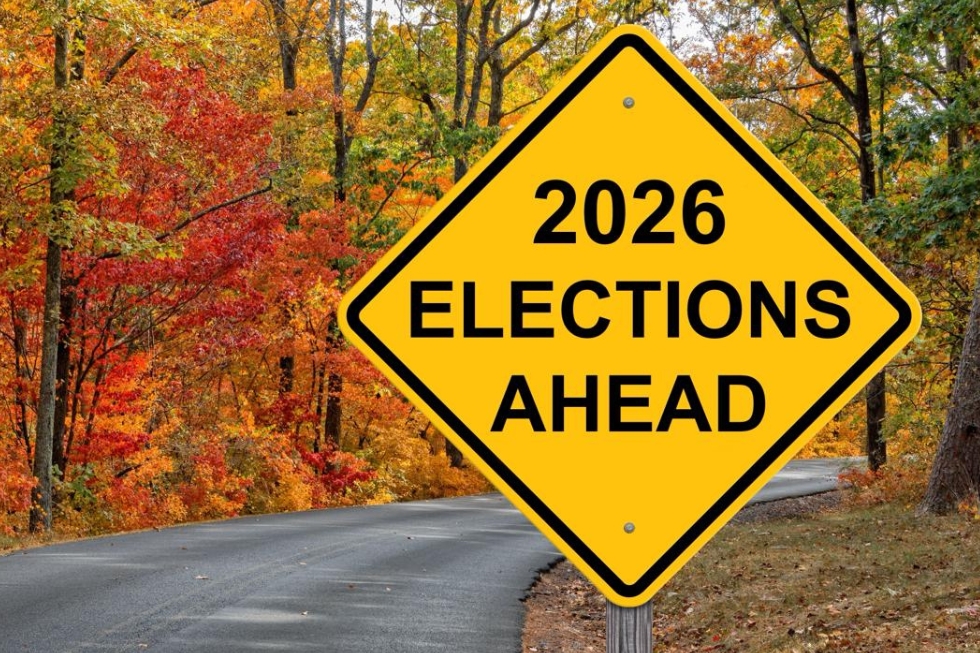



Donald Trump’s 2024 presidential election is part of a growing global pattern of anti-democratic sentiment in mainstream politics. Prior years in American public life involved bipartisanship to shape civil protections and security. As Trump’s influence shows through his official actions, American civil life is being reshaped against historical norms. The political pressures of the current US administration are leading to the unwinding of pertinent institutions and influences under the guise of encouraging wider viewpoint diversity.
As a pluralist, I am all for encouraging open discussions and permitting divergent views room to collaborate. I am a fan of bipartisan bills that are geared toward the public good. However, Trump’s influence reflects a cult of personality, as once-critical legislators bow to his every wish, constituents take vengeance on his critics and he betrays central promises that appealed to voters. His projected image was that of a man of the people who would restore the American Dream that growing numbers felt was under pressure. Uncertainty about the military-industrial complex, fears of rampant crime, particularly by immigrants, bureaucratic overreach and excess liberal control of media animated hostility to the status quo.
However, is Trump the answer? Should we, as citizens, have more trust in our institutions to resolve complex issues? Is a wrecking ball to democratic functioning an impediment to the process? A pluralistic society should embrace diverse opinions and collaboration over competition.
Weaponizing the legal system
The excesses of one branch of political persuasion are more likely to be checked by its opponents, and collaboration produces sustainable measures. The Preventing Child Trafficking Act of 2025, introduced by Democrat Senator Jon Ossoff and Republican Senator Chuck Grassley, is one such example, and it elaborates on the REPORT Act of 2024, introduced by Ossoff and Republican Senator Martha Blackburn. These bills promote security for children by addressing trafficking and abuse, as well as increasing reporting obligations for online service providers to monitor potential sex crimes against children.
A counterexample where the bipartisan impulse is lacking: Ken Paxton in Texas — whose Trump endorsement secured him the Senate run over Senator John Cornyn — flourished in the absence of sufficient pushback from within the party for his uncontrolled behavior. He was brought to trial on securities fraud charges and secured a plea bargain, under which restitution was paid to victims from taxpayer funds.
After whistleblowers in Paxton’s office reported him to the Federal Bureau of Investigation (FBI) for fraud in 2020 and were dismissed, Texas taxpayers will front a $6.6 million restitution bill. He also had an affair that brought accusations of bribery and resulted in divorce. During the trial, Paxton’s impeachment lawyer, Tony Buzbee, referenced religious conviction in his defense, stating, “All have sinned and fallen short of the grace of God, right?” The use of religion to shield officials from public responsibility is part of a broader ongoing pattern chipping at responsible governance.
The fact that Paxton’s continual legal mishaps and accusations against him are shielded as “political retribution” and the excuses framed in religious language show how the right wing is protecting its most aggressive campaigners. Many Texas campaign ads framed Cornyn (whom I once voted for) as a traitor for not being unquestionably behind President Donald Trump’s agenda.
Another example of this political recusal is Thomas Massie’s campaign in Tennessee. Trump portrayed Massie as a traitor for daring to push the release of the Epstein files. The same attack was leveled against former Senator Marjorie Taylor Greene. Representative Massie is considered a libertarian in principle and generally votes for fiscal restraint. Greene faced threats to her family for her opposition despite her bizarre alt-right claims in the past, such as “Jewish space lasers” causing the 2018 California wildfires. Both of these candidates have been thrust from the Republican ranks for daring to voice dissent against Trump.
In 2015, Trump accused former President Bill Clinton of association with Jeffrey Epstein at a February Conservative Political Action Conference (CPAC) meeting. He spoke of releasing the files on a couple of occasions. Several key members of his administration, including Kash Patel and his vice president, also expressed interest in the files’ release. At one point during a heated controversy, ally Elon Musk tweeted that Trump was mentioned in the files. Despite all the banter about the child sex trafficker, his victims have often spoken against the handling of the case, and Trump has said the issue is a “hoax.” His comments reflect a callous disregard for the American people’s desire to see justice. Instead, Trump’s lust for power and attention has been seized by anti-democratic extremists to centralize governance for their aims, and influence society through top-down measures instead of organic discourse among free citizens. This shaping of the agenda behind-the-scenes undermines Trump’s campaign integrity and has introduced unexpected outcomes.
Trump’s betrayal of the American people
All of this betrayal rides on public skepticism of institutions and mainstream journalism. Trump’s appeal to voters was in his rhetoric to fight the “deep state” and be their “vengeance.” The botched reporting on Russiagate and the failure to secure any meaningful convictions about January 6, 2021, cast Trump as an unwitting victim of liberal conspiracies. His promise to bring peace in Ukraine and Gaza after years of economic trouble and growing death tolls marked him as a peacekeeper among corrupt officials. He appeared to voters like an outlier who could demolish corruption and bring resolution to our most pivotal issues.
However, his administration has shown in its initial years to be a longer extension of this corruption as Trump pillages the public purse to pay his loyalists, increases the reckless deficit spending and betrays the public trust. Even the Department of Government Efficiency (DOGE) cuts were insufficient and poorly done, considering many fired federal workers were asked to return, information from the Social Security Administration’s database was stolen and the budget savings were rerouted into defense expenditures. Trump requested $1.5 trillion from Congress for the new defense budget as Washington’s debt climbs more steeply than before.
The ways these political battles affect culture and social bonds are entirely different. How opportunists engage with them is also complex and important. The development of left-wing identity politics from civil rights-era efforts heated the culture wars, as right-wing reactionaries emerged in opposition, forging an anti-DEI (diversity, equity and inclusion) stance and resistance to “globalist corporatism.” A key topic was critical race theory and sexual identity-related issues that put the Democrats on the defensive.
This ongoing culture war dominated the discourse during the 2024 election. The conservatives framed themselves as opposing liberal bureaucratic elites while exploiting the absence of fresh perspectives in the stale political environment, appealing to citizens’ desires to unsettle the status quo. However, many key propaganda points they adopted were straight from the left-wing theory they criticized, such as the “deep state” and “culture war.” Both of these terms were misappropriated to support the alternative right’s seizure of power. By framing the bureaucratic networks as biased toward “left-wing” agendas, the campaign successfully presented itself to voters as an alternative. By dividing voters into them-and-us, political divisions were worsened by the campaign’s rhetoric.
In spite of his initial denial, the Trump administration has pushed Project 2025’s agenda, and key advisors are listed in the Heritage Foundation’s document as authors. So far, the dismantling of the “deep state” is infiltration rather than reversing supposed bias. Accusations of widespread fraud by Democrats in safety net programs deliberately ignore the same fraud in Republican states and efforts to prosecute it by the Biden administration. Trump accuses Democrats of running “satanic pedophile rings” yet ignores Make America Great Again (MAGA) influencers when they are caught in the same acts. All the push against corruption serves a distinct political purpose.
White chauvinism gets a mainstream boost
Musk himself also co-opts talking points to cast opponents as responsible for the divisiveness his rhetoric invites. While he tweets that “Western civilization” was built by “white men” who supported “individual rights,” he also frequently antagonizes critics by suggesting German dictator Adolf Hitler was “left-wing.” Trump’s own attacks against “enemies of the state” resemble those of Hitler following the Reichstag fire in 1933.
The ongoing case against the Southern Poverty Law Center also muddies political battles, framing resistors as the problem themselves. It is important to note that the Southern Poverty Law Center (SPLC) has stated they fund informants to infiltrate extremist groups and the organization publicly discloses its tax records. The organization is also responsible for bankrupting the United Klans of America in 1987, for which the murder victim Michael Donald’s mother was given the deed to Klan headquarters as compensation for her son’s racial lynching.
The indictment filed by Trump loyalist Attorney General Todd Blanche notes, “Starting in the 1980s, the SPLC began operating a covert network of informants who were either associated with violent extremist groups, such as the Ku Klux Klan, or who had infiltrated violent extremist groups at the SPLC’s direction.” These informants were referred to by some individuals within the SPLC as the “field sources” or the “Fs.” While the organization is not without its scandals, the indictment is a clear case of abusing political power and of framing critical opposition as the enemy.
Evaluating extremist tactics through threatening texts, the Australian professor Awni Etsaywe notes, “The analysis reveals a prevalent strategy of positive self-presentation and negative victim portrayal. This approach articulates beliefs advantageous to threateners while discrediting, delegitimising and blaming victims.” It is no coincidence that this method resembles the DARVO (deny, attack, and reverse victim and offender) tactic of narcissists to shift blame to the victim.
The SPLC’s initial crime that provoked Trump occurred during the Unite the Right rally controversy in 2017. Trump responded to the violence, “There are very fine people on both sides,” a comment former US President Joe Biden exploited during his campaign. The indictment claims the Southern Poverty Law Center funded extremists among those at the rally and that the Center has become overly partisan in recent decades.
All of these efforts at retribution — as Trump calls the affordability crisis a hoax and says he is more concerned with Iran than our domestic economy — reflect a continuing pattern of disregard for America’s best interests. If the administration seeks to fight bureaucratic corruption, why did the Department of Justice file a suit suggesting the Presidential Records Act is unconstitutional? Is there something to hide from the public? In this environment, we also find media companies shifting their editorial priorities, billionaires buying networks to promote right-wing views and published responses to news items critical of the administration that border on infantile.
Has Trump’s focus on retribution taken precedence over normal political agendas promoting social well-being? His backpedaling on issues is telling. For instance, he suggested Democrats would defund the police and crime was rampant in liberal run cities. However, Biden’s administration increased federal funding for effective policing through the Community Oriented Policing Program, and crime began its decline during his term. While Trump credited himself for the drastic decline in his first year, he also cut funding that same year.
Budget cuts also included organizations that combat sex trafficking and assist victims and Catholic charities that help immigrants. However, his efforts to secure a $1.776 billion settlement fund for undisclosed victims of “lawfare” have even had congressional Republicans stirring against him. A settlement for the former Trump National Security Advisor Michael Flynn will come from public funds. This is only part of the waste. He also spends more time on the golf course than former President Barack Obama, even billing taxpayers for use of his own properties to do so. Aside from this, he requested that the settlement involving E. Jean Carroll (who accused Trump of rape) be dropped, citing reputational harm and presidential immunity.
Ask whether the Internal Revenue Service (IRS) leak settlement fund involving thousands of victims, by IRS contractor Charles Edward Littlejohn, might invite lawsuits for privacy violations by DOGE. Trump’s vengeance settlement seemed to be resolved quickly, but the possible Hatch Act violation (a law that prevents civil service employees from engaging in overt political activity) from December 2025 appears to be stalled. No comments have been made from the administration on the data leaks, which may be tied to an organization promoting Trump’s election denial. In short, is this administration fighting for the American public or for Trump? And why do we even have to ask this question? These obvious corruptions would not be such a terrible thing if not accompanied by the pollution of our media with far-right conspiracies and views, corrupting faith in our institutions.
The future is always uncertain
We know there are problems to address within our society. It is odd how the party that usually chooses to ignore or deny them altogether now shields a strongman who proposed to resolve them on his first day in office. The Republican Party can no longer hold the image of superior patriotism and preservation of the status quo, since they are choosing to be shaped by an immature bully who throws his dinner when he loses an election and confuses an issue instead of admitting to a mistake, such as his Sharpiegate lie. He also accused the Emmys of being rigged when he did not win for The Apprentice.
His behavior has never changed. He tells us he does not ask God for forgiveness. His spiritual adviser, Paula White-Cain, has said that saying no to him is saying no to God, and during an Easter celebration, they both compared his campaign trial to Jesus’s legacy. To top off this religious hypocrisy, Secretary of War Pete Hegseth’s pastor, Doug Wilson, is a self-described “neo-Confederate” who wants to end women’s voting rights. The current administration paints its fascism in Christian colors, but it remains fascism nonetheless. Several ministers within Wilson’s circle, such as Joel Webbon, advocate abolishing democracy and voting altogether, even suggesting their ministry will take over the Grand Old Party (GOP) in the coming years.
When your neighbor or friend criticizes the Trump administration, perhaps it is in good faith and concern that the movement he has spawned bears so much resemblance to the Third Reich. Hitler assumed power by attacking out-groups and blaming them for the Weimar Republic’s economic woes. He proceeded to dismantle democratic institutions and centralize power in himself. We are edging dangerously close to this trend in the United States. Trump’s economic policies have deepened the K-shaped economy that followed the pandemic, and the “deep state” cronyism he proposed to end is now simply adjusted to benefit his aims.
Hopefully, during the midterms, the GOP’s gerrymandering destruction will not disenfranchise the Democratic voters who are the majority registered by party affiliation. With Democratic economic policies, our country might get back on track to real-world priorities instead of gutting the public purse to enrich lawbreakers. Historically, Democratic-led administrations have seen greater growth across all sectors related to job creation and annual GDP.
Under President Trump, tax funds are wasted on cronyism, poor decisions and Trump’s vanity, such as the ongoing Reflecting Pool drama. The current administration is antagonistic to American values such as free speech and treats political dissent as un-American.
While previous administrations had their flaws, the current president is centralizing authority in the executive branch, and Congress is not offering balance or restraint with its Republican dominance. Culturally, the battle is imbalanced as prominent conservative advocates suggest ending women’s suffrage to push American society further to the right.
Government is the art of compromise, and so far, the Christian right under Trump is not showing a willingness to collaborate on key issues. While American families still struggle with expenses due to social spending cuts, the MAGA coalition is focused more on cultural disruption. Government does not exist to shape our personal lives, but to strengthen our institutions and industries, preserving cultural dialogue and security in a world of increasing uncertainty.
[Patrick Bodovitz edited this piece]
The views expressed in this article are the author’s own and do not necessarily reflect Fair Observer’s editorial policy.
MAGA’s Trans Strawman: All Filler, No Brain
Make America Great Again-aligned media and politicians exploit a “trans strawman,” portraying trans people as violent or manipulative despite evidence...
The Epstein Files: A Political Ticking Time Bomb
The Department of Justice (DOJ) confirmed that US President Donald Trump’s name was in the Epstein files, fueling bipartisan calls...
The One Big Beautiful Bill: Trumpism in Legislative Form
US President Donald Trump returned to the White House with a Republican majority eager to codify his vision. On July...

Support Fair Observer
We rely on your support for our independence, diversity and quality.
For more than 10 years, Fair Observer has been free, fair and independent. No billionaire owns us, no advertisers control us. We are a reader-supported nonprofit. Unlike many other publications, we keep our content free for readers regardless of where they live or whether they can afford to pay. We have no paywalls and no ads.
In the post-truth era of fake news, echo chambers and filter bubbles, we publish a plurality of perspectives from around the world. Anyone can publish with us, but everyone goes through a rigorous editorial process. So, you get fact-checked, well-reasoned content instead of noise.
We publish 3,000+ voices from 90+ countries. We also conduct education and training programs
on subjects ranging from digital media and journalism to writing and critical thinking. This
doesn’t come cheap. Servers, editors, trainers and web developers cost
money.
Please consider supporting us on a regular basis as a recurring donor or a
sustaining member.
Will you support FO’s journalism?
We rely on your support for our independence, diversity and quality.
My God! America’s White Christian Right Is So Wrong
The resurgence of White Christian nationalism in America mirrors historical religious extremism, eroding the separation of church and state while...

In Defense of Lobbying
Lobbying is essential for helping ordinary citizens navigate the complex political system and advocate for their interests. Despite the negative...

MAGA’s Trans Strawman: All Filler, No Brain
Make America Great Again-aligned media and politicians exploit a “trans strawman,” portraying trans people as violent or manipulative despite evidence...





Comment