





There is a photograph hidden inside every migration statistic. It never appears in UN charts, government reports or spreadsheets that reduce human dramas to columns and percentages. It is the photograph of the last night at home. The final meal in the kitchen where someone grew up. The dog left behind. The empty bedroom. The goodbye hug given without knowing when the next one will come.
I realize this is beginning to sound like the lyrics of a song by Brazilian singer-songwriter Roberto Carlos — “O Portão,” one of my favorites, to be precise — but those were the images that came to mind when I read what seemed at first like a bureaucratic piece of news: In 2025, Cubans surpassed Venezuelans as the largest group of refugees seeking protection in Brazil.
Behind this statistical milestone lies a stark reality: a growing wave of displacement that, above all else, demands an urgent humanitarian response. I saw it firsthand in Vietnam, Cambodia and Tibet. We are seeing it now with Cuba. Nobody leaves home for sport. Nobody abandons their language, childhood friends, neighborhood and a lifetime of accumulated references simply because they woke up one morning eager to start over somewhere else. When people cross borders carrying their lives in a suitcase, desperation is usually involved long before any sense of adventure or opportunity.
But something else caught my attention: the common denominator. Cuba and Venezuela have different histories, different governments and different problems. Yet both have spent years living under US sanctions and economic restrictions. Their crises cannot be explained solely through American policy. To claim otherwise would be intellectually dishonest. At the same time, it is impossible to ignore the effects that decades of economic pressure can have on entire populations.
This gap between cold numbers and living flesh is what brings me back to the main point. When I criticize the US, I am not talking about its people, but its foreign policy. This distinction matters to me. I didn’t learn it from textbooks or bureaucratic reports. I found it on the road. I put a face to it in airports, hospitals, refugee camps, temples and villages that still carry on their skin the deep scars of decisions made thousands of miles away.
The lasting echoes of conflict: Vietnam, Cambodia and Tibet
My first real lesson on this geographical chasm came in 1999. I spent nearly a year crossing Southeast Asia, the most transformative experience of my life. I would arrive in a country chasing one story and leave with ten in my bag. At every turn of that journey, the physical traces of the Cold War and superpower interventions were impossible to escape.
Vietnam was perhaps the clearest example. When I visited the country, roughly 25 years after the Vietnam War had officially ended, I reported on children born with severe deformities in areas exposed to chemical agents used during the conflict. I spent days speaking with doctors, parents and researchers. I walked through hospital corridors that I have never forgotten.
I remember a French doctor explaining why certain regions showed a much higher concentration of cases. I remember another mother holding her child, who had been born without one leg and with severely underdeveloped arms. I still have the photograph somewhere.
Most of all, I remember the discomfort of asking questions in the presence of so much suffering. The war had ended in history books. For those families, it had not.
I came back from Vietnam with the feeling that some wars continue long after the last shot is fired. They continue in bodies, illnesses and in the children and grandchildren of people who never fought in them.
I wrote about some of those experiences in my first book, Sem Pauta (Without Assignment). It is out of print now, although copies occasionally appear on second-hand marketplaces. If I ever manage to recover a digital version, I’ll make it available on my website.
The same feeling returned in Cambodia. There I encountered another chapter in the story of what happens when entire nations become pieces on a geopolitical chessboard. The rise of the Khmer Rouge (members of the Communist Party of Kampuchea) is often presented as though it emerged in isolation, detached from its historical surroundings. It didn’t. It grew out of a much larger context shaped by Cold War rivalries and by the obsession of great powers with expanding or containing spheres of influence.
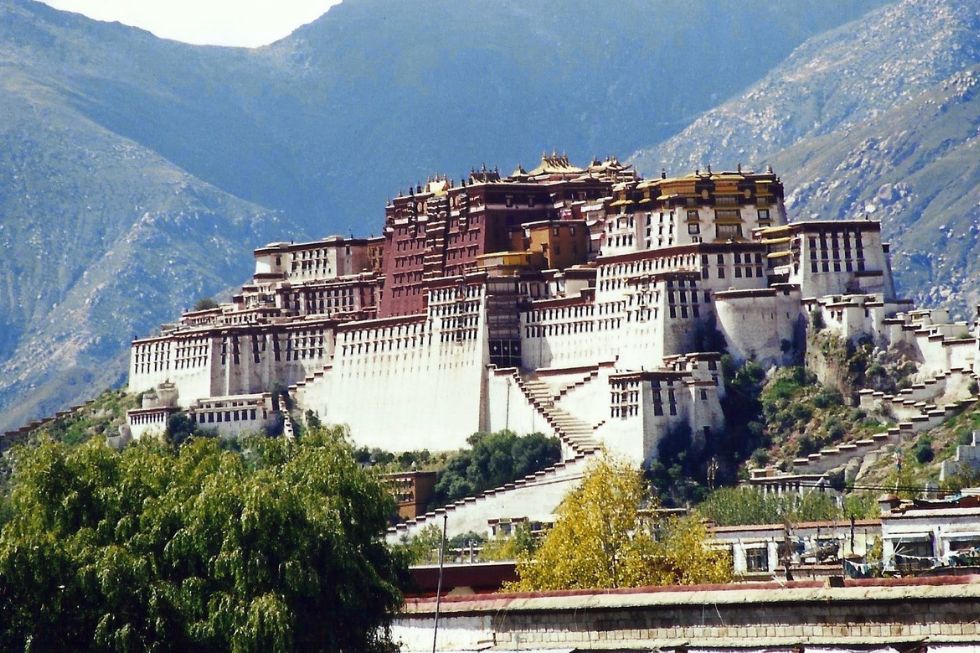
Years later, I experienced something similar in Tibet. I went there as a reporter and came back haunted by the questions the trip left behind. What began as a journalistic assignment eventually evolved into a much deeper investigation, one that decades later became my master’s dissertation on the tulkus — the reincarnated spiritual masters of Tibetan Buddhism — and the sophisticated succession system developed to preserve Tibetan Buddhism under Chinese rule and against the constant threat of cultural erasure.
It was there that I understood something maps never show. When powerful nations compete for territory, influence or hegemony, the bill is usually paid by people who happened to be born in the wrong place at the wrong moment. Flags change. Speeches change. Justifications change. The people buried beneath history remain people.
Yet when I read that Cubans have become the largest refugee group arriving in Brazil, my mind doesn’t go first to diplomatic briefings or economic reports. It goes back to those hospital corridors in Vietnam. To conversations in Cambodia. To monasteries and long discussions in Tibet.
Unveiling the human stories behind displacement
Today’s defining rivalry is no longer between Washington and Moscow. The Soviet Union belongs to the past. The central competition now runs largely through Washington and Beijing. China continues its remarkable ascent. The United States remains the world’s dominant military power.
It goes back to people I met along the way, all of whom seemed to be fighting for the same thing: preserving something that mattered. A family. A culture. A sense of dignity. Sometimes simply survival. Perhaps that is why I struggle to see refugees as numbers. Numbers do not cross borders. People do. And they are almost always carrying far more than can fit inside a suitcase. This is why we must look past the spreadsheets and demand a diplomacy that values human survival over geopolitical leverage. We need to see the faces behind the numbers before the next family is forced to pack their lives into a suitcase.
[Kaitlyn Diana edited this piece.]
The views expressed in this article are the author’s own and do not necessarily reflect Fair Observer’s editorial policy.
The Refugee Protection System is Racist and Colonial
As the first and only female CEO of an international refugee rights organization with lived experience of forced displacement, I...
Hosting Refugees and Migrants Is a Global Public Good
Multilateral support can help countries in Latin America overcome challenges and reap immigration’s rewards.

Support Fair Observer
We rely on your support for our independence, diversity and quality.
For more than 10 years, Fair Observer has been free, fair and independent. No billionaire owns us, no advertisers control us. We are a reader-supported nonprofit. Unlike many other publications, we keep our content free for readers regardless of where they live or whether they can afford to pay. We have no paywalls and no ads.
In the post-truth era of fake news, echo chambers and filter bubbles, we publish a plurality of perspectives from around the world. Anyone can publish with us, but everyone goes through a rigorous editorial process. So, you get fact-checked, well-reasoned content instead of noise.
We publish 3,000+ voices from 90+ countries. We also conduct education and training programs
on subjects ranging from digital media and journalism to writing and critical thinking. This
doesn’t come cheap. Servers, editors, trainers and web developers cost
money.
Please consider supporting us on a regular basis as a recurring donor or a
sustaining member.
Will you support FO’s journalism?
We rely on your support for our independence, diversity and quality.





Comment