

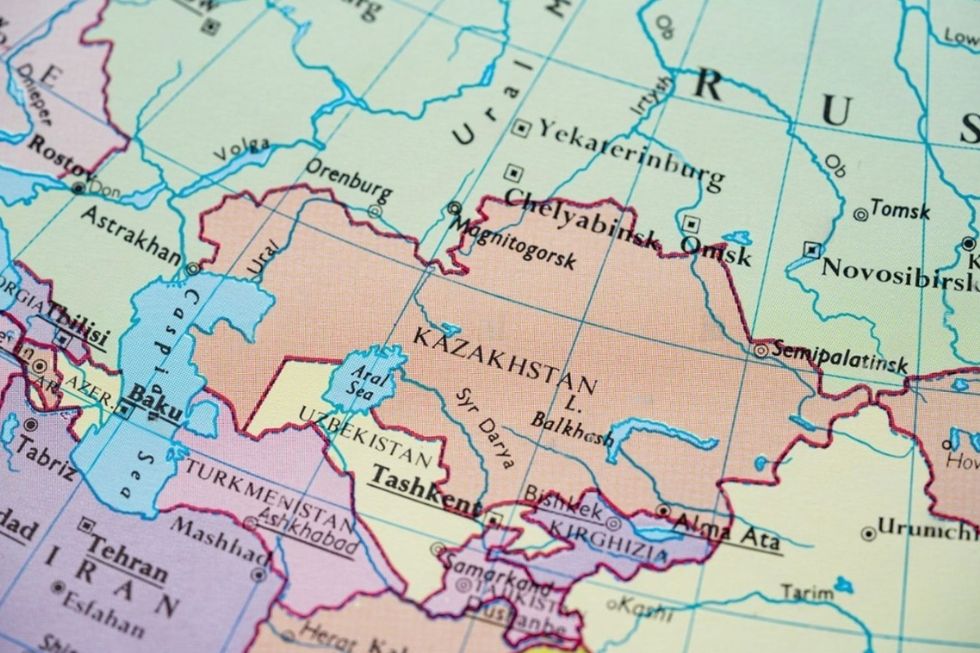



Across Kazakhstan, Kyrgyzstan, Uzbekistan, Turkmenistan and Azerbaijan, there are formal institutions like elections, constitutions and representative bodies. However, political power remains mostly concentrated in strong executive structures, influenced by legacy state institutions, resource-based economies, and ongoing concerns about internal and external stability. Instead of moving toward liberal democratic models, these countries have taken different paths, all emphasizing a controlled political order.
This raises a larger question: Why do post-authoritarian societies, even after many years of independence, continue to prioritize stability and state capacity over political competition and pluralism?
Reform without political transformation
Kazakhstan offers perhaps the clearest example of how political stability became a governing priority in post-Soviet Central Asia. Under President Nursultan Nazarbayev’s long rule, the country developed a strong presidential system that delivered relative stability, attracted foreign investment, and benefited from substantial oil and gas revenues. For many years, economic growth helped strengthen the government’s legitimacy, even as political competition remained limited.
The 2019 transition of power from Nazarbayev to President Kassym-Jomart Tokayev was initially framed as a managed succession rather than a systemic political transformation. However, the unrest that erupted during the January 2022 protests exposed deeper social and political tensions beneath Kazakhstan’s image of stability. Triggered by a sharp increase in fuel prices, the demonstrations quickly escalated into nationwide protests fueled by long-standing frustrations with inequality, corruption, and the continued political influence of former President Nazarbayev and his inner circle. Tokayev responded by requesting military assistance from the Russia-led Collective Security Treaty Organization (CSTO) to restore order, after which he moved decisively to dismantle much of the political and economic network associated with Nazarbayev.
Since then, Tokayev has introduced constitutional reforms and promoted the concept of a “listening state,” while simultaneously reducing the influence of Nazarbayev-era elites — senior officials, security figures and business oligarchs who had dominated Kazakhstan’s political and economic system for nearly three decades. Although these reforms have altered the balance of power within the ruling establishment, they have yet to produce genuine political pluralism or a competitive opposition.
Therefore, Kazakhstan continues to illustrate one of the central dilemmas facing the region: whether institutional reforms can gradually broaden political participation without undermining the stability upon which the existing political order has long depended.
The erosion of Central Asia’s democratic island
Kyrgyzstan’s experience also highlights the difficulties of sustaining political pluralism in a state marked by recurring instability. Frequent changes of government, elite rivalries and disputed elections created a political environment in which democratic participation expanded, but institutional consolidation often lagged.
This pattern culminated in the aftermath of the disputed parliamentary elections in October 2020, which triggered mass protests and the government’s collapse. Amid the political turmoil, Sadyr Japarov was released from prison by his supporters and rapidly emerged as the country’s dominant political figure, later winning the presidency. His rise reflected widespread public frustration with entrenched political elites and growing demands for stronger and more decisive leadership.
Since then, Kyrgyzstan has witnessed a gradual shift toward a more centralized political system. Supporters argue that stronger executive authority has improved governance by accelerating decision-making, strengthening anti-corruption efforts and helping resolve long-standing border disputes with neighboring Tajikistan. Critics, however, contend that these gains have come at the expense of political competition, media freedom and civic space.
Even in Central Asia’s most politically pluralistic environment, the tension between democratic openness and political stability remains unresolved. Kyrgyzstan is a perfect example.
Reform or regime adaptation
Uzbekistan represents one of the most significant cases of political transformation in post-Soviet Central Asia, yet also one of the most ambiguous. For more than two decades under President Islam Karimov, the country was characterized by a highly centralized political system marked by strict state control and limited political freedoms. The transition following Karimov’s death in 2016 marked a turning point, rather than a full rupture.
President Shavkat Mirziyoyev’s rise to power initiated a series of reforms aimed at opening the economy and easing the country’s international isolation. Measures such as the abolition of forced labor in the cotton sector and partial liberalization of foreign exchange controls were widely welcomed and contributed to noticeable economic improvement.
However, these economic and administrative reforms have not been matched by a corresponding political transformation. Constitutional changes have extended presidential authority, while political competition, independent media and organized opposition remain significantly constrained. As a result, Uzbekistan is often described not as a democratizing state, but as an example of managed modernization within a continued centralized political framework.
As a result, this duality places Uzbekistan at the heart of a broader regional question: Can economic and administrative reforms gradually evolve into political liberalization or will they ultimately reinforce existing power structures in a more modern form?
Central Asia’s most closed political system
Turkmenistan represents the most closed and tightly controlled end of the political spectrum in post-Soviet Central Asia. Since independence, political power has remained highly concentrated under successive leaders, beginning with President Saparmurat Niyazov, who established a strong cult of personality and a highly centralized state structure marked by pervasive state control over political and civic life. Following his death in 2006, Gurbanguly Berdimuhamedov assumed the presidency and largely maintained the existing political framework.
The political system has remained characterized by oppressive state control over civic and political freedoms. Moreover, in 2022, the formal transfer of power from Gurbanguly Berdimuhamedov to his son Serdar Berdimuhamedov reinforced perceptions of dynastic continuity within the country’s leadership structure.
While often described as one of the most isolated states globally, Turkmenistan also serves as a useful reference point in understanding the broader regional spectrum. It illustrates how far state control can extend when political institutions are fully subordinated to executive authority and alternative centers of power are virtually absent.
How conflict reinforced state power
Azerbaijan represents a distinct case within the broader post-Soviet political landscape of Central Asia and the Caucasus. Situated across the Caspian Sea, the country has developed a highly centralized political system under President Ilham Aliyev, who succeeded his father, Heydar Aliyev, in 2003. Over time, the governance structure has become closely intertwined with the state’s substantial energy revenues, particularly from oil and gas exports. These revenues have enabled the government to finance public investment, strengthen state institutions and expand military capabilities, while also reinforcing the political dominance of the executive.
The government has faced persistent criticism regarding the absence of political pluralism and institutional checks and balances, yet it has also pursued a foreign policy characterized by strategic pragmatism. Azerbaijan has managed to maintain working relations with a range of regional and global actors, including Türkiye, Russia and Israel, balancing competing interests in a highly volatile geopolitical environment.
This pragmatism is reflected in its ability to align closely with Türkiye on military and security cooperation, particularly during and after the 2020 Nagorno-Karabakh war, while simultaneously maintaining a working, interest-based relationship with Russia despite their competing regional agendas. At the same time, Azerbaijan has developed a strategic partnership with Israel, particularly in defense technology and energy cooperation, which has further diversified its external alliances and reduced dependence on any single power center.
The 2020 Nagorno-Karabakh war marked a significant turning point in the country’s modern history. Azerbaijan’s military success in regaining territories lost in the early 1990s strengthened the leadership’s domestic position and reshaped its regional standing. This outcome further consolidated the political system, as wartime victory significantly enhanced the government’s legitimacy and reinforced a “rally-around-the-flag” dynamic, reducing space for political contestation and strengthening the public perception of the executive as the guarantor of national security. Electoral processes, while formally maintained, remain highly centralized and offer limited space for meaningful opposition.
And so, Azerbaijan illustrates how energy wealth, state capacity and territorial conflict can reinforce existing political structures, even in contexts where questions about democratic governance remain unresolved. The country’s substantial hydrocarbon revenues have strengthened state institutions and executive authority, while improved administrative capacity has enabled the consolidation of centralized governance. In addition, the outcome of the 2020 Nagorno-Karabakh war reinforced domestic legitimacy by strengthening narratives of national unity and further reducing the space for political contestation.
Central Asia’s post-Soviet choice: stability or democracy?
The experience of Central Asia suggests that the region’s political evolution cannot be reduced to a straightforward rejection of democracy. Instead, it reflects a more complex and persistent balancing act between competing priorities: the need for political order, the demands of economic development and the pressures — both internal and external — of maintaining state cohesion.
Across the region, electoral institutions and constitutional frameworks have not disappeared. However, they continue to operate within systems in which executive authority, security structures and managed political competition remain central. In this sense, the legacy of the Soviet state has not vanished entirely, but has been adapted into new institutional forms.
More than three decades after independence, Central Asia remains defined not by a settled political outcome, but by an ongoing tension. Because the relationship between stability and political openness is shaped by shifting economic conditions, geopolitical pressures and differing national experiences of state-building, it continues to evolve unevenly. And whether this balance will gradually open space for broader political pluralism or continue to consolidate around centralized models of governance remains an open question rather than a resolved trajectory.
[Yasmine Haji edited this piece.]
The views expressed in this article are the author’s own and do not necessarily reflect Fair Observer’s editorial policy.







Join the conversation
Share your perspective
Log in to share your thoughts and take part in the discussion.