


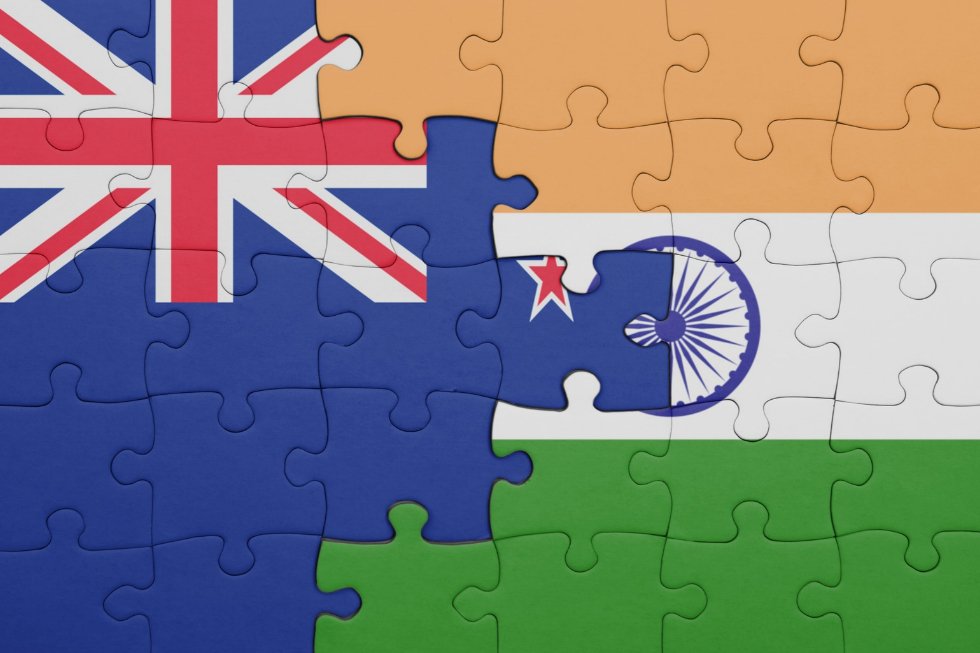



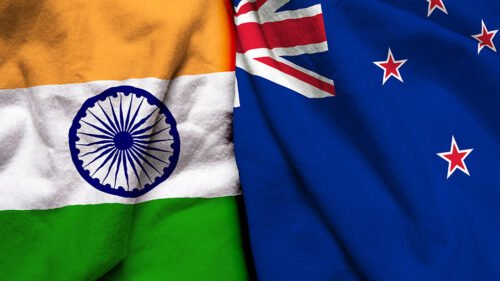
Indian Prime Minister Narendra Modi’s visit to New Zealand on July 10–11 marked a historic moment in bilateral relations. It was the first visit by an Indian prime minister to New Zealand in four decades. During the two-day visit, Modi and New Zealand Prime Minister Christopher Luxon elevated the countries’ relationship to a Strategic Partnership. They announced the “Roadmap to 2030” — a framework meant to guide cooperation across diplomacy, defense, trade, technology, education, and regional security.
This announcement came just months after India and New Zealand signed a Free Trade Agreement (FTA) on April 27. While the FTA marks an important step toward expanding economic ties, the Strategic Partnership shows that both governments view their relationship as part of a much broader transformation.
The Indian media outlet Firstpost observed that the visit marked “a new era” in India–New Zealand relations. It reflects a partnership that is increasingly moving beyond commerce into strategic cooperation.
The timing of this development is also significant. Across the Indo-Pacific region, security concerns are increasingly shaping economic relationships. Supply-chain resilience, maritime stability, technological cooperation and access to critical infrastructure have become closely connected to national interests. For India and New Zealand, strengthening ties is about building a partnership between two democracies that share an interest in a stable, open and rules-based regional order.
From trade agreement to strategic partnership
The India–New Zealand FTA provides the economic bedrock for this new phase of cooperation. As Firstpost explained: “New Zealand offers 100% duty-free access to all Indian exports. India has liberalised duties on about 70 percent of tariff lines for New Zealand exports.” By eliminating tariffs on a vast array of Indian exports, and establishing Centres of Excellence for agriculture, the agreement is expected to deepen economic cooperation between the two countries.
The two governments have also set an ambitious target to double trade in goods and services to 7 billion New Zealand dollars by 2030. Achieving this target will require much more than tariff reductions alone. It will depend largely on improving connectivity, strengthening business links and encouraging greater private-sector participation.
The Roadmap to 2030 creates no financial obligations. Its importance lies in establishing mechanisms for sustained cooperation. The two countries have committed to regular consultations between leaders, ministers and senior officials, ensuring the Strategic Partnership remains an ongoing process and not just a symbolic declaration.
Security cooperation in a changing Indo-Pacific
The most significant transformation in India–New Zealand relations is perhaps taking place in the security sphere. The geopolitical landscape has drawn India and New Zealand closer together, particularly because of their converging interests in maintaining a free, open and inclusive Indo-Pacific, grounded in the rules-based international order and freedom of navigation.
The defense component of the Roadmap reflects this reality. Building upon the 2025 Memorandum of Understanding on Defence Cooperation, India and New Zealand have agreed to expand military exchanges, joint exercises, maritime cooperation and professional exchanges between their respective armed forces.
Of particular importance is the focus on maritime security, as both countries depend heavily upon secure sea lanes for trade and energy supplies. Cooperation on naval exercises, hydrography, logistics support and maritime dialogue indicates a shared understanding that regional stability depends, in no small measure, on maintaining an open maritime environment.
Why trade and security cannot be separated
The counterterrorism dimension of the visit has received less attention than the trade and defense announcements. However, that dimension is important for understanding why New Zealand matters to Delhi. Modi’s visit also produced a joint working group on counterterrorism, creating a mechanism for closer cooperation between the two countries.
Dhruva Jaishankar, executive director of the Observer Research Foundation America, explained in an interview with RNZ that transnational crime, terrorism and narcotics problems increasingly have links across borders. For India, establishing government-to-government mechanisms with countries such as New Zealand is therefore a way of addressing potential problems before they become crises.
Jaishankar also pushed back on the idea that the FTA should be viewed primarily through a geopolitical lens rather than as a genuine trade agreement. He argued that the economic and strategic dimensions of the relationship cannot be completely separated.
“In this day and age, we can’t completely separate economics and strategy,” he said.
This is particularly relevant to India and New Zealand, as both countries seek to strengthen their economic resilience while expanding cooperation in areas such as security, technology and trade. The FTA and the Strategic Partnership should therefore be viewed as complementary rather than separate developments.
Jaishankar situated this within a longer arc of Indian foreign policy, from the 1990s “Look East ” policy, which focused largely on economic engagement, to a more security-conscious approach. In relation to New Zealand specifically, he pointed to opportunities for Indian exports in areas including petroleum products, IT and AI-related services, auto parts and electronics, as well as potential investment and greater educational cooperation.
Technology, education and human connections
The Roadmap places considerable emphasis on education, research and innovation. India’s rapidly growing technological capabilities, together with New Zealand’s expertise in areas such as agriculture, environmental research and advanced industries, create genuine opportunities for meaningful collaboration. Joint work in digital transformation, climate-related technologies and scientific research could become important drivers of future cooperation.
People-to-people ties provide another important foundation. New Zealand is home to a substantial Indian diaspora, which contributes to the country’s economy, culture and social fabric alike. The New Zealand government has described the Indian diaspora as a “vital living bridge” strengthening cultural, commercial, educational and social connections between the two countries.
Tourism and connectivity are also important elements. Expanding air links and easing travel facilitation are practical steps that could increase business exchanges, educational opportunities and cultural interaction between the two societies.
The India–New Zealand relationship is no longer defined by trade alone
Modi’s visit to New Zealand was far more than a diplomatic milestone. For India, the Strategic Partnership creates an opportunity to deepen relations with an important Indo-Pacific partner. For New Zealand, closer cooperation with India offers an opportunity to strengthen relations with one of the world’s largest economies and an increasingly influential regional power.
As Firstpost noted, New Zealand increasingly recognizes India’s importance as a global economic power and as a potential partner in diversifying its economic relationships.
The India–New Zealand relationship is no longer defined by trade alone. The Strategic Partnership shows that economic security and strategic security are increasingly interconnected. Economic cooperation now exists alongside defense coordination, technological collaboration, counterterrorism cooperation and people-to-people ties.
The FTA created the opportunity for closer India–New Zealand relations; the Strategic Partnership is turning that opportunity into a comprehensive political, economic and security relationship.
[Alexandros Ouzounis edited this piece.]
The views expressed in this article are the author’s own and do not necessarily reflect Fair Observer’s editorial policy.
Empowering the Lost “Guest Workers” of Kerala the Right Way
The Indian state of Kerala has long benefited from migrant labor as its local population grew wealthy. In return, Kerala’s...
Between Beijing and Washington: New Zealand and Australia’s Fragile Balancing Act in the Pacific
New Zealand and Australia face a precarious geopolitical dilemma, torn between their deepening economic ties with China and growing security...

In ASEAN’s Balancing Act, India Expands the Middle Ground
Despite economic and strategic limitations, India is becoming a useful partner for Southeast Asia by expanding the region’s strategic options...
Deal Under Pressure: What India Really Gains from the Trade Agreement with the US
The India-US trade deal only offers modest tariff relief and limited competitive advantages over regional rivals. Furthermore, any benefits arising...
India–New Zealand FTA: A People-First Pact for a New Era of Trade
India and New Zealand have concluded a landmark free-trade agreement that prioritizes people and services alongside goods. The deal grants...
Support Fair Observer
We rely on your support for our independence, diversity and quality.
For more than 10 years, Fair Observer has been free, fair and independent. No billionaire owns us, no advertisers control us. We are a reader-supported nonprofit. Unlike many other publications, we keep our content free for readers regardless of where they live or whether they can afford to pay. We have no paywalls and no ads.
In the post-truth era of fake news, echo chambers and filter bubbles, we publish a plurality of perspectives from around the world. Anyone can publish with us, but everyone goes through a rigorous editorial process. So, you get fact-checked, well-reasoned content instead of noise.
We publish 3,000+ voices from 90+ countries. We also conduct education and training programs
on subjects ranging from digital media and journalism to writing and critical thinking. This
doesn’t come cheap. Servers, editors, trainers and web developers cost
money.
Please consider supporting us on a regular basis as a recurring donor or a
sustaining member.
Will you support FO’s journalism?
We rely on your support for our independence, diversity and quality.





Comment