



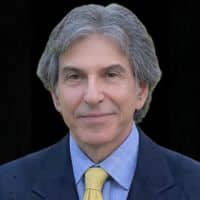
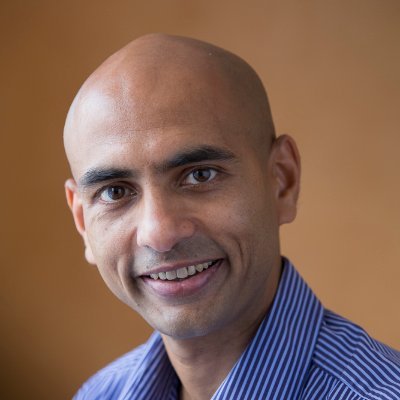
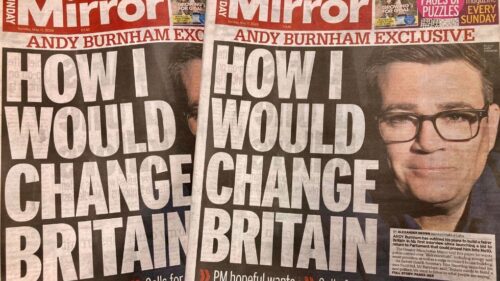
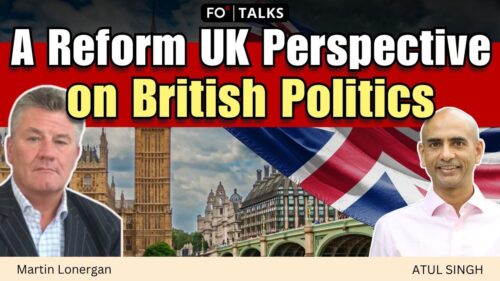
Editor-in-Chief Atul Singh and Kent Jenkins Jr., a former political reporter from The Washington Post turned communications consultant, discuss the rise of Andy Burnham as Britain’s seventh prime minister in a decade. They examine Burnham’s working-class roots, his governing philosophy of “Manchesterism” and the political and economic challenges awaiting his government. Can Burnham offer a credible alternative to both Thatcherism and the populist movements that have reshaped British politics over the past decade?
King of the North challenges London’s political orthodoxy
Jenkins believes that Burnham stands apart from recent British prime ministers because of his background and his political experience. Rather than emerging through Westminster, Burnham spent nearly a decade as mayor of Manchester, where he developed a policy platform centered on stronger local government, public investment and regional empowerment. As Jenkins puts it, Burnham is “very much unlike his predecessors” because of his biography, political path and policy agenda.
Singh places this argument in historical context, noting that Britain has produced several prime ministers from modest backgrounds, including Margaret Thatcher, John Major and Keir Starmer. Even so, Burnham’s rise from Manchester rather than Westminster remains unusual.
Additionally, Singh and Jenkins explore Burnham’s working-class upbringing, his Catholic background and his experience as the first member of his family to attend university. Unlike most recent prime ministers, Burnham is a Cambridge graduate. These experiences, together with his years outside what he calls “the Westminster bubble,” allow him to connect with voters who feel ignored by Britain’s political elite.
Burnham’s personal story has appeared to resonate with working-class voters who have defected from Labour during the Brexit era. His struggles with what he later described as imposter syndrome reinforce an image of a politician who personally understands the struggle of moving up in society.
New Manchesterism and break with New Labour
The conversation turns to Burnham’s governing philosophy, which he calls Manchesterism. Singh explains that the original 19th-century Manchester School championed free trade and laissez-faire economics, whereas Burnham has repurposed the term to describe a more interventionist approach with more government involvement. However, New Manchesterism involves devolving power away from Westminster to local bodies in the UK.
Jenkins highlights several reforms Burnham introduced as Mayor of Greater Manchester, including bringing buses back under public control, capping fares, improving regional transport and advocating greater investment in technical education and council housing. He argues that Burnham’s visible improvements, such as Manchester’s bright yellow buses, demonstrated that the government could still deliver practical results at a time of widespread political cynicism.
Singh agrees that Burnham deserves credit for improving regional planning and transport integration but says that Manchester’s wider revival also reflected broader economic forces. Foreign investment, growth in technology and life sciences, sovereign wealth funding in sports a la Manchester City, similar investments in real estate that have lowered rents compared to London, and the city’s expanding knowledge economy have all contributed to the city’s resurgence. Burnham successfully “rode a wave” of economic transformation while also helping shape it.
Much of the discussion contrasts Burnham’s priorities with those of former Prime Minister Tony Blair. Blair recently argued that Labour should focus primarily on artificial intelligence, national competitiveness and Britain’s role in the global economy. Burnham instead emphasizes inequality, local communities and rebuilding public trust from the ground up.
Jenkins states that Burnham represents one of the first major center-left leaders to develop a comprehensive response to the populist politics that emerged after Brexit and Donald Trump’s election. Rather than dismissing those voters, Burnham seeks to address the economic frustrations and regional inequalities that fueled their dissatisfaction.
Critics question Burnham’s consistency, pointing out that he previously opposed devolution when he was part of the Westminster bubble before opportunistically embracing them when he became a mayor. Even so, Singh and Jenkins agree that Burnham has fundamentally shifted Labour’s emphasis away from Westminster and toward local communities. His proposal to devolve greater authority to cities and regions reflects both practical experience and a broader political strategy.
A difficult inheritance and Burnham’s big test
Despite Burnham’s popularity, Britain faces severe problems. Singh outlines a daunting economic landscape that includes high public debt, persistent fiscal deficits, deteriorating infrastructure and mounting welfare costs. Burnham inherits what he calls a “poisoned chalice” after years of economic stagnation and institutional decline.
Jenkins observes that many important questions remain unanswered. Burnham has spoken extensively about local government, housing, transport and vocational education but far less about national economic management or foreign policy. Whether Manchesterism can successfully expand from governing a city to governing an entire country remains uncertain.
Singh and Jenkins further examine Burnham’s dispute with Blair over Labour’s future direction. As noted earlier, Blair and Burnham have different visions of the future. The former prescribes a top-down approach to drag the UK to the heart of the global economy while the latter pushes for a bottom-up approach that puts communities first. Clearly, Blair and Burnham not only have policy disagreements but also fundamentally different worldviews.
Singh and Jenkins go on to place Burnham within the bigger picture of Anglo-American politics. Singh compares Burnham’s rise with earlier political realignments led by Thatcher, Ronald Reagan, Bill Clinton and Blair in the days before the populism of Brexit and Trump. Burnham is now attempting to define the next phase of that political cycle by offering a center-left alternative based on local empowerment instead of more globalization.
Neither speaker sees an easy path ahead. Jenkins believes Burnham is an exceptionally skilled politician who has successfully navigated both local and national politics, though he stresses that success in office will require considerable luck alongside political talent. Singh is more pessimistic, arguing that Britain’s fragmented political landscape and mounting economic pressures make lasting success unlikely regardless of who occupies Downing Street.
Burnham has already altered the terms of Britain’s political debate. Whether Manchesterism ultimately reshapes the country or becomes another short-lived experiment will depend not only on Burnham’s leadership but also the larger economic, political and geopolitical forces no one really controls.
[Lee Thompson-Kolar edited this piece.]
The views expressed in this article/video are the author’s own and do not necessarily reflect Fair Observer’s editorial policy.




































Comment