


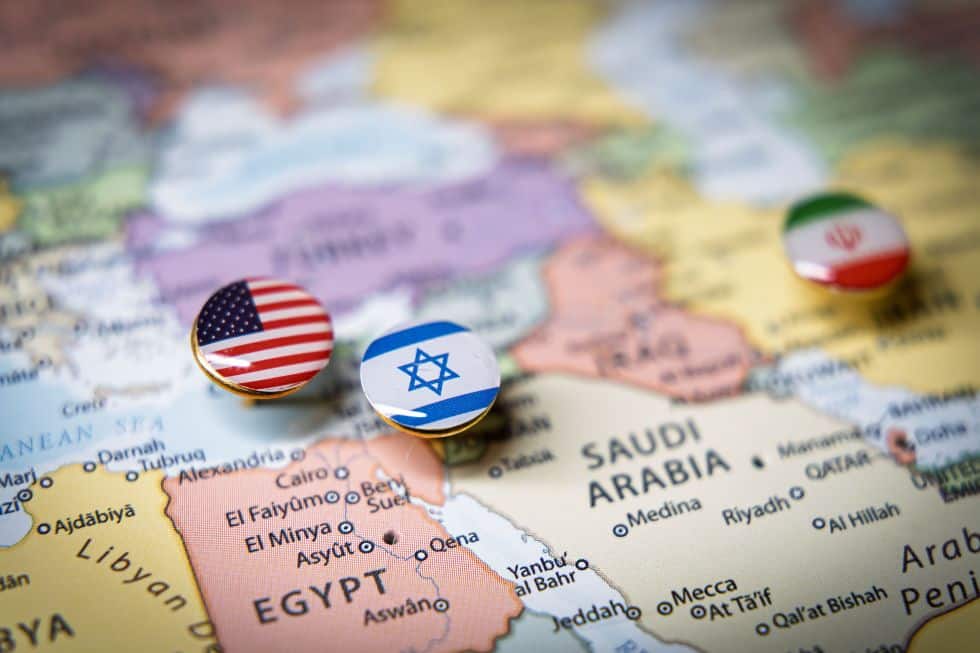



In November 2025, the US released its new National Security Strategy under President Donald Trump, marking the revival of the Monroe Doctrine through what the administration termed the “Trump Corollary,” or the so-called “Donroe Doctrine.” What followed was the unprecedented application of this unilateral doctrine — first in Venezuela, and later through Washington’s participation alongside Israel in Operation Epic Fury against Iran. The latter campaign, launched with the stated objective of regime change, proved disastrous for both Washington and Gulf states, while the global economy suffered a severe shock when Iran responded by closing the Strait of Hormuz, cutting nearly 20% of the world’s energy supply in the process.
The Trump administration’s “Donroe Doctrine” represents a modern revival of the centuries-old Monroe Doctrine, originally conceived to prevent external powers from establishing influence within the Western Hemisphere. Yet, as the international system gradually transitions from a unipolar order toward an increasingly multipolar one, the implementation of such unilateral doctrines carries significant risks for American foreign policy.
From Monroe to Donroe: doctrinal expansion beyond geography
The Monroe Doctrine, in its original form, was confined to the Western Hemisphere — a limitation that, within the logic of national security, could be justified to some extent. However, in its rebranded form as the “Donroe Doctrine,” it has evolved into a coercive tool of statecraft whose application extends far beyond geographical limitations.
Washington’s pursuit of regime change in Venezuela, its threats toward Greenland and the launch of its largest military operation in the Persian Gulf since the 2003 Iraq War — without prior consultation with its Arab and European allies — have inflicted significant damage on American credibility in West Asia. These actions have also inflicted significant damage on US military installations and disrupted one of the most vital arteries of the global economic order.
Iran’s strategic leverage and the Hormuz factor
After sustaining significant logistical losses and witnessing the collapse of its Gulf security umbrella, Washington found that the Iranian regime not only survived but emerged with a decisive strategic advantage: It can now control the Strait of Hormuz indefinitely, potentially through a system of toll payments.
For Israel, the objective was clear: to decisively weaken Iran both militarily and politically. That outcome did not materialize. Instead, Iran has strengthened its position as a regional military power, particularly in terms of offensive capabilities. Reports suggest that Iran has preserved its ballistic missile and drone arsenal while gaining control over the Strait of Hormuz, which it can now use as a powerful bargaining chip in negotiations over its long-standing nuclear program dispute with Washington.
Compounding this new strategic reality is Pakistan’s growing role in Gulf security. Under the Saudi-Pakistan defense pact, Pakistani military personnel, along with fighter jets, airborne warning and control systems (AWACS), and refueling tankers, have been stationed at the King Abdulaziz Airbase in Saudi Arabia. This development could potentially offer a nuclear umbrella to the Gulf, introducing a new and complex security dynamic with potentially significant implications for Israel in particular.
Gulf autonomy and the emerging security order
One of the most striking ramifications of the Iran war is the drastic shift in the Gulf states’ foreign policy posture, as countries such as Saudi Arabia, Qatar and the United Arab Emirates are asserting greater autonomy in their security affairs. During the Iran-US conflict, the Saudis, Qataris and Emiratis signed mutual defense cooperation agreements with Ukraine without Washington’s involvement, signaling not an anti-US posture, but rather the emergence of a new regional security order that is less dependent on American direction.
At the same time, President Trump’s rhetoric during the conflict has caused noticeable strains between Washington and its most vital alliance, NATO. Consequently, the current strategic outlook in Washington requires urgent recalibration. Efforts must be made to restore credibility and address the weaknesses exposed during the Iran conflict by drawing lessons from this strategic setback. If current trends continue, it may only be a matter of time before the US finds itself increasingly isolated.
This urgency is heightened by the broader geopolitical environment. In a multipolar world where America’s principal adversaries — China and Russia — are actively asserting themselves, Iran’s control of the Strait of Hormuz carries profound implications. Should Iran begin charging toll fees — potentially in Chinese yuan, as some reports suggest — it could accelerate the weakening, if not the gradual decline, of petrodollar dominance. As a result, Washington cannot afford to alienate its allies. Frustration over their limited support during the Hormuz crisis should not translate into the abandonment of alliances, as Washington will need these partnerships the most once hostilities in West Asia subside.
Blockade strategy and strategic miscalculations
The most significant contest between the US and Iran is no longer unfolding on the battlefield, but at the negotiating table. In the Islamabad peace talks and in the subsequent MoU signing, the Strait of Hormuz was at the center of negotiations–something which was never part of the plan for Washington. Tehran is likely to leverage its control over the strait both for economic gain and as a bargaining tool in nuclear negotiations. Recent developments ahead of the 60-day nuclear talks between Iran and the US further underscore this dynamic.
While the US Navy’s attempt to impose a naval blockade in the Strait of Hormuz may appear formidable in theory, in practice, it could result in a significant strategic failure for Washington. The blockade’s stated aim is to restrict oil shipments to and from Iranian ports, yet nearly all of Iran’s oil exports, close to 80%, flow to its biggest buyer, China. Disrupting China’s energy supply would constitute a major red line for Beijing, one Washington is unlikely to cross, not due to military inferiority, but because of its current constraints. US ammunition stockpiles have been significantly depleted, and air defense systems are reportedly running low on interception missiles.
Even if Iranian exports were partially disrupted, Tehran possesses alternative routes to ship its oil through its extensive land borders with neighboring countries, enabling it to mitigate the impact of any blockade. Washington’s naval blockade, therefore, could end up inflicting greater damage on the US and global economy than on Iran.
Washington must confront the strategic failures of this war and draw valuable lessons from it. Trump’s “Donroe Doctrine,” a policy rooted in the unilateral assertion of power, has, in fact, exposed the limits of American power. If Washington is to recalibrate its strategic approach, it must abandon coercive policies and move toward more inclusive diplomatic engagement. It must adopt a new foreign policy direction focused on restoring the faith and trust of its allies, and confront the shifting realities of global power with prudence and diplomatic statecraft.
[Omar Abdelrahman edited this piece.]
The views expressed in this article are the author’s own and do not necessarily reflect Fair Observer’s editorial policy.
FO Live: US Surrenders to Iran, Leaving Israel in the Dark
In this episode of FO Live, Atul Singh, Lauren Dagan Amoss and Josef Olmert discuss the reported US–Iran memorandum of...
Blowback 2026: The Price of Empire and the Costs of War on Iran
US President Donald Trump’s war on Iran has wreaked havoc on thousands of innocents in the Middle East and our...
After the Ceasefire: Power, Limits and the Future of Global Order
The Iran war will shape global politics, exposing limits of military power while disrupting energy flows and security dynamics. The...
Support Fair Observer
We rely on your support for our independence, diversity and quality.
For more than 10 years, Fair Observer has been free, fair and independent. No billionaire owns us, no advertisers control us. We are a reader-supported nonprofit. Unlike many other publications, we keep our content free for readers regardless of where they live or whether they can afford to pay. We have no paywalls and no ads.
In the post-truth era of fake news, echo chambers and filter bubbles, we publish a plurality of perspectives from around the world. Anyone can publish with us, but everyone goes through a rigorous editorial process. So, you get fact-checked, well-reasoned content instead of noise.
We publish 3,000+ voices from 90+ countries. We also conduct education and training programs
on subjects ranging from digital media and journalism to writing and critical thinking. This
doesn’t come cheap. Servers, editors, trainers and web developers cost
money.
Please consider supporting us on a regular basis as a recurring donor or a
sustaining member.
Will you support FO’s journalism?
We rely on your support for our independence, diversity and quality.





Comment