

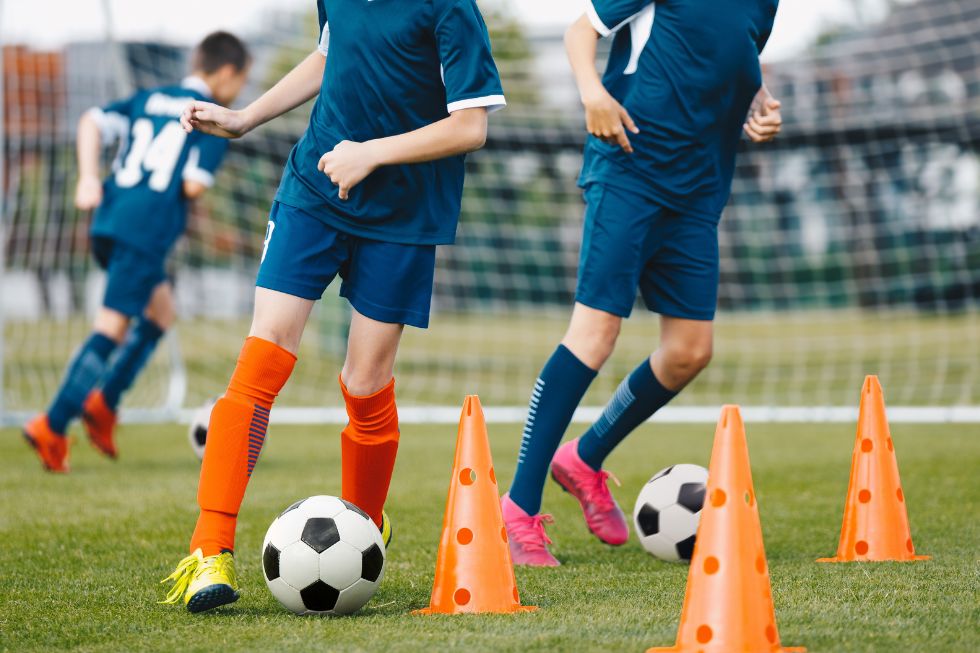



In many parts of the world, children arrive at school carrying far more than books. They carry displacement, exclusion, trauma and the quiet weight of inequality. Education systems often respond with new strategies, revised standards and another round of teacher training. Far less often do we consider the role that movement and physical activity can play in learning, both inside and beyond the classroom. That is a mistake.
Education policy is routinely shaped by what can be easily measured and quickly reported. Standardized assessments, enrollment rates and literacy benchmarks dominate reform agendas because they offer visible proof of progress. These indicators matter. They provide clarity and accountability. But when measurement begins to drive reform, the definition of learning narrows.
As the world turns its attention to the FIFA World Cup, one of the most widely watched sporting events globally, the conversation around sports cannot remain confined to stadiums and elite competition. Moments like this invite us to reflect on sport’s broader role in society, including its untapped potential within education systems. When sports are intentionally integrated into education policy and practice, they strengthen learning, advance gender equality, build confidence, reduce isolation, and contribute to more peaceful and inclusive societies.
This is measurable. It is not aspirational language or institutional optimism. School systems that have integrated structured sports and physical activity report increases in attendance of 15 to 20% in some contexts. In Namibia, students participating in sports-linked development programs passed Grade 10 examinations at rates exceeding national averages by more than 20 percentage points. Across multiple countries, research shows that physical activity improves learning outcomes, strengthens engagement in school and reduces dropout rates.
Movement changes the brain. Increased blood flow, neural growth in the hippocampus, improved executive functioning, memory retention and attention span are all associated with regular physical activity. When students move, they are not stepping away from learning. They are reinforcing the neural architecture that enables learning.
Building leadership and trust in post-conflict environments through sports
The impact extends beyond academics. In refugee settings, structured sports programs have helped restore routine and stability for children whose lives have been disrupted by conflict. In Chad, young refugee women trained as certified sports facilitators now lead activities for their communities. Their presence on the field challenges assumptions about gender and leadership in ways that policy statements alone cannot achieve.
“At first, the community resisted the program,” one facilitator explained. “Now girls and boys play together.”
I have stood in schools where girls who were once silent now organize teams, speak with confidence and assume visible leadership roles. The shift is not dramatic in a single afternoon. It is cumulative. It begins with participation. It grows into a voice.
When sports are embedded in education, they create structured spaces for dialogue. In post-conflict contexts, programs that combine literacy, life skills and physical activity have strengthened conflict-resolution skills and reduced aggression among youth. Shared rules, shared goals and shared effort build trust. Trust allows divided communities to rebuild relationships and function again.
Sport for Development
A Sport for Development approach uses sports as a platform to help children and young people realize their potential through programs that strengthen personal growth, social inclusion and community cohesion. Sports are not added for recreation alone; they are structured to advance learning, resilience and opportunity.
In practice, a Sport for Development approach is intentional and structured. It connects sports to clearly defined development objectives. Coaches are trained not only in sports skills but also in mentorship, safeguarding and facilitating discussions on topics of concern to participants. Activities are designed to reinforce life skills such as communication, cooperation, leadership and conflict resolution. Monitoring frameworks track attendance, engagement and social outcomes alongside academic indicators. The goal is not competition; It is durable human development. When implemented well, this approach integrates sports into broader education and community strategies rather than treating them as standalone initiatives.
Sports integrated into education advance Sustainable Development Goals (SDGs) in multiple areas. These include SDG 3 on health and well-being, SDG 4 on quality education, SDG 5 on gender equality, SDG 10 on reduced inequalities, and SDG 16 on peaceful and inclusive societies. Few single interventions operate across so many dimensions simultaneously.
Sports are not disposable
Yet sports are still treated as disposable. They are frequently the first element cut when education budgets are tightened, or concerns are raised about poor academic outcomes. Cutting them ignores their structural role in learning and social cohesion.
When budgets are reduced, decisions reveal priorities. Core academic subjects are protected. School construction projects move forward. Physical education and sports are often dropped from the school curriculum because they are viewed as discretionary. Yet this framing overlooks their preventative and integrative function. In contexts marked by inequality and displacement, structured physical activity can stabilize attendance, improve behavior, strengthen classroom engagement and reinforce peer relationships. Removing it often increases strain elsewhere in the system. What appears to be fiscal restraint often leads to higher long-term costs, including disengagement, classroom disruption and dropout.
Global education reform efforts today frequently emphasize foundational literacy and numeracy. These are essential. However, outcomes are strengthened when students are engaged, confident, physically well and socially connected. Sports support those conditions by fostering a sense of belonging among marginalized youth, reducing isolation, establishing predictable routines for children recovering from stress and trauma, and cultivating teamwork, discipline and respect in environments where division might otherwise take root.
Sports and physical activity reinforce learning and should not be seen as a replacement.
Empowering communities through sports in education
If we are serious about building bridges between communities and breaking down barriers to opportunity, then sports must be recognized as a core component of effective education systems. They function as social infrastructure, strengthening both human capital and the connective tissue that holds communities together.
At a moment when global attention is riveted on sport’s capacity to transcend borders and unify diverse audiences, the imperative to embed it within education systems has never been more compelling. Sports in education is not an optional add-on; it is a strategic investment in advancing inclusion, equity and peace — shaping the everyday lived experience of children worldwide.
When we invest in both the classroom and the playing field, we build more resilient, cohesive societies from the ground up. The playing field sits at the heart of education, shaping how children develop, relate to one another and thrive.
[Education Above All first published this piece.]
[Kaitlyn Diana edited this piece.]
The views expressed in this article are the author’s own and do not necessarily reflect Fair Observer’s editorial policy.









Join the conversation
Share your perspective
Log in to share your thoughts and take part in the discussion.