




The most serious damage from US President Donald Trump’s war with Iran may not be in Iran at all, but rather in the alliance system the US spent decades building. As European governments refused to co-own a war they neither chose nor helped design, Washington responded with pressure instead of with persuasion, consultation or strategic humility.
France, Italy and Spain pushed back against US military operations related to the war, while Britain kept its support carefully limited. Then US Secretary of War Pete Hegseth declined to reaffirm America’s commitment to NATO’s core collective-defense principle. That sequence matters. It suggests that when the White House cannot win allied consent, it is prepared to make uncertainty itself an instrument of power.
When Article 5 becomes conditional
Hesgeth’s refusal to reaffirm the US’ commitment to NATO is a more serious development than the usual transatlantic quarrel. NATO was never meant to function as a protection racket in which security guarantees remain solid only as long as allies fall into line behind unrelated American wars. Article 5 of the North Atlantic Treaty is the political heart of the alliance because it tells every member that collective defense does not depend on whether the White House is pleased with them on any given week.
When Hegseth treated that commitment as something effectively subject to presidential discretion, he did more than create an awkward headline. He introduced a dangerous idea into the alliance’s bloodstream: that treaty credibility can be made conditional on political obedience. Even if no formal change follows, allies have heard the message. Once heard, it cannot easily be unheard.
A war allies will not own
The allied refusals themselves should not be dismissed as symbolic irritation. They reveal something larger about how this war is being seen outside Washington. France reportedly denied overflight rights for aircraft connected to the conflict. Italy denied access to certain US war-related flights. Spain went further, restricting its airspace and making it clear that NATO could not be used as a backdoor into a war Madrid considered unjustified.
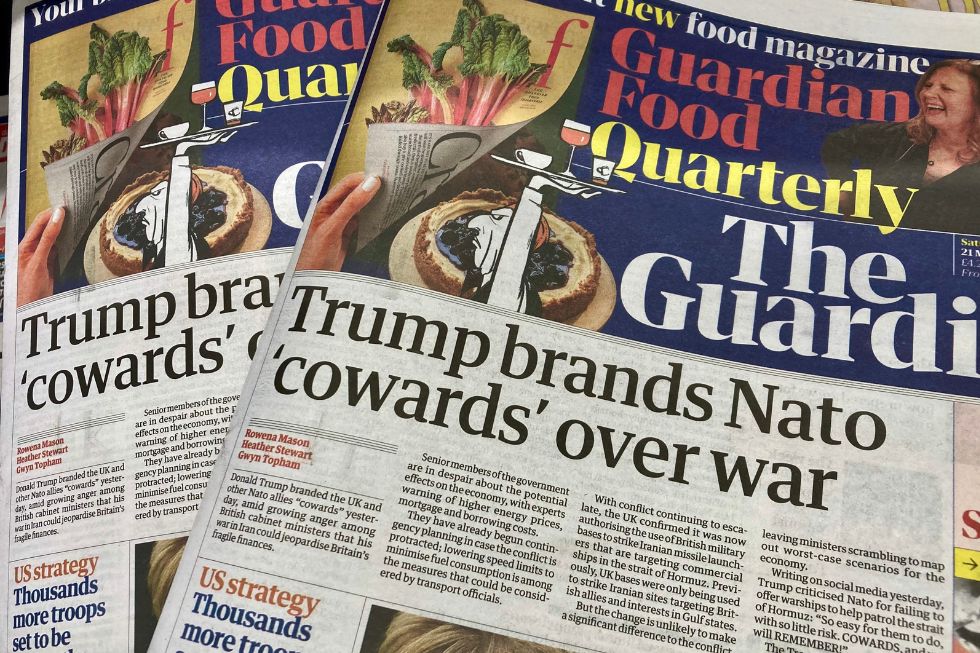
Earlier, Trump had publicly called NATO allies “cowards” for failing to support the campaign. Those are not the dynamics of a coalition rallying behind a shared strategy. They are the dynamics of an administration discovering that its partners see the war not as collective defense, but as a war of choice for which Washington wants retrospective buy-in.
Raising the price of dissent
What makes this episode even more revealing is the way Washington has begun to raise the price of dissent. European governments that bought American weapons through the Foreign Military Sales program have been told to expect delays because the Iran war is draining US stockpiles. Estonia and Finland have publicly confirmed that they were notified about those delays. Now Trump has ordered the withdrawal of 5,000 troops from Germany and hinted at deeper reductions to come.
Taken separately, each move can be explained away as an inventory problem or a force-posture review. Taken together, they tell a clearer story. The White House is beginning to convert dependence on allies into leverage. If allies will not support the war, they may be reminded how much their own defense planning still depends on American decisions.
From leadership to leverage
This is where Trump’s contradictions become more than a personal weakness. He still talks as if American primacy remains intact: The US leads, others adjust and dissent can eventually be managed through pressure. But the response to the Iran War suggests something else. America can still coerce. It is less able to persuade. That is a crucial difference.
Hegemony, in its most durable form, does not rely on constant threats against allies. It rests on a mix of legitimacy, predictability and the sense that following Washington, however imperfectly, remains safer than resisting it. Once the hegemon begins punishing allies for declining to join its wars, it is no longer operating from unquestioned authority. It is operating from insecurity.
The British response offers a glimpse of where this can lead. Prime Minister Keir Starmer has not staged a theatrical break with Washington, but he has argued that the war and the wider volatility around it strengthen the case for closer British ties with Europe on both security and the economy. That may sound modest, but in strategic terms it is not.
Hedging rarely begins with declarations of divorce. It begins with adjustments in habit. Governments start building alternatives, widening their options and reducing the political cost of future distance. The more Washington treats alliances as instruments to be switched from reassurance to punishment, the more allies will look for ways to dilute their exposure to American volatility.
What allies learn from pressure
For American policymakers, this ought to be a moment for sobriety. Instead, Trump and Hegseth seem determined to prove that coercion can substitute for strategy. They appear to believe that if allied capitals are reminded often enough of their dependence, resistance will soften. More likely, the opposite will happen. States that feel bullied do not become more invested in America’s wars; they become more careful about how much of their own security architecture is tied to American discretion. That means more scrutiny of base access, more appetite for European coordination, more demand for procurement diversification and, over time, more willingness to imagine a post-American security order even if no one is yet ready to name it outright.
That is why this moment matters far beyond the immediate question of Iran. The issue is not only whether Trump can compel a little more compliance from nervous allies in the middle of a war. The larger issue is what kind of international system the US is building when it uses treaty ambiguity, arms delays and troop withdrawals to discipline partners that refuse to endorse its choices.
A country confident in its leadership does not need to hold its alliances hostage. It can absorb disagreement without making its guarantees seem conditional. What Trump is revealing, perhaps more clearly than he intends, is that America’s problem is no longer just overstretch in the Middle East. It is the erosion of a form of power that once made allied cooperation feel natural rather than forced. When that kind of power starts to fade, punishment becomes tempting. It is also a sign that the old order is already weaker than Washington wants to admit.
[Kaitlyn Diana edited this piece.]
The views expressed in this article are the author’s own and do not necessarily reflect Fair Observer’s editorial policy.





Join the conversation
Share your perspective
Log in to share your thoughts and take part in the discussion.