




[Editor’s note: This interview was conducted on March 13, prior to Nepali Prime Minister Balen Shah’s inauguration on March 27, 2026.]
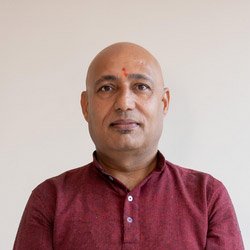
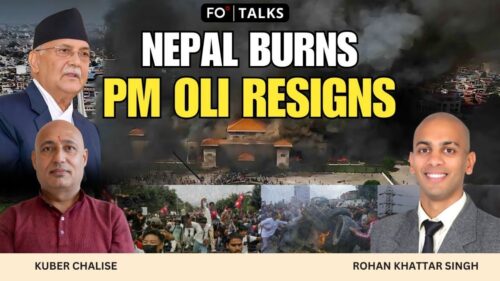
Rohan Khattar Singh, Fair Observer’s Video Producer & Social Media Manager, speaks with Kuber Chalise, a journalist for Nepal Khabar, about the election that has upended Nepal’s political order. At the center of the discussion is the rise of Balen Shah, a 35-year-old engineer, former rapper and former mayor of Kathmandu, who has become prime minister after the Rashtriya Swatantra Party’s sweeping victory. Khattar Singh and Chalise explore why traditional parties collapsed so quickly, why young voters turned so sharply against the old guard and why Nepal’s new leaders now face a harder test in government than they did at the ballot box.
A revolt against the old parties
Chalise presents the result as a long time coming. Nepal’s established parties, including the Nepali Congress and major communist factions, lost public trust over years of corruption, nepotism and poor governance. These parties had once expanded rights and shaped the post-monarchy political system, but they failed to adapt after the 2015 constitution.
That failure created a widening gap between political elites and the public, especially younger voters. Chalise says the old parties behaved as though politics could continue as usual even after their original mission had ended. Public frustration deepened over stagnant leadership, weak performance and a closed political class dominated by insiders.
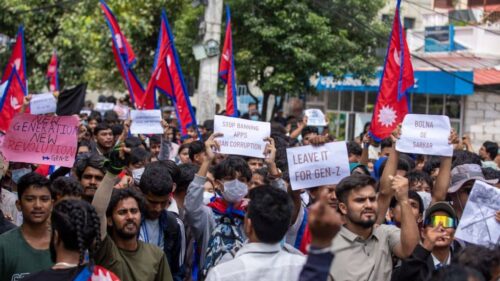
Khattar Singh places the election in the context of the September 2025 Generation Z protests, which erupted over these frustrations and forced the resignation of then-Prime Minister KP Sharma Oli. Despite the unrest, the subsequent vote was peaceful. Chalise calls the election’s conduct “a miracle,” given the violence that preceded it.
The scale of the political shift
The results show how decisively voters turned away from the traditional order. Chalise explains that the Rashtriya Swatantra Party (RSP) dominated the lower-house contest and is expected to hold 182 of 275 seats. By contrast, the Nepali Congress fell sharply. The Communist Party of Nepal (Unified Marxist–Leninist), led by Oli, and the Communist Party of Nepal (Maoist Centre), associated with former Prime Minister Pushpa Kamal Dahal (or Prachanda), were reduced to minor roles.
For Chalise, the message is clear. The public has handed the RSP a workable majority and the chance to govern for five years, but not a mandate to rewrite the constitution. Because the party lacks upper-house representation, it cannot change the constitutional framework alone.
The result also breaks a longstanding assumption that no single party could secure a stable majority. Khattar Singh notes that Nepal has seen 32 governments in 35 years. Still, Chalise warns that a majority alone is not enough. The real question, he suggests, is majority versus maturity.
Why Shah rose so fast
The discussion then turns to Shah. His rise began with his victory as mayor of Kathmandu, which gave voters a chance to judge his performance. His reputation rests largely on contrast. In a system associated with financial scandals, Shah emerged without a personal corruption case.
That clean image becomes his main political asset. Chalise describes it as Shah’s “USP,” the unique selling point that distinguished him from many local leaders facing corruption allegations. He also notes Shah’s unusual style. Unlike many senior leaders, Shah speaks sparingly. Chalise calls him “a very mysterious character,” and Khattar Singh notes that this unpredictability can appear both as strength and weakness.
The youth dimension is equally important. Chalise argues that for decades, Nepal’s young people drove political movements but were sidelined once power was distributed. This election reflects a democratic revolt against that pattern, with younger voters choosing to take power through the ballot.
A party with power but no identity
Even after its landslide, the RSP remains politically unsettled. Chalise says the party lacks a clear ideological identity and has not yet held its first convention. Its elected members come from varied backgrounds, including democrats, leftists and some with monarchist leanings.
Its appeal rests on delivery rather than doctrine. Khattar Singh suggests that voters increasingly prioritize jobs, prosperity and competence over ideology. Chalise agrees, noting that the party’s commitment paper points toward liberal economic instincts and a role for the private sector, though he stops short of calling it ideologically defined.
That ambiguity creates risk. If the new government performs, it may dominate Nepal for years. If it fails, support could collapse quickly. From a political science perspective, Chalise says, the RSP is “not yet a party.” It must evolve while governing.
The real test starts now
The conversation concludes with the challenge ahead. Khattar Singh points to Nepal’s difficult geography, limited state capacity and dependence on India and China for trade and energy. Nepal cannot insulate itself from regional instability or global shocks.
Chalise agrees that foreign policy may prove decisive. Nepal’s next government must navigate shifting regional dynamics and domestic expectations simultaneously. Shah’s nationalist symbolism, including the “Greater Nepal” map seen in his office, adds uncertainty. Chalise returns to the same point: Shah is unpredictable, and whether that becomes an asset or liability depends on how he governs.
For now, voters have rejected the old political class and chosen youth, anti-corruption politics and the promise of delivery. But protest energy and electoral success are only the beginning. The real test starts with governing.
[Lee Thompson-Kolar edited this piece.]
The views expressed in this article/video are the author’s own and do not necessarily reflect Fair Observer’s editorial policy.


























Comment