



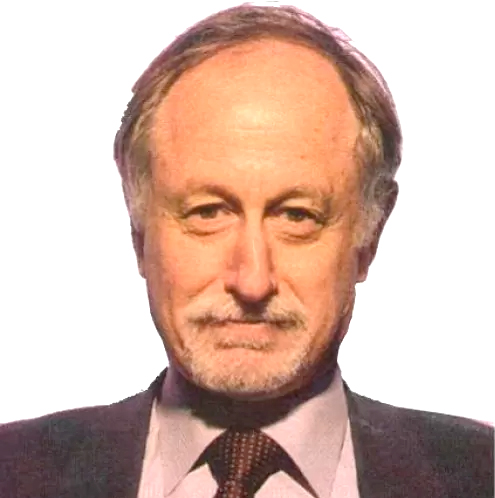

Fair Observer’s Video Producer Rohan Khattar Singh speaks with Fair Observer’s Chief Strategy Officer Peter Isackson about the political and structural implications of the newly released Jeffrey Epstein files. With millions of pages of documents now public and millions more still pending, the scandal has reignited scrutiny of figures across the political spectrum. Their conversation moves beyond individual allegations to examine elite networks, media hesitation and what the unfolding revelations could mean for US President Donald Trump and the approaching midterm elections.
A mountain of evidence, a moving target
Rohan opens with the scale of the release. Roughly 3.5 million pages have been made public, with an estimated three million more still to come. The files include emails sent to more than 1,000 individuals, images, video material and victim testimonies provided to the FBI. Independent media outlets are combing through the material daily.
Peter cautions that the story is far from settled. “We know more and more every day,” he says, emphasizing that the volume of material makes reaching definitive conclusions difficult. The disclosures are less a single revelation than an evolving mosaic. As he describes it, observers are assembling a “jigsaw puzzle,” starting with the frame before gradually filling in the center. The real significance may lie in the structural patterns emerging from the whole.
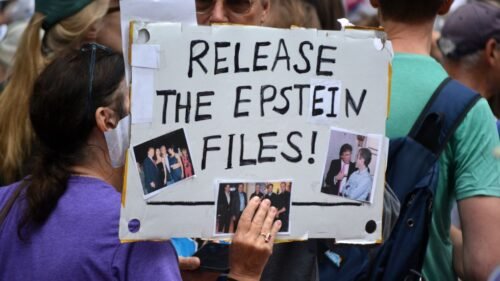
The files were released under the Epstein Files Transparency Act, which Trump signed after bipartisan pressure from US Representatives Thomas Massie and Ro Khanna. The law permits limited redactions, but only in narrowly defined circumstances. Yet many names and details remain obscured, fueling suspicion that something larger is being protected.
Trump, transparency and political blowback
Rohan presses Peter on Trump’s role. During his 2024 campaign, Trump promised transparency on unresolved national controversies, including the infamous assassination of US President John F. Kennedy and the Epstein trafficking case. Peter argues that this pledge helped consolidate Trump’s image as a leader willing to challenge entrenched power structures.
But the release has placed Trump in a precarious position. In a now-notorious cabinet meeting exchange, Trump reportedly dismissed the files as “old business,” angering parts of his own electorate. The very transparency he championed has generated political turbulence.
Peter suggests Trump miscalculated. By aligning himself with disclosure, he raised expectations he could not fully control. Now that millions of pages are public with more pending, the administration faces an unpredictable political environment in which allegations touch figures across party lines, including both Trump and former US President Bill Clinton.
A club of the compromised
Moving beyond partisan politics, Peter adopts what he calls a sociological lens. Drawing on analyst Simon Dixon’s framework, he proposes that the Epstein network reflects not a simple blackmail ring but a broader culture of elite mutual compromise.
In his formulation, influence operates through belonging to an exclusive circle. “To get into the club, you have to be compromised,” Peter explains. Rather than classic blackmail, the logic is reciprocal vulnerability. The more compromised individuals are, the more securely they are bound into a system of shared silence and protection.
He likens it to organized crime structures in which mutual exposure ensures loyalty. Within such a system, power is distributed across finance, politics, intelligence and business, with occasional sacrifices when exposure becomes too costly. Whether or not one accepts the full thesis, the files appear to expose dense interconnections among influential actors across sectors and continents.
Media silence and editorial risk
Rohan highlights a striking disparity in coverage. British outlets such as The Guardian and the BBC prominently feature the story, while major US newspapers appear comparatively restrained. In India and parts of East Asia, coverage is also limited.
Peter attributes this to institutional caution. Large outlets operate within established editorial frameworks and may hesitate to amplify allegations that could disrupt long-standing narratives or implicate powerful interests. The sheer scale of the data also poses practical challenges: responsible verification takes time.
He describes mainstream media as “diffident” and at times “cowardly,” suggesting that some organizations may hope public attention fades before deeper scrutiny becomes unavoidable. Independent platforms, less constrained by legacy structures, have moved more aggressively.
Atomized America and the midterm test
Why, Rohan asks, are Americans not protesting en masse if the files implicate their political class? Peter offers a bleak assessment of civic cohesion: “There is no ordinary American.” He describes a society fragmented into individualized identities. In his view, cultural and ideological shifts have weakened the capacity for unified moral movements.
As for Trump’s future, Peter is cautious but skeptical. Impeachment appears unlikely, given bipartisan embarrassment and prior failed attempts. However, he predicts political damage. “Most people think he will be humiliated in the midterms,” he says, though what that humiliation would mean in practice remains uncertain.
With both major parties potentially implicated and media institutions hesitant, the Epstein saga may continue to unfold primarily through independent journalism and social media. The files, Peter suggests, are a mirror held up to the structure of power — and the reflection is still coming into focus.
[Lee Thompson-Kolar edited this piece.]
The views expressed in this article/video are the author’s own and do not necessarily reflect Fair Observer’s editorial policy.
































Comment