







 | ||||||||
| ||||||||
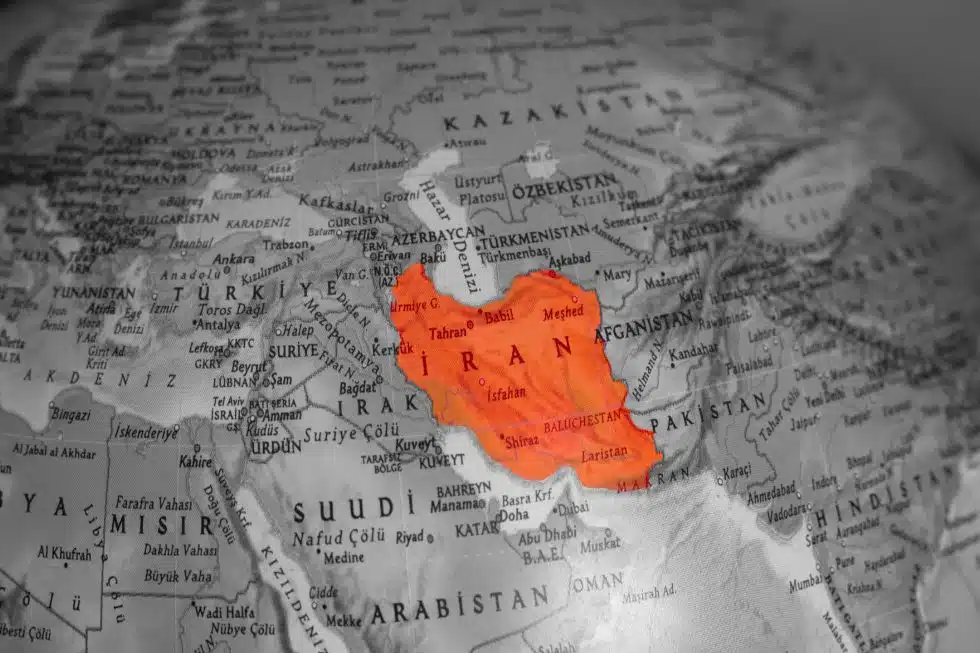
Dear FO° Reader, Once again, we send greetings to you all from the United States, where the dominant story continues to be President Donald Trump’s ongoing war with Iran. Many networks have ratcheted up their breathless coverage of the conflict as new developments continue to bombard the public, and it can be easy for an interesting story to slip between the cracks. As we do every week, the team at Fair Observer will highlight one of those stories: Trump’s refusal to rule out the military draft. Given the abrupt nature of the war, many theories, some more conspiratorial than others, have been raging online, including a reintroduction of the draft, which has been dormant for 50 years. On March 8, Trump’s press secretary Karoline Leavitt was asked about this and replied that Trump was “keeping all options on the table.”
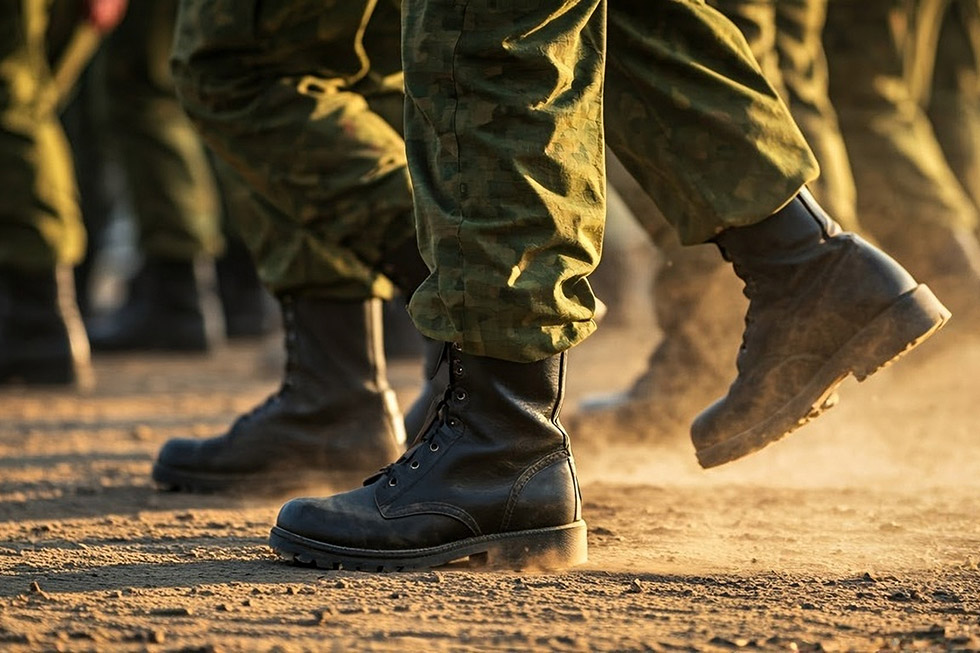
via Shutterstock This comment was met with criticism. Some commentators said that it was another step towards authoritarianism, while others suggested that this would make an already unpopular war even more unpopular. However, we at Fair Observer, keeping in line with our mission to diversify viewpoints, will offer an alternate argument. We’ll pretend Fair Observer is the ultimate devil’s advocate — to steal our chief strategy officer Peter Isackson’s series title — that proposes a well-reasoned, morally compelling plan capable of uniting a divided America and bringing prosperity back to the nation. Of course, the verity of such an argument remains to be seen. Source: Youth in peril, Uncle Sam to the rescueCurrently, in America, the economy is on a downward trend. Unemployment has been slowly rising throughout Trump’s second term, as has inflation and a myriad of other disagreeable statistics. In fact, the latest jobs report from February 2026 notes 92,000 jobs being lost in the US economy. The job market remains fierce. Many young people with college degrees find themselves unable to find permanent employment even after working tirelessly for ten hours a week in the service of excellent online publications such as Fair Observer. Nonetheless, this creates an opportunity for the administration to seize. Sources: Fudging the numbers: Trump’s economy is not what he claims — or wants | The Hill Civilian unemployment rate | US Bureau of Labor Statistics Conscription in the United States | Wikipedia If they institute the draft, suddenly thousands of Americans will be gainfully employed. Job numbers will climb back up. The unemployment rate will shrink. Money will flow back into productive areas of the economy. It will be an unmitigated success. However, some naysayers might point to the fact that both sides of America’s political aisles would have extreme problems with this. The left would likely call it authoritarian and a gross violation of presidential authority, while the right would say it is more reckless government spending. That is, of course, until Trump gives the go-ahead. But there lies the beauty of this plan. Trump’s draft would secretly satisfy both sides of the political extremes. The left, which often pushes for socialized health care and government spending to help fix problems, would have an influx of people eligible for military benefits, including tuition, health care and honest paying jobs. The right would get to do what Trump told them to do. Everyone wins. Other critics of this plan would point to its unconstitutionality as a draft will most likely come from a peremptory presidential decree, even though Congressional consent is needed to impose a military draft. Were Trump to push it forward, it would likely provoke a constitutional crisis. Not that anything would come from that. Trump has already made a habit of ignoring Congress whenever it suits him. He’s already been impeached twice with no consequences and then reelected. Mike Johnson, the Speaker of the House, has also made a habit of craftily ignoring any important details concerning Trump’s actions. Rushing ahead and imposing the draft is the kind of bold leadership Americans respect. If Trump is willing to risk a third impeachment to fight for citizens’ right to be forcibly given socialized income, surely its citizens will be willing to fight for him. Sources: Lessons from Vietnam: how to beat the draft dodgers There are also important life lessons to be learned from the last time the US imposed the draft during the Vietnam War. Many young men actively dodged the draft, fleeing to different cities, different states and even Canada and Europe, amongst other tactics to avoid being drafted to fight in what they believed to be an unjust war. The ongoing US-Israeli War in Iran is also very unpopular with the public, with only 21% of people endorsing the war in one poll. Imposing the draft will likely cause a new deluge of draft dodgers, which would seriously harm morale and interfere with the Trump Administration’s aims of giving these young men gainful employment. If our humble leaders wish to avoid a repeat of the past, something must be done. And conveniently, something has already been done. As the Fair Observer team has already pointed out in previous issues, surveillance in America has expanded a thousandfold in recent decades. By using these convenient public safety tools provided by Palantir and other military-industrial suppliers, the administration can track down these dissenting voices and make certain they are properly reeducated and end up accepting the draft. But of course, it would take an indecent amount of manpower to pull off, even with AI systems already in place to help our wayward watchers. Where could the US possibly get all the people required to man these threat monitors? Of course: the military’s new recruits. It would be a perfect positive feedback system. The military finds draft dodgers and offers pardons for their crime of avoiding their service — say, one year off for every dodger they catch. Soon, everyone will be caught, with a new batch of recruits ready to take the old ones’ places. You may think that this massively incentivises corruption, witch hunts and finger-pointing. We respond by saying that sounds like a surefire way to reach 0% unemployment in record time. Source: Draft evasion in the Vietnam War | Wikipedia Do Americans Favor Attacking Iran Under the Current Circumstances? | Critical Issues Poll
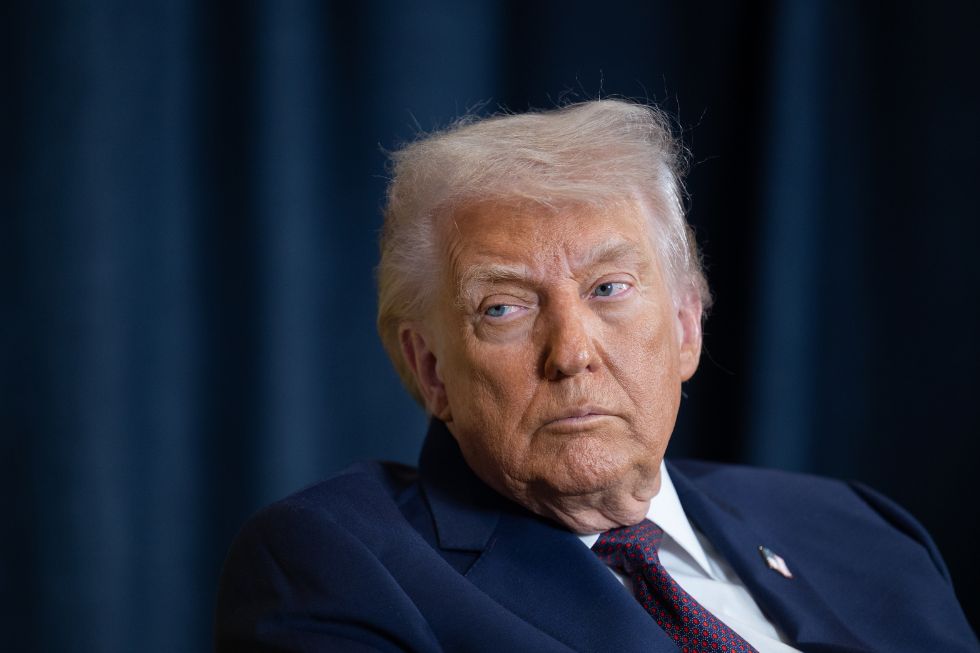
More manly methods for Pete Hegseth’s macho militaryAs conversations around a potential expansion of US military commitments resurface, so too does a familiar question: What, exactly, should the modern American fighting force look like? Secretary of War Pete Hegseth has offered a clear answer. The military, he argues, must return to a “warrior ethos” — toughness, dominance and physical strength should be, in his eyes, the foundation of American power. Critics have suggested that this emphasis risks turning military policy into a public display of machismo rather than a strategy grounded in operational reality. Again, for the sake of experimentation, it may be worth considering what a fully realized version of Hegseth’s vision might entail. First, all soldiers could be required to marry before deployment. Not for emotional support, but for macroeconomic efficiency. Each new spouse becomes eligible for benefits and, in the worst-case scenario, survivor pensions, creating a kind of built-in wartime stimulus. It is, in its own way, a family-centered approach to fiscal policy. That is certainly the kind of family values the Republican Party will want to uphold. Second, the Pentagon might expand its definition of combat readiness. Physical fitness will always matter, but modern conflicts increasingly reward the ability to project strength as much as to deploy it. Recruits could be evaluated not only on battlefield performance, but on their ability to communicate resolve clearly and consistently — particularly in environments where perception carries significant weight. Third, in the interest of eliminating any remaining traces of “softness,” the military could move toward a more standardized presentation of toughness across the services. This would not necessarily require formal regulation, but a shared understanding that clarity, certainty and visible confidence are preferable to ambiguity, whether strategic or rhetorical. Training exercises might follow a similar logic. Rather than focusing exclusively on coordination and logistics, they could place greater emphasis on decisive outcomes, ensuring that victories are not only achieved but described in terms that reinforce strength and dominance. Finally, communication from leadership would reflect this broader philosophy. Briefings could prioritize clarity and simplicity, favoring direct language over complexity. Although the public may not always see the full details of a strategy, they are left with the impression that someone is controlling events. In that sense, the objective is not just to maintain the most capable military in the world, but to ensure it is consistently perceived that way. This is an outcome that, while difficult to measure, appears to have taken on growing importance. Sources: Checks and Balance: Pete Hegseth and the risks of a macho military | The Economist Leading from the golf cart: a commander’s exampleCritics sometimes raise questions about the commander-in-chief’s relationship with military service. These concerns, however, tend to overlook a broader point: Leadership does not always require direct participation. During the Vietnam War era, Donald Trump received several draft deferments, including a medical exemption for bone spurs in his heels. At the time, the condition made military service impractical. Decades later, leaders no longer require physical presence on the battlefield as their demands have changed. Instead, they operate from a distance, relying on briefings, advisors and carefully curated vantage points to make decisions of global consequence. In that sense, the president’s preferred environment, a golf course, offers a certain clarity. Control the process, predict the outcomes and eliminate the uncertainty associated with conflict. From there, decisions can be made deliberately, without the distractions of the battlefield itself. Military leadership has taken many forms throughout history, from generals on the front lines to presidents in the Situation Room. The current model simply reflects a different kind of distance, one that, depending on perspective, can look either like strategic detachment or something else entirely. Let Barron lead the chargeIf the administration truly wishes to demonstrate its confidence in American strength, there is one simple way to prove it: let the next generation lead. Deploying Barron Trump to the front lines would be a powerful statement about the administration’s belief in its own policies. Nothing conveys faith in a military strategy quite like sending a member of the First Family to test it personally, right? The move could inaugurate an entirely new doctrine in American foreign policy: hereditary deterrence. Under this strategy, adversaries would know that American leaders are so confident in their decisions that they are willing to put their own relatives at risk. Diplomats across the globe would think twice before challenging a nation whose leadership might respond by dispatching its tallest family member to the battlefield. Recruitment posters would write themselves. “Uncle Sam Wants You” might finally be replaced by a more modern slogan: “If It’s Good Enough for Barron…” At the very least, it would demonstrate that the administration believes the war effort is a cause worthy of personal investment — not just political messaging. War, politics and unequal sacrifice Of course, discussions of war, drafts and military policy are rarely simple. They involve real lives, real consequences and decisions that echo far beyond the news cycle. But in an age of political theater, it sometimes becomes difficult to distinguish between serious policy proposals and the performance of strength. And if nothing else, the debate over who should serve and who should lead continues to reveal an enduring truth about American politics: Sacrifice is always easier to endorse when someone else is making it. Sources: Donald Trump’s confusing explanation for how he avoided the Vietnam draft | The Week Is Donald Trump considering a military draft for Iran? What we know | USA Today How Donald Trump Avoided Military Draft 5 Times | Newsweek Draft Barron Trump Website Launches as US Strikes Iran | Newsweek Casey Herrmann and Liam Roman Assistant Editors Related readings
| ||||||||
We are an independent nonprofit organization. We do not have a paywall or ads. We believe news
must
be free for everyone from Detroit to Dakar. Yet servers, images, newsletters, web developers and
editors cost money.
So, please become a recurring donor to keep Fair Observer free, fair and independent. 
| ||||||||
| ||||||||
| About Publish with FO° FAQ Privacy Policy Terms of Use Contact |








Explore More FO° Spotlight



Support Fair Observer
We rely on your support for our independence, diversity and quality.
For more than 10 years, Fair Observer has been free, fair and independent. No billionaire owns us, no advertisers control us. We are a reader-supported nonprofit. Unlike many other publications, we keep our content free for readers regardless of where they live or whether they can afford to pay. We have no paywalls and no ads.
In the post-truth era of fake news, echo chambers and filter bubbles, we publish a plurality of perspectives from around the world. Anyone can publish with us, but everyone goes through a rigorous editorial process. So, you get fact-checked, well-reasoned content instead of noise.
We publish 3,000+ voices from 90+ countries. We also conduct education and training programs
on subjects ranging from digital media and journalism to writing and critical thinking. This
doesn’t come cheap. Servers, editors, trainers and web developers cost
money.
Please consider supporting us on a regular basis as a recurring donor or a
sustaining member.
Will you support FO’s journalism?
We rely on your support for our independence, diversity and quality.





Comment