


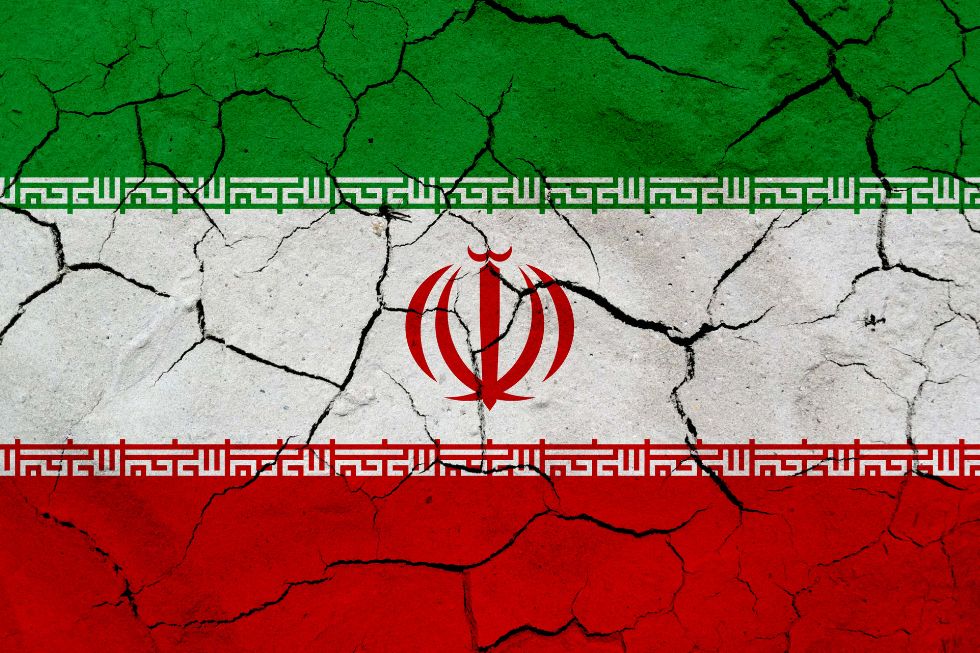



Israel and the US began a new round of attacks against Iranian targets on February 28. This is the second time Israel and the US have bombed Iran, only this time, the attacks are much more intense. The reason for such a great blow to one of the Middle Eastern powers lies within its long-term strategic mistakes and a series of miscalculations, such as overconfidence in its political capital, intransigent ideological fervor and investing in the wrong ambitions, like nuclear enrichment.
The Islamic Republic of Iran came into being when Ayatollah Khomeini sidelined other Iranian factions and assumed the role of the revolution’s leader in 1979. Although other groups, such as the Tudeh Party of Iran, the People’s Mojahedin Organization (MEK), the People’s Fedayeen guerrillas and others, helped topple the late Shah of Iran, these organizations were sidelined.
Khomeini established a Shi’a theocracy advocating anti-American and anti-Israeli policies. At the same time, the new regime focused on supporting Shi’a groups such as Lebanese Hezbollah across the Middle East, both politically and militarily. Domestically, the Islamic Revolutionary Guards Corps (IRGC) took over sensitive governmental institutions and gradually entrenched its authority in every aspect of the Iranians’ lives, from financial to construction to military sectors. Furthermore, any protest by Iranians was met with violence, where torture and the death penalty were systematically used.
Up to a couple of years ago, very few analysts would have imagined military action of such significant scale against Iran. This happened mostly due to Tehran’s miscalculations and missteps in its long-term strategic plan. These miscalculations have given Iran a horrid endgame.
Strategic miscalculations
The first major strategic miscalculations began shortly after the 1979 revolution, driven by the desire to export it. The revolutionaries chose an “anti-imperialist” path and declared themselves pioneers of resistance against the Sunni-American powers. While this gave the Islamic Republic a network of loyal, mostly Shi’a militias, it also turned Iran into a pariah regionally and internationally.
Pursuing an anti-Western path soon brought Iranian support for nonstate actors such as the Lebanese Amal Movement and Hezbollah. This network of alliances grew over time and included many groups, such as Palestinian Hamas and Islamic Jihad, Iraqi Shi’a militia groups and Yemen’s Houthi movement. As this network (referred to as the Axis of Resistance) grew throughout four decades, Tehran, which was once a close US and Israeli ally (before the 1979 revolution), became their archenemy, advocating the annihilation of Israel and suspending all diplomatic ties with the US.
This axis of resistance required military, political and financial assistance from Tehran to maintain its struggle. For instance, between 2012 and 2018, Iran spent more than $16 billion supporting the Assad regime and proxy groups in Syria, Iraq and Yemen. These expenses and harsh sanctions directly affected the livelihoods of ordinary Iranians. At the political level, the international community lost trust in Tehran, and the Islamic Republic grew increasingly isolated. Iranians experiencing hardships both at home and abroad gradually grew more bitter and turned to protests. Thousands of Iranians were murdered during the last wave of protests, which began at the end of December 2025, with the official reports claiming around 30,000 killed and human rights organizations verifying more than 7,000 protesters’ deaths.
Tehran focused and sacrificed much of its resources and finances on its nuclear and ballistic missile ambitions for more than four decades. The nuclear project has been degraded not only by the American bombings during the 12-day war in 2025, but also by Israeli and US cyber-attacks and the assassinations of Iranian nuclear scientists. As for the ballistic missile part, Iran has fired a good number of them at Israel and other targets across the Middle East; however, they have not been as effective because of airstrikes carried out by Israeli and American warplanes. Iran has no modern jet fighters, insufficient air defense systems, or proper sirens or shelters for its citizens.
Ideological fervor
The Islamic Republic’s adherence to a specific ideology led it to increasingly curtail opportunities for engagement and collaboration, even as other nations sought to maintain open dialogue amid global challenges. Iran pursued alliances with nonstate actors and the building of proxy networks in hopes of regional dominance. The dominance seemed to work when, in the aftermath of the Iraq War of 2003, Iran became a significant player. Tehran became further misguided with the success of keeping Bashar Assad in power for more than a decade following the Syrian civil war.
This alliance diminished slowly following the start of the Israel-Gaza war after the Hamas October 7 attacks on Israel. The conflict dramatically reshaped the regional power dynamics with surprising speed and brutality. Initially, Hezbollah suffered a devastating blow. Their military capabilities, once considered a formidable deterrent, were severely diminished following a coordinated and sustained offensive. They lost key commanders and crucial supply lines, leading to a significant contraction of their influence and operational capacity. This immediate setback sent shockwaves through the anti-Western alliance.
Following closely on this initial defeat, the long and brutal reign of Syrian President Bashar al-Assad came to an abrupt and chaotic end. Within a single devastating “blitz week,” the remaining loyalist defenses collapsed. Facing an overwhelming coordinated assault and internal revolts, Assad lost his grip on the capital and the remaining heartland, forcing him to flee the country and ending decades of dynastic rule. This power vacuum in Syria had immediate and profound consequences for the rest of the region.
With their most reliable state sponsor gone and their primary proxy weakened, Iran’s network of outposts, bases and militias across the Middle East has become much less tenable. The Iranians still have partners in the region, but they are not capable of inflicting a decisive defeat against their enemies. The weakening of their alliance is devastating for Tehran’s ability to project power.
However, Tehran remained determined, at least in rhetoric, to be the dominant regional power and possesses a leverage significant enough to afford intransigence in its diplomatic efforts to reach a deal with the US over the nuclear program. Further, Tehran refused to discuss its ballistic missile program under any circumstances, calling it nonnegotiable. This aligned with the unbending rhetoric of IRGC commanders and Supreme Leader Ayatollah Ali Khamenei. This shows they were overconfident that they could play the game as they had for 47 years, which had enabled their survival, with periods of stricter or looser sanctions.
Fatal consequences
Like a slow-motion game of positional chess, international politics and foreign policy unfold over time. Both sides meticulously develop their resources, secure their core interests, establish a strong structural base with a firm opening and build toward a solid middle game. Then they can aim for a draw if they are unable to win in the endgame.
Anywhere in the world, it is quite difficult to win a war if the public is not supporting the government. Videos of Iranians cheering the death of Khamenei by dancing on the streets, shooting fireworks and chanting anti-regime slogans prove the limited support the regime has among Iranians, even when under attack by a foreign country.
Both in June 2025 and since the start of the war, Iran has failed to defend its skies against the Israeli and American fighter jets. Iranian cities lack proper siren systems, and there are no adequate shelters for people to find refuge in when fighter jets pound the ground.
Iran made an opening move in its game that contained a few grave mistakes. Their middle game continued with a series of more mistakes, too. By antagonizing the West, being overconfident about its regional proxies and investing in a nuclear program and ballistic missiles instead of proper air defense and addressing its citizens’ grievances, Tehran believed it could beat the whole world. Thus, the prospect of the endgame turned out to be far from victorious for Tehran.
Even if the Islamic Republic survives the current war, it has been beaten twice at home in less than a year and has taken a great blow at its outposts in the region. Managing its position will be a tough task, as both domestically and internationally, it has little leverage to play with.
[Patrick Bodovitz edited this piece]
The views expressed in this article are the author’s own and do not necessarily reflect Fair Observer’s editorial policy.
Europe, Iran and the New Face of American Power
Europe’s diplomatic influence on Iran has sharply declined since the US withdrew from the Joint Comprehensive Plan of Action and...
Iran Has History of Persecuting Minorities: Might This Change Now?
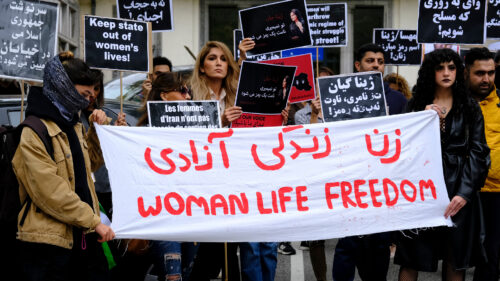
Minorities have been mistreated in Iran both under the Shahs and the Ayatollahs. During the current protests, there is great...
Support Fair Observer
We rely on your support for our independence, diversity and quality.
For more than 10 years, Fair Observer has been free, fair and independent. No billionaire owns us, no advertisers control us. We are a reader-supported nonprofit. Unlike many other publications, we keep our content free for readers regardless of where they live or whether they can afford to pay. We have no paywalls and no ads.
In the post-truth era of fake news, echo chambers and filter bubbles, we publish a plurality of perspectives from around the world. Anyone can publish with us, but everyone goes through a rigorous editorial process. So, you get fact-checked, well-reasoned content instead of noise.
We publish 3,000+ voices from 90+ countries. We also conduct education and training programs
on subjects ranging from digital media and journalism to writing and critical thinking. This
doesn’t come cheap. Servers, editors, trainers and web developers cost
money.
Please consider supporting us on a regular basis as a recurring donor or a
sustaining member.
Will you support FO’s journalism?
We rely on your support for our independence, diversity and quality.





Comment