





Fair Observer’s Communications and Outreach officer, Roberta Campani, speaks with renowned educator Esther Wojcicki about the crisis of modern media and the weakening of the public’s ability to tell fact from falsehood. Their conversation begins with journalism’s changing role but quickly expands into a broader diagnosis of social media, literacy, education and parenting. Wojcicki believes the collapse of trust in news cannot be separated from how people now read less, watch more and grow up without the habits needed to judge information for themselves.
Journalism under pressure
Campani opens with the central democratic question: Can journalists still hold the powerful accountable? Wojcicki says the profession’s mission has not changed — journalists are still supposed to inform the public, serve their communities and provide accurate information about issues that affect ordinary life. But this work has become harder because reporters now operate under political pressure while competing with a digital environment in which anyone can imitate the form of news.
Looking back over more than 50 years in journalism, Wojcicki says the work once felt more stable and direct. Reporters gathered information, wrote their stories and published them without constantly facing harassment or attacks on their legitimacy. Local reporting on school boards or government meetings was more straightforward because the surrounding information ecosystem was less chaotic. Now, journalists must work in an environment where fabricated stories circulate alongside real ones and where many readers no longer know how to distinguish between them.
For that reason, Wojcicki argues that journalism should not be treated as a profession understood only by reporters. Students, she says, should learn how journalism works, including the basic structure of reporting through the five Ws (who, what, where, when, why) and one H (how). If young people understand how a proper story is built, they are better equipped to see when information has been distorted.
Clickbait, monetization and the collapse of trust
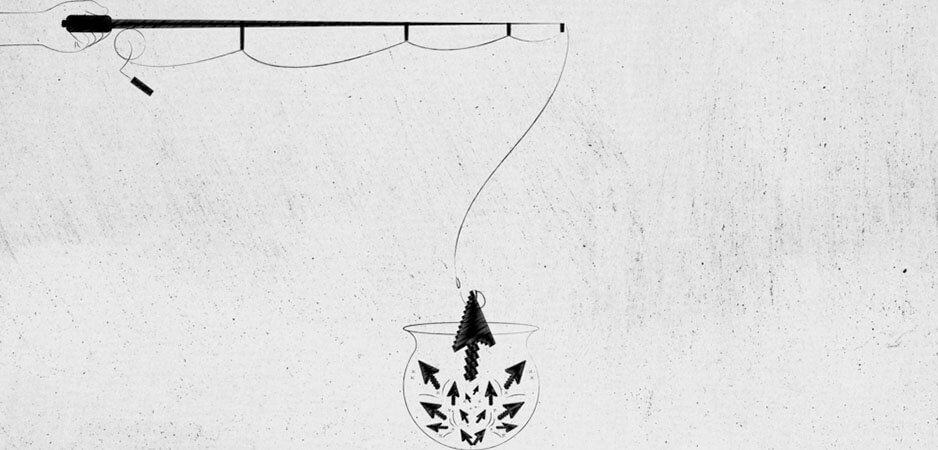
Wojcicki identifies monetization as one of the central forces corrupting the information system. Social media platforms did not simply broaden access to information; they also created strong incentives to produce sensational, manipulative or false content that attracts attention and advertising revenue. As she puts it, “There’s a monetary incentive for people to corrupt the news.”
She explains that fake or exaggerated stories are often designed not to inform but to generate clicks. The more traffic a story receives, the easier it becomes to sell advertising against it. Political agendas intensify the problem, but the profit motive is just as corrosive. The result is a media environment filled with emotionally charged claims, viral distortions and growing public confusion.
Campani notes that independent platforms such as Fair Observer can sometimes step back from the frantic news cycle and focus on deeper analysis. Wojcicki agrees that this is valuable, but she also insists that large news organizations still matter. In her view, major outlets and local newspapers remain more reliable than random sources on social media. Even so, she recognizes the limits of that answer. Paywalls, shrinking newsrooms and changing ownership structures make access and trust more difficult than they once were.
Why misinformation spreads so easily
The conversation then shifts from media institutions to the audience itself. Wojcicki points to a deeper literacy crisis in the United States — many adults lack the reading ability needed to process complex information. She says the average reading level is now around the fifth grade and suggests that this decline worsened during and after the pandemic, when more people turned to video and stopped reading regularly.
This is not just a technological problem, but an educational one also. Wojcicki argues that reading instruction over the past two decades has often failed students, especially boys, who may need more time and support in learning to read well. She strongly favors phonics: It is “the only system that has been proven to actually teach reading,” she says. Other methods leave too many children guessing rather than actually decoding words.
Campani links this to a wider cultural shift toward short-form content, fragmented attention and constant digital stimulation. Wojcicki agrees. People are bombarded by snippets of information, dramatic images and video clips, but they often do not stop to ask basic questions about the source, the motive or the evidence. That makes them vulnerable to written misinformation as well as manipulated audio and video.
Teaching media literacy early
Wojcicki’s solution is to begin media literacy education in elementary school. She says she would start in third grade by teaching children the difference between fact and opinion. Her method is practical rather than abstract. She uses product reviews, beginning with cookies, to show students that ingredients and place of manufacture are facts, while judgments about taste are opinions.
Wojcicki believes this simple exercise builds the foundation for critical thinking. Once students grasp that not every claim has the same status, they begin to question the authority of what they see online. From there, they can learn concrete habits such as checking sources, comparing coverage across multiple outlets, looking for sponsorship or financial motives and being wary of sensational language.
Democracy depends on ethical journalists and capable readers. If students never learn how to evaluate information, they will grow up easily manipulated.
From media literacy to self-reliance
To conclude, Wojcicki connects media literacy to parenting and emotional development. Children need to feel capable in the world, she says, and parents often undermine this by doing too much for them. A child who never learns to manage basic tasks may struggle to believe in their own competence later in life.
This leads to a wider reflection on mental health, therapy and dependence. Wojcicki worries that too many young people are treated as fragile and too quickly pushed toward pharmaceutical or therapeutic solutions. Campani suggests that some distress may simply be part of growing up. Even so, the two agree that independence, critical judgment and confidence are essential qualities that should be cultivated early.
For Wojcicki, the crisis of journalism is inseparable from the crisis of education. A healthier media culture will require better reporters, but it will also require readers and viewers who know how to think for themselves.
[Lee Thompson-Kolar edited this piece.]
The views expressed in this article/video are the author’s own and do not necessarily reflect Fair Observer’s editorial policy.






































Comment