





 | ||||||||||||||
| ||||||||||||||
Dear FO° Reader, As you may know, the US and Israel conducted missile strikes targeting Iran beginning on February 28. The first wave of strikes killed Iran’s Supreme Leader, Ayatollah Ali Khamenei, as well as many powerful figures in the Islamic Revolutionary Guard Corps (IRGC). On March 8, Iran’s Assembly of Experts, the country’s clerical body, selected Khamenei’s son, Mojtaba Khamenei, to be Iran’s Supreme Leader.Both Israel and the US have called their strikes “preemptive,” claiming the purpose of the attack is to stop the development of Iran’s nuclear and missile programs. Regime change has also been cited by both as a reason for the strikes, as well as the Iranian regime’s violent crackdown on protesters. These strikes also come after the 12-Day War between Israel and Iran. It commenced on June 13, 2025, when Israel targeted Iran’s nuclear facilities and top military commanders, claiming the state was close to developing nuclear weapons. Then, on June 21, the US joined the conflict with Operation Midnight Hammer. In the attack, the US deployed over 125 aircraft and used its biggest “bunker-buster” bombs on Iran’s nuclear enrichment facilities at Fordow and Natanz.
Why did US and Israel attack Iran and how long could the war last? What to know about Mojtaba Khamenei, Iran’s new supreme leader What Operation Midnight Hammer Means for the Future of Iran’s Nuclear Ambitions 12-Day War (June 2025) | Strike, Ceasefire, Attack, Nuclear Program, Ayatollah Khamenei, American bases, Map, & United States | Britannica
It is important to note that while several reasons have been offered as to why the US and Israel are carrying out these attacks now, the bad blood between these three countries has a long history. And, just as it is important to explore the context surrounding the current conflict, it is doubly important to understand the historical context of the tensions between the US and Israel and Iran. Luckily for you, Fair Observer has published a plethora of podcasts, videos and articles that delve deep into the history leading up to this particular content. Fair Observer is dedicated to providing a multifaceted view of current events, and this conflict is no different. For your listening and reading pleasure, I have compiled a few of these informative pieces. Iran’s hostility towards the West has a historical precedent First, I invite you to listen to this episode of The Dialectic, FO’s flagship podcast hosted by founder, CEO and Editor-in-Chief Atul Singh alongside retired CIA officer Glenn Carle. The two trace the long history of how the Iranian civilization has come to see itself at odds with the US and Israel.
Glenn and Atul explore the history of Iran from Reza Shah Pahlavi’s 1921 coup and the Islamic Revolution (more on both later) to the US invasion of Iraq in 2003 and US President Donald Trump’s 2018 withdrawal from the Obama-era Joint Comprehensive Plan of Action (JCPOA). Another unique feature of this historical analysis is not only its deep dive into history — it is also Atul and Glenn’s exploration into scenarios regarding Iran’s future. Not many put the pieces of the puzzle together, so to speak. Josef Olmert predicted the strike on Iran Speaking of putting puzzle pieces together, esteemed FO author Josef Olmert, a former Israeli government official and Middle East scholar, correctly predicted that the US would strike Iran. In an interview with Atul, Olmert explains that because Operation Midnight Hammer failed to achieve its core objectives, a strike on Iran by the US and Israel would be a continuation of that attack.
Like The Dialectic episode I mentioned above, Olmert’s analysis is unique because he also provides potential outcomes for the US-Israeli strike on Iran. He warns that if the first strike is not decisive — that is, a strike that doesn’t take out Iran’s core military assets — then the potential for a long, drawn-out conflict increases. Olmert also points out that without a coherent “follow-up” strategy, an attack may not have the transforming quality the US and Israel want for the region.
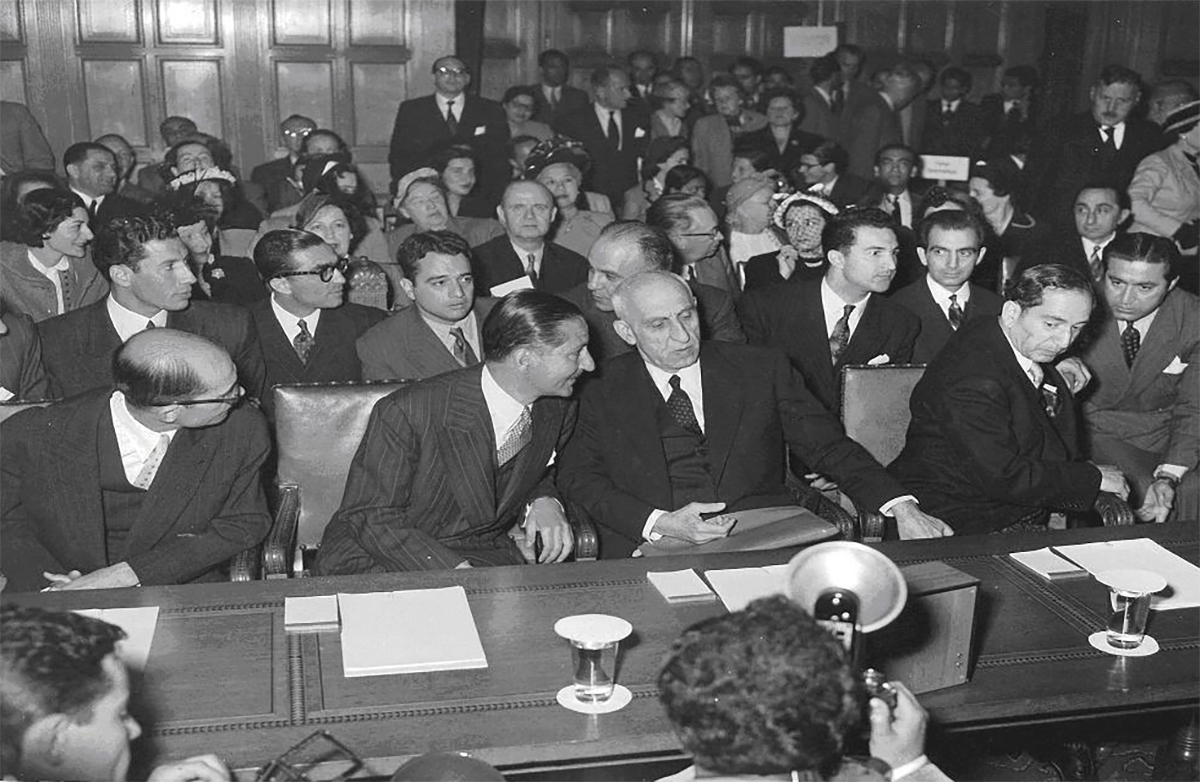
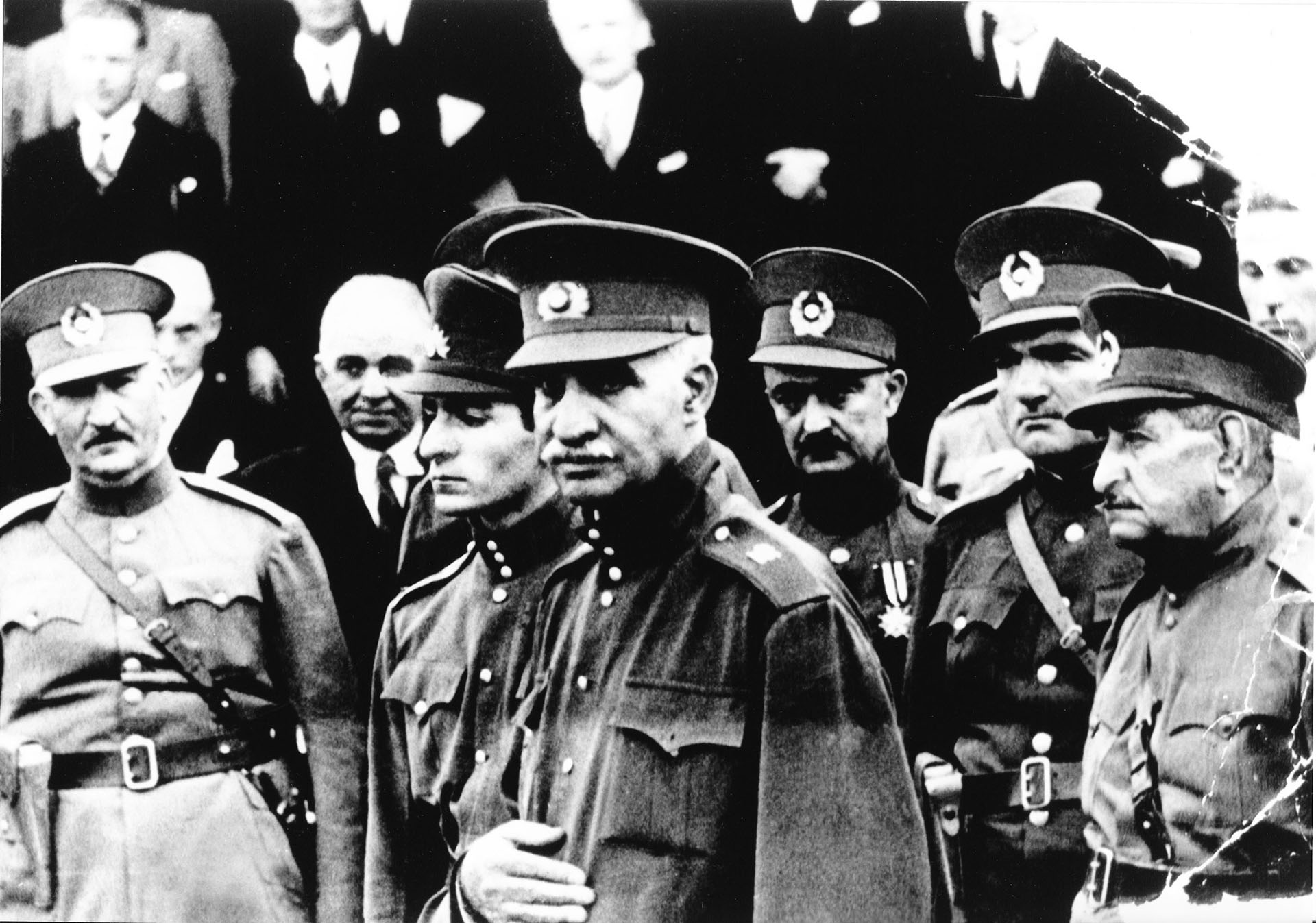
Regional transformation has been a decades-long fight Now isn’t the only time outside players have attempted to transform the region or Iran, and the US and Israel haven’t been the only key players. A series of three articles co-authored by Mehdi Alavi and Atul explain the history of regime change in Iran and how much of the state was influenced by foreign actors. Each article presents the argument that imperial interference from Britain and the US paved the way for a theocratic regime to arise in Iran by putting three of Iran’s leaders under the microscope. The first part of the series focuses on Reza Shah, who ruled Persia from 1925 to 1941. The British Empire, wishing to keep a hold on the Persian oil market, allowed his rise to power as well as his corrupt leadership. Ultimately, British imperial interference weakened Iran against other foreign powers.
As readers, we must follow the patterns
So, foreign intervention in the region is not a new phenomenon. Neither is the goal of regime change or regional transformation. This is why investigating historical context is important: Without it, current events cannot be understood. We at Fair Observer invite you to follow the contextual patterns and ask questions about potential outcomes. In the meantime, we urge you to do your own research. Fair Observer is a great place to start. Warm regards, Cheyenne Torres Operations Chief of Staff | ||||||||||||||
We are an independent nonprofit organization. We do not have a paywall or ads. We believe news
must
be free for everyone from Detroit to Dakar. Yet servers, images, newsletters, web developers and
editors cost money.
So, please become a recurring donor to keep Fair Observer free, fair and independent. 
| ||||||||||||||
| ||||||||||||||
| About Publish with FO° FAQ Privacy Policy Terms of Use Contact |







Explore More FO° Reflections




Support Fair Observer
We rely on your support for our independence, diversity and quality.
For more than 10 years, Fair Observer has been free, fair and independent. No billionaire owns us, no advertisers control us. We are a reader-supported nonprofit. Unlike many other publications, we keep our content free for readers regardless of where they live or whether they can afford to pay. We have no paywalls and no ads.
In the post-truth era of fake news, echo chambers and filter bubbles, we publish a plurality of perspectives from around the world. Anyone can publish with us, but everyone goes through a rigorous editorial process. So, you get fact-checked, well-reasoned content instead of noise.
We publish 3,000+ voices from 90+ countries. We also conduct education and training programs
on subjects ranging from digital media and journalism to writing and critical thinking. This
doesn’t come cheap. Servers, editors, trainers and web developers cost
money.
Please consider supporting us on a regular basis as a recurring donor or a
sustaining member.
Will you support FO’s journalism?
We rely on your support for our independence, diversity and quality.





Comment