

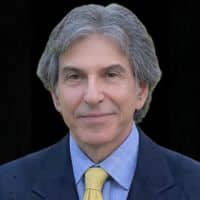



Editor-in-Chief Atul Singh and Kent Jenkins Jr., a former political reporter from The Washington Post turned communications consultant, discuss America’s “forbidden C-word:” class. They argue that class shapes opportunity, identity and political behavior, even as Americans prefer a national story of rugged individualism. Jenkins frames himself as a class migrant — someone who grows up blue-collar and builds a white-collar career — and Singh offers a parallel story of dispossessed aristocracy from India, where status, schooling and accent can open doors even when money is scarce. Together, they treat class as a lived system of signals, networks and unspoken rules.
 Spotify
 Amazon Music
Two class journeys, one shared unease
Jenkins grew up in a cotton mill town in the Appalachian foothills of North Carolina, in a family where mill work begins young and college is more aspiration than inheritance. His parents insisted he would go to a university, and that expectation pushed him through degrees and newsrooms until he reached Washington and the cultural shock that came with it. In elite professional spaces, he became hyperaware of how quickly class is read off the body: diction, manners, wardrobe, assumptions about competence. As he puts it, when he speaks, he can feel that he “lose[s] about 20 or 25 IQ points” in other people’s eyes — not because he knows less, but because a Southern accent triggers a class filter.
Singh’s story runs along a different track. He describes a family with education and lineage but limited liquid wealth, selling heirlooms to fund schooling. His Oxford background gives him a protective layer of cultural legitimacy in Anglophone spaces, while he remains attentive to how quickly people place him in hierarchies back home. The point of the comparison is not equivalence, but recognition: Both men understand how class travels with you, even when you try to outrun it.
How American class works without aristocracy
Singh contrasts the United States with the United Kingdom, where class often has obvious institutional markers — elite schools, Oxbridge pipelines and a highly legible accent code. Jenkins argues that the American class is less formal but still powerfully enforced. His working definition rests on three overlapping pillars:
Economics matters, but it is not enough. Education functions as both a badge and a gate, especially when selective colleges and flagship state universities become sorting mechanisms for careers. Culture is the glue: habits, language, leisure, taste and the everyday assumptions that signal who belongs. Jenkins offers small examples that reveal big divides — even the difference between seeing “summer” as a season and using it as a verb, something people do. For class migrants, the problem is not only money or credentials; it is learning the “instruction manual” everyone else seems to have received at birth.
Cultural capital and the “secret handshake”
A major theme is cultural capital, the accumulated familiarity with elite norms that makes professional and social life easier. Jenkins describes how, in white-collar Washington, people connect through shared reference points that feel neutral to insiders but exclusionary to outsiders — where they vacation, what countries they have visited, which institutions shaped them and how they talk about food, schools and work. At a certain kind of cocktail party, he notes that much of the conversation is people comparing passport stamps. Travel is genuinely enriching, but it also becomes a shorthand for belonging — a way of recognizing one another through experiences that require disposable income, time and confidence.
Singh broadens this into a critique of “old worldification,” the growth of private-school pipelines and admissions industries that reproduce class advantages under the language of merit. Jenkins’s own family illustrates the tension: His son attends an elite Washington “independent” school — a feeder into Harvard–Yale–Princeton networks —, and Jenkins sees both the genuine benefits and the quiet reproduction of social closure. The result is a class system that denies it is a class system, even while it hands down predictable outcomes.
Elections, Trump and the Democrats’ condescension trap
The conversation then turns to politics. Jenkins argues that class divides shape the current national debate and help explain why working-class voters are the decisive swing bloc. He describes the Republican Party’s long project — from US President Richard Nixon through Ronald Reagan to Donald Trump — to pull working-class voters away from the Democrats. Trump’s advantage begins with the basic fact that he goes where many Democrats do not. He appeared in small towns, staged rallies that blended politics with entertainment, and performed an attitude of recognition rather than disdain. Whatever voters think of his policies, many hear acknowledgment.
Both speakers are harsher on the Democrats’ elite style than on any single platform plank. Jenkins says working-class communities detect condescension instantly, and that once they feel dismissed, “it cancels everything” that follows. Singh’s anecdote about Democratic nominee Hillary Clinton’s 2016 presidential campaign makes the same point through a different lens: Elite language policing, performed as moral superiority, can alienate the very communities a campaign claims to champion. The Democrats’ problem is not only messaging, but a class culture that signals discomfort around the people it needs.
Privilege, identity politics and the path back to democracy
Jenkins agrees that racism and sexism are real and that “white male privilege” exists. But he objects to being lectured about privilege by people whose class advantages are enormous and whose work has rarely involved uniforms, time clocks or physical strain. Singh adds that privilege is layered and context-dependent. In one setting, accent and elite schooling confer legitimacy; in another, challenging bureaucratic elites brands you a traitor. Their shared critique is that identity politics, when detached from class realities, can become a performance by the professional-managerial class rather than a coalition-building strategy.
Jenkins ends with a strategic and civic warning. If American politics hardens into an oligarchy funded by billionaires and corporate power, then class becomes the central democratic problem, whether or not politicians say the word. For Democrats in particular, the choice is to become a lifestyle clique or a governing coalition. In his phrase, they must decide whether they want to be “a cocktail party or a political party,” then build ladders of opportunity — better schools, genuine mobility and leaders who actually come from the working class — not just leaders who know how to speak about it.
[Lee Thompson-Kolar edited this piece.]
The views expressed in this article/podcast are the author’s own and do not necessarily reflect Fair Observer’s editorial policy.
The Democratic Party’s Disdain for Youth Will Have Consequences
The Democratic Party’s failure to change course over policies has increasingly isolated younger voters. The Party’s elites dismiss youth-led movements...
FO° Talks: Traditional or Modern — What Life Do American Families Want?
In this episode of FO° Talks, Peter Isackson and Aidan Grogan debate America’s economic and cultural future, weighing nostalgia for...

American Privilege Is No Longer Invisible
The US has been adept at exercising exaggerated privilege both at home and abroad, but the contradiction with its democratic...


FO Podcasts: Canada’s Untold Role in Modern Conflicts
In this episode of FO Podcasts, Ranjani Iyer Mohanty and Muhannad Ayyash examine Canadian policy toward the Israel–Palestinian conflict through...

FO Podcasts: Making Sense of Trump’s Financial Controversies
In this episode of FO Podcasts, Casey Hermann and John Feffer examine Donald Trump’s alleged financial gains during his second...

FO Podcasts: Cockroach Chronicles — Making Sense of the CJP
In this episode of FO Podcasts, Ranjani Iyer Mohanty and Barun Mohanty examine how exam irregularities, limited educational opportunities and...

FO Podcasts: Stairways to the Skies — The Secrets of Hiking
In this episode of FO Podcasts, Ranjani Iyer Mohanty and Christine Gabriel discuss the appeal of hiking, drawing on her...

FO Podcasts: What the West Ignores About China’s Digital Nationalism
In this episode of FO Podcasts, Florian Schneider and Haruko Satoh argue that digital nationalism is a defining force shaping...

The Dialectic: Japan — The Aging Land of the Rising Sun
In this episode of The Dialectic, Atul Singh and Glenn Carle examine Japan’s transformation from a postwar economic giant into...

FO Podcasts: Why Narcoterrorism Still Matters
In this episode of FO Podcasts, Atul Singh and Jeffrey James Higgins examine how narcoterrorism combines organized crime, insurgency and...

FO Podcasts: The Big Paradox — Why Immigration Divides America Like Nothing Else
In this episode of FO Podcasts, Atul Singh and Kent Jenkins Jr. examine why Americans support strict border control but...

FO Podcasts: The Muslim Brotherhood Explained — Origins, Ideology and Global Influence
In this episode of FO Podcasts, Atul Singh and Cynthia Farahat examine the Muslim Brotherhood’s origins, debating whether it evolved...

China–Taiwan Tensions — Civil War Legacies and Geopolitical Chess
Since President Xi Jinping came to power in 2012, China has been acting more aggressively towards Taiwan. Tensions go back...

The Dialectic: Narendra Modi’s Vegetarian Stalinism Has Ruined the Indian Economy
In this episode of The Dialectic, Atul Singh and Glenn Carle explain how India’s current leader has rolled back the...
FO° Podcasts: Maduro, the War on Drugs and Trump’s Revival of the Monroe Doctrine
In this episode of FO° Podcasts, Atul Singh and Benjamin Delille examine US President Donald Trump’s confrontation with Venezuela, questioning...





Comment