




Rohan Khattar Singh, Fair Observer’s Video Producer & Social Media Manager, talks with Daniel Bunn, President and CEO of the Tax Foundation, about the rise of digital services taxes (DSTs). They explore what these taxes are, why governments are introducing them, their impact on consumers and businesses, and how the United States — particularly under US President Donald Trump — has responded. At the heart of the debate lies a simple but pressing question: Who really pays the price when governments tax digital platforms?
What is the digital services tax?
DSTs emerged in Europe after a European Union-wide DST proposal in 2018 failed. Several member states then implemented their own versions, and the trend has since spread worldwide. Unlike corporate taxes, which target profits, DSTs are levied on revenues — usually from large tech firms such as Google, Amazon, Netflix and Uber.
Bunn stresses that this makes DSTs regressive. Companies with smaller margins face heavier burdens than those with higher ones. From the American perspective, taxing revenues rather than profits is discriminatory because it disproportionately affects American tech giants.
Governments can determine which companies must pay the tax, but they cannot control how businesses react. Firms may raise prices, cut wages or reduce shareholder payouts to offset the cost — outcomes that lawmakers often underestimate.
Netflix, Prime to be costlier?
Services like Netflix, Amazon Prime, Uber and YouTube Premium fall directly under DST regimes. Bunn explains that many providers simply pass the tax along, either to advertisers, small businesses that depend on their platforms, or end users themselves. For everyday consumers, that can mean higher subscription prices. For small businesses, it could mean steeper advertising or product placement fees.
The effect cascades down the supply chain, making it less clear whether DSTs truly tax big corporations or instead squeeze consumers and small players. In Bunn’s view, this indirect burden should force policymakers to reconsider whether DSTs are the right tool, compared to more transparent approaches like value-added tax (VAT).
Big Tech being targeted?
DSTs raise the question: “Is it a start of a global tax revolution, or is this just another sneaky way of taxing the Big Tech?” Bunn leans toward the latter. He argues that politicians are essentially eyeing successful American companies and demanding a cut. Critics call the taxes messy and inconsistent, as they don’t fit neatly into profit-based or consumption-based categories.
Bunn suggests that countries should instead adapt their existing VAT or Goods and Services Tax systems to include digital consumption. Many jurisdictions already do this successfully, providing clearer rules and avoiding the distortions DSTs create.
Trump vs digital taxes
Several countries, including India and Canada, have pulled back from DSTs in part because of US pressure. India dropped its plan in line with the Organisation for Economic Co-operation and Development framework, while Canada retreated after trade threats from Washington.
Bunn characterizes Trump’s approach as aggressive and sometimes even harmful, but acknowledges that it achieved limited success. Targeting Canada worked, but EU member states are harder to pressure since taxation is set at the national level, while trade policy rests with Brussels, Belgium.
Trump’s trade war
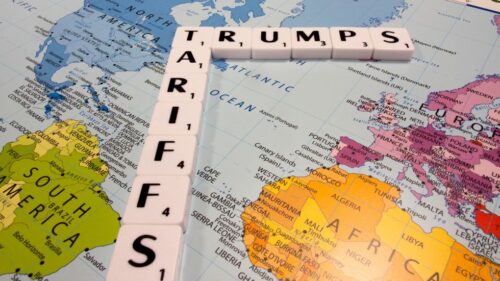
During Trump’s first term, his administration prepared “tailored tariffs” to match the revenue countries expected from DSTs. These tariffs were designed as retaliation against jurisdictions that taxed US digital companies. According to Bunn, the groundwork for such measures is already in place, and they could be revived quickly if DST tensions flare again.
This is a bipartisan issue: Democrats and Republicans alike have voiced concern about discriminatory digital taxes. That consensus means future US governments are likely to keep a hard line.
Who really pays?
Ultimately, the costs of DSTs rarely stop with Big Tech. While some companies may absorb the expense, many shift it onto consumers, advertisers and small businesses. In some cases, companies might even scale back services in jurisdictions with DSTs, leaving users with fewer choices.
The bigger problem, Bunn warns, is the lack of consistent definitions and frameworks. A single digital transaction could, in theory, be taxed multiple times by different jurisdictions, creating a “messy” global landscape. For millions of Internet users, the debate over DSTs is not abstract policy — it directly shapes the price, quality and availability of the services they rely on every day.
[Lee Thompson-Kolar edited this piece.]
The views expressed in this article/video are the author’s own and do not necessarily reflect Fair Observer’s editorial policy.











































Comment