

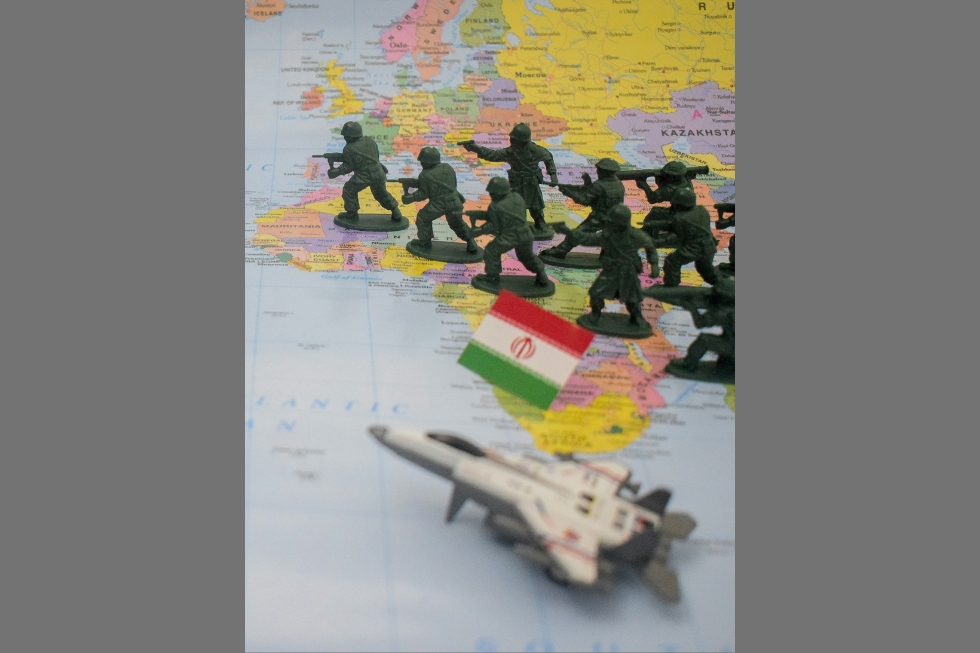



US President Donald Trump’s second-term approach to the Middle East rests on the assumption that personal relationships and sequenced bilateral deals can impose order on a region shaped by revolutionary ideologies, sectarian divisions and entrenched proxy networks. The record so far suggests otherwise. While the administration has secured a ceasefire framework with Iran and explored new openings with Syria’s transitional authorities under President Ahmed al-Sharaa, these initiatives have also been accompanied by signals that risk weakening the very alliances upon which American influence has historically depended.
The Islamabad Memorandum of Understanding (MoU), tentative moves toward reinstating Turkey into the F-35 program and the suggestion that Damascus might manage the Hezbollah threat illustrate a pattern in which short-term diplomatic activity substitutes for a coherent assessment of long-term strategic costs. The Abraham Accords demonstrated that pragmatic normalization between Israel and several Arab states could advance US interests without requiring the immediate resolution of the Palestinian question. However, current policy choices appear to be eroding the conditions that made those gains possible.
The Islamabad Memorandum
The Islamabad MoU is emblematic of a corporatized, short-termist approach to statecraft, in which complex geopolitical disputes are managed through transactional exchanges rather than durable institutional frameworks. The agreement establishes an immediate ceasefire across all fronts, lifts the US naval blockade and provides for a 60-day toll-free reopening of the Strait of Hormuz in exchange for sweeping US economic concessions. While it succeeded in halting the immediate kinetic exchanges of Operation Epic Fury, the agreement’s structure heavily advantages Tehran over the medium to long term.
The central strategic vulnerability of the MoU lies in its asymmetry: It grants Iran immediate and substantial economic relief while deferring negotiations on the Islamic Republic’s nuclear program and proxy network capabilities to an ill-defined 60-day window. Prior to the conflict, Iran’s economy was contracting under extreme pressure, with the International Monetary Fund (IMF) projecting inflation at 68.9% and economic contraction of 6.1% in 2026. During the war, the Iranian rial plummeted to a record low of approximately 1.9 million rials per US dollar, and the US naval blockade drove Iranian crude exports down to zero in May 2026. The MoU rapidly reverses those pressures. Under the agreement, the US Department of the Treasury’s Office of Foreign Assets Control (OFAC) issued General License X, authorizing the production, delivery and sale of Iranian energy products through August 21, 2026.
Furthermore, the MoU commits the United States and “regional partners” to develop a definitive plan for a $300 billion Reconstruction and Economic Development Fund for Iran, alongside the unfreezing of tens of billions of dollars in restricted Iranian assets. Iran’s initial demand for the fund was $400 billion in direct compensation for war damages, but this was negotiated down to a $300 billion private investment and credit mechanism.
Providing Iran with billions of dollars without placing restrictions on the Islamic Revolutionary Guard Corps (IRGC) creates severe strategic risks as the funds will likely help rebuild the Axis of Resistance. While Iranian Foreign Minister Abbas Araghchi claimed that Lebanese Hezbollah was a party to the MoU, the militant group violated the ceasefire on the very day it was signed, launching explosive devices and rockets at Israeli forces in southern Lebanon that had killed five Israelis by June 19.
The ambiguity surrounding the Strait of Hormuz creates additional potential flashpoints. While the MoU specifies a 60-day toll-free passage, Iranian Parliament Speaker and chief negotiator Mohammad Bagher Ghalibaf has asserted that the strait will never return to its pre-war conditions and will ultimately be administered and tolled by Iran.
The credibility of US deterrence
The bilateral nature of the Islamabad negotiations, which largely bypassed Israel and the Gulf Cooperation Council (GCC), has fundamentally undermined the credibility of the US security umbrella in the Middle East. Gulf states view the MoU as a “bad peace” that ignores their core security concerns, specifically Iran’s ballistic missile and unmanned aerial vehicle (UAV) programs, which were used to fire thousands of projectiles against Arab Gulf states during the war.
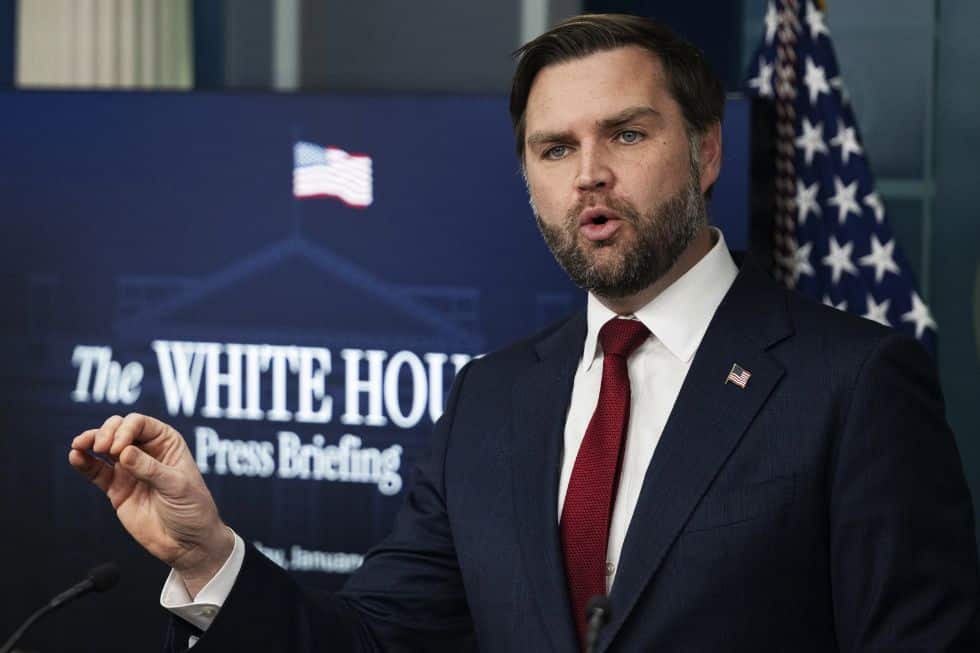
These concerns intensified after US Vice President JD Vance suggested that a “Gulf Coast Coalition” could help finance Iran’s $300 billion reconstruction package. For Gulf states, funding the recovery of an adversary that recently attacked their territory is politically untenable and reinforces perceptions of weakened US deterrence. The MoU is therefore widely seen as evidence that Washington is prioritizing short-term diplomatic and economic gains over the region’s long-term security architecture. In response to perceived US unreliability, Gulf Arab states are accelerating their transition from traditional alignment with Washington toward a strategy of multidirectional hedging.
Saudi Arabia’s national security doctrine under Crown Prince Mohammed bin Salman has evolved to explicitly integrate strategic hedging to ensure the Kingdom’s survival in an increasingly multipolar Middle East. The Kingdom’s defense infrastructure proved highly vulnerable during the 2026 war; its stockpile of Patriot PAC-3 MSE interceptors was depleted by 86%, leaving roughly 400 rounds in inventory with no meaningful replenishment expected before mid-2027.
Faced with an emboldened, soon-to-be reconstituted Iran, Riyadh is expanding its security and technological portfolios beyond Western suppliers. The most significant dimension of this hedging is Saudi Arabia’s accelerating civilian nuclear cooperation with the People’s Republic of China. Frustrated by Washington’s insistence that Riyadh sign the standard International Atomic Energy Agency (IAEA) Additional Protocol as a prerequisite for a Section 123 Agreement, Saudi Arabia has turned to Beijing, which imposes no comparable non-proliferation restrictions.
Chinese and Saudi entities have signed multiple agreements to construct high-temperature gas-cooled reactors (HTRs) and to explore uranium and thorium resources. Western intelligence assessments indicate that Saudi Arabia is working with China to build industrial capacity for extracting uranium concentrate (yellowcake) from domestic ore deposits. Although officially framed as part of Vision 2030 economic diversification strategy agenda to meet domestic energy demand, this cooperation provides Riyadh with the infrastructure necessary to maintain nuclear latency.
The Saudi leadership has publicly and repeatedly stated that if Iran acquires a nuclear weapon, the Kingdom will follow suit. Washington’s willingness to defer negotiations over Iran’s nuclear program under the Islamabad MoU accelerates Riyadh’s timeline for acquiring independent, indigenous fuel-cycle capabilities via Chinese technology.
The transactional approach to Middle Eastern diplomacy has also jeopardized what has arguably been one of the central pillars of US regional policy: expanding the Abraham Accords to include Saudi Arabia. Economic projections overwhelmingly support normalization. Scenario modeling suggests that a Saudi-Israeli normalization agreement could generate between $650 billion and $1.3 trillion in cumulative economic activity by 2046, driven by AI infrastructure, sovereign wealth integration and the completion of the India-Middle East-Europe Economic Corridor (IMEC). However, geopolitical realities have rendered these economic models unviable. Comprehensive polling indicates that 99% of Saudi citizens view establishing ties with Israel as a negative step.
The al-Sharaa gamble
In June 2026, the US administration proposed an unorthodox solution to the ongoing conflict between Israel and Lebanese Hezbollah: Outsource the disarmament and containment of Hezbollah to the new Syrian government. This is a profound miscalculation of the realities on the ground.
The Syrian transitional government is led by President Ahmed al-Sharaa. Born in Riyadh in 1982, al-Sharaa (formerly known by the nom de guerre Abu Mohammad al-Jolani) fought in the Iraqi insurgency against US forces from 2003 to 2006 and was imprisoned in Abu Ghraib. After his release, he formed the al-Qaeda-affiliated Nusra Front in Syria in 2012. Although he broke with al-Qaeda in 2016 and rebranded his organization as Hayat Tahrir al-Sham (HTS), establishing the technocratic Syrian Salvation Government (SSG) in Idlib, his jihadist history remains a major factor in regional calculations.
While he has successfully rebranded himself as a pragmatic statesman, the nascent Syrian state is highly fragile. The Syrian transitional government is currently consumed by the significant challenges of internal stabilization, institutional reconstruction, managing tensions with the Kurdish Syrian Democratic Forces (SDF) following recent clashes in Aleppo and preventing sectarian massacres against the Alawite minority.
Unsurprisingly, al-Sharaa explicitly rejected the US proposal to intervene militarily against Hezbollah, stating that Syria seeks to build economic — not military — ties with Lebanon. Expecting a newly formed Sunni-dominated transitional government to open a new military front against a heavily armed Iranian-backed Shiite proxy group like Hezbollah is strategically unsound. Forcing Damascus into this role would likely trigger a risk of collapse of the Syrian state, plunging the country back into multi-factional civil war and providing a vacuum for Iranian re-infiltration.
Turkey’s strategic realignment
Transactional diplomacy prioritizes bilateral leverage over multilateral cohesion. This is most evident in the US administration’s approach to the Republic of Turkey ahead of the July 2026 NATO summit in Ankara. In a bid to secure a diplomatic victory, the Trump administration has signaled its intent to bypass standing legal frameworks and reintroduce Turkey to advanced US aerospace technology, citing Turkey’s alignment with Washington during the recent US-Israeli strikes on Iran.
Trump has downplayed the notion of a formal exchange, telling reporters alongside President Recep Tayyip Erdoğan, “We don’t need their money, we don’t need anything, I just want loyalty.” Still, the administration appears to be banking on Ankara’s continued utility on two regional fronts: Its role in shepherding Washington’s opening to Syria’s new government under Ahmed al-Sharaa, whose rise Trump has credited to Erdoğan, and Erdoğan’s offer to help broker an end to the Ukraine-Russia war. Turkey’s divestment from the Russian S-400 missile system that triggered its expulsion from the F-35 program in 2019 remains unverified in current reporting, leaving lawmakers and allies including Israel to warn that the technology transfer may be proceeding without the safeguards Congress originally required.
Greece and Israel have expressed profound alarm. Greece views the transfer of the F-35 to Ankara as a direct threat to the regional military balance. Former Greek Prime Minister Alexis Tsipras and diplomatic channels have lobbied Washington to block the sale — sending a warning that an F-35-equipped Turkey will expand its regional military influence in the Aegean and Eastern Mediterranean, threatening Greek and Cypriot sovereignty. Advocacy groups in the US and lawmakers, like Representative Dina Titus, are preparing resolutions to block the move.
Israel vehemently opposes the sale, describing Turkey’s regional policies as “hostile” due to its support for the terrorist militia Hamas and its increasingly belligerent rhetoric. Israeli defense contractors, such as Elbit Systems, manufacture highly sensitive components for the global F-35 supply chain, including helmet-mounted display systems and outer wings. Jerusalem considers the integration of Israeli-developed technology into the arsenal of a strategic rival to be an unacceptable security risk. If President Erdoğan secures the F-35, he will have successfully leveraged US transactionalism to shatter the deterrence framework of the Countering America’s Adversaries Through Sanctions Act (CAATSA). Ankara would be better positioned to project military power independently of NATO consensus.
The Russian vector
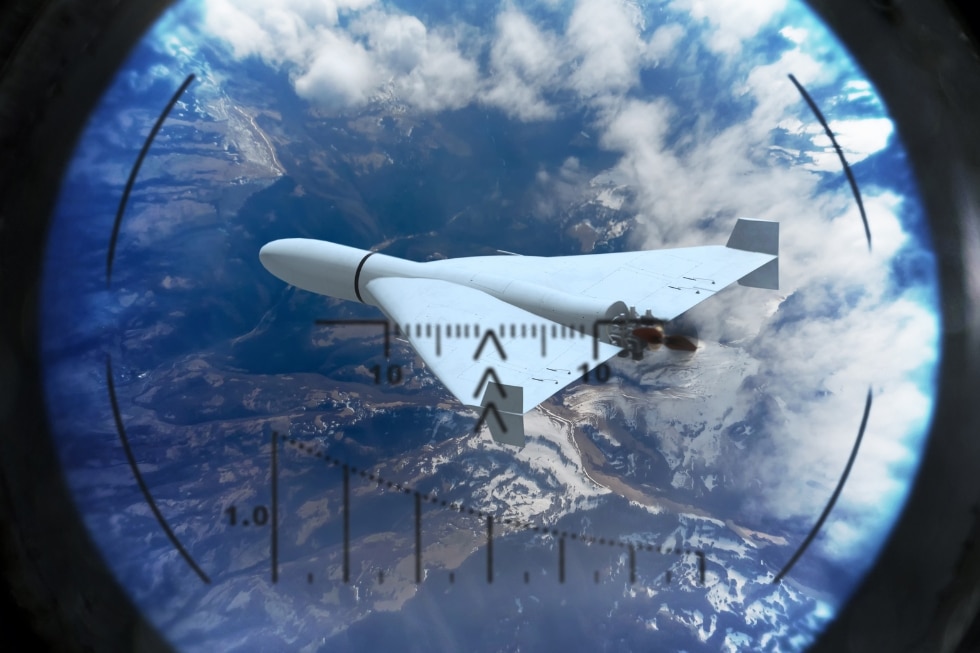
During Operation Epic Fury, Iran depleted an estimated 60% of its unmanned aerial vehicle (UAV) arsenal. Rebuilding this capability is a strategic priority for Tehran, and Russia is facilitating this rearmament through a highly secure, sanctions-proof logistics corridor: the Caspian Sea.
Shielded by the 1921 Russo-Persian Treaty of Friendship, which bars non-littoral military forces from the sea, the Caspian route operates entirely beyond the reach of the US. naval blockade in the Strait of Hormuz. Russian commercial vessels, frequently operating with deactivated transponders, are transporting advanced drone components down the Volga and Kama rivers directly from the Alabuga Special Economic Zone in Tatarstan. These components — including guidance modules, warhead assemblies, and wing sections — originate at Russia’s massive drone production facility there, capable of outputting up to 5,500 drones a month.
These components transit through Astrakhan and Makhachkala directly to the Iranian port of Bandar Anzali.
This logistics pipeline represents a significant limitation of Western interdiction strategies. Russia is helping reconstitute Iran’s asymmetric strike capabilities, effectively reducing the tactical gains achieved by the US and Israel during the February-May 2026 air campaign. Intelligence also indicates that Russia is preparing to transfer 5,000 advanced short-range fiber-optic drones and satellite-guided systems to Iran. This will enhance Tehran’s ability to target US naval assets in future conflicts. Simultaneously, the conflict generated substantial additional revenues for Russia. The energy disruptions alone generated an estimated $161 billion in additional export revenues for Moscow over a three-month span, funding its own war efforts.
The Chinese vector
If Russia is securing Iran’s military resilience, China is securing its economic leverage. The Islamabad MoU is tailored to advance Beijing’s strategic and commercial interests in the Middle East. Since 2021, Iran has operated under a 25-year cooperation agreement with Beijing, securing $400 billion of oil at below-market prices in exchange for Chinese investment.
Prior to the 2026 conflict, China accounted for 80% to 90% of Iranian oil purchases, largely conducted via illicit shadow fleets to evade the US secondary sanctions. The issuance of US waivers would effectively normalize much of this trade. This allows major Chinese state-owned banks and energy conglomerates to enter the Iranian market without fear of US punitive measures. Furthermore, US and European firms will remain legally hesitant to invest in Iran due to the ever-present threat of sanctions “snap-back.” Chinese contractors are positioned to dominate the $300 billion reconstruction market authorized by the MoU.
Ultimately, the true beneficiaries of the current US diplomatic framework are Moscow and Beijing. Washington has created diplomatic, military and economic strategic openings across the Middle East. Russia is utilizing the Caspian corridor to establish a resilient military supply chain with Tehran, while China leverages US sanctions waivers to achieve a dominant economic position over the Iranian state. The Middle East is likely to emerge from the 2026 conflict not as a stabilized region, but as a fragmented theater characterized by multipolar competition and increasingly asymmetric actors.
[Rosa Messer edited this piece]
The views expressed in this article are the author’s own and do not necessarily reflect Fair Observer’s editorial policy.





Join the conversation
Share your perspective
Log in to share your thoughts and take part in the discussion.