




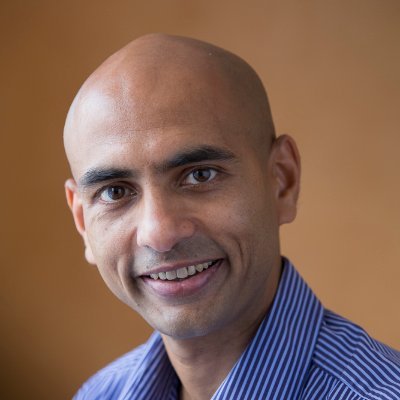
Editor-in-Chief Atul Singh and FOI Senior Partner Glenn Carle, a retired CIA officer who now advises companies, governments and organizations on geopolitical risk, conclude the March 2026 edition of FO Exclusive by analyzing the US private credit market, a $2 trillion sector that experienced serious trouble this month.
Warning signs flashing red
The US private credit is facing the greatest stress since the 2007–08 financial crisis, following years of rapid growth. Signs of major trouble emerged this month.
Kunal Shah, the co-chief executive of Goldman Sachs International and global co-head of fixed income, currencies and commodities, said that some of his iconic bank’s clients were “just glad there’s something to talk about that isn’t software exposures and private credit.” Blackstone Private Credit reported its first monthly loss since 2022. Ares Management has limited withdrawals from one of its marquee private credit funds pitched to wealthy individuals, as redemptions surged to 11.6% in the first quarter amid a broad flight from the asset class. Apollo Global Management limited redemptions from one of its flagship private credit vehicles, becoming the latest investment manager seeking to staunch outflows as wealthy investors retreat from the industry.
Investors are increasingly ditching private credit funds on rising worries over bad loans — Publicly traded vehicles are trading at steep discounts in a gloomy sign for the broader industry. Last month, Blue Owl permanently restricted investors from withdrawing their cash from its inaugural private retail debt fund. Investors are no longer able to redeem their investments in quarterly intervals voluntarily. In September 2025, twin bankruptcies of Tricolor Holdings and First Brands Group shook private credit markets. Fraud allegations shook investor confidence, which has not recovered since.
These developments, Atul suggests, should be treated as early indicators rather than isolated incidents. The private credit market grew rapidly during years of cheap liquidity, but now faces a more challenging environment of higher rates and slowing growth. Investors appear increasingly concerned about bad loans and liquidity mismatches. Glenn reinforces this interpretation by noting that stress in one corner of finance often signals broader fragility. Like JP Morgan CEO Jamie Dimon, “cockroach theory,” explaining that “if you see one cockroach, there’s a likelihood there are many others,” implying that the visible problems may only hint at deeper systemic risks.
How private credit works, advantages and risks
To explain the stakes, Atul outlines the structure of private credit. Unlike traditional bank lending, private credit involves non-bank institutions — private equity firms, hedge funds and specialized lenders — providing loans directly to companies. Borrowers are often mid-sized firms that struggle to access public bond markets or face stricter bank regulations introduced after the 2008 crisis.
The model offers advantages. Companies benefit from faster deal-making, flexible terms and confidentiality. Investors, including pension funds and sovereign wealth funds, are attracted by higher yields and floating interest rates that rise with inflation. In an era of low returns, private credit became a major destination for capital.
Yet these same features create vulnerabilities. Loans are illiquid, meaning investors cannot easily exit positions during downturns. Borrowers are typically more sensitive to economic stress, increasing default risk. Limited transparency reduces regulatory oversight. As conditions tighten, these weaknesses become more visible.
The structure of private credit creates a mismatch between investor expectations and underlying assets. Many funds offer periodic redemption windows for investors, but they cannot sell the loans on their books quickly. If investors withdraw simultaneously, funds may face liquidity troubles similar to bank runs.
Atul and Glenn highlight additional warning signs. Some borrowers are paying interest with additional debt rather than cash, a practice known as payment-in-kind. This can mask deteriorating financial health. Covenant-lite deals — contracts with weaker lender protections — have also become widespread, leaving fewer tools to manage distress. Sources say that years of low rates reduced risk premiums and encouraged aggressive lending.
Glenn links private credit stress to wider economic vulnerabilities. Rising interest rates, slowing growth and technological disruption — particularly from artificial intelligence — are putting pressure on mid-sized companies that depend on this financing. If defaults increase, refinancing options may narrow, potentially triggering layoffs and bankruptcies.
Investor warnings and the threat of systemic risk
Atul and Glenn note that prominent investors and policymakers are already raising alarms. Dimon has also cautioned that risks may be “hiding in plain sight.”
Mohamed El-Erian, a legendary investor and the former CEO of investment manager PIMCO, has unequivocally sounded the alarm:
Is this a “canary-in-the-coalmine” moment, similar to August 2007? This question will be on the mind of some investors and policymakers this morning as they assess the news that, quoting the FT, the “private credit group Blue Owl will permanently restrict investors from withdrawing their cash from its inaugural private retail debt fund.” There’s plenty to think about here, starting with the risks of an investing phenomenon in advanced (not developing) markets that has gone too far overall (short answer: yes), to the approaches being taken by specific firms (lots of differences, yet subject to the “market for lemons” risk). There’s also the “elephant in the room” question regarding much larger systemic risks (nowhere near the magnitude of those which fueled the 2008 Global Financial Crisis, but a significant – and necessary – valuation hit is looming for specific assets).
Others are more optimistic than El-Erian and argue that financial markets will be able to shrug off private credit market risk. They think that the Federal Reserve will keep interest rates low, avoiding excessive tightening of credit markets. Also, although software companies face terminal value risk, this does not impact their debt in most cases. They can cut costs rapidly and generate significant cash.
Atul argues that banks withdrew from riskier lending after the financial crisis, allowing private credit firms to fill the gap. This shift moved risk into less-regulated areas. Complex structures, limited transparency and overlapping exposures now complicate assessment of true valuations. If stress spreads, mid-sized companies that rely on private credit may struggle to refinance operations, amplifying the economic slowdown.
Glenn concludes by placing private credit within a larger narrative of structural fragility. He links the sector’s vulnerabilities to rising US debt, weakening demand for US Treasuries, delayed effects of the Trump administration’s tariffs and broader economic imbalances. Together, these factors suggest that financial markets may be underestimating downside risks. Atul echoes the concern, warning of “flashing warning signs” that point to a sustained downturn rather than a temporary correction.
[Lee Thompson-Kolar edited this piece.]
The views expressed in this article/video are the author’s own and do not necessarily reflect Fair Observer’s editorial policy.







































Comment