




The Indian diaspora has built remarkable success stories. It leads universities, global corporations and technology frontiers. Yet when it comes to public life, it often stays quiet, not from indifference, but from a familiar caution that weighs on every word. That silence may seem harmless, even rational in a polarized environment, but in truth, it is costly. Democracies survive not on individual brilliance but on collective participation.
When Indian Member of Parliament (MP) Shashi Tharoor recently lamented “the silence of the diaspora” on issues such as immigration or civic engagement, he touched a nerve that goes beyond politics. He was describing a deeper instinct, one of self-preservation disguised as prudence. It is a habit many Indians recognize: to stay safe, polite and disengaged even when their experience could enrich public debate.
Restraint can look rational. But when silence hardens into avoidance, it weakens the very democracy that made such success possible. The Indian diaspora’s story has been one of aspiration and excellence. Its next chapter should be about contribution, using its global voice to strengthen the democratic ideals that empowered it.
Why this matters beyond identity
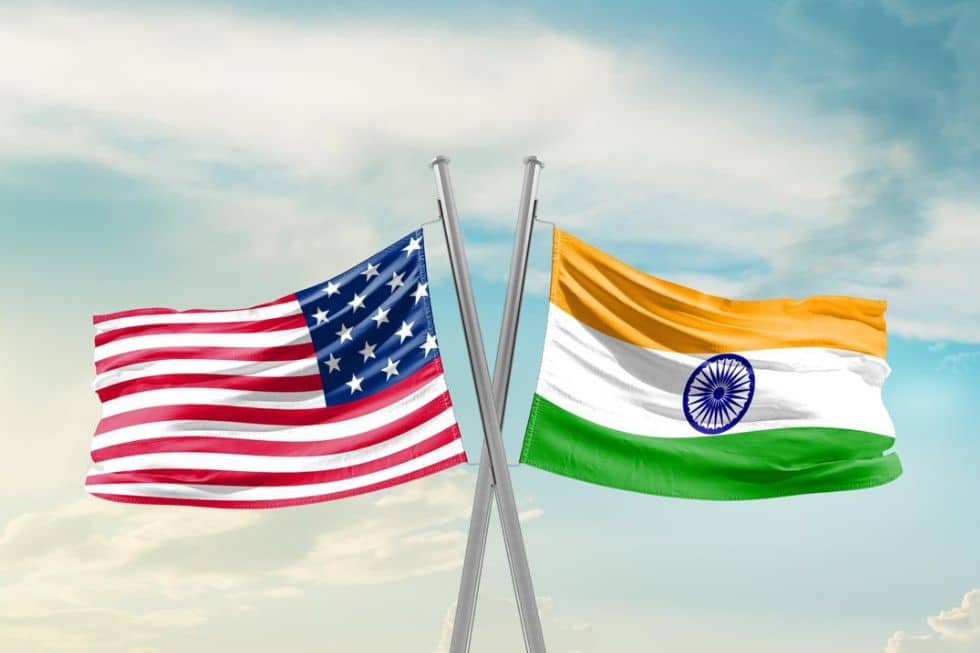
For decades, Washington and New Delhi have spoken of shared democratic values, assuming that cultural similarity would naturally translate into political alignment. That assumption no longer holds. Across the world, democracies are losing hold of institutions, truth and one another.
In this moment of drift, the Indian diaspora stands at a rare intersection. It lives within one democracy while carrying the memory of another, giving it the vantage point to interpret both. Yet when debates sharpen, from immigration to technology policy, its instinct is to stay silent, to watch and wait for the storm to pass rather than weigh in and act.
Caution can be wise when politics changes color, but silence in moments of churn is not prudence; it is absence when engagement matters most. The diaspora’s distance, often mistaken for neutrality, risks shrinking its influence just when its experience could help restore balance.
Of course, silence may not be only cultural; it is also structural. Many in the diaspora live within systems that reward stability over dissent. Visa uncertainty, professional dependence on sponsorships and the fear of jeopardizing immigration status make civic participation feel risky. Others face subtler barriers, such as underrepresentation in politics or the absence of collective institutions that promote policy engagement. Indian community organizations in the United States often focus on cultural preservation rather than political advocacy or coalition building. In that ecosystem, discretion becomes a habit, and risk aversion turns into an identity.
This silence has cultural roots. From early schooling, Indians are trained to compete, not collaborate. Marks, promotions and awards all reward the individual. Working together is rarely taught as a skill, except perhaps on the sports field.
We are taught that “Unity is Strength” and “Knowledge is Power.” Yet somewhere along the way, we learned to practice only the second. Our education system produces skilled professionals, not civic thinkers. It teaches us how to win, not how to belong. The result is a quiet contradiction: We celebrate both proverbs yet live by only one.
While studying in Singapore, I noticed how cultural habits shaped learning. My Chinese classmates, guided perhaps by Confucian notions of harmony, collaborated freely and celebrated collective achievement. Many Indian students, though equally talented, tended to work more independently. It wasn’t a lack of goodwill, but a reflection of how deeply competition is wired into our idea of success.
This is not about blame; it’s about inheritance. Centuries of hierarchy and colonialism taught us that survival depends on personal advancement. Even today, diversity, one of India’s strengths, can make unity fragile. We coexist but visibly fail to act together.
Sociologists call this a low-trust culture, rich in talent but short on cooperation. The diaspora reflects it too. We gather easily for festivals or emergencies but rarely for the slower, harder work of civic life.
The pattern is visible across what were once called the BIMARU states (Bihar, Madhya Pradesh, Rajasthan and Uttar Pradesh), regions that have produced some of India’s brightest global achievers yet still struggle with underdevelopment. Individual success has not translated into collective renewal. It is a mirror of the diaspora’s dilemma: brilliance without solidarity, achievement without influence.
Democracy’s unfinished lesson
This habit extends into Indian politics. Opposition and ruling parties alike often invest more in criticism than in ideas. Prime Minister Narendra Modi’s call for “Team India” and his vision of Viksit Bharat, a developed India by 2047, rest on the same truth Tharoor hinted at: democracies thrive on participation, not performance alone.
The diaspora faces the same challenge. Members are not guests in their adopted democracies; they are an integral part of them. Their voice can help both India and the United States reimagine liberty, equality and civic duty in a divided world.
To participate is not to take sides. It is to take responsibility. The diaspora’s unique position, between two experiments in democracy, gives it moral leverage few others have.
Finding balance
Former Dean of the Lee Kuan Yew School of Public Policy, Kishore Mahbubani, recently told CNN-News18 that India must become an independent third pole in a multipolar world, close to both Washington and Beijing yet dependent on neither. He compared the two powers to elephants on a seesaw, saying India’s strength lies in balance.
The same could be said of the diaspora. Living between cultures gives the diaspora a rare chance to balance ideas, not just loyalties. Its role need not be political; it can be moral, cultural and intellectual. Silence, in that context, is not elegance but evasion. True independence, whether for nations or communities, grows from engagement and from the courage to speak when the way forward is unclear.
Toward a shared voice
India’s story has always balanced individual brilliance with collective purpose. The freedom movement, the cooperatives of the early republic, and the shared traditions of Bhakti and Sufism all remind us that progress is social, not solitary.
Today’s global Indians, whether in Delhi or Dallas, have more influence than any generation before them. What remains is the courage to act together, to see unity not as sameness but as shared purpose.
It is not to argue that the diaspora should fight back or turn political; rather, it is to suggest something quieter and more powerful: that it must develop an assimilated voice, one that speaks from within the societies it belongs to, shaping conversations rather than echoing them.
History shows how perception can shape destiny. During the Second World War, Kyoto was removed from the US list of atomic-bomb targets, and Nagasaki became one of the alternatives. Historians note that the decision reflected not sentiment alone but Kyoto’s cultural prestige, its diplomatic importance and the personal intervention of Secretary of War Henry Stimson. Influence, as that episode reminds us, does not always stem from power; sometimes it flows from how a place, or a people, are perceived.
That is the kind of soft power India and its diaspora must rediscover, not through symbolism but through credibility, empathy and engagement. When a community speaks not from anger but from alignment, it earns trust. And trust, in today’s fractured world, is the rarest currency of all.
The challenge for the Indian diaspora is not to find a louder voice but a wiser one, capable of helping build a fairer world and keeping alive the moral promise of collective democracy.
[Natalie Sorlie edited this piece.]
The views expressed in this article are the author’s own and do not necessarily reflect Fair Observer’s editorial policy.
India’s Higher Education: A Global Opportunity in the Making
India’s universities face the enormous task of doubling higher education enrollment to reach a 50% Gross Enrollment Ratio by 2035....
Transformed by India: A Life
Transformed by India is the memoir of a man who spent over 50 years documenting India’s sacred arts and crafts....
The 2023 GUESSS Survey on India’s Promising Youth Entrepreneurship
The GUESSS India 2023 Survey reveals a growing trend of youth in India starting businesses, influenced by new academic programs...
Support Fair Observer
We rely on your support for our independence, diversity and quality.
For more than 10 years, Fair Observer has been free, fair and independent. No billionaire owns us, no advertisers control us. We are a reader-supported nonprofit. Unlike many other publications, we keep our content free for readers regardless of where they live or whether they can afford to pay. We have no paywalls and no ads.
In the post-truth era of fake news, echo chambers and filter bubbles, we publish a plurality of perspectives from around the world. Anyone can publish with us, but everyone goes through a rigorous editorial process. So, you get fact-checked, well-reasoned content instead of noise.
We publish 3,000+ voices from 90+ countries. We also conduct education and training programs
on subjects ranging from digital media and journalism to writing and critical thinking. This
doesn’t come cheap. Servers, editors, trainers and web developers cost
money.
Please consider supporting us on a regular basis as a recurring donor or a
sustaining member.
Will you support FO’s journalism?
We rely on your support for our independence, diversity and quality.
Humiliated and Offended: Trump’s Deportations Echo Fascist Germany
US President Donald Trump promised, delivers and goes further. In the hunt for and expulsion of illegal immigrants in the...

Facilitating the Rise of HTS Is the Latest US Blunder
Once the world’s only superpower, the American empire is falling because of incompetence, corruption and brutality. Supporting the war in...

Trump’s Return: Can He Deliver America’s Golden Age?
The US is no longer the global beacon of strength and prosperity it once appeared to be, as deep divisions...





Comment