



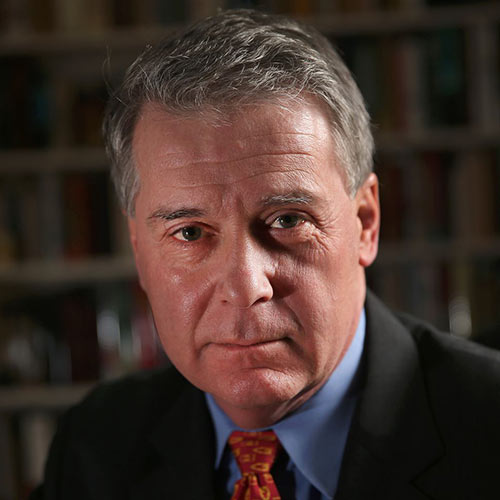
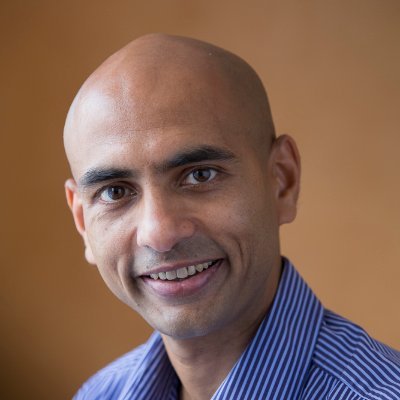
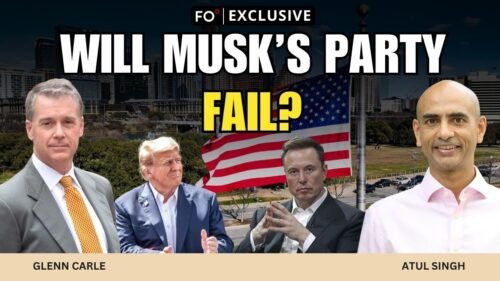
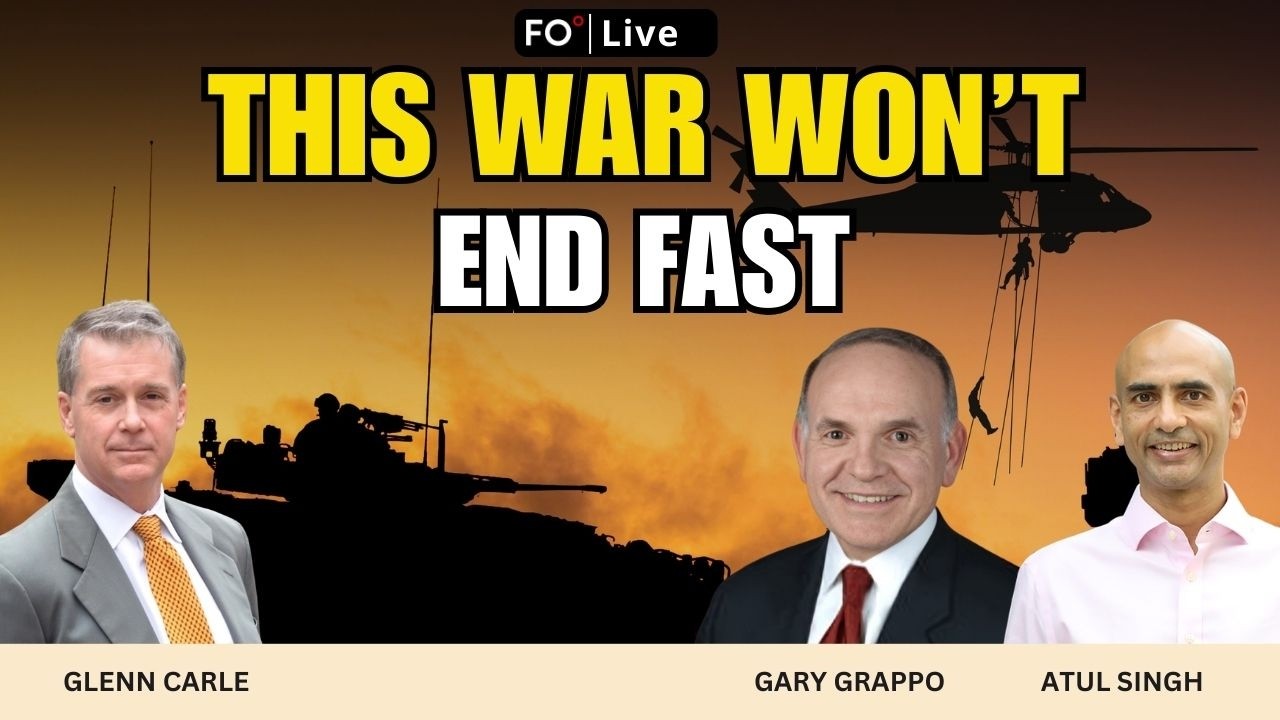
Fair Observer Founder, CEO & Editor-in-Chief Atul Singh and retired CIA Officer Glenn Carle discuss the political fallout surrounding the late sex trafficker Jeffrey Epstein and the scandal’s implications for US President Donald Trump. The scandal has re-entered the spotlight not just for its disturbing details, but for the way it fuels conspiracy theories and deepens divisions in American politics. With Trump’s name resurfacing in connection to Epstein, and his base growing restless over broken promises, the conversation probes the uneasy intersection of scandal, loyalty and public perception.
The Epstein scandal resurfaces
Atul and Glenn open the conversation by acknowledging that while Trump has faced many scandals — indictments, convictions and connections to suspected Russian agents — the Epstein case is gaining unusual traction. Glenn calls the affair both “farce” and “sick,” noting that the pedophilia aspect hits a nerve but is also steeped in conspiracy theories.
Epstein was a wealthy financier who used his fortune and connections to sexually exploit adolescent girls, aided by his partner, Ghislaine Maxwell. Glenn emphasizes that both were involved in grooming young women under the guise of employment, including as masseuses or assistants, to serve Epstein and his associates.
Atul interjects with a comment on social status and naming conventions, briefly linking the prominence of Epstein’s and Maxwell’s families to elite networks. He and Glenn note Epstein’s properties in New York and Palm Beach, Florida, and his infamous private island in the Virgin Islands, which served as the backdrop for much of the alleged abuse.
Legal troubles and a suspicious death
Epstein was arrested in 2005, convicted and sentenced to just 13 months in prison — a lenient outcome criticized as protecting powerful figures. A non-prosecution agreement shielded others who may have been implicated, including Trump, former US President Bill Clinton and lawyer Alan Dershowitz.
The case faded until 2018, when the Miami Herald newspaper interviewed survivors and revived public interest, resulting in Epstein’s rearrest. But before his new trial could begin, he was found dead in his prison cell under circumstances that Glenn and many others find deeply suspicious. Crucial surveillance footage vanished, and the prison guard assigned to watch him inexplicably left his post. Glenn sarcastically compares the event to a “Godfather movie or a Mossad operation.”
Trump, the client list and political blowback
Trump’s name appears repeatedly in the context of Epstein’s social circle. Though no illegal conduct has been publicly linked to Trump, Glenn and Atul explain how the mere association has political consequences — especially since Trump once vowed to release Epstein’s client list to expose elites like the Clintons. Once in office, however, he reportedly backed off after being told his own name appears in the testimony, though not as a client. This U-turn has enraged the conspiracy-minded Make America Great Again (MAGA) base that had hoped Trump would “drain the swamp” and hold elites accountable.
Another political flashpoint is the viral meme, “Epstein didn’t kill himself,” which has become a symbol of deep distrust in American institutions. Glenn expresses his disbelief at the convenient disappearance of the prison video and suggests the scenario reeks of a cover-up. Trump’s base feels betrayed — the justice it was promised never materialized. Glenn quips that Trump has gone from crusading against conspiracies to dismissing them as a distraction.
Impact on the political landscape
Despite the scandal, Glenn notes Trump’s poll numbers remain resilient. While most Americans disapprove of him, many MAGA supporters see the renewed attention to Epstein as just another Democratic attack. Traditional Republicans are divided — some approve, others disapprove and many claim not to know enough. Atul speculates the issue could hurt Republicans in the upcoming midterms, though he acknowledges that such damage might be modest.
Conspiracies, psychology and social media
Atul and Glenn go on to examine how conspiracy theories shape political behavior. Atul compares the dynamic to Soviet-era communists who reversed their beliefs overnight after the Molotov–Ribbentrop Pact of 1939, illustrating how tribal loyalty can override facts. Glenn adds that people often cling to the worldview of their “tribal leaders,” regardless of contradictory evidence.
While these psychological patterns aren’t new, social media has radically accelerated their spread.
Glenn shares a personal story about friends who fled the Soviet bloc and were lifelong anti-Russians — until they became fervent Trump supporters. These friends now see any criticism of Trump’s ties to Russia as betrayal, which Glenn finds both tragic and illustrative of the broader social phenomenon. In his view, the Epstein case may create political cracks for Trump, but not an existential collapse. Atul agrees that this scandal may leave a mark, just not a decisive one.
[Lee Thompson-Kolar edited this piece.]
The views expressed in this article/video are the author’s own and do not necessarily reflect Fair Observer’s editorial policy.

























Comment