





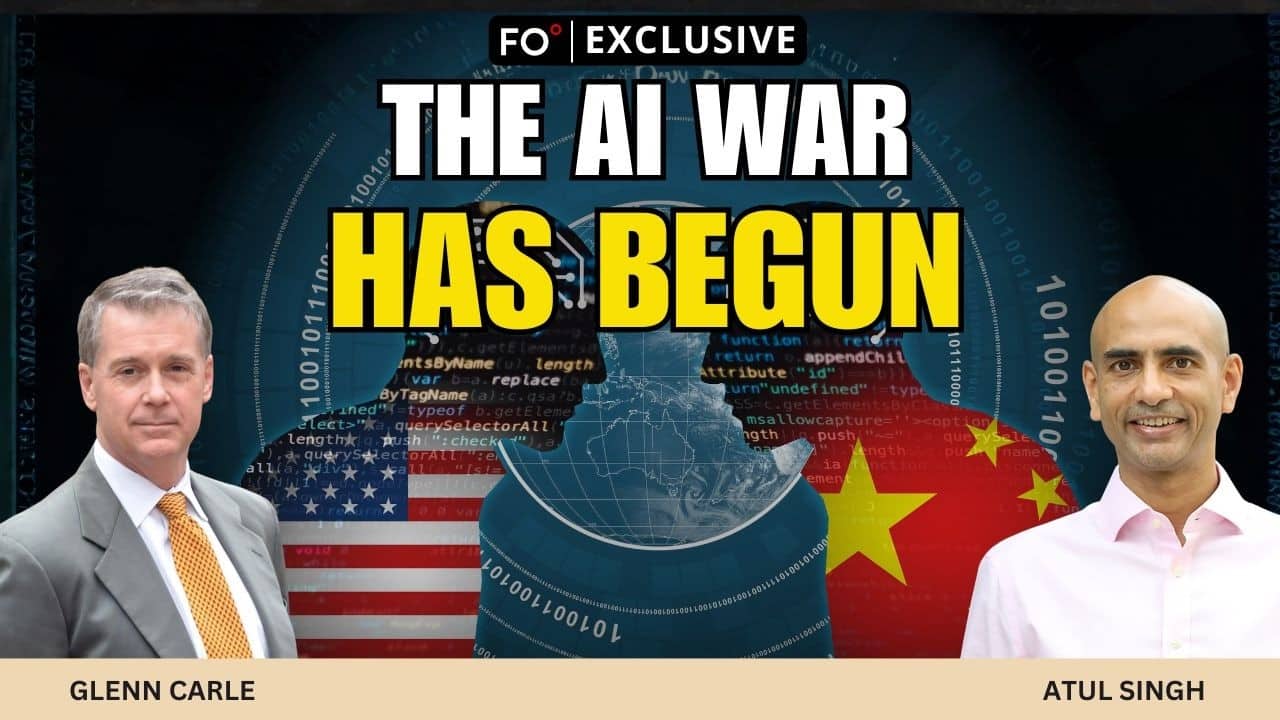
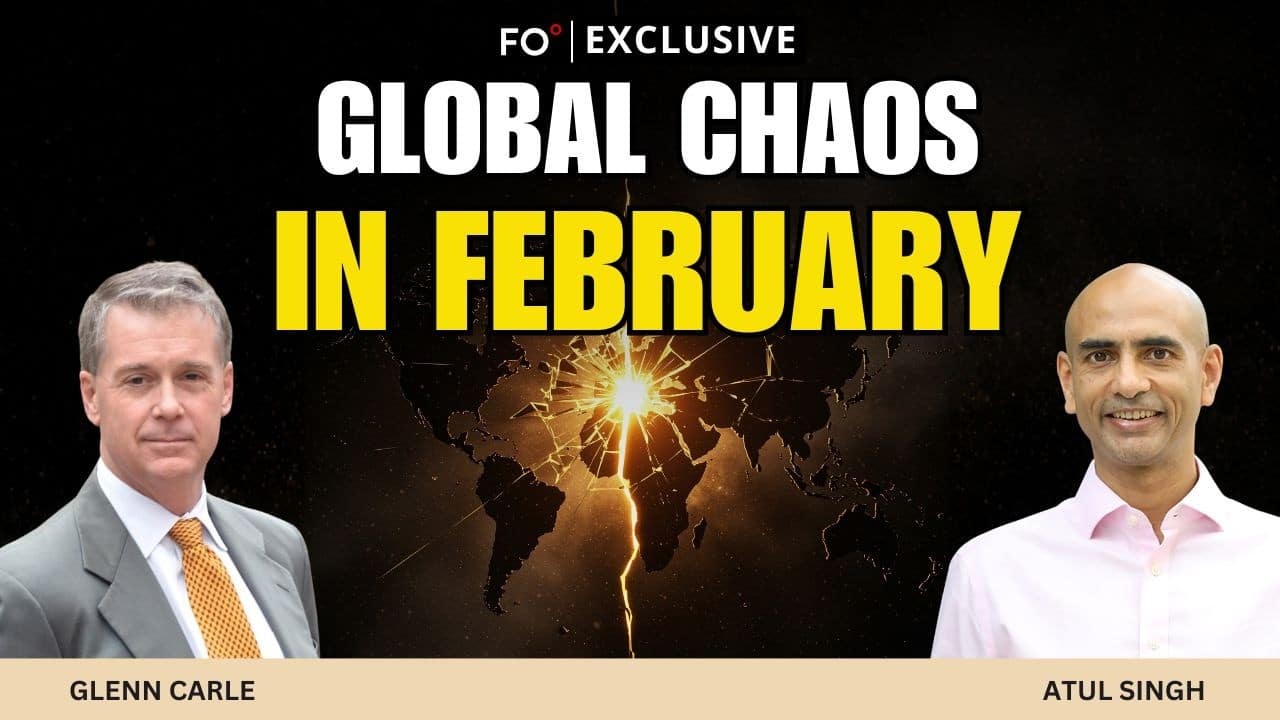
Editor-in-Chief Atul Singh and FOI Senior Partner Glenn Carle, a retired CIA officer who now advises companies, governments and organizations on geopolitical risk, look ahead and predict the world’s biggest challenges in 2026. To structure their forecast, they borrow the SPERM framework — Social, Political, Economic, Religious and Military factors — and argue that this year will be defined by the way multiple stresses reinforce one another. Immigration pressure, democratic dysfunction, market distortions and strategic competition are not separate stories. They are connected pressures on social cohesion and state capacity.
- Immigration will be a hot ticket issue around the world
Atul begins with immigration because it is already driving elections and may drive more. In the US, border politics helped deliver US President Donald Trump’s 2024 victory. In the UK, the 2016 Brexit vote was, at its core, a demand to “take back control,” especially of borders. In France and Germany, immigration has moved from a background concern to a central axis of political competition.
However, this is not a purely Western story. Atul stresses that “Third World” states are also tightening and reacting. Pakistan is deporting millions of Afghans back to Taliban-ruled Afghanistan. India worries about Bangladeshi migration altering the demography in border regions. In South Africa, the vigilante movement Operation Dudula has targeted undocumented migrants — especially children — with street-level intimidation.
Atul underscores the demographic contradiction inside Europe: Aging societies with falling birthrates need workers, but large-scale inflows intensify cultural and political strain. He bolsters the argument with numbers that make assimilation debates unavoidable:
- US: As of January 2025, 53.3 million immigrants, 15.4% of the population — the highest number ever recorded.
- United Kingdom: 10.7 million immigrants at the 2021/2022 census, about 16% of the population, with both number and share rising since.
- France: Estimates of immigrants range from 10.3% to 13.8%.
- Germany: 17.4 million immigrants in 2024, 20.9% of the population — the EU’s largest immigrant destination.
- The Netherlands: Over 3 million immigrants out of 18 million total as of January 1, 2025, about 16.8%.
From there, the conversation moves into the cultural edge of the immigration debate. Immigration becomes explosive when it collides with questions of identity and religion in secular states. Atul frames it as a clash between a Western secular order and the social norms many Muslim migrants bring with them. Europe is experiencing both Islamism and Islamophobia at the same time, with rising numbers feeling threatened by the “other.”
Their forecast in this section is blunt: Immigration remains a global driver of polarization, and far-right parties thrive as mainstream politics struggles to reconcile labor needs with assimilation pressures. As that tension persists, Atul and Glenn expect democratic practices to fray, and social unrest to remain a regular feature of politics rather than an exception.
- US democracy faces a systemic challenge
If immigration is the social spark, Atul frames the American political story as institutional decay. The headline example is the 43-day government shutdown, triggered when Congress failed to pass a budget for the fiscal year beginning September 1, 2025. In theory, Congress’s “power of the purse” should produce annual appropriations that keep the government functioning smoothly. In practice, since the start of the 21st century, Congress has repeatedly missed deadlines and relied on continuing resolutions (CRs) — stopgap funding that keeps programs alive until lawmakers can pass regular appropriations. The fact that the US legislature cannot reliably do its most basic job becomes, for them, a symptom of a deeper disease: polarization so intense that governance itself becomes episodic.
Atul describes the mental map each camp has of the other. Republicans see Democrats as “woke totalitarians,” while Democrats see Republicans as “racist fascists.” As Glenn has said repeatedly, the country is more divided than at any point since 1861, and today’s divide exceeds the unrest and violence of the 1960s and 1970s. Unlike then, this divide is now embedded in institutions rather than primarily in streets.
This polarization has led to dysfunction in Congress and empowered the White House. Over decades, an “imperial presidency” has developed. Now, the theory of the unitary executive has emerged: The president needs power because Congress cannot act. Atul points back to how US President George W. Bush accelerated this expansion of presidential power by using executive orders, executive privilege, emergency powers and agency rulemaking to bypass gridlock. The Global War on Terror became a convenient justification for increased executive authority, including policies that normalized coercive practices and “justified torture.” The result is a presidency Atul and Glenn describe as king-like: stronger, more insulated and with fewer checks and balances than intended by the constitution.
They make a cautious forecast: Once authority centralizes, it is hard to restore the old balance. Even if a majority of the public opposes the drift, some of the erosion of checks and balances becomes permanent by inertia. Restoration is possible, but partial — and likely contested.
- The far right will become stronger in Europe
Atul then widens the lens: Europe is not immune to the same spiral of immigration pressure, economic anxiety and institutional paralysis. He starts with the general pattern: Few European democracies now produce clear majorities, which means fragile coalitions, weak mandates and frequent breakdowns.
Even the UK now conforms to this pattern despite leaving the EU. The center-left Labour Party’s 2024 “loveless landslide” has not translated into decisive governance, while British Member of Parliament (MP) Nigel Farage’s rise signals a persistent appetite for insurgent populism. In France, the paralysis is more explicit: Parliament has three amorphous blocs and cannot cohere around budgets or reforms. In 2025, lawmakers failed to agree on a budget and resorted to a stopgap loi spéciale to carry the state into January at 2025 spending levels. Atul’s conclusion is stark: France looks “ungovernable.”
Germany is the bellwether. The far-right Alternative für Deutschland (AfD) party continues its inexorable rise. Atul cites a late November event in the German town of Giessen where the youth wing Generation Germany urged “mass remigration” of foreigners — language meant to sound administratively tidy while implying dramatic expulsions.
Glenn and Atul also emphasize that the increased power of the far right is no longer a fringe phenomenon confined to a couple of outliers. Hungary, Slovakia and the Czech Republic have far-right governments. Italy, Finland and Croatia feature far-right parties in government. Even Sweden, long treated as the progressive archetype, is now governed in a way that depends on the support of the Sweden Democrats.
The conversation ties this to a longer historical rhythm: the post-1945 European settlement — peace, integration and liberal norms — may have been closer to an aberration than a permanent achievement. The implication is not inevitability of war, but fragility of the assumptions that EU integration could steadily deepen regardless of social and economic strain.
Atul and Glenn foresee that Europe faces an existential democratic challenge. The nativist right continues to grow, and that growth threatens not only domestic liberal norms but also EU integration and NATO cohesion. Both of these rely on member states sustaining political consent for compromise and collective security. This consent is increasingly less forthcoming.
- Increasing economic strains leading toward global recession
Atul and Glenn then pivot to economics, where they do not share the official optimism of either Goldman Sachs or the American government. They start with Washington’s upbeat narrative. US Treasury Secretary Scott Bessent says 2026 can be “a very good year.” A major prop is the One Big Beautiful Bill Act, a tax-cutting law enacted in July 2025, which will soon deliver tangible benefits — including refunds reflecting retroactive tax cuts on 2025 income and reduced levies on monthly earnings. Citing Piper Sandler, they note that the “two years of tax cuts in one” amount to roughly $191 billion.
An expansive fiscal policy is accompanied by a loose monetary policy, which should lead to increased economic activity. The Federal Reserve cut rates three times in 2024, and then again in September, October and December 2025, as layoffs mounted. Yet over a million jobs were lost in 2025, making it the worst year for layoffs since 2009. Atul situates 2025 historically with a short list of high-layoff years:
- 2020: 2,227,725
- 2001: 1,956,876
- 2002: 1,373,906
- 2009: 1,242,936
- 2025: 1,170,821
- 2003: 1,143,406
It is true that growth data still looks strong: GDP rose 4.3% in Quarter 3. Goldman Sachs investment banking company projects 2.8% global growth in 2026 (versus 2.5% consensus) and expects the US to outperform at 2.6% (versus 2.0% consensus). Their quarterly US forecast: 3.5% (Quarter 1), 2.5% (Quarter 2), 2.1% (Quarter 3), 2.1% (Quarter 4) — driven, Goldman argues, by reduced tariff drag, tax cuts and easier financial conditions.
But Atul and Glenn push back. They read positive projections as politically convenient and structurally misleading. Their historically-informed trends include mercantilism/protectionism, tax cuts and deficits, monetary pump-priming, more mergers and acquisitions (M&A), market distortions and a K-shaped economy where gains concentrate at the top. They believe the economy to be frothy and in danger of a crash.
A concrete example of the “froth” is the increased M&A activity in the economy. The Harvard Law School Forum on Corporate Governance reported that US M&A volume hit $2.3 trillion in 2025, up 49% from 2024, with global M&A rising over 25% in 2025. Mega-deals returned: four $40 billion-plus US deals took place in 2025 compared with zero in 2024. Globally, there were 63 deals of $10 billion-plus through late November, exceeding the prior annual high set a decade earlier. Private equity is also roaring back, with global deal volume expected near $2 trillion — the biggest since 2021.
Then comes the artificial intelligence (AI) bubble warning: $350 billion in AI capex, $100 billion debt-financed, triple the prior nine-year average. They flag “incestuous circular deals” as a sign of market mania — money cycling between the same firms and platforms. Valuations look stretched, with the S&P 500 posting a P/E ratio of 31. Note that historical long-term P/E ratios for the S&P 500 range from 16 to 20. Markets have posted three strong years in a row: 24% in 2023, 23% in 2024 and 17% in 2025. A correction seems overdue. Atul cites a back-of-the-envelope reality check from JPMorgan Chase: To earn 10% returns on projected AI capex by 2030, firms would need $650 billion in annual AI revenues — roughly $400 per year from every iPhone user.
Economic weakness is not just an American story. China’s factories are running under capacity with weak demand and high unemployment. Europe faces aging demographics, low demand, high unemployment, heavy debt and low productivity. India risks “meltdown” from inefficient oligopolies and “tax terrorism” by rapacious bureaucrats who have suppressed demand.
Atul and Glenn argue that the risk of a market crash, rising unemployment and recession is higher than consensus estimates suggest. Budget deficits, tariffs, immigration restrictions, labor shortages, extreme concentration of wealth in the top 1–5%, and heavy investment concentration in AI are all likely to act as brakes on economic growth.
- Global race for critical minerals
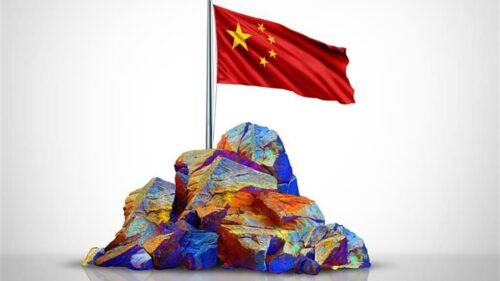
China’s near-total control over many critical minerals and rare earth elements has become a central geopolitical concern. In its trade war with the US, Beijing has already demonstrated its willingness to weaponize export controls, restricting access not only to raw materials but also to technologies such as rare earth magnets. According to the US Geological Survey, 60 minerals are now classified as critical to national and economic security and the International Energy Agency projects sharply rising demand by 2030.
As is now well known, the supply chain of critical minerals is dangerously concentrated. The Democratic Republic of Congo produces more than 70% of the world’s cobalt, while China controls roughly 78% of cobalt processing and dominates rare earth refining. In response, the Trump administration has issued multiple executive orders and mobilized agencies, including the Departments of Commerce and Defense, the Export–Import Bank and the US International Development Finance Corporation to reduce dependence on China. Tools include loans, equity investments, price floors and long-term purchase agreements. Parallel diplomatic efforts include the G7 Critical Minerals Action Plan, the Quad Critical Minerals Initiative and over $10 billion in joint commitments with Asian partners.
Atul and Glenn forecast that competition over critical minerals will increasingly resemble earlier struggles over oil, shaping industrial policy, diplomacy and strategic rivalry in 2026, though supply diversification remains uncertain.
- Europe faces a mega polycrisis
Europe’s pressures converge into what Atul calls a “mega polycrisis.” Political paralysis at national and EU levels collides with looming sovereign debt risks, suffocating regulation, low productivity and difficulty attracting talent. Immigration intensifies social strain, while bureaucratic elites appear disconnected from public sentiment.
The crisis is social, political, economic, religious and military. Secular Europe is struggling to digest religious Muslim immigrants even as Russia is on the ascendant in Ukraine. The European welfare state model is under threat. Storm clouds are gathering over the aging continent even as mainstream political parties struggle to deal with the challenges. Populists are promising simple answers to complex questions and are on the rise.
Atul and Glenn believe Europe is likely to evolve de facto into a continent of multiple speeds, with sustained strain on EU cohesion, the euro and NATO, as domestic fragmentation limits collective action.
- Instability on the rise: failing, flailing and fracturing states
Atul and Glenn broaden the lens from a Europe facing a polycrisis to a global pattern of state fragility. They cite Venezuela, Nigeria, Mali, Libya, the Democratic Republic of Congo, Somaliland, Lebanon, Syria, Iraq, Iran, Yemen and Afghanistan as cases where governance is weakening or collapsing.
Some states like Afghanistan and Mali are failing. Others like India and Nigeria are flailing. Still others like Syria and Somaliland are fragmenting. The principle of state sovereignty is clashing with the principle of self-determination.
The speed and scale of this instability signal a return to a harsher international environment as Pax Americana fades and a Hobbesian world reemerges.
- Russia–Ukraine war comes to an end
The Russia–Ukraine war is now entering its final phase. Advisors to Ukrainian President Volodymyr Zelenskyy speak of “the beginning of the end.” The Russians are ascendant on the battlefield and the Trump administration is pressuring Ukraine to make peace. Kyiv has reportedly agreed to most elements of the US 20-point plan. No longer is Ukraine hung up on NATO membership. It is willing to accept security guarantees instead. Similarly, the country will not join the EU either.
Ukraine does not want to give up land, though. But the country may not get its wish because Trump favors a land-for-peace settlement. He is likely to force this deal on the Ukrainian government. Growing voter fatigue in Europe, driven by perceptions of corruption and the presence of young Ukrainian men in European cities, is weakening public support for continued aid.
In a polycrisis, European politicians will find it really difficult to send even a tiny amount of taxpayer money to Ukraine. A weary Kyiv is likely to make peace with Moscow in 2026 because US or EU support will weaken.
- Tensions turning dangerous in East Asia
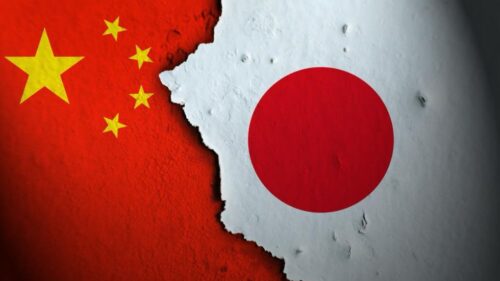
Risks of conflict in East Asia are rising, too. At the end of the year, China’s Justice Mission 2025 live-fire exercises followed a record $11 billion US arms sale to Taiwan. Taiwan reported 130 Chinese aircraft and 14 naval vessels operating in the exercise, with 90 sorties entering its air defense identification zone. Taiwanese President Lai Ching-te condemned the drills as intimidation, while Beijing accused Taiwan and Japan of provocation and slammed the US weapons sale.
Glenn calls China’s diplomatic outrage “a tempest in a Beijing-made teapot.” Atul also points to Beijing’s rising tensions not only with Taipei but also with Tokyo. East Asia is now going through its most dangerous period since World War II. Rising nationalism and miscalculation could cause conflict and catastrophe.
- The Middle East: Israel, Iran and the end of regional order
Glenn closes by turning to the Middle East, a region undergoing tectonic realignment. While Israel currently enjoys overwhelming military dominance following the Gaza War — having neutralized Hamas, liquidated Hezbollah’s leadership, shattered Syria’s conventional military capacity and secured its borders — this dominance has not produced stability. Instead, it has destroyed the regional order and inaugurated a new period of increased instability.
The Middle East is reverting toward what English philosopher Thomas Hobbes described as a state of nature. The postcolonial states of Syria, Libya and Yemen have disintegrated de facto, if not de jure. Contending areas in these countries are now dominated by different militias, foreign intelligence services and their proxy forces. Lebanon remains deeply divided, Iraq only partially sovereign and Iran internally strained by economic pressure, demographic stress and recurring protests. The region’s problem is now the absence of legitimate, durable state authority.
This decline in state authority has come at a time the US is pulling back from the region. The old traditional alliances are loosening. Saudi Arabia and the United Arab Emirates are moving closer to China, recalibrating their foreign policy away from exclusive dependence on Washington. Turkey, invoking its Ottoman legacy, is expanding its influence across Syria and the eastern Mediterranean. Pax American is yielding to a more fragmented and transactional regional order.
Atul and Glenn do not forecast imminent large-scale war, but persistent instability. Skirmishes, proxy conflicts and sudden escalations will continue as weak Middle Eastern states fracture further and external powers compete for influence. The Middle East exemplifies the broader global condition entering 2026: an erosion of the post–Cold War security architecture and a world in which volatility, uncertainty, complexity and ambiguity are no longer episodic, but permanent.
[Lee Thompson-Kolar edited this piece.]
The views expressed in this article/video are the author’s own and do not necessarily reflect Fair Observer’s editorial policy.
































Comment