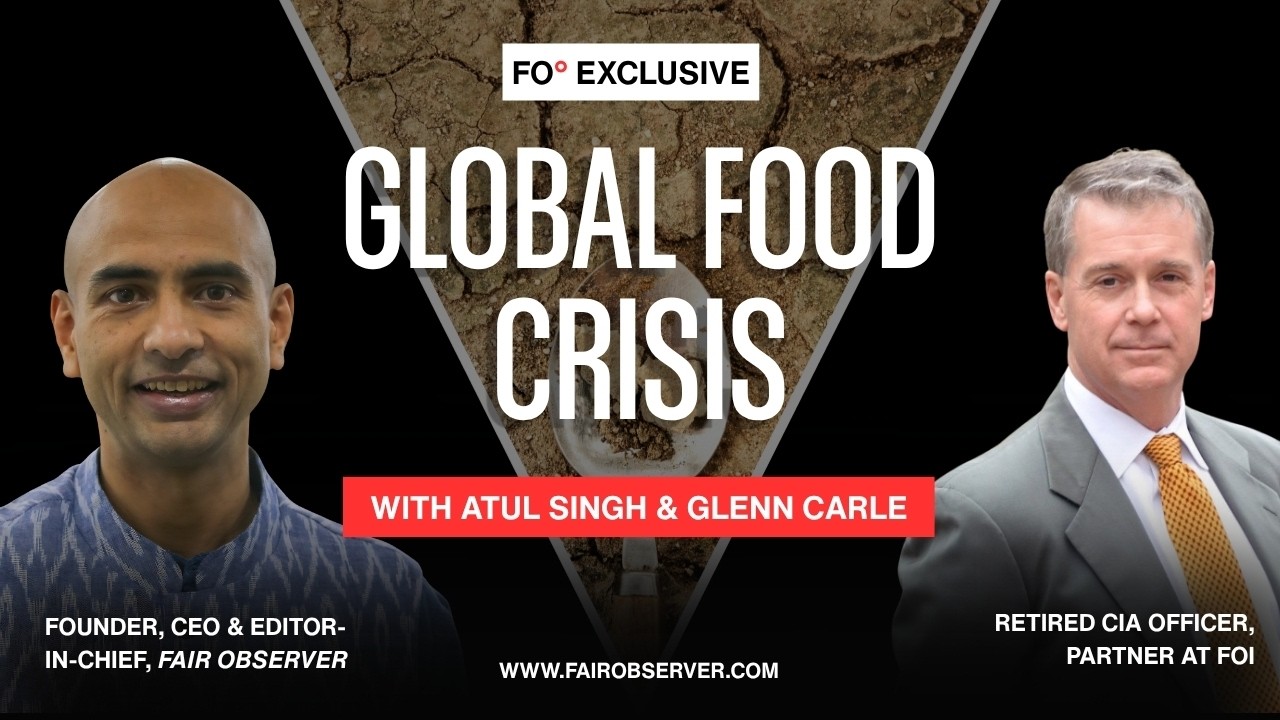
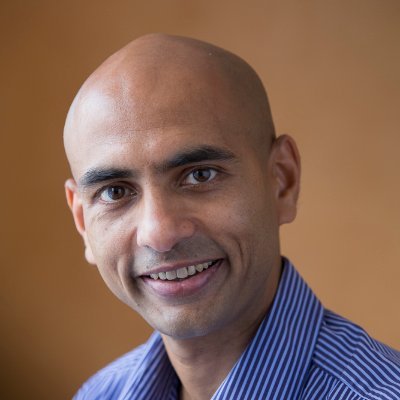
Atul Singh takes the view that these are perilous times for the global economy. Global debt reached a record $235 trillion: it is now 247% of GDP. Inflation around the world has shot up. In the eurozone, it was 9.2% in December 2022.
Poor economies are now paying more for stuff, getting less for their exports and seeing rising deficits. In turn, these increase debts. And rising interest rates, a necessity because central banks have to combat inflation, mean that the cost of servicing existing debt and of borrowing new debt has shot up. As a result, there is a food and debt crisis in the poorest countries. Countries like Sri Lanka, Pakistan, Bangladesh and Argentina are going with a begging bowl to the International Monetary Fund (IMF).
It is not just the poor who are suffering. Europe is going through a tremendous crisis. Elections in Italy, Hungary and Sweden have reflected that phenomenon. Germany is under tremendous strain. German industry is reeling: the legendary Mittelstand is turning into Mittel-kaput. Deutsche Bank economist Stefan Schneider has said: “When we look back at the current energy crisis in 10 years or so, we might consider this time as the starting point for an accelerated deindustrialization in Germany,"
Singh takes the view that quantitative easing that began with the 2007-08 financial crisis followed by lots of pandemic spending has created a perfect storm. The former was akin to the Spanish discovery, loot to be precise, of silver in the New World that caused asset bubbles, especially in stock markets and housing. The latter led to governments ballooning deficits and debts. The Russia-Ukraine War has pricked the bubble and the chickens have now come home to roost.
Glenn Carle is more optimistic. He points out counterpoints to the alarming stresses and trends that Singh emphasizes. Carle makes the case that inflation is down in the US, growth trends are strengthening and the shift to renewable energy is slowly but surely occurring. As per this retired CIA officer, “as goes the US economy, so goes the world economy” even though 18-24 months later.
Yet Carle is not pollyannaish either. He points out that 350 million people are starving today. The Russia-Ukraine War has led to a global food crisis. Risks of economic, social and political collapse have increased. For Americans, the cost of gas is the issue. For many other countries, the crisis is far more existential.
The food, fertilizer and fuel crisis is something that concerns the Global South. India as the leader of the G20 had highlighted this crisis in a recent conference in New Delhi. In short, poor countries are suffering terribly.
Singh adds that the US has the advantage of cheap gas, top universities and new technologies. The American economic engine can turn these new technologies into successful businesses. However, American success might be on the backs of European failure. As European businesses go under because of expensive gas prices, American companies might take their place. So, the American economy might do well at the cost of economies in many other parts of the world.
Carle sees a silver lining. He thinks American technologies, especially in green energy, will eventually benefit the rest of the world.
The views expressed in this article are the author’s own and do not necessarily reflect Fair Observer’s editorial policy.