




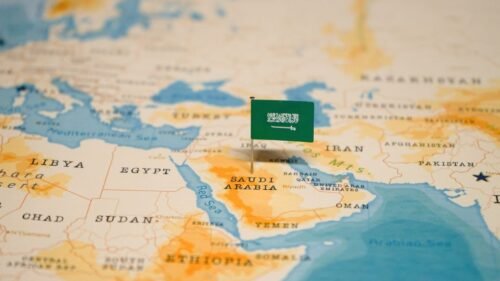
Editor-in-Chief Atul Singh and eminent scholar Ishtiaq Ahmed explore the recent Saudi Arabia–Pakistan mutual defense pact. The discussion traces the origins of Pakistan, the historical trajectory of Saudi–Pakistani relations and the dramatic shifts the 1979 Islamic Revolution of Iran caused. They then examine the timing and rationale of the latest defense pact before analyzing its potential consequences, especially for India.
The formation of Pakistan
Ahmed begins by recalling the unease that surrounded Pakistan’s creation in 1947. Many Arab leaders hesitated to endorse the new state because its founding principle of religious nationalism resembled Zionism. Like Israel, Pakistan defined itself not by territorial nationalism but by religious identity. Ahmed explains that the Muslim League claimed areas of India where Muslims formed a majority, leading to the displacement of Hindus and Sikhs, much like the displacement of Palestinians.
The House of Saud in particular regarded religious nationalism with suspicion. In their view, Pakistan’s partition of India looked similar to Zionist efforts to carve out a homeland in the Middle East. Yet geopolitical realities soon forced closer ties.
Saudi Arabia–Pakistan relations
During the Cold War, Saudi Arabia aligned with the US and UK against radical Arab nationalism, while Pakistan joined Western-led security alliances. Their parallel paths created space for collaboration. From the 1950s onward, Pakistani workers migrated to Saudi Arabia in droves, initially filling municipal jobs before expanding into professional and military roles.
By the 1970s, Pakistani military personnel were protecting Gulf royals, and Pakistan had become a reliable security provider. Singh frames this as part of Pakistan’s identity as a “garrison state.” Ahmed believes that Pakistani President Zulfikar Ali Bhutto embraced Islamism not out of conviction but as a political tool to counter his right-wing opponents.
Several events deepened the bilateral relationship: the 1974 Islamic Summit in Lahore, Saudi and Libyan backing for Pakistan’s nuclear program and the symbolic construction of the Faisal Mosque in the Pakistani capital of Islamabad. Singh even cites intelligence reports that Pakistani nuclear assets were implicitly guaranteed for Saudi Arabia in exchange for vital oil revenues.
The 1979 Islamic Revolution
A watershed moment arrived in 1979 with the Iranian Revolution, the Soviet invasion of Afghanistan and the siege of the Grand Mosque in Mecca, Saudi Arabia. Pakistani commandos played a key role in retaking the mosque, further cementing the Saudi-Pakistan partnership. Meanwhile, Saudi volunteers, including mujahideen fighter Osama bin Laden, traveled to Afghanistan to wage jihad against the Soviets.
Ahmed stresses that these developments entrenched sectarian polarization across the region. Iran supported Shia militias while Saudi Arabia and its allies armed Sunni radicals. Proxy conflicts spilled over into Pakistan during the 1990s, creating cycles of instability that persist to this day.
The latest Saudi–Pakistan defense pact
The new mutual defense pact makes explicit what had long been informal. Singh explains that Gulf rulers have lost confidence in the US security umbrella, particularly after Israel struck Hamas leaders in Qatar, a country closely tied to Washington and the largest American base in the region. The attack showed that Gulf allies could no longer rely on American protection.
Ahmed says regional capitals realized the US could not be trusted. Pakistan, with its nuclear arsenal and Sunni identity, emerged as the logical security partner. Singh relays that Arab diplomats privately acknowledge their technological inferiority to Israel and the US but believe Pakistan’s economic dependence ensures reliability.
For Pakistan, the deal is also a financial lifeline. Ahmed calls it perhaps a once-in-a-lifetime chance to escape crippling debt. Singh agrees, describing the pact as a “terrific diplomatic coup” that strengthens both Islamabad and the Saudi capital of Riyadh while unsettling their adversaries.
The Saudi–Pakistan deal’s impact on India
The implications for India are profound. Singh notes unease in Delhi as Saudi Arabia’s advanced Eurofighters and F-15 aircraft could be deployed alongside Pakistan’s forces. This undermines India’s deterrence strategy against terrorism. Earlier this year, India launched Operation Sindoor to target terrorist camps in Pakistan after terrorists massacred unarmed civilians in Kashmir. Now, India will not be able to launch such an operation. In any case, India has already been weakened by Pakistan’s backing from China and Turkey.
Ahmed points out, however, that Saudi Arabia has extensive investments in India and employs nine million Indian workers. He voices the subjective hope that Riyadh could mediate rather than inflame Indo-Pakistani tensions.
Singh, by contrast, emphasizes India’s growing isolation. He cites New Delhi’s failure to secure diplomatic backing during clashes with Pakistan, strained ties with neighbors such as Nepal and Bangladesh and mistrust from Russia and China due to India’s close ties to the US. His subjective assessment is that India’s Gulf policy has “failed.”
Modi’s foreign policy
The pact also carries symbolic weight. Singh highlights that the two countries announced the pact on Prime Minister Narendra Modi’s birthday, which he interprets as a deliberate message undermining Modi’s image-making. He thinks that India under Modi has become a “pumpkin village,” a state that looks impressive on the outside but lacks credibility as a functioning democracy.
Ahmed closes the discussion by critiquing India’s foreign policy more broadly. He argues that India’s bark has proven worse than its bite, and its unwillingness to join military pacts has left it sidelined. His hope is that the new Saudi–Pakistan partnership will foster stability rather than extremism, since Gulf rulers themselves do not want to encourage terrorism.
A new security architecture
The Saudi-Pakistan pact signals a turning point in regional politics. For the Gulf, it reflects declining trust in US protection. For Pakistan, it offers both financial salvation and enhanced international status. For India, it represents a new set of strategic headaches.
The pact could either escalate rivalries or serve as a platform for mediation. Both Singh and Ahmed agree that Saudi Arabia and Pakistan have shifted their decades-old partnership into a binding alliance with far-reaching consequences.
[Lee Thompson-Kolar edited this piece.]
The views expressed in this article/video are the author’s own and do not necessarily reflect Fair Observer’s editorial policy.

























Comment