



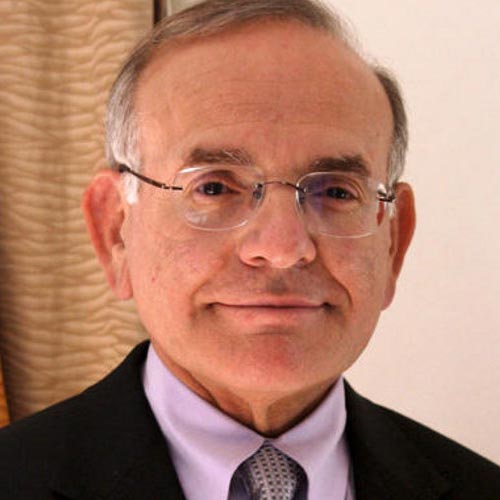

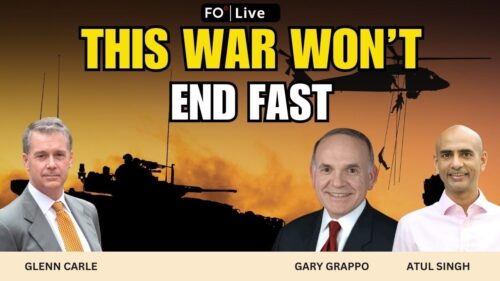
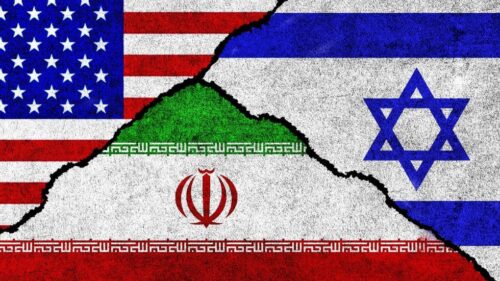
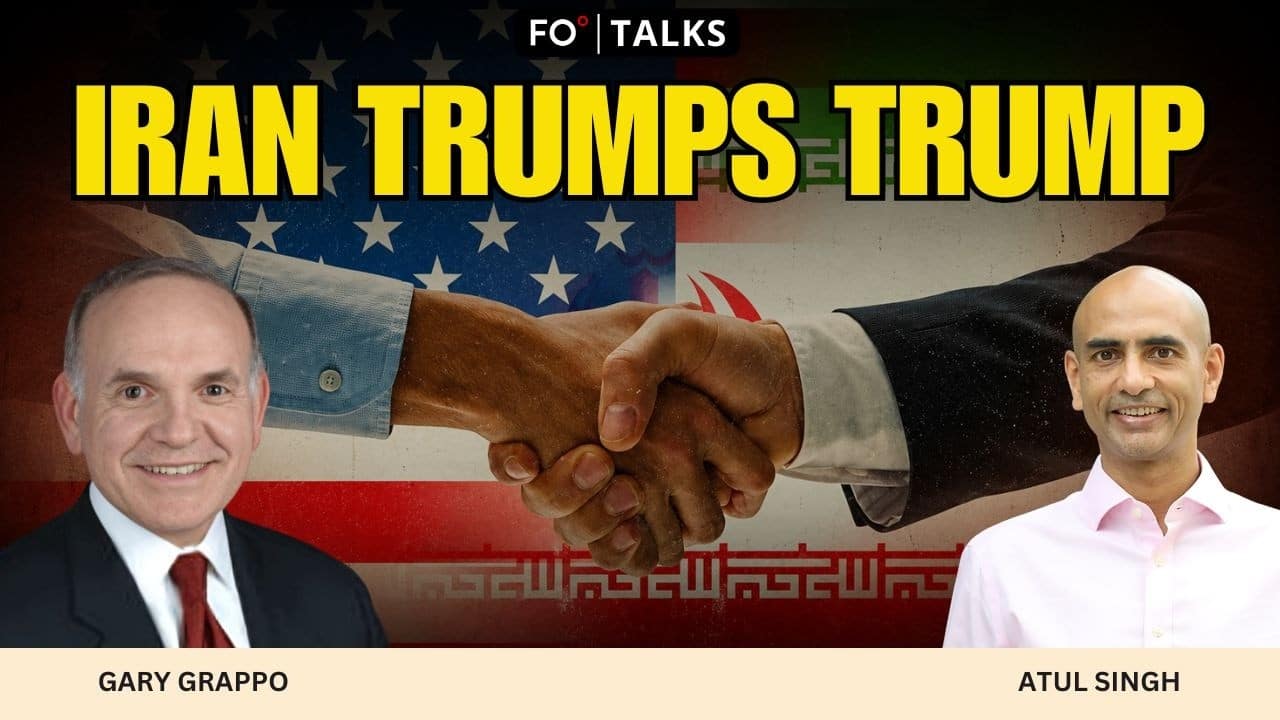
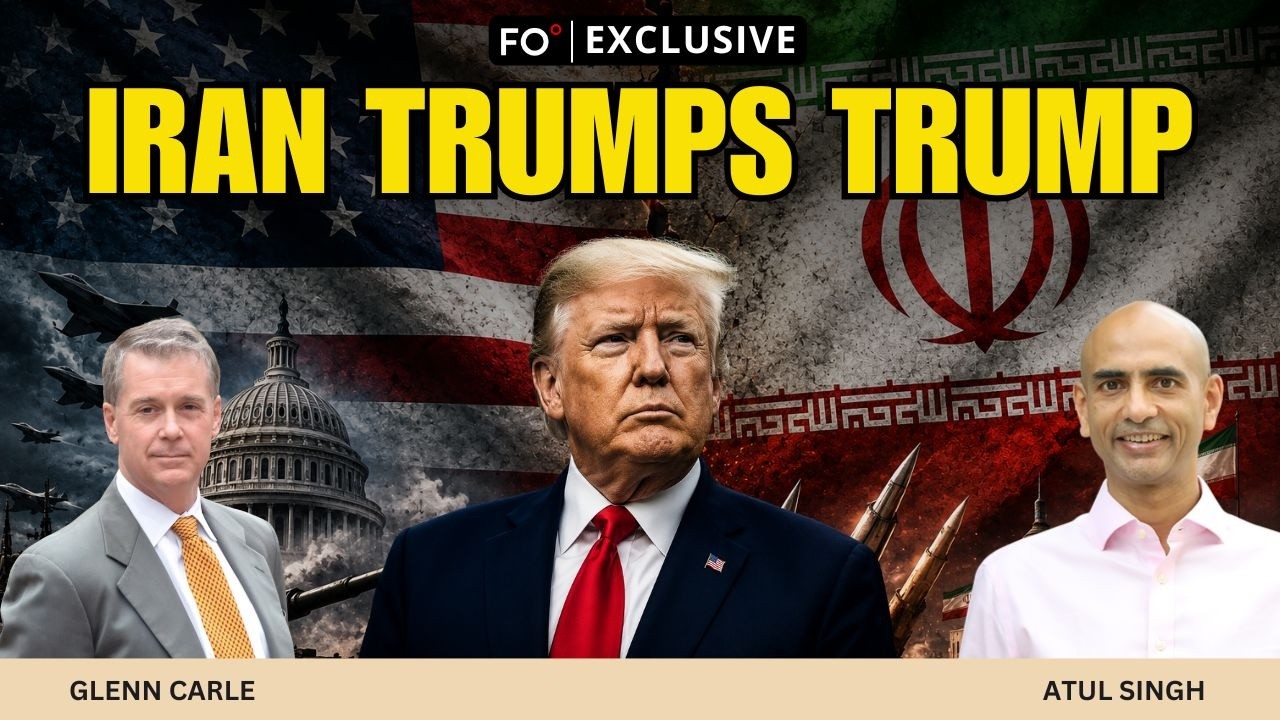
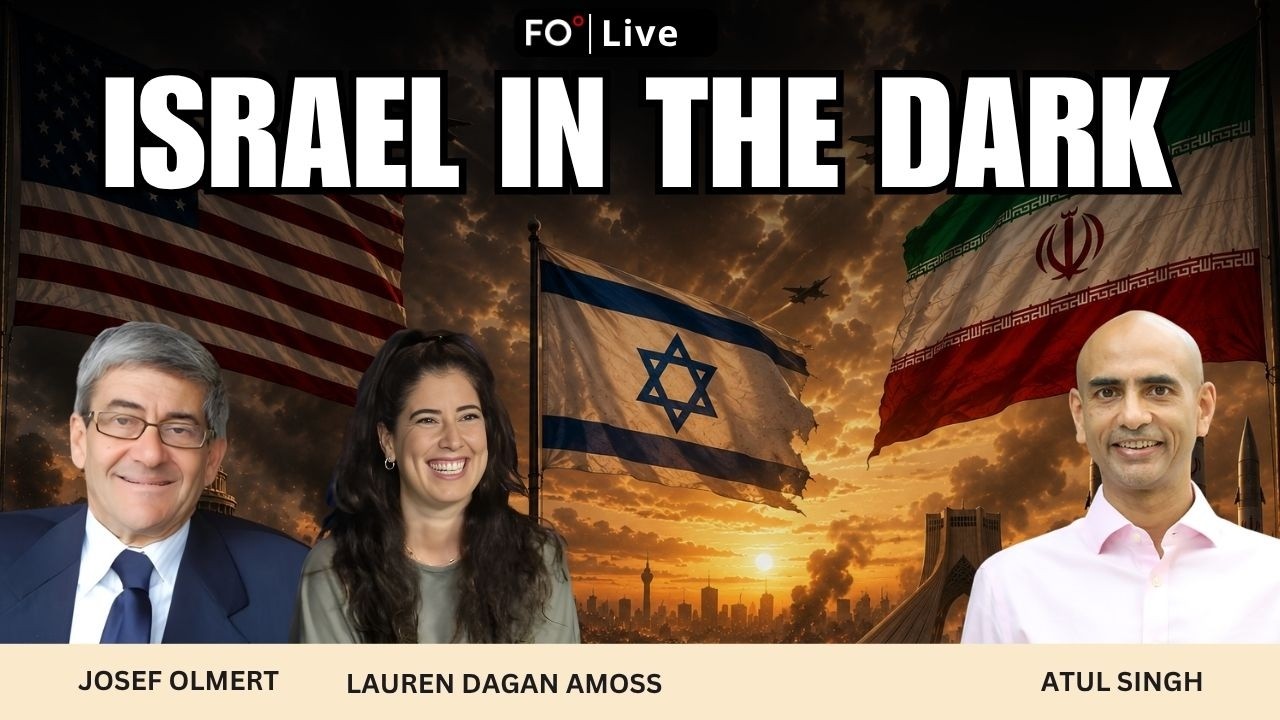
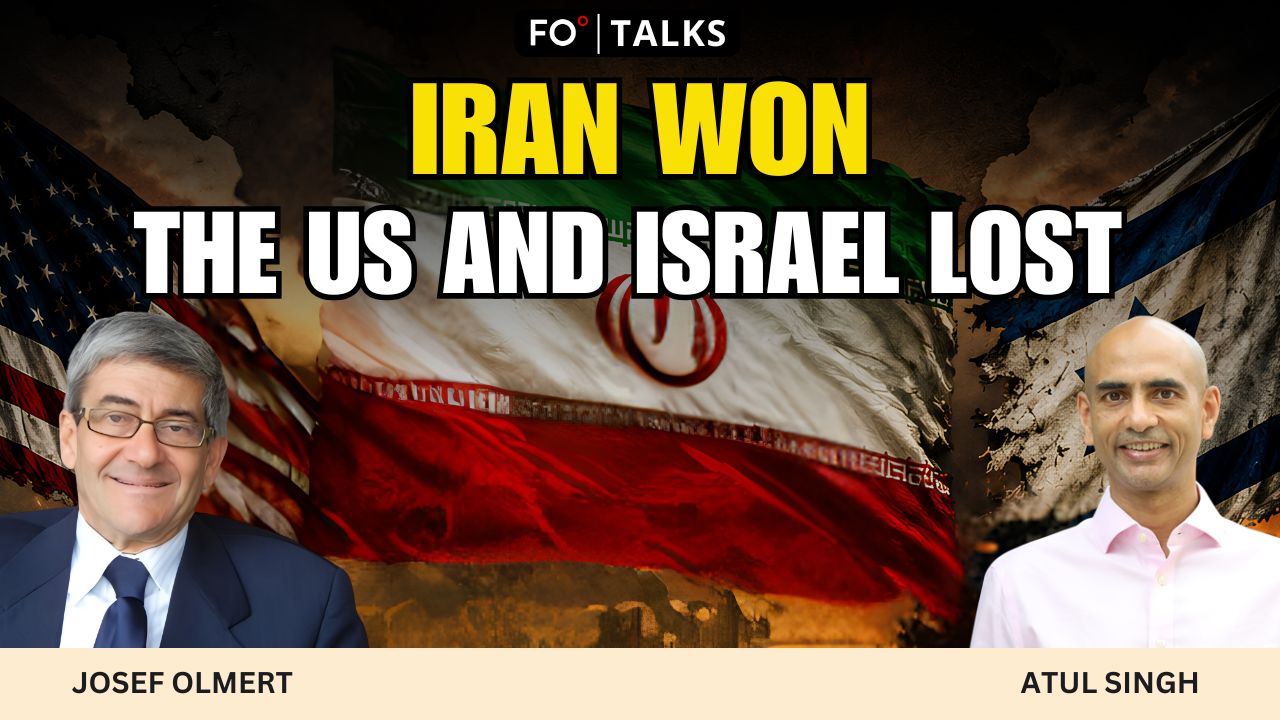
Editor-in-Chief Atul Singh and former US Ambassador Gary Grappo, who served as Envoy and Head of Mission of the Office of the Quartet Representative Tony Blair in Jerusalem, examine the Trump administration’s new memorandum of understanding (MOU) with Iran and assess whether it marks the beginning of peace or simply a pause in hostilities. They explore the agreement’s implications for Iran’s economy, the future of its nuclear program, the security of the Strait of Hormuz and the broader balance of power in the Middle East. What does the deal mean for US influence, Israel’s strategic position and the risk of a wider regional arms race?
A temporary pause, not a lasting peace
Gary describes the agreement as “a very unsatisfactory and … abysmal memorandum of understanding.” He argues that it merely creates a 60-day framework for further negotiations rather than resolving the underlying conflict. Despite fighting alongside the United States during the war, Israel is absent from the negotiating table, which highlights an important shift in regional diplomacy.
The immediate beneficiaries are Iran’s economy and leadership. Washington has temporarily lifted sanctions on Iranian oil exports, allowing Tehran to sell oil in US dollars for the first time in decades. While this will not fully repair Iran’s struggling economy, Gary says the agreement provides a significant financial boost at a moment when Tehran desperately needs liquidity. Simultaneously, conflicting public statements over nuclear inspections suggest both governments are presenting different narratives to domestic audiences while leaving the core nuclear dispute unresolved.
The Strait of Hormuz becomes the central battleground
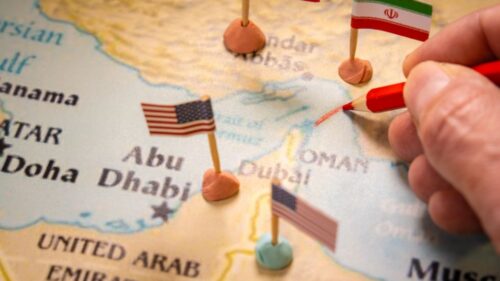
Regarding the Strait of Hormuz, the agreement calls on Iran to make “best efforts” to keep shipping lanes open. Yet Tehran has also indicated that it intends to administer traffic through the strait, potentially charging vessels for passage.
Atul argues that such payments resemble protection money, while Gary calls the proposal “pretty much extortion” because it lacks any legal basis under international maritime law. Unlike the Panama or Suez canals, Iran provides no infrastructure that would justify transit fees. If accepted, this precedent could undermine the longstanding principle that international waterways remain open to global commerce.
Gary also draws on his experience as US ambassador to Oman. Although Iran has suggested Muscat could participate in any collection scheme, Oman has remained publicly silent. He believes the Omanis are unlikely to violate their international commitments, though they could legitimately charge for services such as search and rescue or environmental protection if necessary. Meanwhile, Oman has emerged comparatively well positioned because its oil exports largely avoid the vulnerable shipping route through the Persian Gulf.
Economic shockwaves extend far beyond the Gulf
Atul and Gary state that the conflict has disrupted the financial architecture built around Gulf energy exports. Bahrain, Kuwait and Qatar face severe challenges because their economies depend heavily on energy exports that pass through Hormuz. Higher transportation costs and uncertainty threaten both government revenues and global energy prices.
Atul expands the analysis beyond oil markets. Gulf monarchies may have to draw down reserves or sell overseas investments to maintain domestic spending commitments while simultaneously increasing defense budgets. Reduced purchases of Western assets and US Treasury bonds could tighten global financial conditions and place upward pressure on borrowing costs.
The United Arab Emirates has requested a Federal Reserve swap line. Gary describes this as an emergency liquidity mechanism. Atul characterizes the development as a reversal of the traditional flow of petrodollars, arguing that instead of Gulf wealth supporting Western financial markets, the US may increasingly find itself supporting Gulf partners during periods of crisis. Together, they suggest that the consequences of the conflict extend well beyond the Middle East into the foundations of the global financial system.
Intelligence failures and misunderstanding Iran
Much of the discussion examines why Washington misjudged the conflict. Gary argues that recent reductions in experienced personnel at the CIA and State Department removed many of the officials with the deepest knowledge of Iran. He believes this weakened strategic planning and contributed to serious miscalculations.
He is particularly critical of the assumption that military pressure and targeted assassinations could trigger the collapse of the Iranian government. Instead, the campaign strengthened domestic support for the regime through a rally-around-the-flag effect while reinforcing a political culture shaped by the 1979 Revolution and the Iran–Iraq War.
Gary argues that American policymakers underestimated Iran’s ideological resilience and negotiating style. “The Iranians have never won a war or lost a negotiation,” he says. He expects negotiations to last far longer than the 60 days envisioned in the MOU because Iranian officials have repeatedly demonstrated their willingness to delay agreements while extracting additional concessions.
A transformed strategic landscape
The discussion concludes by examining how new military technologies have altered the balance of power. Gary argues that drones have fundamentally changed naval strategy because even a single successful attack on a tanker can disrupt shipping and drive insurance costs high enough to halt commercial traffic. Control of strategic waterways no longer depends solely on major naval fleets.
Looking ahead, both speakers warn that the agreement leaves Iran’s nuclear program unresolved while increasing pressure on neighboring states to reconsider their own security strategies. Saudi Arabia may accelerate nuclear planning if confidence in American security guarantees continues to erode. Other regional powers could eventually follow.
Rather than marking the end of the crisis, Atul and Gary conclude that the MOU begins a new phase of prolonged negotiations and strategic competition. Iran appears economically strengthened, the US faces difficult diplomatic and financial challenges and the Middle East enters an even more uncertain era in which regional stability, energy markets and the global balance of power remain interconnected.
[Lee Thompson-Kolar edited this piece.]
The views expressed in this article/video are the author’s own and do not necessarily reflect Fair Observer’s editorial policy.






















Comment