


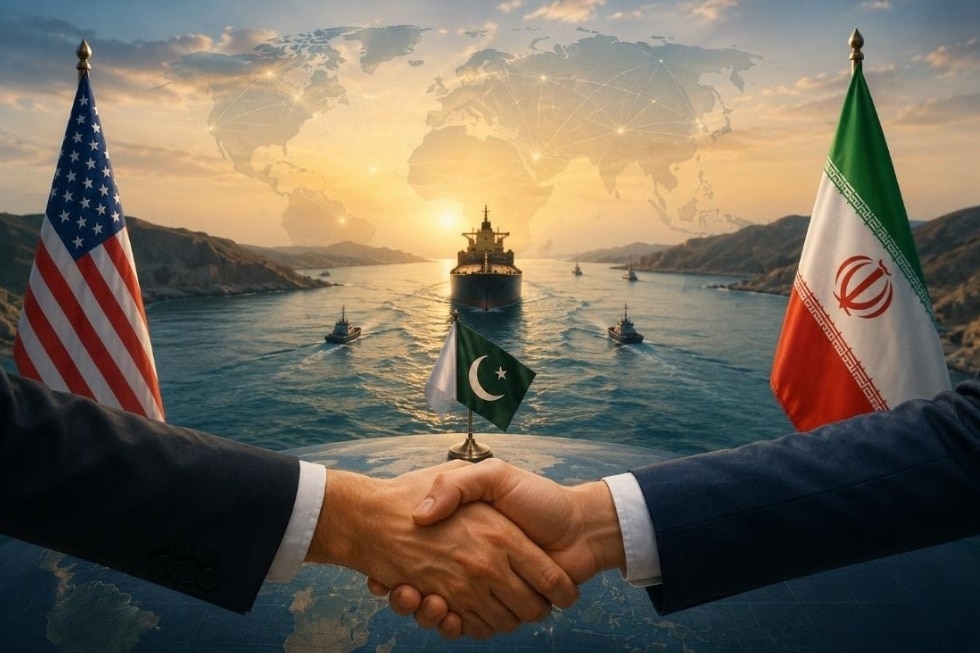



The memorandum of understanding that was announced between the United States and Iran on June 15 may end up being one of the more consequential diplomatic breakthroughs in recent Middle Eastern history. After weeks of rapidly rising military tensions that were starting to press too close to the global economy, President Donald Trump said, “the deal with the Islamic Republic of Iran is now complete,” and signaled the Strait of Hormuz would reopen quickly in addition to the US naval blockade being lifted.
Iranian officials then confirmed that a framework agreement had been finalized, though the formal negotiations were still laden with unresolved matters. Work on those remaining issues was planned to continue over the next 60 days, but still, the international community took a kind of collective exhale.
Behind the public remarks and carefully timed statements, there exists a quieter narrative, one of intricate, high-pressure backchannel diplomacy. This underappreciated, subtle brand of diplomacy was at the heart of this geopolitical victory and championed by an unexpected go-between, Pakistan.
The Islamabad channel
Pakistani Prime Minister Shehbaz Sharif caught many international observers off guard with his statement that regional military operations would stop and that the framework agreement between the US and Iran would be formally signed in Geneva on June 19. This announcement came from weeks of intense covert Pakistani outreach to regional stakeholders, including direct talks involving Washington, Tehran and various Persian Gulf States.
Despite the usual “neutral” suspects like Qatar and Oman being heavily involved, Islamabad seemingly became the main conduit for de-escalation when the crisis hit its most sensitive point. Pakistan’s involvement was not accidental, yet it was not an obvious necessity either. Historically, Oman has often functioned as Washington’s discreet line to Tehran, while Qatar has become, for better or worse, the region’s most hyperactive mediator.
The conflict began after a sequence of US and Israeli strikes on Iran, but quickly became more complex. It turned into a broader crisis that threatened maritime security, global energy markets, and overall regional stability. Since these consequences impacted Gulf Arab interests directly, the usual mediators found themselves too close to the issues at hand. As a result, Pakistan stepped into that gap and used its position hosting senior American and Iranian representatives for extremely sensitive, closed-door discussions, all in Islamabad.
The power of dual-track diplomacy
Pakistan’s distinct diplomatic edge did not stem from strict neutrality; instead, it came from this almost unmatched access. Islamabad kept working contact channels open with Washington, Tehran, and several key regional capitals, even when direct dialogue between the main adversaries had almost completely collapsed.
What stood out in Pakistan’s mediation was not just the outcome, but the high degree of coordination inside its foreign policy machine. You can see the smooth back-and-forth between civilian statecraft and the military side of things too, without the friction that usually hinders similar efforts.
Prime Minister Sharif supplied the political helm, international legitimacy, and the public-facing diplomatic template. Pakistan’s military leadership also played an important role. Field Marshal Asim Munir went straight to Tehran in the last, tense stretch of negotiations, meeting face to face with Iranian security officials to size up escalation danger and draw clearer deterrence limits.
In today’s conflicts, especially those with active naval blockades and missile strikes, communication between security establishments counts just as much as classic diplomacy. The synchronized stance between Pakistan’s civilian figures and military leadership created confidence that messages, diplomacy, security terms and consequences relayed through Islamabad would be understood.
The rise of the mediating middle power
The importance of the memorandum of understanding is often understated; it is not limited to the quick reopening of shipping lanes. For years, the international perception of Pakistan has been somewhat narrowed due to domestic security views, economic turbulence, and, of course, its continuing rivalry with India. However, the US-Iran framework has created more nuance in Pakistan’s global reputation: Pakistan ends up looking like a refined facilitator, helping steady global stability, not just reacting inside its own boundaries.
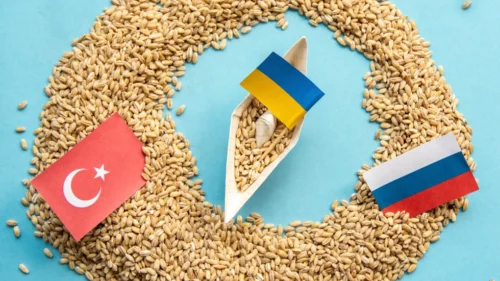
This breakthrough fits into a broader, evolving pattern in international relations. As intense competition among major superpowers complicates direct diplomacy, “middle powers” are increasingly leveraging their agility to shape global outcomes. In 2020, Qatar brokered historic, complex negotiations between the United States and the Taliban. Oman has consistently provided backchannels to prevent total diplomatic collapse in the Middle East. In 2022, Turkiye successfully negotiated the Black Sea Grain Initiative during the height of the Russia-Ukraine war. And now, Pakistan has leveraged military and civilian access to bridge the chasm between Washington and Tehran.
What actually ties these countries together isn’t raw military force, and it isn’t even economic supremacy. The main thing seems to be diplomatic access. States that keep active links across rival geopolitical camps are often in a special position to nudge results that bigger powers can hardly handle cleanly on their own.
High stakes and unresolved risks
Even with the general optimism over the Geneva signing, the road ahead is still full of immense peril. The present agreement stays more like a memorandum of understanding, not a fully comprehensive, binding settlement. The hardest and most deeply anchored questions, such as the exact gears of US sanctions relief, the long-range maritime rules around the Strait of Hormuz, and what happens next with Iran’s nuclear program, remain unsettled.
Furthermore, cracks in interpretation are already beginning to show. Officials in Tehran have hinted that the framework is comprehensive and covers all proxy fronts, including Lebanon. Simultaneously, intelligence and political figures in Israel have expressed deep caution, signaling a much narrower interpretation of the ceasefire.
For Pakistan, this diplomatic victory is a double-edged sword. Success breeds high expectations, and if the next 60 days of negotiations yield a permanent treaty, then Islamabad’s reputation as an indispensable regional mediator will basically be set in stone, unlocking huge diplomatic and economic dividends for the energy-importing nation. But if the framework collapses under the weight of unresolved disputes, the political capital invested by Islamabad could evaporate.
Middle Eastern diplomacy is a graveyard of historic agreements, many of which initially appeared to solve all the problems they addressed before ultimately crumbling. The Geneva accord could just as easily follow that tragic path. Still, no matter what happens in the end, this moment will be remembered as the juncture where Pakistan successfully stepped out of its regional box, showing it can serve as a vital diplomatic bridge in a rapidly fracturing global order.
[Charlie Smith edited this piece.]
The views expressed in this article are the author’s own and do not necessarily reflect Fair Observer’s editorial policy.
Beyond the Funeral: What Khamenei’s Final Farewell Reveals About Iran’s Next Chapter
Iran recently held a massive state funeral for its Supreme Leader Ali Khamenei, who had been killed early on in...
Iran Turns Kurdistan Region Into a Proxy Battlefield
The Kurdistan Region of Iraq (KRI) has faced relentless attacks from Iran and its proxies, despite its declared neutrality in...
Hormuz, Hegemony and Hubris: The Strategic Fallout of America’s New Doctrine
Washington’s strategic failure in Iran has exposed the risks of the Trump administration’s Donroe Doctrine and unilateral actions, while the...
The Truth About Turkey’s Interest in Russia–Ukraine Grain Trade
Turkish President Recep Tayyip Erdoğan’s pursuit of reviving the Black Sea Grain Initiative (BSGI) transcends mere humanitarian concern. It’s a...
Support Fair Observer
We rely on your support for our independence, diversity and quality.
For more than 10 years, Fair Observer has been free, fair and independent. No billionaire owns us, no advertisers control us. We are a reader-supported nonprofit. Unlike many other publications, we keep our content free for readers regardless of where they live or whether they can afford to pay. We have no paywalls and no ads.
In the post-truth era of fake news, echo chambers and filter bubbles, we publish a plurality of perspectives from around the world. Anyone can publish with us, but everyone goes through a rigorous editorial process. So, you get fact-checked, well-reasoned content instead of noise.
We publish 3,000+ voices from 90+ countries. We also conduct education and training programs
on subjects ranging from digital media and journalism to writing and critical thinking. This
doesn’t come cheap. Servers, editors, trainers and web developers cost
money.
Please consider supporting us on a regular basis as a recurring donor or a
sustaining member.
Will you support FO’s journalism?
We rely on your support for our independence, diversity and quality.





Comment