
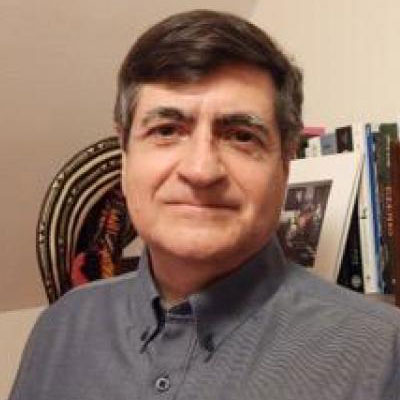


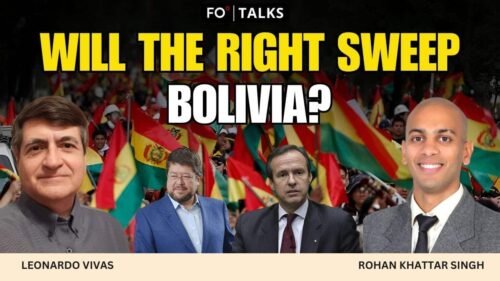
Fair Observer’s Video Producer Rohan Khattar Singh speaks with Leonardo Vivas, a professor at Lesley University, about María Corina Machado. This former deputy of the National Assembly of Venezuela is an opposition leader who has gone from political exile to Nobel Peace Prize laureate. Once branded a traitor by Venezuelan President Nicolás Maduro, Machado now stands as the face of Venezuela’s pro-democracy struggle, a movement that has endured exile, repression and stolen elections.
From aristocrat to activist
Vivas was stunned to learn Machado had won the Nobel Peace Prize. The award recognizes her as the leading figure in Venezuela’s long fight for democracy and freedom. For over 20 years, she has challenged authoritarian power — first under Venezuelan President Hugo Chávez, then under Maduro — in a country that, in Vivas’s words, has spent the past decade under “a very crude dictatorship.”
Born into privilege, Machado turned toward public service early in life. Under Chávez’s rule, the government expropriated her father’s metalworking empire. Her mother, a national tennis champion, inspired her commitment to social causes. Machado founded nonprofits for abandoned children and later established Súmate, a group promoting electoral transparency. When she ran for Congress, she won the highest vote share in the nation, solidifying her reputation as one of the government’s most forceful critics.
A new hope and a dangerous victory
By 2023, her image began to shift from right-wing hardliner to unifying reformer. In opposition primaries that year, she captured an overwhelming 92% of the vote, igniting a sense of hope Venezuela had not felt since Chávez’s early years. Her campaign promise — to bring home the nearly nine million Venezuelans living abroad — resonated deeply across the country.
Though barred from running in the general election, Machado helped rally support for veteran diplomat Edmundo González, who won roughly 70% of the vote in a contest the Maduro government refused to recognize. González fled to Spain after Maduro’s administration jailed his son-in-law. Machado went underground, continuing to coordinate the opposition from hiding.
The Nobel effect
Machado’s Nobel Prize thrust her into the global spotlight and, paradoxically, offered her a measure of safety. Vivas believes the award shields her from arrest, since targeting her now would deepen Maduro’s diplomatic isolation. More importantly, it restores legitimacy to a fractured opposition, transforming what was once a two-sided standoff between Washington and the Venezuelan capital of Caracas into a three-way dynamic that includes the Venezuelan democratic movement itself.
Across Venezuela, the news of the award felt, Vivas says, like “fresh air.” It revived hope and renewed attention from abroad. While Maduro dismissed the Nobel Prize as a political ploy, international solidarity grew: Spanish and American musicians wrote songs in her honor, and democratic activists across Latin America rallied to her cause.
Critics, allies and the Trump connection
Machado’s critics accuse her of being too close to the United States, citing her ties with US Secretary of State Marco Rubio and her viral conversation with Donald Trump Jr. about privatizing Venezuela’s oil sector. Vivas rejects these charges, noting that US policy toward Venezuela has long been bipartisan. Both parties, he argues, see the country’s crisis through the lens of democracy and human rights rather than partisan interest.
He also insists that her call for privatization is not ideological but practical. Venezuela’s once-mighty oil industry — which produced more than three million barrels per day before collapsing under corruption and debt — cannot recover without private investment. Rebuilding, he says, requires rational policy, not political purity.
Critics condemn Machado for her open support of Israel, even during the ongoing Gaza conflict. Vivas reminds listeners that Venezuela historically maintained close ties with Israel and that Machado has not endorsed any particular military action.
After winning the Nobel Prize, Machado phoned US President Donald Trump to dedicate the award to both the Venezuelan people and to him. Vivas interprets the gesture as a calculated act meant to secure continued US backing. In his view, Venezuela’s democratic transition won’t happen without US support.
What’s next for Venezuela?
The Nobel Prize has rekindled international interest in Venezuela’s fate. With González in exile and Machado in hiding, the opposition now operates through dispersed networks and quiet acts of defiance — from university campaigns to movements demanding the release of political prisoners.
Vivas argues that lasting change depends on two forces working together: readiness inside the country and sustained external pressure from democratic allies. The challenge, he warns, is to keep the movement alive under relentless repression.
Khattar Singh concludes that this is no ordinary peace prize. It has turned a persecuted dissident into a global symbol and returned Venezuela’s struggle for freedom to the world’s attention.
[Lee Thompson-Kolar edited this piece.]
The views expressed in this article/video are the author’s own and do not necessarily reflect Fair Observer’s editorial policy.


















Join the conversation
Share your perspective
Log in to share your thoughts and take part in the discussion.