


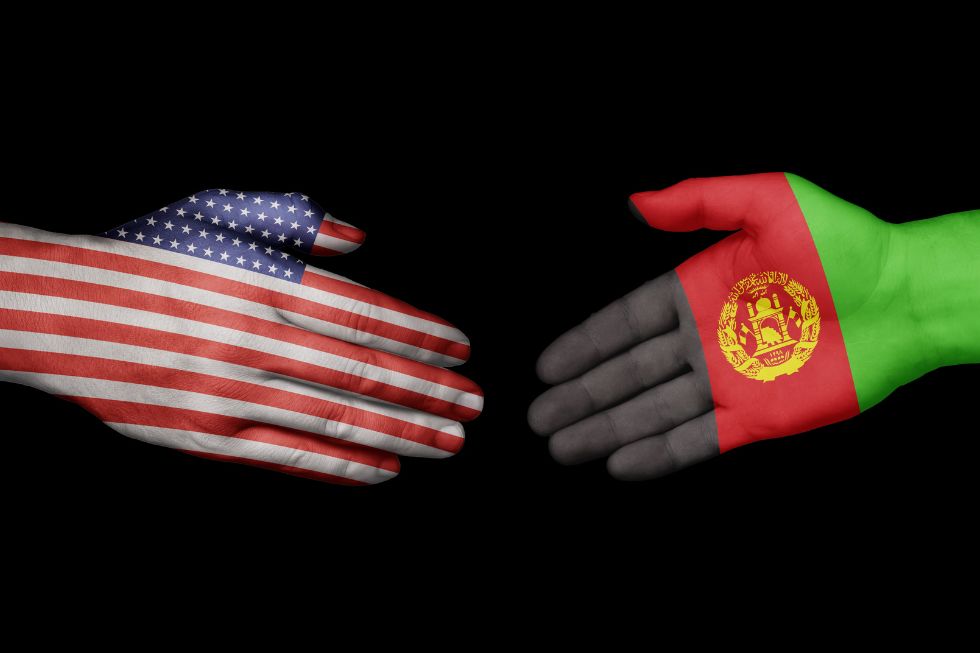


Since the signing of the Doha Accord in 2020, the Taliban’s actions have raised persistent questions about compliance and implementation, undermining Afghanistan’s internal stability and regional security. The agreement required intra-Afghan dialogue, counterterrorism obligations and a reduction in violence. Instead of engaging politically, the Taliban pursued a military campaign that culminated in the fall of Kabul in 2021. This deviation was deliberate, reflecting operational priorities rather than procedural oversight.
One of the most consequential provisions involved the release of approximately 5,000 Taliban prisoners. While the agreement conditioned their release on their refraining from combat, within weeks, these fighters rejoined Taliban ranks, reinforcing insurgent capabilities across Afghanistan. Prior intelligence assessments had warned of this outcome, highlighting structural weaknesses in the agreement’s enforcement mechanisms.
Counterterrorism commitments and regional security risks
The Doha Accord obligated the Taliban to prevent Afghan territory from being used to threaten the security of the US and its allies. In practice, however, this provision has proven largely ineffective. The Taliban’s tolerance and facilitation of transnational militant groups, including al-Qaeda and Tehrik-e-Taliban Pakistan (TTP), constitutes a clear violation.
Ayman al-Zawahiri, the leader of al-Qaeda, reportedly lived openly in Kabul before being killed in a US drone strike in 2022, nearly a year after the Taliban assumed power. His presence in the Afghan capital raised questions about the effectiveness of counterterrorism assurances. Additionally, reports that members of Osama bin Laden’s family continue to reside in Afghanistan fueled debate over whether the Taliban have fully met their commitments.
These developments extend beyond Afghanistan. They complicate border insurgencies and compel regional powers to rethink their security arrangements.
Khalilzad’s advocacy and selective framing
Former US envoy Zalmay Khalilzad’s recent statement portraying the Taliban as ready to engage constructively with regional actors, including Pakistan, echoes a familiar pattern of misrepresentation. Khalilzad presents the group as cooperative and compliant, claiming any agreement would prevent extremist groups like the Islamic State of Iraq and Syria (ISIS) and TTP from using Afghan territory to threaten others, with third-party monitoring. In reality, the Taliban’s record under the 2020 Doha Accord tells a starkly different story: promises of intra-Afghan dialogue were ignored, and the group marched unopposed on Kabul, exposing the failures of Khalilzad’s diplomacy.
Khalilzad’s repeated framing of the Taliban as reasonable actors overlooks the broader regional consequences and security risks, while his renewed advocacy for agreements modeled on Doha risks repeating past strategic mistakes where enforcement mechanisms were lacking and accountability is absent. Despite no longer holding a US government position, Khalilzad continues to intervene in Afghan affairs, raising serious questions about his motives, judgment and credibility. The pattern is clear: overstatement, miscalculation and self-serving maneuvering consistently undermine meaningful conflict resolution, leaving the region to grapple with the consequences.
Multiple Pakistan–Taliban agreements
Over the past three years, Pakistan and the Taliban have engaged in several rounds of security dialogue. These efforts included a bilateral agreement guaranteed by the United Arab Emirates, promises made in Doha in 2025 backed by Turkey and Qatar, as well as follow-up discussions in Istanbul.
Despite repeated diplomatic engagement, none of the agreements yielded the expected results, thereby indicating the Taliban’s continued inability or unwillingness to fulfill their commitments.
Recent Saudi-mediated negotiations in Riyadh reportedly stalled when the Taliban rejected the proposed verification mechanisms, reinforcing a consistent practice of demanding recognition and legitimacy without taking responsibility. Pakistan has emphasized the need for enforceable monitoring frameworks, drawing lessons from earlier agreements: trust cannot be extended based on words alone; it must be secured through actual performance.
Regional fallout and security implications
The Taliban’s noncompliance has broader consequences for South and Central Asia. Neighboring countries — including Pakistan, Iran and Central Asian states — face heightened risks of cross-border attacks because of the unregulated movement of militants. Activities linked to the anti-state Pakistan-based militant group TTP were facilitated by the areas under Taliban control, while the presence of al-Qaeda in Kabul complicates regional counterterrorism coordination, exposing significant fault lines in regional cooperation.
Instability also affects economic cooperation. Trade corridors, humanitarian assistance channels and regional integration initiatives depend on predictable security conditions. As a result, the shortcomings of the Doha Accord have become a matter of transnational concern.
The Doha legacy
The Taliban’s consolidation of power also carried significant humanitarian consequences. Communities protesting coercion, resource seizures and governance abuses have faced violent repression. These actions highlight a governance model prioritizing power consolidation over human life, exacerbating instability within Afghanistan.
The Doha Accord failed because it lacked compliance and transparency, illustrating the importance of enforceability in diplomatic agreements. Verification is not a procedural luxury; it is essential for credible security cooperation and sustainable regional stability. Agreements that rely primarily on trust risk creating gaps between formal commitments and actual behavior, allowing the Taliban to consolidate power while projecting an image of compliance and perpetuating insecurity both inside and outside Afghanistan.
The Doha legacy is defined by strategic failure and its cascading effects on regional security. Taliban violations, internal repression and facilitation of militant networks have undermined intra-Afghan peace prospects and South Asian stability. Future diplomatic efforts depend on prioritizing enforceability, transparency and accountability frameworks with measurable performance to prevent further erosion of trust and mitigate the political, security and human costs that have defined the past three years.
[Adam Karadsheh edited this piece]
The views expressed in this article are the author’s own and do not necessarily reflect Fair Observer’s editorial policy.
Afghanistan: The Crisis the US Chose to Forget and Why That Is a Strategic Mistake
Afghanistan is experiencing a worsening humanitarian crisis that has largely disappeared from US attention, leaving millions without food, shelter or...
A Regional Compact for Afghanistan: Why Neighbors Must Act Together to Secure Stability
Decades of hedging, proxy politics, and selective engagement have failed to contain Afghanistan’s deepening crisis. As illegitimacy fuels extremism and...
The Taliban’s Broken Promises Undermine Global Diplomacy
The Taliban regime in Afghanistan has failed to fulfill its obligations to the international community to curb its terrorist militants....
Support Fair Observer
We rely on your support for our independence, diversity and quality.
For more than 10 years, Fair Observer has been free, fair and independent. No billionaire owns us, no advertisers control us. We are a reader-supported nonprofit. Unlike many other publications, we keep our content free for readers regardless of where they live or whether they can afford to pay. We have no paywalls and no ads.
In the post-truth era of fake news, echo chambers and filter bubbles, we publish a plurality of perspectives from around the world. Anyone can publish with us, but everyone goes through a rigorous editorial process. So, you get fact-checked, well-reasoned content instead of noise.
We publish 3,000+ voices from 90+ countries. We also conduct education and training programs
on subjects ranging from digital media and journalism to writing and critical thinking. This
doesn’t come cheap. Servers, editors, trainers and web developers cost
money.
Please consider supporting us on a regular basis as a recurring donor or a
sustaining member.
Will you support FO’s journalism?
We rely on your support for our independence, diversity and quality.
Security, Identity and the Pashtun Tahafuz Movement Discourse in Pakistan
The Pashtun Tahafuz Movement, once a sociopolitical initiative advocating for the rights of marginalized Pashtuns, has increasingly been perceived as...

Pakistan’s Airstrikes in Afghanistan: Aggression or Self-Defense?
In recent months, Pakistan has conducted airstrikes in Afghanistan. To justify these strikes, Pakistan has claimed self-defense against the non-state...
Security in South Asia: Shifting Ways of the Islamic State
A top official of the Islamic State Khorasan Province was killed, signaling shifting dynamics within the organization. After years of...





Comment