


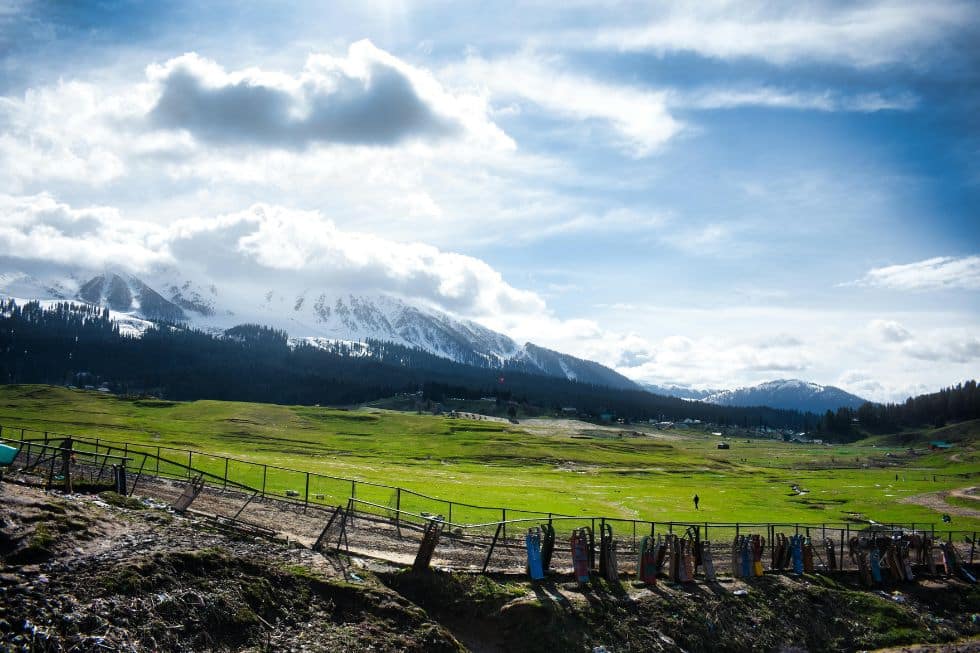



On April 22, 2025, gunmen killed 26 people — mostly tourists — in a targeted attack in Baisaran Valley near the town of Pahalgam, an Indian-administered Kashmir. The victims were shot at close range in a mountain meadow, a popular destination for families and honeymooners. It was one of the deadliest attacks on civilians in the region in two decades.
India’s response was immediate and unequivocal: Pakistan was responsible. The Indian government pointed to what it described as the involvement of Pakistan-based militant groups, specifically The Resistance Front, a shadow organization linked by Indian intelligence to Lashkar-e-Taiba. For India, the attack fit a familiar pattern — cross-border terrorism it has long attributed to Pakistan’s security establishment, which India accuses of involvement and which called the accusations baseless. It called for a neutral international investigation. India refused.
What followed was not diplomacy. Within two weeks, India had suspended the Indus Waters Treaty, expelled Pakistani diplomats and on May 7 launched Operation Sindoor — missile and air strikes targeting sites deep inside Pakistani territory. Pakistan responded with four days of fighting, involving drones, missiles and air-to-air engagements. This would become the most intense military exchange between two nuclear-armed neighbors in over two decades.
On May 10, a ceasefire was held. The world exhaled. And then, almost immediately, moved on.
What the coverage missed
Most international reporting on the May 2025 conflict followed a familiar script. Two nuclear powers are on the brink. American diplomats are racing to prevent a catastrophe. Fingers hovering over buttons. That script is not wrong. But it is incomplete.
From the start, Western media coverage was shaped by an asymmetry in narrative access. Indian officials, diplomats and think-tank voices flooded English-language media within hours of the Pahalgam attack. The framing was fixed before Pakistan had issued a formal response: This was Pakistani-baked terrorism, and India had the right to respond. Outlets including BBC, Reuters and the Associated Press ran Indian government attribution almost without qualification, while Pakistani denials were typically buried or framed as predictable deflections.
By the time Operation Sindoor began, the editorial template was already set. India was acting. Pakistan was reacting. The possibility that Pakistan might be telling the truth — that it had no verifiable connection to Pahalgam — was treated not as a serious legal question but as a talking point.
Specific choices were made in coverage that deserve scrutiny. When Pakistan shot down Indian aircraft, including reportedly several advanced Rafale jets, most Western outlets gave that fact minimal prominence. When Pakistan called for a UN Security Council session to address Indian strikes on its soil, that request received a fraction of the coverage granted to India’s Sindoor announcement. When the US brokered the ceasefire on May 10, President Donald Trump publicly credited American diplomacy — a claim Pakistan welcomed and India pointedly rejected.
India’s refusal to acknowledge American mediation was driven by domestic political imperatives. Prime Minister Narendra Modi’s government has built its political brand on muscular nationalism — an India that does not need outside help and handles Pakistan on its own terms. Admitting that a ceasefire required American intervention would have undercut that narrative at home, so India denied it. Most Western coverage, reluctant to call New Delhi out on a factual matter, largely let the contradiction stand.
Religion, military and why both matter
The Pahalgam attack did not occur in a vacuum. To understand it and India’s reaction, two factors are essential: religion and the military establishment’s role on both sides.
The victims of the Pahalgam attack were predominantly Hindu tourists. According to survivor accounts and early reporting, the attackers asked victims to identify their religion before opening fire. This gave the attack a communal dimension that inflamed Hindu nationalist sentiment across India at extraordinary speed. For Modi’s government, which has governed since 2014 on a platform of Hindu majoritarianism, the political pressure to respond forcefully was immense. Restraint would have been read domestically as weakness. The attack landed at the intersection of India’s most volatile political fault lines — Kashmir, religion and national security — and the government’s response reflected that.
On the Pakistani side, the military institution carries a weight in strategic decision-making that has no direct parallel in most democratic states. Pakistan’s army has historically regarded India as an existential threat and Kashmir as unfinished business from the Partition of British India in 1947. The military’s decision to name its response Bunyan-ul-Marsoos and to conduct it with visible operational restraint was itself a strategic and institutional choice — one made by an establishment that understood it was operating under the world’s scrutiny and chose to act accordingly.
The Indus Waters Treaty and what its suspension means
One detail in the conflict that received far too little attention outside South Asia was India’s decision to suspend the Indus Waters Treaty.
The Indus Waters Treaty was signed in 1960, brokered by the World Bank, and has survived three full-scale wars between India and Pakistan. It divides the waters of the Indus river system between the two countries, giving India control of the eastern rivers and Pakistan control of the western ones. For Pakistan, this is not a technicality. The Indus basin provides water for roughly 80% of Pakistan’s agriculture and supports the livelihoods of tens of millions of people. It is, in the most literal sense, a lifeline.
By suspending the treaty as a punitive measure in the wake of Pahalgam, India weaponized water, turning a foundational agreement that had outlasted decades of hostility into a pressure tool. Pakistan called it a red line. International legal scholars noted that unilateral suspension violated the treaty’s own dispute resolution mechanisms. The suspension remains in place and has received a fraction of the media attention given to the missile strikes.
Marka-e-Haq: the battle of truth, and what it means today
Pakistan officially named its response Marka-e-Haq, meaning “the battle of truth” in Urdu and Arabic. The operational name was Bunyan-ul-Marsoos, drawn from a Quranic verse in Surah As-Saff describing believers who stand in a solid, unified wall. Both names were chosen with deliberate intent.
The religious framing was not incidental. In a conflict where India had used the religious identity of the Pahalgam victims to galvanize domestic support, Pakistan’s choice of a Quranic operational name communicated to its own population that this response was not merely military but based in religious principle. The wall metaphor is particularly significant: It describes defense, not advance; holding ground, not taking it.
May 10 has been designated a national commemoration day — not to celebrate a conquest, but to remember a defense. That distinction matters enormously. The sequence of events the name Marka-e-Haq encapsulates is this: We were attacked without evidence being presented. We called for an investigation that was refused. We defended our territory when our soil was struck. We accepted a ceasefire as soon as one was possible. We are still asking for dialogue.
A monument is now being built in Rawalpindi at Kutchery Chowk to honor the soldiers and civilians who gave their lives. It will carry the name Marka-e-Haq. Pakistan fought a war. Then it chose peace. The world barely noticed. But the battle of truth, as Pakistan named it, is still being fought — in diplomatic halls, in international newsrooms and in the growing body of analysis slowly correcting the record.
The views expressed in this article are the author’s own and do not necessarily reflect Fair Observer’s editorial policy.
Support Fair Observer
We rely on your support for our independence, diversity and quality.
For more than 10 years, Fair Observer has been free, fair and independent. No billionaire owns us, no advertisers control us. We are a reader-supported nonprofit. Unlike many other publications, we keep our content free for readers regardless of where they live or whether they can afford to pay. We have no paywalls and no ads.
In the post-truth era of fake news, echo chambers and filter bubbles, we publish a plurality of perspectives from around the world. Anyone can publish with us, but everyone goes through a rigorous editorial process. So, you get fact-checked, well-reasoned content instead of noise.
We publish 3,000+ voices from 90+ countries. We also conduct education and training programs
on subjects ranging from digital media and journalism to writing and critical thinking. This
doesn’t come cheap. Servers, editors, trainers and web developers cost
money.
Please consider supporting us on a regular basis as a recurring donor or a
sustaining member.
Will you support FO’s journalism?
We rely on your support for our independence, diversity and quality.





Comment