


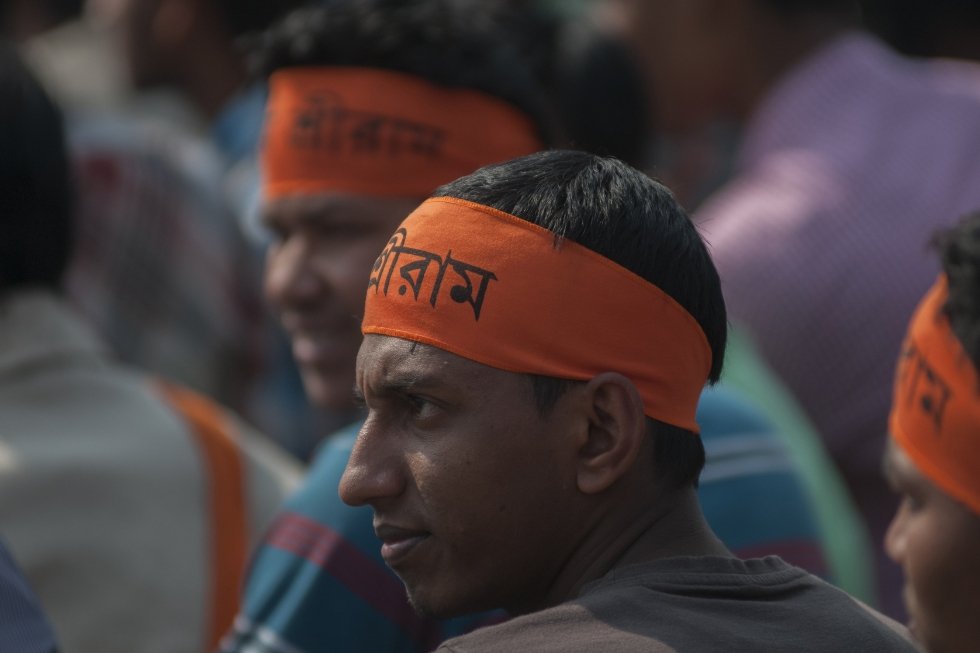



In the loud theater of modern global politics, few words are as debated, weaponized and misunderstood as Hindutva. Around the world, critics frequently paint it as an aggressive, exclusionary nationalism. Domestically, it is often reduced to a heated political voting banner.
As India’s global influence expands, the narrative surrounding its civilizational identity has become deeply polarized. Both domestic rivalries and external commentaries often conflate Hindutva with a narrow, dogmatic creed designed to exclude others. This has created widespread confusion, leaving India’s foundational ethos routinely misunderstood and misrepresented by divisive political interests.
It is time to look at the term clearly and with common sense. Linguistically, suffixing “-tva” to a Sanskrit noun simply means “the essence of” — just as Mahatva means the essence of greatness, Hindutva means Hinduness. Historically, “Hindu” was never a narrow religious label; it was a geographical term derived from the Sindhu (Indus) River, describing the civilization that practiced Sanatan Dharma. Hindutva simply refers to the living spirit of these timeless principles — an open, universal framework that recognizes the entire world as one interconnected family (Vasudhaiva Kutumbakam).
India’s civilizational identity is fundamentally inclusive, not exclusionary. By stripping away partisan exploitation and clearing up manufactured misunderstandings, the world can finally see India in its true perspective — as a pluralistic society whose ancient values naturally support social harmony, mutual respect and global cooperation.
The global narrative vs. the ground reality
Global observers look at the current Bharatiya Janata Party (BJP) administration in India under Prime Minister Narendra Modi and routinely interpret its civilizational rhetoric as a departure from secular governance. Yet, this narrative stands in absolute contradiction to the concrete data of India’s rapid, comprehensive transformation.
Over a short span of 12 years, the nation has shifted from historic economic stagnation to emerge as one of the world’s leading economic powerhouses, currently holding the position of the world’s fifth-largest economy.
Furthermore, this era has seen India earn global strategic respect by successfully landing its Chandrayaan-3 spacecraft on the moon’s unexplored south pole, building world-class infrastructure, and achieving comprehensive military self-sufficiency through the baseline of Atmanirbhar Bharat (Self-Reliant India).
When one steps away from social media algorithms and examines the actual, measurable delivery of public goods on the ground, an astonishing paradox emerges. Under the current administration, India has executed some of the most mathematically fair, transparent, and inclusive welfare drives in its modern history.
This stark disconnect between global rhetoric and domestic reality raises a fundamental question: What if the international community has completely misunderstood the core code of Hindutva?
Redefining the term: the civilizational baseline
To understand modern Indian politics, one must first rescue its terminology from linguistic distortion. Unlike Western political ideologies, which are often built on rigid church-state dynamics, Hindutva is fundamentally civilizational, cultural and geographical.
In plain words, Hindutva simply means the essence of being Hindu. If we trace the word back to its actual origin, “Hindu” is a geographical term derived from Sindhu, the ancient Sanskrit name for the mighty Indus River. In ancient Persian, the Sanskrit “S” sound shifted to an “H” sound (much like the Sanskrit Sapta became the Persian Hapta). Consequently, for ancient travelers coming from the West, anyone living in the vast plains stretching beyond the Indus River became known as a “Hindu.” Therefore, a Hindu is historically defined as someone who lives in the Indus plain and follows Sanatan Dharma.
To a global audience, the word Dharma is frequently mistranslated as “religion,” but its true meaning is far more profound. In the Indian ethos, Dharma refers to the essential, unalterable characteristic of an element — its “natural nature.” For instance, the natural property of water is to flow, to cleanse and to quench thirst. It cannot exist without these properties. Similarly, Sanatan Dharma represents the inherent, eternal tenets of human nature itself — the baseline of righteousness, empathy and universal responsibility that allows human society to exist in harmony.
The foundational pillars of this framework are anchored in the timeless Vedic maxim of Vasudhaiva Kutumbakam — the understanding that the entire world is a single, interconnected family, a concept formally recorded in the ancient Maha Upanishad. This civilizational ethos is encapsulated perfectly in its universal peace prayer, which serves as the traditional conclusion to all cultural gatherings and is enshrined as the official motto of the National Human Rights Commission of India: Sarve Bhavantu Sukhinah, Sarve Santu Niramayah, Sarve Bhadrani Pasyantu, Ma Kascit Duhkha Bhagbhavet (“May all be happy, may all be free from illness, may all see auspiciousness, may no one suffer”).
By definition, a framework whose daily prayer wishes for the peace, health and happiness of all living beings is inherently all-inclusive and non-discriminatory. It recognizes that diverse streams of thought can coexist within the same broader ecosystem.
Therefore, a governance model derived from this civilizational baseline cannot, by its very mechanics, be exclusionary. It is designed from the bedrock up to seek the welfare of the entire population.
A calculated risk: reclaiming the narrative
This raises a critical political question: why did the BJP and Prime Minister Modi consciously accept the immense political risk of bringing the term Hindutva to the forefront of their administration? They knew that in a deeply polarized global environment, critics would weaponize the term.
The choice was a deliberate, visionary, calculated risk. Rather than retreating into defensive vocabulary, the administration sought to put the true definition of Hindutva to a real-world test. They utilized the term as the open baseline of their governance explicitly to show the world what the philosophy actually means when translated into policy.
By operating under this umbrella, they set out to demonstrate that an unapologetic embrace of Indian civilization naturally results in the holistic development, protection and uplifting of all citizens, including minorities, without discrimination.
“Sabka Saath, Sabka Vikas” as an administrative reality
The practical execution of this civilizational blueprint is summarized in the administration’s core governance baseline: “Sabka Saath, Sabka Vikas, Sabka Vishwas” (Together with All, Development for All, Trust of All).
In public policy education, the ultimate test of non-discrimination is found in the mechanics of welfare distribution. The current government achieved this by shifting from politicized, targeted minority appeasement to a strict policy of welfare saturation.
Under this model, the largest state-backed socioeconomic infrastructure drives in human history have been allocated based entirely on spatial and economic data, completely bypassing religious identity:
- Universal Basic Infrastructure: Landmark initiatives like the Jal Jeevan Mission (providing piped tap water to rural households), the Pradhan Mantri Awas Yojana (building affordable concrete housing) and the Pradhan Mantri Ujjwala Yojana (distributing clean cooking gas connections) are mapped out using the objective data of the Socio-Economic and Caste Census (SECC). Because these goods are delivered to 100% of qualified households in a given village or block, minority-concentrated neighborhoods receive infrastructure at the exact same pace as majority areas, systematically eliminating administrative bias.
- Streamlining Minority Welfare: Far from neglecting minorities, the administration digitalized and streamlined competitive educational scholarships under the Ministry of Minority Affairs. By utilizing Direct Benefit Transfers (DBT) via India’s robust digital banking infrastructure — tracked openly on the official DBT Bharat Portal — the government ensured that millions of minority students received financial support directly into their accounts, eliminating the predatory middlemen who plagued previous systems.
- Economic Integration: Initiatives like Hunar Haat (Skill Hubs) were scaled up nationwide under the National Portal of India Ministry Directory to provide formal market access, digital training and global platforms to traditional master artisans and craftsmen, a massive percentage of whom belong to minority communities. This actively integrated vulnerable traditional livelihoods into India’s formal economic growth.
True secularism in action
When public goods — roads, electricity, banking access, digital infrastructure and life-saving healthcare — are delivered to hundreds of millions of people without a single question asked about their faith, that is the literal definition of a fair administration.
The modern Indian governance model under Prime Minister Modi has effectively flipped the script on global assumptions. Yet, the challenge remains that the true, civilizational meaning of Hindutva has been obscured — not just globally, but even among the domestic majority, the press and the political opposition.
Propagating its genuine, inclusive definition is essential, because when correctly understood, this timeless ethos serves as the ultimate safeguard of fair governance for every citizen, mirroring the foundational tenets of equal protection enshrined in the Constitution of India.
By risking the narrative battle over Hindutva, the administration has demonstrated a profound lesson in political science. Far from threatening pluralism, this data-driven model utilizes comprehensive digital public infrastructure to actively accelerate the United Nations Sustainable Development Goals across all demographic strata.
An indigenous, civilizational framework does not threaten pluralism; it anchors it. True Hindutva in action is not a majoritarian enterprise; it is a common-sense, data-driven governance model that embraces everyone under its umbrella, ensuring that as the nation rises, no citizen is left behind.
[Zania Morgan edited this piece.]
The views expressed in this article are the author’s own and do not necessarily reflect Fair Observer’s editorial policy.
100 Years On: Can Hindutva’s Assertiveness Replace Hinduism’s Ahimsa?
The first of this three-part article is an overview of the historical background of Hindutva and how it has evolved...
The Hindu Ethos Is Hurting India’s Republican Spirit
Prime Minister Narendra Modi has unleashed the Hindu majority, and the real loser of this ethos is India’s common man.

Support Fair Observer
We rely on your support for our independence, diversity and quality.
For more than 10 years, Fair Observer has been free, fair and independent. No billionaire owns us, no advertisers control us. We are a reader-supported nonprofit. Unlike many other publications, we keep our content free for readers regardless of where they live or whether they can afford to pay. We have no paywalls and no ads.
In the post-truth era of fake news, echo chambers and filter bubbles, we publish a plurality of perspectives from around the world. Anyone can publish with us, but everyone goes through a rigorous editorial process. So, you get fact-checked, well-reasoned content instead of noise.
We publish 3,000+ voices from 90+ countries. We also conduct education and training programs
on subjects ranging from digital media and journalism to writing and critical thinking. This
doesn’t come cheap. Servers, editors, trainers and web developers cost
money.
Please consider supporting us on a regular basis as a recurring donor or a
sustaining member.
Will you support FO’s journalism?
We rely on your support for our independence, diversity and quality.





Comment