

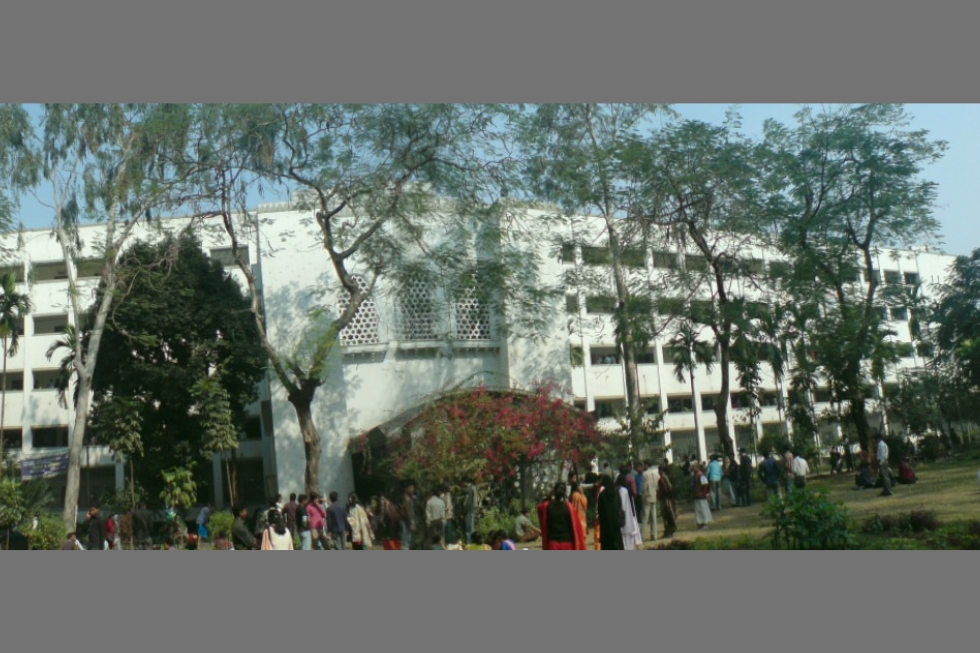



Bangladesh’s public universities must confront a difficult inheritance. For years, ruling-party student fronts turned residential halls into spaces of surveillance, discipline and fear. Between 2009 and 2024, this system worked most powerfully through the Bangladesh Chhatra League (BCL) — the student wing of the Bangladesh Awami League, founded by Sheikh Mujibur Rahman on January 4, 1948. In that world, visible Muslim piety could become political evidence, and the label “Shibir” could turn a student into a suspect.
I know this world not only as a researcher. In September 2013, as a second-year bachelor’s student at the University of Dhaka, I was taken from my hall room by senior student leaders, accused of links with Islami Chhatra Shibir, interrogated for hours, beaten, handed over to police and later sent to prison in a car-burning case that had taken place months earlier and that I knew nothing about.
Islami Chhatra Shibir, often called Shibir, is the student organization historically associated with Jamaat-e-Islami, Bangladesh’s main Islamist political party. On campuses, however, the word often traveled beyond formal membership. It became a label that could mark students as politically suspect, anti-government or ideologically dangerous, sometimes because of appearance, books, friendships, prayer habits or rumor.
The personal memory matters here because it points to a larger institutional problem. Bangladesh’s universities did not only police party affiliation. In many cases, they allowed informal student power to turn religious visibility into suspicion.
Hall power
For international readers, a “hall” may sound like an ordinary dormitory. In Bangladesh’s public universities, especially at the University of Dhaka, it is much more than that. It is where students sleep, eat, study and learn the informal grammar of campus power. For thousands of students from outside Dhaka, a hall seat makes university life possible.
Officially, university administrations allocated seats. In practice, many rooms fell under the control of ruling-party student leaders. Prothom Alo reported in 2022 that first-year students often had no chance of receiving valid seats and had to enter gono rooms, or mass rooms, controlled by Chhatra League leaders. According to students in that report, some rooms held 40 to 50 students, while politically connected seniors could occupy better spaces.
The price of shelter was discipline. Students in these rooms had to attend political programs, obey seniors known as boro bhai, literally “big brother,” and appear in “guest room” sessions. These were not guest rooms in the Western sense. They were nightly gatherings where juniors were instructed, questioned, humiliated or punished. Newspaper reports documented how this culture created fear among freshers and helped political leaders rule the halls.
The hall, then, was not merely a residence. It was a sorting machine. It helped determine who was loyal, who was disobedient and who could remain within the university’s most intimate space.
It is important to be precise about the source of this power. The surveillance, interrogation, beatings and police handovers described by many students were not usually carried out directly by university authorities or intelligence agencies. They were often carried out by leaders and activists of the ruling party’s student front. During the Awami League years, that meant BCL.
University administrations formally remained responsible for halls, but real authority often belonged to student-political leaders. In one reported case, The Daily Star reported that BCL activists were accused of torturing four Dhaka University students for nearly three hours before handing them to police. This was not quite state power in uniform. It was not quite private violence either. It was party power living inside a public university.
A label larger than politics
The most infamous case was the killing of Abrar Fahad, a second-year student at Bangladesh University of Engineering and Technology (BUET). In October 2019, Fahad was summoned from his dormitory room to Room 2011 of Sher-e-Bangla Hall after writing a Facebook post criticizing a Bangladesh-India water-sharing deal. Human Rights Watch reported that students knew Room 2011 as a “torture cell,” and that BCL members questioned him about alleged Shibir links. He was reportedly beaten for hours and later found dead. TBS later reported that a court sentenced 20 people to death and five to life imprisonment in the case.
Abrar’s killing was not about religious visibility in the narrow sense. He died after criticizing government policy. But the case revealed the same architecture of fear. A student could be taken from his room, questioned about loyalty, marked through the Shibir label and punished inside a university hall.
As part of my MA thesis, “Stigmatization of Islamic Symbols in Bangladesh’s Public Universities,” I conducted 38 in-depth interviews across ten campuses with students, rights activists and faculty members. Interviewees described a similar atmosphere again and again. Visible Islamic identity often appeared not simply as religious expression, but as a possible sign of ideological risk.
One former student said, “We learned how to manage ourselves. We avoided carrying certain books openly or discussing religion too loudly because someone might misunderstand.” The word “misunderstand” matters. Fear did not always arise from proven political activity. It arose from the possibility that visible piety could be read as political danger.
Student politics in Bangladesh is not a minor campus activity. Students played major roles in the Language Movement of 1952, the Liberation War of 1971, the anti-Ershad movement of the 1980s and the 2024 uprising that ended Sheikh Hasina Wazed’s long rule. But this tradition also produced a darker culture. Student wings of major parties competed for halls, rooms and influence.
During Awami League rule, BCL became the dominant force on most public university campuses. Shibir activists became one of the main targets of state and campus suspicion. But on the ground, the word “Shibir” often traveled beyond formal membership. Some students were accused because of real affiliation. Interviewees described others being accused because they appeared too religious, too reserved, too unwilling to join ruling-party networks or too visibly attached to Islamic practices. This labeling became known as Shibir-tagging.
This is how a label becomes larger than itself. It no longer describes only an organization. It begins to mark a type of student.
When piety becomes a risk
A student with a beard could be jokingly called “Shibir” before anyone knew his politics. A woman wearing a niqab could be treated as anti-cultural or politically risky before she spoke. Islamic books, regular prayer, avoidance of political programs or a quiet personality could be read through the same suspicious lens.
Universities have every reason to remain alert to violent extremism. Bangladesh has experienced real militant violence. The 2016 Holey Artisan attack in Dhaka killed 20 hostages and forced a national conversation about radicalization. No institution should ignore violence in the name of religion, nationalism or ideology.
But a different problem begins when ordinary religious visibility itself becomes a reason for suspicion. After Holey Artisan, some academic and policy discussions in Bangladesh appeared to place visible changes in Islamic language, dress and cultural preference close to the vocabulary of radicalization. A 2017 Prothom Alo report on a Dhaka University research presentation noted concerns about the increased use of Arabic expressions among students, the wearing of hijab and niqab among women, short trousers among some men and criticism of Pahela Baishakh or Mangal Shobhajatra as Hindu cultural practices.
Pahela Baishakh is the Bengali New Year. Mangal Shobhajatra is a colorful procession associated with it and recognized by the UN Educational, Scientific and Cultural Organization (UNESCO) as an intangible cultural heritage. Many Bangladeshis see it as a symbol of secular, plural Bengali culture. Some conservative Muslims view parts of it as religiously or culturally Hindu in origin. Whether one agrees or not, the question is whether such disagreement should be studied as cultural dissent, religious conservatism or evidence of dangerous radicalization.
This is the line that matters. Arabic greetings, modest dress or skepticism toward a state-backed cultural festival may deserve sociological study. But when they are placed too close to the language of extremism, ordinary Muslim life becomes vulnerable to suspicion. The study of violent extremism can slowly become a study of visible religiosity itself.
The distinction between security and securitization is useful here. Security protects citizens from violence. Securitization turns an identity, practice or community into a suspected threat before any actual wrongdoing is shown. When this happens inside a university, the campus becomes a space where some students must constantly prove that they are harmless.
Several interviewees described this as everyday self-management. Some lowered their voices when discussing religion. Some avoided carrying Islamic books openly. Some removed books from dormitory shelves before inspections. Some prayed quietly, avoided group religious gatherings or kept distance from students already marked as politically suspicious. Others withdrew from campus social life.
The effect was not only political. It was psychological. Students spoke of anxiety, shame and fear of misidentification. A university is supposed to teach students how to think, argue and disagree. Many visibly religious students learned a different lesson: how not to be noticed.
Unequal secularism
The issue becomes sharper when one looks at the unequal management of religious expression. Hindu festivals such as Durga Puja and Saraswati Puja, as well as cultural events like Pahela Baishakh, are often celebrated on campuses with administrative support. This is welcome. A plural society should protect minority religious and cultural expression. Prothom Alo reported that students of 74 Dhaka University departments arranged Saraswati Puja pandals at Jagannath Hall in 2026.
The concern is not that these festivals are celebrated. The concern is why Islamic practices often face a different standard. Students arranging Ramadan discussions, collective Qur’an recitation, prayer-related activities or Islamic seminars have sometimes encountered suspicion, bureaucratic pressure or political hostility. In March 2024, New Age reported that five students were injured after BCL activists attacked a Ramadan discussion organized by Dhaka University law students. Interviewees also described obstruction when students sought basic prayer arrangements for women at the Teacher-Student Centre.
This uneven treatment raises a larger question about secularism. If secularism means equal respect for citizens, it cannot treat one set of religious expressions as culture and another set as a problem to be managed.
Bangladesh is not India. Its history and political formation are different. But a comparative point helps. In parts of India, Hindu practices can appear as culture or national tradition, while visibly Islamic practices appear as religion and therefore as excessive in the public sphere. A similar tension can appear in Bangladesh when Bengali cultural symbols are treated as naturally public, while Islamic symbols are expected to remain private or politically silent. This is not simply about festivals. It is about who gets to appear as a normal citizen.
Bangladesh’s secular-nationalist imagination carries a historical burden. The 1971 Liberation War remains the moral foundation of the state. Those who collaborated with the Pakistani army are remembered as Razakars, one of the most powerful terms of condemnation in Bangladeshi politics. Jamaat-e-Islami’s wartime role and later political presence have shaped deep suspicion toward Islamist politics.
That history matters. But it can also become a tool of present-day exclusion when categories such as “Razakar,” “anti-liberation” or “Shibir” move too easily from proven political conduct to visible religious identity. Many students accused of Shibir affiliation after 2009 were born decades after 1971. In this atmosphere, visible Islam did not always need to do anything. It only needed to look like it might mean something.
After July 2024
Bangladesh now stands after a major political rupture. Sheikh Hasina resigned and fled the country in August 2024 after student-led protests grew into a mass movement. Much attention has gone to elections, reforms, courts and accountability. But the future of democracy will also depend on quieter institutions, including universities.
The July uprising changed the hall order dramatically. After BCL leaders and activists were driven out of Dhaka University halls, the old system of ruling-party control over rooms began to collapse. TBS News reported that regular students began receiving legal seats from hall administrations after years of student-wing control. Prothom Alo later reported that gono room and guest room culture had largely ended in the residential halls.
The change remains contested. In response to student pressure, Dhaka University banned politics inside residential halls under the July 17 framework. The university says the ban remains in force. Yet the Bangladesh Nationalist Party’s (BNP) student wing, Jatiyatabadi Chhatra Dal, has tried to reorganize hall committees, triggering student protests and renewed debate over whether party politics will return to residential life, TBS reported.
This is why the issue matters beyond the Awami League period. The problem was not only one party’s brutality, although BCL’s role between 2009 and 2024 was central. The deeper problem was a political culture in which student fronts could occupy public dormitories.
Universities must resist violent extremism. They must also resist coercive politics. But they cannot do either by turning ordinary Muslim students into permanent objects of suspicion. Democratic scrutiny is different from inherited suspicion. It is one thing to investigate violence or coercion. It is another to allow a campus culture in which ordinary Islamic visibility becomes evidence of hidden danger.
A democratic university is not a place where everyone thinks alike. It is a place where Marxists, liberals, nationalists, atheists, Islamists, feminists, conservatives and apolitical students can coexist without humiliation or automatic suspicion.
The real test is not whether a university celebrates pluralism in speeches. It is whether a student wearing a niqab, carrying Islamic literature, praying regularly or refusing to join dominant political networks can still feel that the campus belongs to them.
When religious visibility becomes suspicion, citizenship itself becomes conditional. And when citizenship becomes conditional inside the university, democracy begins to fail where it should have been taught.
[Zania Morgan edited this piece.]
The views expressed in this article are the author’s own and do not necessarily reflect Fair Observer’s editorial policy.






Join the conversation
Share your perspective
Log in to share your thoughts and take part in the discussion.