


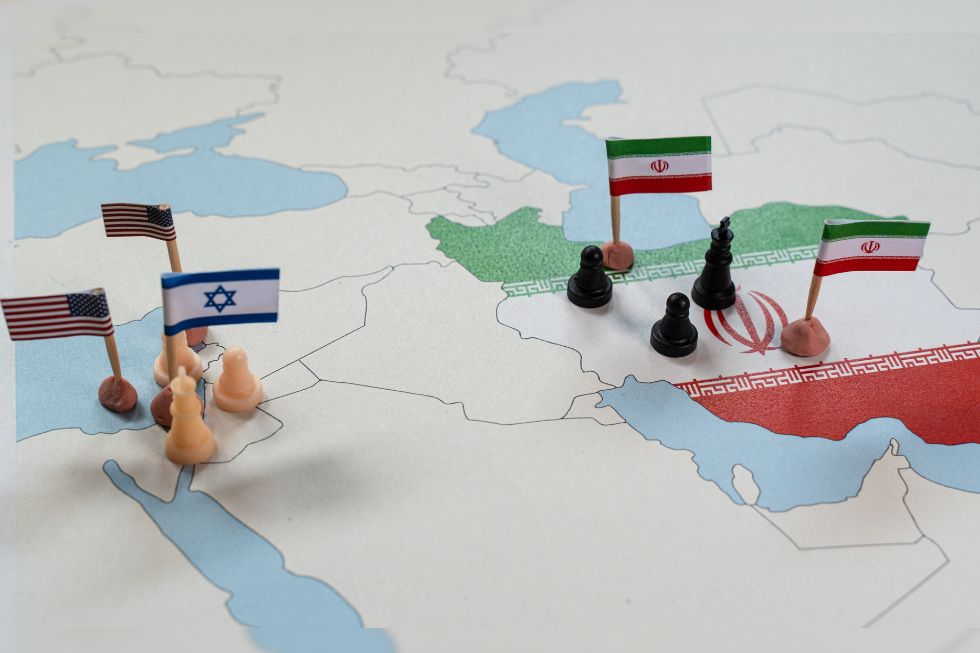



January 2026 marks an irrevocable geopolitical shift. The Islamic Republic of Iran faces terminal systemic failure. What began on December 28, 2025, as local economic protests has rapidly escalated into the clerical establishment’s gravest existential threat since the 1979 Islamic Revolution. Unlike past unrest, this uprising demands revolution rather than reform.
The regime’s internal survival mechanisms have fractured beyond repair. No longer a guarantor of stability, the Islamic Republic has become the region’s primary agent of chaos, rendering Western passivity obsolete. Regional stabilization now requires a coordinated US–Israeli intervention that leverages air superiority, advanced telecommunications and political support to facilitate a transition of power.
The collapse of the rial and the bazaari revolt
The collapse of the Iranian rial in late December 2025 triggered the current unrest. While sanctions and mismanagement had long burdened the economy, this sudden hyperinflationary spike severed the social contract between the state and the Bazaaris. On December 28, shopkeepers in Tehran’s Grand Bazaar shuttered their stalls in a spontaneous reaction to market unviability rather than a political strike.
Protests spread to more than 348 locations across all 31 provinces by January 10, 2026. This expansion occurred at unprecedented speed, reaching the periphery in hours rather than the weeks seen during the 2017 Iranian protests. A diverse coalition has replaced the specific demographics of the 2022 Woman, Life, Freedom movement. Young men from peri-urban areas, laborers, students and a formerly loyal conservative base have united to explicitly call for the system’s fall.
Provincial hubs like Yasuj, Kermanshah, Ilam and even Qom — the regime’s theological heart — have become flashpoints for violence, moving beyond the liberal enclaves of northern Tehran. In these regions, the conflict resembles urban warfare, as protesters erect barricades, seize municipal buildings, and confront security forces. These actions signal a demand not for lower prices, but for the end of the theocratic dictatorship.
Official figures acknowledge at least 45 deaths, but medical data indicate a much higher toll. One Tehran physician reported 217 protester deaths in just six hospitals, citing head and chest wounds that point to a “shoot to kill” policy using live ammunition. Rights groups like the Human Rights Activists in Iran (HRAI) documented over 2,250 arrests in the first fortnight, indiscriminately sweeping up students, laborers and 166 minors. Security forces have shifted from riot control to military suppression. By January 9, troops were using heavy machine guns in residential areas, a tactic formerly reserved for border conflicts.
Attorney General Mohammad Movahedi Azad classified all protesters as Moharebeh (“enemies of God”) on January 9, a charge carrying a mandatory death sentence. This classification suggests the judiciary is preparing the court system for mass executions. The Supreme National Security Council reinforced this stance, declaring no leniency for saboteurs and effectively authorizing further atrocities.
Regime collapse as a prerequisite for regional stability
The strategic necessity of regime change challenges the decades-old Western wisdom that Iran’s collapse would create a chaos vacuum akin to post-2003 Iraq or post-2011 Libya. In 2026, the inverse is true: the Islamic Republic’s continued existence primarily drives Middle Eastern chaos. As a zombie state — illegitimate yet capable of exporting terror — removing the clerical regime is a moral imperative for Iranians and a strategic necessity for the US, Israel and the Arab world.
A paradigm shift in Israeli strategy has moved from fighting tentacles to striking the head of the octopus. Previously, the West and Israel contained proxies like Hezbollah, Hamas and the Houthis while leaving Tehran’s command center undisturbed. However, events in 2024 and 2025 have vindicated proponents of regime change.
The 12-Day War between Israel and Iran in June 2025 fundamentally shifted the power balance. Israeli air forces destroyed nuclear infrastructure and the Islamic Revolutionary Guard Corps (IRGC) command centers. It shattered the myth of the regime’s invincibility and exposed its hollow air defenses.
The US intensified this pressure on June 22, 2025, by airstriking three nuclear facilities. President Donald Trump authorized the operation to neutralize the nuclear program. These attacks degraded Iran’s coercive capacity and emboldened the public, who now see the leadership under fire from both within and without. The war’s lingering economic damage has demoralized security forces and emptied the treasury. Despite the regime projecting strength, the system remains stretched to its breaking point.
Israel’s Head of the Octopus doctrine regarding Iran posits that terror networks will regenerate as long as Tehran’s funding and ideological center remains intact. The current uprising offers a unique opportunity to strike this head directly; disintegrating the Islamic Republic would sever financial and logistical lifelines to the Axis of Resistance, cascading stability across the Levant and Arabian Peninsula.
The degradation of Hezbollah has reduced Iran’s former crown jewel to a shadow of itself. Following the 2024 war with Israel, its leadership was decimated and missile stockpiles depleted. Crucially, the late 2024 collapse of the Assad regime severed the critical Syrian “land bridge” for resupply. Without this conduit or Tehran’s finance, Hezbollah ceases to be a strategic threat to Israel, reverting to a local faction facing disarmament or domestic annihilation. Tehran’s fall would be the final nail in its coffin.
The isolation of Shia militias followed the fall of Bashar al-Assad, which removed Iran’s only regional state ally. Dependent on Iranian coordination, these groups are now vulnerable. Regime change would orphan them; without Velayat-e Faqih (guardianship of the Islamic jurist) ideology or Quds Force cash, they would fracture, likely dissolving or integrating into the state, thereby reducing sectarian tensions and stabilizing Iraqi democracy.
The neutralization of the Houthis’ maritime threat depends on cutting Iranian supply lines. While locally rooted, the Houthis rely on Iranian components — specifically guidance systems and rocket motors — for the advanced ballistic missiles and drones threatening Red Sea shipping. Collapsing the Tehran regime would halt these supplies, effectively ending the Houthi threat to international maritime commerce.
US and Israel’s strategic calculus
Israel’s strategic calculus has shifted in the last 25 months. Following the trauma of the October 7 attacks and the subsequent regional wars, the Israeli defense establishment has abandoned the concept of mowing the grass — periodically degrading enemy capabilities — in favor of a Victory Doctrine. This doctrine argues that conflicts with ideological enemies end only when one side is decisively defeated.
Prime Minister Benjamin Netanyahu views the current Iranian protests not just as a humanitarian issue but as a force multiplier for Israel’s security. The degradation of the regime from within reduces the likelihood of a coordinated multifront attack on Israel. Consequently, Israel has a vested interest in the success of the protesters. Israel’s recent strikes on Iran’s nuclear program are part of this strategy: denying the regime a doomsday insurance policy while it is under internal siege.
However, there is a divergence in views on how to support the collapse. While some Israeli voices call for direct military intervention to aid the protesters, others warn against the Iraq scenario, where external imposition delegitimizes the opposition. The consensus, however, is that a nuclear-armed Islamic Republic facing internal collapse is the most dangerous scenario, necessitating preemptive action to neutralize strategic weapons before the regime can use them as a last resort.
The return to Maximum Pressure signals a definitive shift from the historical US policy oscillation between engagement and containment. In January 2026, the Trump administration introduced a kinetic component, departing from previous passivity with air strikes on nuclear facilities and the President’s warning: “if Iran shoots … we’ll start shooting too.”
The strategic argument for US intervention confronts the Islamic Republic as a revisionist power committed to overturning the US-led order. Its alliance with Russia is marked by Iranian drones used in Ukraine. Rumors of Supreme Leader Ayatollah Ali Khamenei seeking asylum in Moscow firmly position Tehran among global adversaries. Regime collapse would isolate Russia, depriving Moscow of a key military supplier and strategic partner. Furthermore, a pro-Western secular successor would realign energy markets and likely join the Abraham Accords, creating a unified pro-American bloc from the Mediterranean to the Caspian Sea.
Iran’s strategy of internet blackout and bloody repression
The Islamic Republic’s digital warfare strategy is central to its survival, relying on sophisticated information control to atomize opposition and conceal state violence. In response to the January 2026 uprising, the regime deployed a multilayered digital counterinsurgency designed not merely as censorship but as a weapon to cloak repression in darkness.
A chilling precision characterizes the shutdown initiated on January 8, 2026. It marks a significant evolution from the crude total blackouts of 2019. This is a whitelist system as a “new high-water mark” in digital censorship; instead of a total disconnect that cripples banking and government functions, the regime now selectively filters access.
Traffic filtration has severed approximately 90% of international internet traffic. Access to major global platforms such as Instagram, WhatsApp and X is now blocked at the infrastructure level, isolating citizens from the outside world. The National Information Network (NIN) represents the regime’s attempt to force users onto a domestic Halal Internet intranet.
Infrastructure targeting extends the blackout from the digital to the physical realm. In protest hotspots, mobile phone towers (BTS) have been deactivated, leaving vast urban areas without antennas and effectively reverting them to a pre-digital state, disrupting communication. The strategic goal is to maintain the regime’s internal command and control (C2) while blinding protesters.
The deployment of military-grade electronic warfare (EW) against satellite internet is a critical development in the 2026 protests. Although Elon Musk and SpaceX activated Starlink services for Iran, the reality on the ground is an intense struggle against these countermeasures. Jamming operations utilize high-powered devices, likely supplied by Russia or China, to disrupt Starlink signals. This interference is localized but effective in dense urban areas, significantly reducing the utility of smuggled terminals.
Disruption levels have been quantified by internet researchers detecting military-grade jamming signals targeting Starlink satellites. These initially disrupted approximately 30% of uplink/downlink traffic before rising to over 80% during peak protest hours. The cat-and-mouse game continues as Starlink terminals enter the country, yet the Direct-to-Cell capability — allowing standard smartphones to connect to satellites — faces significant hurdles due to the signal strength required to overcome terrestrial jamming.
Brutal physical repression unfolds under the cover of digital darkness, with the Supreme National Security Council explicitly ordering no leniency for saboteurs. Lethal tactics involve security forces employing a mix of kinetic weapons, including birdshot (pellets) fired at close range to blind or maim, and live ammunition (Kalashnikov and pistol fire) targeting the torso and head.
The weaponization of infrastructure sees ambulances used to transport security forces and detain protesters — a violation of international humanitarian norms that erodes trust in medical services. Hospitals have become danger zones, with security forces raiding emergency rooms to arrest the wounded. Judicial warfare accelerates executions by swiftly labeling protesters as Moharebeh. State TV broadcasts of coerced confessions — such as those from an 18-year-old woman and a 16-year-old girl accused of leading riots—are obtained through torture to terrify the public.
The regime’s strategic goal is clear: sever connections between protesters to prevent organization, blind the international community to avoid immediate sanctions or intervention, and use overwhelming lethal force to break the psychological will of the street.
The impossibility of regime reform
The impossibility of reform resolves the recurring Western debate regarding a “managed transition.” Events in 2025–2026 provide definitive evidence that the regime is incapable of self-correction; due to deep structural, ideological and economic rigidities, the only remaining trajectory is collapse.
The death of the political safety valve is the end of the decades-long vacillation between hardliner and reformist factions. The marginalization of reformists and the consolidation of power by the Principalist faction have eliminated space for political evolution. President Masoud Pezeshkian, despite his “moderate” label, remains powerless against crackdowns or economic crises; his admission that failure to address hardship means “we will end up in hell” signals impotence. With the Supreme Leader, Ali Khamenei, and the IRGCholding all levers of power, any genuine reform is neutralized as a security threat. The electorate now recognizes this, chanting: Reformist, Hardliner, the game is over.
The succession crisis centers on the aging Khamenei (86), the system’s linchpin. His impending death or incapacitation creates a power vacuum the regime is ill-equipped to handle, with reports of a “Plan B” involving his flight to Moscow underscoring internal fragility. The rejection of Mojtaba looms over the transition. Khamenei’s son and groomed successor lacks both religious credentials and popular legitimacy; his ascension would likely trigger mutiny within the clerical establishment and the lower ranks of the military.
The threat of an IRGC coup represents the most probable internal shift — not reform, but a military transition where the IRGC usurps the clerical class to establish a naked military dictatorship. Yet, the IRGC itself is fractured, plagued by rumors of defections and reliance on paid proxies rather than ideological loyalists. Khamenei reportedly trusts the IRGC over the regular Army (Artesh), fearing defections in the latter.
The economic collapse of the Islamic Republic is total; Khamenei’s Resistance Economy is broken beyond repair. Hyperinflation has rendered the Rial nearly valueless, making subsistence impossible. Corruption is systemic, with the IRGC controlling vast sectors — telecoms, construction and energy — prioritizing rent-seeking over productivity; dismantling this empire is impossible without forcible resistance. Meanwhile, the nuclear impasse ensures continued sanctions, and the 12-Day War infrastructure destruction imposes reconstruction costs the bankrupt state cannot meet.
The collapse of legitimacy has eroded the regime’s foundational pillars: religious authority and anti-imperialist nationalism. Rapid secularization defines a society where strict hijab enforcement has backfired, creating an aggressively anticlerical generation. Simultaneously, the opposition embraces nationalism, viewing Islamism as an alien imposition; Exiled Iranian Prince Reza Pahlavi’s “Cyrus Accord” rhetoric appeals to this pre-Islamic Persian identity, which the regime cannot co-opt.
The terminal phase of the Islamic Republic relies solely on coercion. Systems dependent on bayonets may survive temporarily, but cannot reform; they are brittle structures that do not bend, but break.
The necessity of multidimensional intervention
A Smart Intervention strategy offers the viable path to regime collapse, replacing the counterproductive and logistically disastrous option of an Iraq-style ground invasion.
Breaking the digital siege requires the US to treat internet access as a strategic priority. Overcoming the current jamming of Starlink requires a technical response in which US intelligence assists SpaceX in hardening signals against Russian/Chinese interference. The Holy Grail is Direct-to-Cell technology; supported by sufficient satellite density, this renders the whitelist intranet useless without needing smuggled dishes. The US must utilize internet freedom funds to subsidize millions of connections. This is the test of whether the US will move beyond appeasement.
External aerial intervention tips the balance via overwhelming air power, as the 12-Day War demonstrated absolute Western air superiority over Iran. Targeting the repression machine requires strikes on IRGC troop concentrations and logistics to prevent reinforcements. Precision decapitation strikes against C2 centers would paralyze the leadership; extending current engagement beyond nuclear facilities to C2 targets is the logical next step. This delivers a psychological impact: unchallenged jets signal to protesters they are not alone and to security forces that their masters are defenseless. This, in effect, dismantles coercive capacity without occupation.
The leadership factor centers on Pahlavi, who has emerged as the opposition’s gravitational center. His National Uprising strategy, calling for coordinated strikes, has been answered. The National Union for Democracy in Iran-backed transition plan provides the necessary political infrastructure: a National Uprising Council, a transitional government and a Constituent Assembly to determine the future state form. Pahlavi is uniquely capable of inducing defections; his message to the army and Immortal Guard to disrupt the repression machine 35 offers military personnel an honorable exit.
Israel’s strategic role acts as the hammer against external assets while the Iranian people serve as the internal anvil. Continued attacks on proxies like Hezbollah prevent their redeployment to suppress domestic protests. Israel’s deep intelligence penetration erodes morale by exposing regime secrets and flight plans. Furthermore, under a “Cyrus Accord,” Israel should publicly commit to a post-regime support package.
The military dimension
The strategic irrelevance of ground invasion concerns renders critics’ fears of occupation moot. While the difficulty of invasion is real, the objective is regime decapitation, not occupation. The modern Iranian military is hollow, with air defenses exposed as obsolete during the June 2025 conflict. Consequently, a sustained air campaign would not seek to hold territory but to destroy the mechanisms of domestic oppression.
| Capability | Islamic Republic (Current Status) | US/Israel (Intervention Capacity) |
| Air Defense | Severely degraded (S-300/S-400 destroyed in June 2025) | Absolute Air Superiority (F-35, B-21) |
| Command & Control | Centralized, vulnerable to decapitation | Cyber-hardened, integrated |
| Morale | Low (Reliance on fear and money) | High (Volunteer/Professional forces) |
| Mobility | Dependent on road infrastructure | Aerial dominance, can interdict roads |
The inducement of mass defections relies on destroying IRGC communication hubs, fuel depots and ammo dumps. This forces enforcers to fight without central coordination or supplies. which exponentially increases the likelihood of collapse. The Venezuela Model suggests military loyalty persists only as long as the dictator provides payment and protection. Air strikes remove the protection, while sanctions remove the pay.
The Islamic Republic of Iran is in its death throes. The convergence of economic collapse, military humiliation and a fearless national uprising has created a fleeting window of opportunity. The regime relies on the West’s hesitation. The Iranian government bets that the US fears chaos more than it desires liberty.
The chaos of the regime’s survival is far greater than the risks of its fall. The US and Israel can facilitate a decisive end to the 47-year nightmare. The fall of the regime is not just a possibility; with the right intervention, it is an inevitability that will herald a new dawn of stability for the Middle East.
[Kaitlyn Diana edited this piece.]
The views expressed in this article are the author’s own and do not necessarily reflect Fair Observer’s editorial policy.
Houthis, Israel, Iran and Yemen: A Nation on the Brink
The Houthis, backed by Iran and entrenched in northern Yemen since 2014, have sought to project power beyond Yemen by...
FO° Talks: Iran Vows Stronger Response If Attacked Again By America, Israel
In this episode of FO° Talks, Rohan Khattar Singh and Stephen Zunes examine the US–Israel–Iran relationship. The latter argues that...
FO° Talks: Israel Strikes Iran. Tehran Hits Back. What Now?
Former Israeli Government Official Josef Olmert analyzes Israel’s recent strike on Iran as a calculated and unprecedented move that decapitated...

Iran’s Revolutionary Ideology Is the Architect of a Destabilizing Order
The Iranian revolution established a unique ideological archetype: the Supreme Leader wields absolute power, the nation views itself as a...
Support Fair Observer
We rely on your support for our independence, diversity and quality.
For more than 10 years, Fair Observer has been free, fair and independent. No billionaire owns us, no advertisers control us. We are a reader-supported nonprofit. Unlike many other publications, we keep our content free for readers regardless of where they live or whether they can afford to pay. We have no paywalls and no ads.
In the post-truth era of fake news, echo chambers and filter bubbles, we publish a plurality of perspectives from around the world. Anyone can publish with us, but everyone goes through a rigorous editorial process. So, you get fact-checked, well-reasoned content instead of noise.
We publish 3,000+ voices from 90+ countries. We also conduct education and training programs
on subjects ranging from digital media and journalism to writing and critical thinking. This
doesn’t come cheap. Servers, editors, trainers and web developers cost
money.
Please consider supporting us on a regular basis as a recurring donor or a
sustaining member.
Will you support FO’s journalism?
We rely on your support for our independence, diversity and quality.





Comment
Ali, we should be cautious when describing things we believe to be “inevitable,” especially if it depends on action by the US. I can’t forget Condeleeza Rice’s remarks about the “birth pangs” of a new Middle East. I can even remember General Westmorland telling us how inevitable would be our victory in Vietnam. And more recently Joe Biden forecast the ruble being quickly reduced to rubble and “that man” (Putin) having to go.