


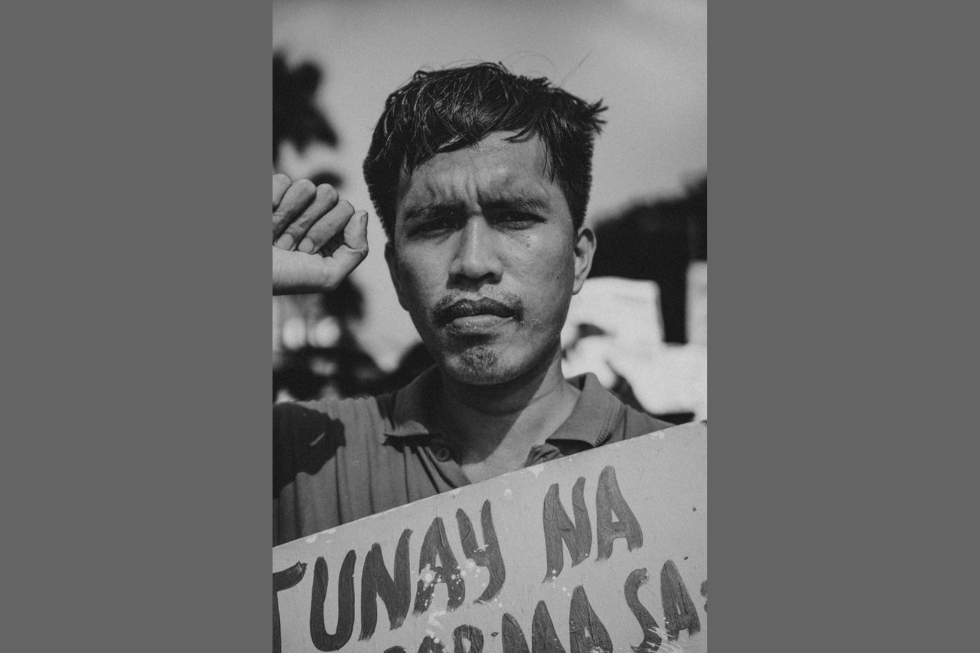



A hunger strike carries no weapons, no budget and no army. Yet for more than a century, this simple refusal to eat has repeatedly forced governments, employers and prison authorities to bend. From suffragette cells in Edwardian London to a protest site in New Delhi this year, the tactic keeps resurfacing because it flips the balance of power between the powerless and the powerful. The striker’s body becomes the battlefield, and the state’s response, whether it force-feeds, ignores or negotiates, becomes the story the public remembers. Stripped of everything else, a prisoner’s body becomes their last bargaining chip, one that forces the state to choose between looking cruel and looking weak.
A weapon born in prison cells
The tactic predates Mahatma Gandhi, who pioneered mass nonviolent resistance against British colonial rule and turned fasting into a weapon of Indian independence, by decades. Russian revolutionaries held in Saint Petersburg refused food as early as 1878, protesting their treatment under tsarist rule. The idea reached Britain three decades later. In July 1909, suffragette Marion Wallace Dunlop refused all food after her arrest for stenciling a protest slogan on a wall of the House of Commons. Authorities released her after 91 hours, and other jailed members of the Women’s Social and Political Union copied her within weeks. British authorities then began force-feeding the striking women, a practice so brutal that it turned public sympathy against the government rather than the protesters.
Mahatma Gandhi undertook at least 20 fasts over his lifetime, turning personal abstinence into national strategy. His first successful fast, in 1918, pressured mill owners in Ahmedabad into raising wages for textile workers. In 1932, a fast against a British plan for separate electorates for India’s lowest castes produced a compromise between Gandhi and B.R. Ambedkar. Not every fast worked. A 21-day strike against British rule in February 1943 changed little. The failures matter as much as the successes. They show that a hunger strike only moves an opponent who cannot afford to watch the striker die.
Why force-feeding backfires on the state
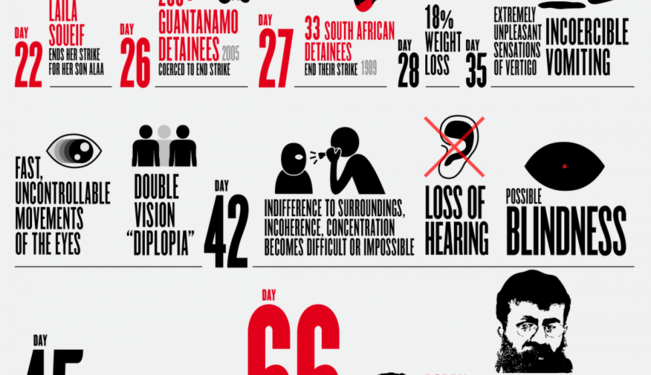
A hunger strike works by turning the striker’s only remaining asset, control over her own body, into a cost the jailer cannot avoid. Doing nothing invites blame if the striker dies. Intervening looks like assault. Bobby Sands, a Provisional Irish Republican Army prisoner in the Maze Prison near Belfast, tested both outcomes at once. He stopped eating on March 1, 1981, demanding that republican prisoners be treated as political detainees rather than criminals. Sands died 66 days later, but not before Irish voters elected him to the British Parliament from his prison cell. Nine more strikers died before the protest ended on October 3, 1981. Prime Minister Margaret Thatcher had refused to negotiate throughout the strike. Shortly after it ended, the British government granted most of the prisoners’ original demands anyway.
Not every government feels this pressure equally, and India’s own history shows why. Irom Sharmila began fasting in Manipur in November 2000, after security forces killed ten civilians at a bus stop under the Armed Forces Special Powers Act. She was force-fed through a tube in her nose for 16 years. She never secured the law’s repeal. She ended her fast in 2016 and turned to electoral politics instead, saying the strike had not delivered the change she sought. Her case shows the limit of the tactic. A government facing no international audience and no electoral cost from a remote region can simply wait out a striker it is willing to keep alive by force.
The tactic keeps finding new causes
The hunger strike travels far beyond prisons and colonial rule. Cesar Chavez, who co-founded the United Farm Workers, fasted for 25 days in 1968 to hold his movement to nonviolence while pressing growers to recognize the union. He fasted again for 24 days in 1972 and for 36 days in 1988, at the age of 61. Each fast drew television cameras and donations that picket lines alone had struggled to attract. In Ladakh, activist Sonam Wangchuk has used the same logic against the same government that Gandhi once faced, fasting repeatedly since 2024 to demand statehood and constitutional protections for the region. His hunger strike in New Delhi this year, begun in solidarity with students protesting exam irregularities, pushed a court to order daily monitoring of his health, a sign that officials still cannot simply look away.
None of this makes a hunger strike a guaranteed weapon. Gandhi’s failed fasts and Sharmila’s 16 years without repeal show that starvation alone persuades no one who can walk away without consequence. What keeps the tactic alive is its asymmetry. It costs the striker everything and the state only its reputation, and reputation is precisely what a government watched by voters, courts or the world cannot afford to lose in public. That asymmetry, more than any single victory, explains why a protest with no weapons has outlasted the empires and prisons built to contain it.
The views expressed in this article are the author’s own and do not necessarily reflect Fair Observer’s editorial policy.
How Do We Understand Non-Violence?
On the International Day of Non-Violence, what can we learn from the teachings of Gandhi and Martin Luther King?



Support Fair Observer
We rely on your support for our independence, diversity and quality.
For more than 10 years, Fair Observer has been free, fair and independent. No billionaire owns us, no advertisers control us. We are a reader-supported nonprofit. Unlike many other publications, we keep our content free for readers regardless of where they live or whether they can afford to pay. We have no paywalls and no ads.
In the post-truth era of fake news, echo chambers and filter bubbles, we publish a plurality of perspectives from around the world. Anyone can publish with us, but everyone goes through a rigorous editorial process. So, you get fact-checked, well-reasoned content instead of noise.
We publish 3,000+ voices from 90+ countries. We also conduct education and training programs
on subjects ranging from digital media and journalism to writing and critical thinking. This
doesn’t come cheap. Servers, editors, trainers and web developers cost
money.
Please consider supporting us on a regular basis as a recurring donor or a
sustaining member.
Will you support FO’s journalism?
We rely on your support for our independence, diversity and quality.





Comment