


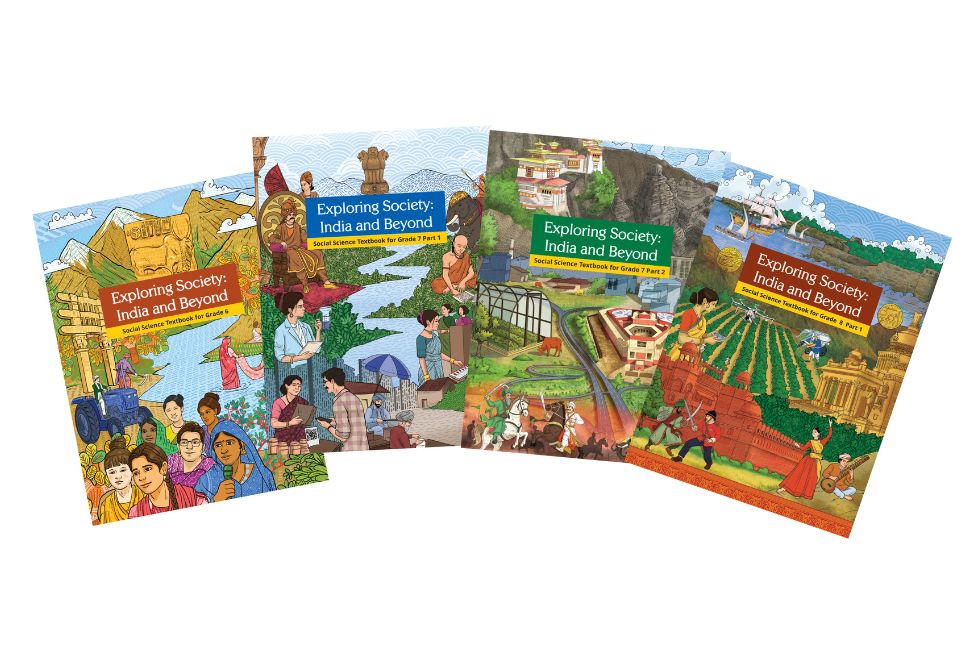


On February 23, 2026, India’s National Council for Educational Research and Training (NCERT) released the second part of its Social Science textbook for grade 8, the first part having appeared in mid-2025. These textbooks are part of a series of new Social Science textbooks for the Middle Stage (grades 6 to 8), entitled Exploring Society: India and Beyond. Taking umbrage at a few paragraphs discussing corruption in the Judiciary, the Supreme Court of India passed strictures against the NCERT, issued a show-cause notice for criminal contempt against its director and ordered a complete ban on the textbook.
What is the NCERT, and what does it do?
The NCERT is an autonomous body under the Ministry of Education, which has for several decades designed curriculum frameworks, syllabi and textbooks for schools aligned to the central government’s CBSE board of education. It is also one of the bodies tasked with designing and implementing teacher training in the country. To put things in perspective, let us recall that India has nearly 250 million school students, over 20 million of whom follow the CBSE board of school education. The rest follow mostly state boards of education or a few other central or international boards. Besides, NCERT textbooks have traditionally been regarded as major references beyond the classroom. Preparing and publishing textbooks across all disciplines is therefore a weighty responsibility.
In recent years, two different committees formed by the Ministry of Education formulated a 65-page new National Education Policy (NEP 2020), followed by a 562-page National Curriculum Framework for School Education (NCF-SE 2023). These two major documents together seek to revolutionize India’s school system by offering a new philosophy of education and making schooling stimulating, engaging and enriching — not just a mere accumulation of facts, figures and other data to be learned by rote. Apart from spelling out a new pedagogy in great detail, they lay much emphasis on encouraging the students’ ability to critically reflect on the material, and preparing them to meet the challenges of today’s world. We will return to this last point.
In other words, the new textbooks are mandated to be written on the new foundation laid down by these two documents. So far, only textbooks of various disciplines for grades 1 to 8 have appeared, and are available for download from the NCERT’s website. A complex system of committees oversees this work. From top to bottom: two overarching committees — the National Syllabus and Teaching/Learning Material Committee (NSTC) and the National Curriculum Frameworks Oversight Committee (NOC) — are ultimately responsible for the preparation and finalization of the new syllabi and textbooks. The former creates Curricular Area Groups (CAGs) for the various disciplines — the CAG for Social Science (CAG-SS), in our present case — which, in turn, form Textbook Development Teams (TDTs) of experts, one per grade or textbook. According to the official notifications, these various groups and committees are expected to work in collaboration with the NCERT, the textbooks’ publisher.
The CAG-SS, together with the CAG-Economics, had so far produced textbooks for grade 6, grade 7 (in two parts) and grade 8 (part one). In a departure from the past, they brought geography, history, cultural heritage, political science and economics together, rather than keeping them as separate books. This meant a substantial reduction in the overall syllabus for the Middle Stage.
India’s Supreme Court took issue
On February 24, the day after the NCERT put the new textbook for grade 8 part two on sale, The Indian Express published an article with the catchy title, “NCERT’s new Class 8 book lists ‘corruption in judiciary’, ‘massive backlog’ as challenges,” focusing on two or three paragraphs of the chapter. The next day, a few Supreme Court advocates, including Kapil Sibal and Abhishek Singhvi, drew the attention of a Supreme Court bench headed by the Chief Justice of India (CJI), Justice Surya Kant, to the article, expressing shock at the content of the textbook — without having read more than the article, it appears. The CJI expressed his strong displeasure, protesting at what he perceived to be a “conspiracy” to defame the Judiciary, and announced his intention to pass an order against the textbook and the NCERT, which he did the next day.
The order, issued in the name of Justice Surya Kant, Justice Joymalya Bagchi and Justice Vipul M. Pancholi, found that the offending passages had been written “in a reckless, irresponsible, contemptuous, and motivated manner” which revealed “a discernible underlying agenda to undermine the institutional authority and demean the dignity of the judiciary.” It issued a show-cause notice for contempt of court to the Secretary, Department of School Education and Literacy in the Ministry of Education, and the NCERT director Professor D.P. Saklani. It asked for “all copies of the book, in hard or soft form … [to be] forthwith seized and removed from public access.” It imposed “a complete blanket ban … on any further publication” of the textbook. And it asked the NCERT to provide, by the next hearing on March 11, the details of the NSTC committee, the “specific names and credentials of the Textbook Development Team responsible for drafting” the said chapter, and all records of meetings pertaining to the chapter. The NCERT and the Ministry of Education tendered unconditional apologies, affirming that the offending passages were unintentional and reflected an “error of judgement.”
Because the banning of a textbook is unprecedented in India’s legal and educational history, there followed a flurry of articles in the press or on online media platforms, a few news items or debates on TV channels (this example from Palki Sharma on Firstpost), YouTube videos (such as this one by Pradeep Singh, in Hindi, praising the authors of the textbook), and numerous social media posts — all of it generating thousands of comments generally critical of the Supreme Court’s strictures. Leaving aside plain news reports, some articles (examples here and here) broadly endorsed the Supreme Court’s views, while most others, to which we will turn, argued that the Supreme Court’s line of action was excessive or even questionable in law.
It is noteworthy that comments and analyses covered the whole political spectrum, from so-called “right-wing” media (an example here) to so-called “left-wing” ones (an example here). Let us clarify that we use these labels in their popular acceptance and without any judgment; our perspective here is strictly apolitical.
The legal angle: the ban and the use of “criminal contempt”
There has been much debate on whether the Supreme Court was right in imposing a ban. In a detailed analysis on the respected Bar and Bench platform, two legal academics, Syed Shiraz Fazal and Twinkle Hussain, asked, “Even assuming that protecting judicial integrity is a legitimate aim, was a complete blanket ban necessary? Could the Court have directed revision, contextual clarification, or expert review instead? A prohibition on any further publication appears at first glance to fail the least restrictive means test.”
Several commentators suggested that “a complete ban must meet an exceptionally high threshold,” and since the facts presented in the concerned chapter were all based on official figures and authentic quotations (including one by the previous Chief Justice of India, Justice B.R. Gavai, on judicial corruption), the absolute necessity and urgency of a ban were debatable. In fact, the Bar and Bench analysis, taken together with an article by the Supreme Court advocate Prashant Bhushan in The Indian Express, another by V. Aravinda in The Federal, and an unsigned one in The Statesman, titled “Silencing Civics,” made the point that the Supreme Court had milder options before going all the way to a ban. Citing earlier judgments, several commentators (let us add here Ummar Jamal in The Indian Express and Saurav Das in Frontline Magazine) argued at length that the ban was detrimental to academic freedom and public debate, contrary to the assurance in the Supreme Court order that it did not intend to “stifle any legitimate critique or to bring to task any individual or organisation exercising their right to scrutinize public institution, including the Judiciary.”
The legal scholar Gautam Bhatia posed a challenge to the order through an intriguing legal argument. He first observed, “The Court does not possess unlimited power. It is crucial to seriously consider what constraints the Constitution places upon judicial power.” He went on to question the Court’s power to ban a book and argued at some length that “The judiciary does not have the constitutional power to directly restrict speech (that is, to ban books or censor films via judicial decree).” In his opinion, “Judicial orders banning books are without jurisdictional foundation, and incorrect in law.” This, of course, opens up a fascinating debate, which we cannot probe deeper here.
Finally, the question of the show-cause notice issued for criminal contempt of court received less media attention, but over the years, several High Court or Supreme Court judges, such as here, have stated, “The contempt of court is a special jurisdiction to be exercised sparingly and with caution.” In another case (with many similar observations on record), the judge observed, “Every important issue needs to be vigorously debated by the people and the press, even if the issue of debate is subjudice before a court. … For the improvement of any system and that includes the judiciary, introspection is the key. That can happen only if there is a robust debate even on issues which are before the court.”
Many social media posts also pointed out that by imposing such a ban, the Supreme Court had in effect drawn far greater attention to the contentious passages in the chapter — a well-known and unavoidable fallout of book banning. Prashant Bhushan observed in his article that “The more the judiciary tries to suppress discussion or restrict access to information, the more distrust is likely to grow in the minds of citizens. As the judiciary is not above scrutiny and is accountable to the people, there is no doubt in my mind that the inclusion of references to judicial corruption and delays in the NCERT curriculum is in keeping with the constitutional values of transparency and accountability that surely must pervade the judiciary above all other institutions in the county.” In the same line, Ummar Jamal wrote, “Removing references to judicial corruption from educational material does not remove corruption from the judiciary itself. Documented instances over the years show that the problem cannot be erased by silence.” Or in Saurav Das’s words, “… blanket bans and threats of contempt against curriculum makers sound like censorship.”
Altogether, there is a good case to argue that the Supreme Court’s order could easily have been more measured, especially since, as the Justices are well aware, they are the ultimate legal authority and their order cannot be appealed.
However, in the end, the legal angle is not the core issue.
The educational angle: the NEP 2020’s mandate
To lay our finger on that core issue, let us return to the Supreme Court’s order and its central argument, which needs to be quoted in full:
The necessity for judicial intervention nevertheless has arisen not from a desire to suppress criticism but from the imperative to safeguard the pedagogical integrity of the national curriculum. Young students in their formative years are only beginning to navigate the nuances of public life and the constitutional architecture that sustains it. It is fundamentally improper to expose them to a biased narrative that may engender permanent misconceptions at an age when they lack the perspicacity to appreciate the manifold and onerous responsibilities that are discharged by the judiciary on a day-to-day basis.
So it is not really the textbook that the Justices have passed judgement on; it is India’s school students who, still “in their formative years,” will be incapable of discernment. At this point, the Justices have shed their robes and turned into educationists. Indeed, deciding what students are capable of reflectively engaging with, and at which stage, is not the task of our courts; it is the job of educationists. And not just any educationists — only those who have closely studied and understood the NEP 2020 and the NCF-SE 2023.
Let us therefore recall that the NEP 2020 “envisages that the curriculum and pedagogy of our institutions must develop among the students a deep sense of respect towards the Fundamental Duties and Constitutional values, bonding with one’s country, and a conscious awareness of one’s roles and responsibilities in a changing world.” The mandate is clear: the new education must make students aware of the challenges facing our society and institutions so as to “truly shape our next generation of citizens”. For this to happen, “cognitive capacities, such as critical thinking and problem solving” need to be developed.
The NCF-SE 2023 develops the point: “Culture is thus not seen as merely an ornament or a pastime, but an enrichment which equips the student (and Teacher alike) to face the many challenges of life, challenges which may be personal or collective in nature.” Turning specifically to Social Science, the document offers these guidelines: “It [the content in Political Science] should also include an understanding of inequity and discrimination in society, and its reasons, alongside the progress that has been made and the ways and efforts that have been made towards inclusion and justice and its successes, failures, and challenges. Students are expected to explore probable solutions to these challenges, including what people can do individually to address these issues.” It also invites projects that will let students “investigate, explore, and respond to complex questions, real-world challenges, and problems.”
In the order, the Supreme Court nowhere mentions the NEP 2020 under which new syllabi, textbooks and (later) digital material are mandated to be developed. The order’s depiction of a passive, impressionable, indiscriminating student who must be protected from real-life situations is rooted in the 20th century, while the NEP 2020 offers a roadmap for 21st-century education. The Supreme Court has not taken into account the whole educational context in which the new textbooks are conceived and prepared. It has also failed to notice that today’s thirteen-year-old has access to a wide array of news, information (and misinformation) and national and international debates. It is true that any form of indoctrination through education should be condemned, but the Court’s order has failed to establish such a charge.
Nor are we trying to blame the Court for stereotyping today’s students. The tasks facing Justices daily in Court are onerous and of far-reaching consequences, often directly affecting the lives of crores (tens of millions) of Indian citizens. They cannot be expected to have expertise in fields that are not their own — a widely accepted principle, which explains the courts’ frequent recourse to expert advice. Except in the present case.
Did the textbook “selectively” target the Judiciary?
When senior advocates brought the issue to the Chief Justice of India’s attention, they accused (according to press reports) the textbook of “selectively” targeting or focusing on the Judiciary. One of them asked why corruption in the Executive or Legislature was not equally highlighted. This very question revealed their ignorance of the new textbooks for Social Science. Had they merely glanced at them, they would have realized that the textbooks published so far have highlighted social, cultural, political, bureaucratic, environmental issues and challenges. Let us mention a few closer to the current controversy.
- From grade 7, part 1 textbook, pp. 206-207: “… It is important to keep in mind, however, that even democracies have their problems. Issues such as corruption, wealth disparity, excessive control by a few over democratic institutions, erosion of the judiciary’s independence, manipulation of information channels, and several more, can cause hurdles in achieving the ideals of democracy. What can we do as individuals, and as a society, to remain vigilant and minimize these issues and hurdles?”
- From Grade 7, Part 2 textbook, p. 156: “… The above roles of the government are executed through India’s Constitution, thousands of laws, many layers of elected representatives, a vast bureaucracy, and a judiciary (brief description in the next section), all of which help us greatly in our daily lives. However, you might wonder why, then, our country and her people also still face so many problems. Why do we still hear of cases of bribery and corruption in public office? We still encounter many issues that need to be addressed — people in difficult socio-economic conditions, lack of access to good education and healthcare, infrastructure that is of poor quality, inadequate access to government schemes, and so on. How do you make or help the government do what it is meant to do? How do you ensure that your grievances with the government are addressed?”
- From Grade 8, Part 1 textbook, p. 131: Cartoons portray election candidates using abusive language, being caught by the police with bundles of banknotes in their car and government officials campaigning for the ruling party.
- From Grade 8, Part 1 textbook, pp. 158-159 (in a section entitled “Challenges to the Effective Functioning of the Legislatures”): the chapter has a table showing that the number of sittings in the Lok Sabha declined steadily from 1952 to 2004, followed by a statement by a former chairman of the Rajya Sabha noting the sharp decline of productivity of the Rajya Sabha “under the impact of disruptions.” The text asks, “What conclusions can you draw from this statement? What implications does this have for the role that the Rajya Sabha is expected to play?”
The text goes on, “Concerns have been expressed by sections of the society about the fact that a substantial proportion of their representatives in the Lok Sabha have criminal cases against them, and that many sessions are marked by angry or biased debates that do not seriously address issues affecting the people.” It then reproduces cartoons poking fun at politicians/election candidates, with the remark, “The media also plays an important role in communicating the concerns of the electorate. These cartoons express them with humour, a practice common to all healthy democracies.”
The above examples highlighted problematic aspects of our democratic systems. The charge that the impugned chapter selectively focused on the Judiciary is simply untrue, as several media pieces also stressed (e.g. Sanjay Maurya in Hindustan Times or Padmaja Joshi’s introduction to a TV debate). This is a good reminder that tearing a few lines out of their context — both textual and educational — is bound to distort their intention and message.
Did the impugned chapter portray the Judiciary in a bad light?
This is perhaps the central question. What did the chapter “The Role of the Judiciary in Our Society” say about the Judiciary? Going by the discussion started by senior advocates, and by the Supreme Court’s order, it painted a very dark picture of the Judiciary. Unfortunately, with the Supreme Court having suppressed the textbook, the public is not in a position to independently appraise its contents. This regrettably prevents a national debate on the new textbooks’ approach — a debate which should also involve parents, teachers and the students themselves.
However, some of us perused the chapter’s contents when the textbook was first released, and the impression we formed was very different. We should first note that the passage on “Corruption in the Judiciary” was only one subsection of a section on “Challenges Faced by the Judicial System.” More importantly,
- The chapter effectively conveyed (in a simplified manner) the principles and concepts behind the Judiciary’s role and functioning.
- The chapter highlighted the Judiciary’s important role in imparting justice, protecting the Constitution and human rights, intervening in social and environmental issues, and striking down laws if they are found to be unjust or unconstitutional.
- The section on “Challenges Faced by the Judicial System” was presented factually; it explained the complexity of the field and the issues involved and engaged the student’s reflection at several points.
- The impugned subsection only used official and public data, which has long been debated by members of the Judiciary and in the national press. It also used a public speech made by the previous Chief Justice of India. In other words, it showed that the systemic issues in the Judiciary have been flagged by members of the Judiciary themselves. (In fact, had the textbook’s authors wanted to tarnish the Judiciary’s image, they could have drawn on a wide choice of members of the legal fraternity condemning judicial correction. Suffice it to mention here Justice K. Ramaswamy’s anguished remarks in 1997, Justice Ruma Pal’s public lecture of 2011, Kapil Sibal’s scathing remarks in 2010 on the Judiciary’s failure “to eradicate the phenomenon of corruption” and long debates on the issue in the Rajya Sabha in 2003 (part 1 and part 2), with remarks by Kapil Sibal and Arun Jaitley, among others.
- The entire section stressed principles of accountability and transparency, which are the pillars of democracy.
- The section did not point fingers towards anyone and ended on this positive note: “… Efforts are constantly being made at the state and Union levels to build faith and increase transparency in the judicial system, including through the use of technology, and to take swift and decisive action against instances of corruption wherever they may arise.”
In our opinion, therefore, there was no attempt in this subsection to tarnish the image of the Judiciary. As in earlier chapters of political science, it simply informed the student of the real-life challenges facing India — challenges which the Judiciary itself has often expressed concern about. The chapter effectively and positively conveyed the enormous responsibility of the Judiciary as the guardian of the Constitution and the Law.
We find, however, that there could have been a better choice of words for the title of the contentious subsection and a more nuanced approach of its content, stressing in particular the Judiciary’s own efforts in improving its service to citizens. We hope that such a revision will be permitted.
How do we best prepare tomorrow’s citizens?
If the new education fails to equip students to reflect on — and help resolve — the challenges of the 21st century, the purpose of NEP 2020, with its emphasis on the need to develop the students’ critical thinking, will be defeated. The school system will continue to produce passive minds groomed to accept all taught material as final and sacrosanct.
Almost all the challenges our Indian society presents ordinary citizens with on a daily basis — whether it is corruption at all levels, deficient infrastructure, social discriminations, social injustice, lack of concern for the environment, red-tape, delayed justice, etc. — are deeply entrenched problems that go back many decades or, in some cases, centuries. None of those challenges can be humanly solved overnight. As many leading lights of the country, right from the makers of the Constitution, have pointed out, it is only if the public becomes aware and remains vigilant that things can and will change. It is one of the objectives of education to help build such an awareness through critical thinking. In our opinion, the discussions in several chapters of the new Social Science textbooks are aligned with this objective.
We noticed, incidentally, that other chapters — of geography, history, cultural heritage and economics — have also contributed to such awareness-building at different levels, without hesitating to highlight challenges, controversies and problems in those areas. We find that these textbooks take a holistic approach to our nation, including its historical and cultural foundations, and should be read as a whole — not just one isolated paragraph, which is bound to give a wrong impression. This is the educational angle which the Supreme Court failed to appreciate.
As we stated earlier, today’s students have access to a wide range of information and are prone to become cynical about our country’s problems: Let us keep in mind that about two hundred thousand young Indians renounce Indian citizenship every year. We owe our children honesty and transparency — both about the unique and great features of India and about ailments affecting governance and society alike — while at the same time conveying the hope that these ailments can be cured.
In the end, let us quote again from The Statesman’s article, which refers to “the daily experience of litigants who wait years for a hearing and of lawyers who navigate a system stretched close to breaking. By invoking contempt and ordering a blanket ban on the [NCERT] book, the court has chosen to treat this discomfort as defamation rather than diagnosis.” Or Ummar Jamal’s positive conclusion, “Age-appropriate discussion of corruption, inefficiency, and case backlogs does not weaken democratic values. It reinforces them by encouraging accountability.”
We hold India’s Judiciary in high respect. The above analysis is offered in a constructive spirit, and in the hope of shifting the focus back to students and the need to prepare them for an increasingly competitive, unstable and challenging world.
[We are a group of educationists, academics, jurists and concerned citizens, who prefer anonymity at this juncture.]
[Note: In all text and quotations, all emphasis in italics is ours.]
[Cheyenne Torres edited this piece.]
The views expressed in this article are the author’s own and do not necessarily reflect Fair Observer’s editorial policy.
India’s Higher Education: A Global Opportunity in the Making
India’s universities face the enormous task of doubling higher education enrollment to reach a 50% Gross Enrollment Ratio by 2035....
Trump’s Attack on Harvard Is Just the Opening Salvo
The US government is pressuring universities to crack down on pro-Palestinian protests. It froze Harvard’s funding and launched an IRS...
Indian History Students Must Learn to Analyze, Not Memorize
Indian history students rely on rote memorization and do not engage actively with their material. Instructors must take an active...
Support Fair Observer
We rely on your support for our independence, diversity and quality.
For more than 10 years, Fair Observer has been free, fair and independent. No billionaire owns us, no advertisers control us. We are a reader-supported nonprofit. Unlike many other publications, we keep our content free for readers regardless of where they live or whether they can afford to pay. We have no paywalls and no ads.
In the post-truth era of fake news, echo chambers and filter bubbles, we publish a plurality of perspectives from around the world. Anyone can publish with us, but everyone goes through a rigorous editorial process. So, you get fact-checked, well-reasoned content instead of noise.
We publish 3,000+ voices from 90+ countries. We also conduct education and training programs
on subjects ranging from digital media and journalism to writing and critical thinking. This
doesn’t come cheap. Servers, editors, trainers and web developers cost
money.
Please consider supporting us on a regular basis as a recurring donor or a
sustaining member.
Will you support FO’s journalism?
We rely on your support for our independence, diversity and quality.
The Supreme Court of India Has No Spine
The Supreme Court of India recently banned a school civics chapter for discussing judicial corruption and blacklisted its authors from...
FO Talks: Public Anthropology in the Age of Startup Universities and Profit-Driven Education
In this episode of FO Talks, Roberta Campani and John Friedman examine how European universities are being reshaped by “startup”...
Trump’s Attack on Harvard Is Just the Opening Salvo
The US government is pressuring universities to crack down on pro-Palestinian protests. It froze Harvard’s funding and launched an IRS...






Comment