Login

    Sections
    Search

    • Politics
    • Economics & Finance
    • Business & Entrepreneurship
    • Art & Culture
    • Science & Technology
    • Environment & Climate Change
    • World
    • World Leaders
    • The Americas
    • Europe
    • Middle East & North Africa
    • Africa
    • Asia
    • United States
    • India
    • China
    • Russia
    • About
    • Authors
    • Publications
    • Events
    • Multimedia
    • Videos
    • Podcasts
    • Events
    • Russia
    • Publications
    • Authors
    • About
    Fair Observer

    MULTIMEDIA

    The Indian Subcontinent’s Hindu-Muslim Divide

    Fair Observer

    VIDEOS

    FO° Talks: Deepfakes and Democracy: Why the Next Election Could Be Decided by AI

    Fair Observer

    PODCASTS

    FO° Podcasts: Maduro, the War on Drugs and Trump’s Revival of the Monroe Doctrine

    PUBLICATION

    Fair Observer Monthly: December 2025

    Support Fair Observer

    We rely on your support for our independence, diversity and quality.

    Donate
    Search
    Fair Observer Logo
    • Donate
    Fair Observer Logo
    Podcasts

    Richard Fontaine on US Security in the World Today

    Richard Fontaine, CEO of the Center for a New American Security, shares his insights on the Israel–Hamas war, the Russia–Ukraine war and a rising but economically troubled China with Fair Observer. In all three theaters, unpredictability reigns. The predictions that have become orthodoxy today may be reversed tomorrow.
    By Richard Fontaine &Atul Singh
    Follow
    Follow
    Richard Fontaine, Atul Singh
    @RHFontaine
    @atulabhas
    SHARE
    November 21, 2023 01:43 EDT
    Check out our comment feature!

    Saved Successfully.

    This article saved into your bookmarks. Click here to view your bookmarks.

    My Bookmarks

    On October 7, Hamas launched a terrorist attack on Israel. Militants crossed the Gaza–Israel border and killed 1,200 Israelis.

    US President Joe Biden was in Israel shortly after the attack. He was vocal about his support for Israel. This is likely to create tension between the US and the Arab world.

    Biden was supposed to meet with the king of Jordan, the president of Egypt and the president of the Palestinian authority. This meeting was canceled after reports that a rocket had destroyed a hospital in Gaza. However, it was later revealed it was not an Israeli rocket that caused the explosions.

    This all will make brokering a normalization agreement between Israel and Saudi Arabia more complicated. 

    US military power is surging to the region, mainly to deter Hezbollah from entering the conflict. That would create a two-front war for Israel, with Hamas in Gaza to the south and Hezbollah in Lebanon to the north. The US goal will be to keep the conflict contained.

    The war has enflamed passions across the Arab world. This will probably not lead, though, to an Arab uprising like the 2011 Arab Spring. The Arab Spring was not organized around support for the Palestinians, but rather deep-rooted grievances about governance, or lack thereof, and especially the economic situation.

    Russia–Ukraine War

    Vladimir Putin is likely glad the Israel–Hamas conflict is occupying the world’s focus. However, the US Congress may package aid to Ukraine together with aid to Israel. This makes it more likely that Ukraine will get military aid than it was before the war in Gaza began.

    A very long war favors Russia because for Ukraine to keep up a war of attrition, it has to rely on the generosity of donor countries (primarily the US and Europe). The West’s appetite for aid is not as high as it was at the beginning of the war, and it will presumably continue to decline. Russia, conversely, will increasingly have the upper hand because of its large domestic resource base

    The situation, therefore seems to favor Russia. Ukraine and Russia may still be fighting a year from now. However, there are a bunch of unknowns that could tip the war either way. Western military technology might make new tactical options available for Ukraine; Russian lines or Ukrainian lines could falter, and the situation would change rapidly.

    Ukraine’s neighbors: Poland, Hungary and Turkey

    Poland just had elections, so there will be a new government there. The new government is more pro-Europe, so any tension with Ukraine is likely to subside.

    More worrying is the situation with Hungary. On October 17, the Hungarian president met Vladimir Putin — the first time a NATO leader met with Putin since the war began. Still, Hungary is unlikely to make a meaningful impact on the outcome of the war.

    Then comes Ukraine’s neighbor across the Black Sea, Turkey. Turkey’s role in NATO is always complicated. Turkey is formally aligned with the West, but it plays a double game, keeping ties with Russia. This has allowed it to do things like negotiate the original Black Sea grain initiative. 

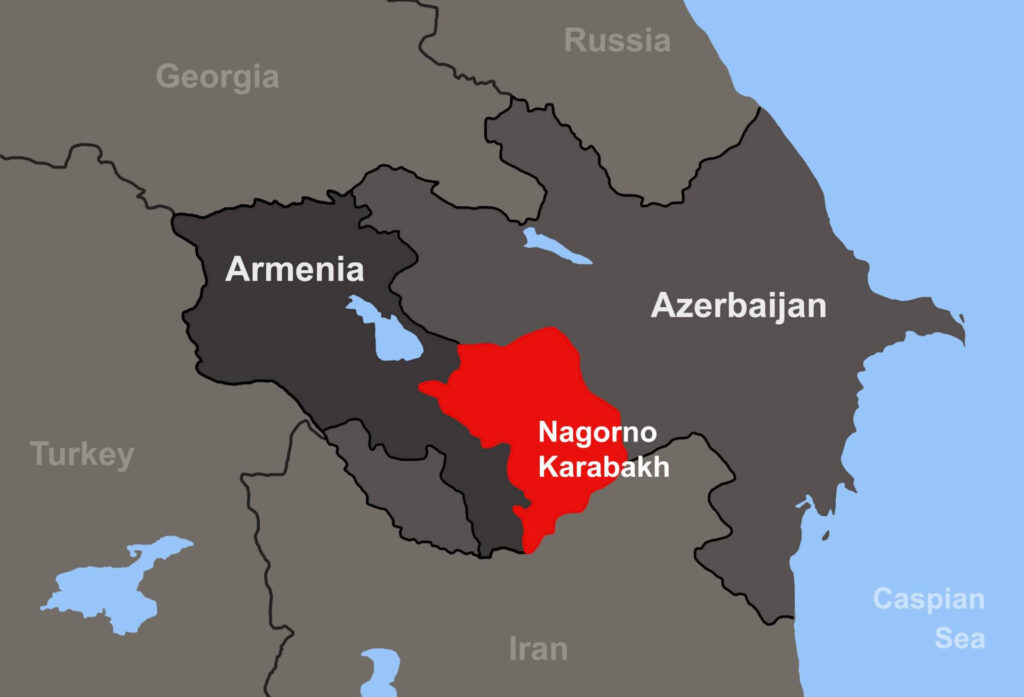
    In September, Turkey collaborated with Russia in Nagorno-Karabakh, an Armenian enclave in Azerbaijan. All the Armenians have been kicked out in a form of ethnic cleansing. This happened with Russia’s blessings and Turkey’s involvement. (This may not be the end of the story, either — Azerbaijan may invade Armenia itself. Azerbaijan could capture territory in southern Armenia to create a land bridge with its exclave, Nakhchivan.)

    Turkey blocking Sweden’s entrance into NATO continues to be a frustration. This is because of what Turkey sees as Sweden’s insufficient crackdown on Kurdish activists. Hopefully, Turkey will see the bigger picture because Sweden would be a great ally to have in NATO.

    China and the US face off in the Pacific

    On the other side of Eurasia, the United States is facing a challenge of a different kind.

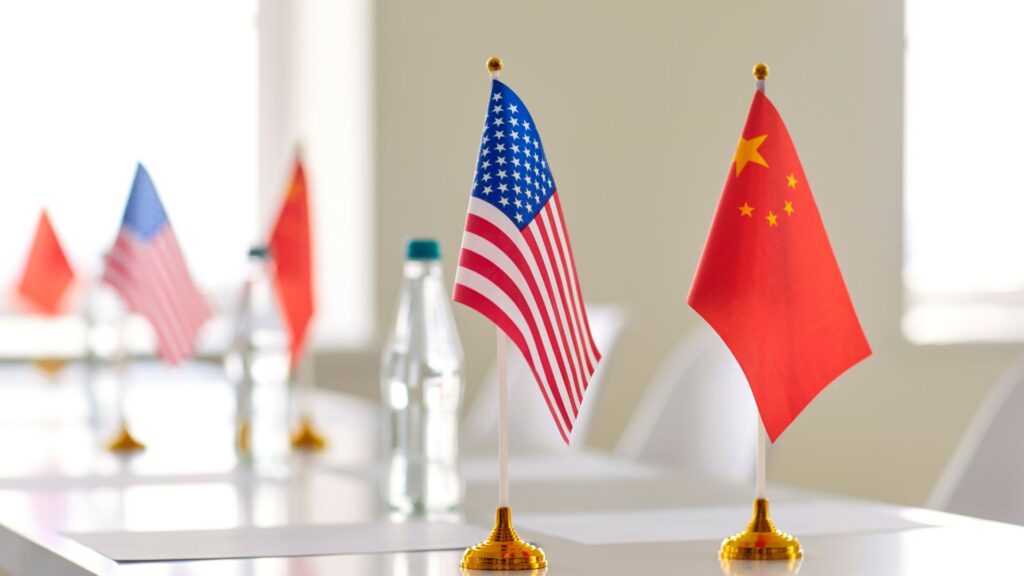
    The rise of China is the most consequential challenge to the US ever. China-US relations are going to continue to be tense indefinitely.

    The Taiwan issue is special because it is the one that could lead to conflict between the two powers. It’s extremely unlikely the US and China will come to blows over the South China Sea or the Uyghurs or any other issue that divides the two countries. Over Taiwan, they could. President Xi Jinping has told his army to be ready for the forcible seizure of Taiwan by 2027, and President Biden four times publicly has said that if Taiwan is attacked, the US will come to its defense. 

    There are multiple reasons Taiwan is important. Recently, there has been talk about semiconductors and their critical role in the US economy. There is also the military advantage that China would accrue by controlling Taiwan. Also, there are long-standing ties between Taiwan and the US. There is a real desire to avoid seeing a free, democratic country swallowed up by force.

    Chinese economic turmoil

    The Chinese Communist Party is going through a crisis of legitimacy. Its implicit contract with the Chinese people is that it provides them economic growth in exchange for their loyalty. But the COVID-19 pandemic took a heavy toll on the Chinese economy, and deeper issues like over-investment in real estate development have created dangerous bubbles.

    Still, large economies have survived bubbles bursting before. The US weathered the 2007–2008 subprime mortgage crisis, and it did not implode. These days, the mood among analysts of China is all doom and gloom; the talk is all about a “declining China.” But Zhongnanhai hasn’t gotten the memo. By and large, Chinese government officials still believe that, despite economic setbacks, China is on the rise and the declining West will have to deal with it.

    At the end of the day, it is too early to tell. We simply do not know if China will recover or if this slump marks the beginning of the end. We also do not know how Xi will react. Will he focus on the economy like Deng Xiaoping, or will he imitate Mao Zedong and subordinate economic issues to ideological ones? We do not know, but for now, the latter seems more likely.

    [Erica Beinlich wrote the first draft of this piece.]

    The views expressed in this article/podcast are the author’s own and do not necessarily reflect Fair Observer’s editorial policy.

    Volodymyr-Zelenskyy

    Ukraine Is Now Sadly Sliding Into The Shadows

    Nagorno-Karabakh

    New Armenian Ethnic Cleansing Is Bad for the World

    US China

    Will Democracy Survive the Rise of China?

    LISTEN ON:
    ALSO AVAILABLE ON:
    • Spotify Spotify
    • apple-podcasts Apple Podcasts
    • Amazon Amazon Music

    Comment

    Login
    Please login to comment
    0 Comments
    Newest
    Oldest Most Voted
    Inline Feedbacks
    View all comments

    Commenting Guidelines

    Please read our commenting guidelines before commenting.


    1. Be Respectful: Please be polite to the author. Avoid hostility. The whole point of Fair Observer is openness to different perspectives from perspectives from around the world.

    2. Comment Thoughtfully: Please be relevant and constructive. We do not allow personal attacks, disinformation or trolling. We will remove hate speech or incitement.

    3. Contribute Usefully: Add something of value — a point of view, an argument, a personal experience or a relevant link if you are citing statistics and key facts.

    Please agree to the guidelines before proceeding.

    More Episodes

    FO° Podcasts: Maduro, the War on Drugs and Trump’s Revival of the Monroe Doctrine

    In this episode of FO° Podcasts, Atul Singh and Benjamin Delille examine US President Donald Trump’s confrontation with Venezuela, questioning...

    Benjamin Delille & Atul Singh, January 18, 2026
    Fair Observer

    FO° Podcasts: Myanmar Votes During a Civil War: Why This Election Could Tear the Country Apart

    In this episode of FO° Podcasts, Rohan Khattar Singh and Asanga Abeyagoonasekera examine Myanmar’s December 28 elections against the backdrop...

    Asanga Abeyagoonasekera & Rohan Khattar Singh, January 6, 2026
    Fair Observer

    FO° Podcasts: The Forbidden C-word, Class in America

    In this episode of FO° Podcasts, Atul Singh and Kent Jenkins Jr. discuss how class shapes US identity and political...

    Kent Jenkins Jr. & Atul Singh, December 29, 2025
    Fair Observer

    The Dialectic: France: The Eternal Crisis Strikes Again. What Now?

    In this episode of The Dialectic, Atul Singh and Glenn Carle examine France’s deepening polycrisis. Rising debt, political paralysis and...

    Glenn Carle & Atul Singh, December 13, 2025
    Fair Observer

    Must Listen

    The Dialectic: Can Germany Outgrow Its Postwar American Model?

    In this episode of The Dialectic, Atul Singh and Glenn Carle explore how Germany faces acute economic, political and social...

    by Glenn Carle & Atul Singh, December 2, 2025
    Fair Observer

    FO° Podcasts: The Right to Play: How Women Fought and Won the Battle for Equality in Sports

    In this episode of FO° Podcasts, Atul Singh and Lauren Greenberg explore how Title IX reshaped women’s sports and personal...

    by Lauren Greenberg & Atul Singh, November 26, 2025
    Fair Observer

    FO° Podcasts: Enemy of the Sun — How Palestinian Poetry Became a Weapon of Resistance

    In this episode of FO° Podcasts, Atul Singh and Edmund Ghareeb trace the unlikely journey of the Palestinian poetry anthology...

    by Edmund Ghareeb & Atul Singh, November 19, 2025
    Fair Observer

    FO° Podcasts: Why is the US Deporting Illegal Migrants to a Tiny African Nation Called Eswatini?

    In this episode of FO° Podcasts, Rohan Khattar Singh and Zweli Martin Dlamini examine the secret deportation deal between the...

    by Zweli Martin Dlamini & Rohan Khattar Singh, November 16, 2025
    Fair Observer

    The Dialectic: Can Germany and France Make Europe Great Again?

    In this episode of The Dialectic, Atul Singh and Glenn Carle examine Europe’s rise from Renaissance brilliance to post-World War...

    by Glenn Carle & Atul Singh, October 17, 2025
    Fair Observer

    Project 2025 and Donald Trump’s Dangerous Dismantling of the US Federal Government

    In this episode of The Dialectic, Atul Singh and Glenn Carle dissect US President Donald Trump’s destruction of federal institutions....

    by Glenn Carle & Atul Singh, September 9, 2025
    Fair Observer

    FO° Podcasts: Why Has Trump Deployed Thousands of National Guard Troops in Washington, DC?

    In this episode of FO° Podcasts, Atul Singh and Ankit Jain examine US President Donald Trump’s interventions in Washington, DC....

    by Ankit Jain & Atul Singh, September 8, 2025
    Fair Observer

    FO° Podcast: The Story of Millions of Syrian Refugees and Why They Can Never Return Home

    In this episode of FO° Podcasts, Atul Singh and William McChesney examine why millions of Syrian refugees remain in exile...

    by William McChesney & Atul Singh, August 30, 2025
    Fair Observer


    Fair Observer, 461 Harbor Blvd, Belmont, CA 94002, USA

    Sections

    • Politics
    • Economics & Finance
    • Business & Entrepreneurship
    • Art & Culture
    • Science & Technology
    • Environment & Climate Change
    • World Leaders
    • World
    • The Americas
    • Europe
    • Middle East & North Africa
    • Africa
    • Asia
    • United States
    • India
    • China
    • Russia
    • Events
    • Publications
    • Authors
    • About
    • Publish
    • Contact
    • Login
    Fair Observer

    MULTIMEDIA

    The Indian Subcontinent’s Hindu-Muslim Divide

    Fair Observer

    VIDEOS

    FO° Talks: Deepfakes and Democracy: Why the Next Election Could Be Decided by AI

    Fair Observer

    PODCASTS

    FO° Podcasts: Maduro, the War on Drugs and Trump’s Revival of the Monroe Doctrine

    PUBLICATION

    Fair Observer Monthly: December 2025

    Support Fair Observer

    We rely on your support for our independence, diversity and quality.

    Donate
    © Fair Observer All rights reserved
    Designed, Developed and Maintained by Netleon IT Solutions
    Fair Observer Education Logo Fair Observer Leadership Academy Logo

    BOOKMARK

    Want to save this post?
    Click to Login

    Support independent, crowdsourced, nonprofit journalism.

    Fair Observer is a 501(c)(3) independent nonprofit. We are not owned by billionaires or controlled by advertisers. We publish nearly 3,000 authors from over 90 countries after fact-checking and editing each piece. We do not have a paywall and anyone can read us for free. With your vital donations, we can continue to do our work.

    Please make a recurring (or even one-time) donation today. Even $1 goes a long way because a million donors like you mean one million dollars. Thank you for keeping us independent, free and fair.

    One Time Monthly Yearly

    Sign into your Fair Observer Account

    • Lost your password?
    Forgot Password

    Forgot Password

    Enter your registered email address or username. You will receive a link to create a new password via email.

    Please enter your username or email address. You will receive an email message with instructions on how to reset your password.

    • Log in

    Or
    Return to Login

    Forgot Password

    We have sent a link to your registered email address to reset your password.

    Back to Login

    Become a Member & Enjoy Exclusive Benefits!

    • Access to comments feature
    • Bookmark your favorite articles
    • Exclusive invitations to FO° Talks & FO° Live
    • Access to all of our e-publications
    Explore Membership
    Return to Login

    NEWSLETTER

    Make Sense of the World

    Unique Insights from 2,500+ Contributors in 90+ Countries

    NEWSLETTER

    Make Sense of the World

    Unique Insights from 2,500+ Contributors in 90+ Countries

    Fair observer

    Make Sense of the World

    Unique Insights from 2,500+ Contributors in 90+ Countries

    We Need Your Consent
    We use cookies to give you the best possible experience. Learn more about how we use cookies or edit your cookie preferences. Privacy Policy. My Options I Accept
    Privacy & Cookies Policy

    Edit Cookie Preferences

    The Fair Observer website uses digital cookies so it can collect statistics on how many visitors come to the site, what content is viewed and for how long, and the general location of the computer network of the visitor. These statistics are collected and processed using the Google Analytics service. Fair Observer uses these aggregate statistics from website visits to help improve the content of the website and to provide regular reports to our current and future donors and funding organizations. The type of digital cookie information collected during your visit and any derived data cannot be used or combined with other information to personally identify you. Fair Observer does not use personal data collected from its website for advertising purposes or to market to you.

    As a convenience to you, Fair Observer provides buttons that link to popular social media sites, called social sharing buttons, to help you share Fair Observer content and your comments and opinions about it on these social media sites. These social sharing buttons are provided by and are part of these social media sites. They may collect and use personal data as described in their respective policies. Fair Observer does not receive personal data from your use of these social sharing buttons. It is not necessary that you use these buttons to read Fair Observer content or to share on social media.

     
    Necessary
    Always Enabled
    These cookies essential for the website to function.
    Social Media
    These cookies are used to enable sharing or following of content that you find interesting on our website. These settings apply to third-party social networking and other websites.
    Performance & Functionality
    These cookies are used to enhance the performance and functionality of our website. They provide statistics on how our website is used and help us improve by measuring errors. Certain functionalities on our website may become unavailable without these cookies.
    Analytics
    SAVE & ACCEPT

    Total Views: