

Login

    Sections
    Search

    • Politics
    • Economics & Finance
    • Business & Entrepreneurship
    • Art & Culture
    • Science & Technology
    • Environment & Climate Change
    • World
    • World Leaders
    • The Americas
    • Europe
    • Middle East & North Africa
    • Africa
    • Asia
    • United States
    • India
    • China
    • Russia
    • About
    • Authors
    • Publications
    • Events
    • Multimedia
    • Videos
    • Podcasts
    • Events
    • Russia
    • Publications
    • Authors
    • About
    Fair Observer

    MULTIMEDIA

    The Indian Subcontinent’s Hindu-Muslim Divide

    Fair Observer

    VIDEOS

    FO Talks: Decoding Mark Carney’s Davos Speech Amid Rising Global Strategic Competition

    Fair Observer

    PODCASTS

    The Dialectic: Narendra Modi’s Vegetarian Stalinism Has Ruined the Indian Economy

    PUBLICATION

    Fair Observer Monthly: January 2026

    Support Fair Observer

    We rely on your support for our independence, diversity and quality.

    Donate
    Search
    Fair Observer Logo
    • Donate
    Fair Observer Logo
    Podcasts

    Rare Personal Memories of JRD Tata and Life in Business

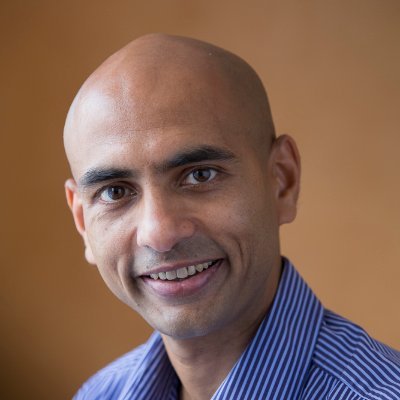
    Hoshang Billimoria reminisces about J. R. D. Tata, the senior managers he chose for the Tata Group and what made them special. He explains how business was extremely difficult in the days of socialism and how private equity can destroy a successful business.
    By Hoshang Billimoria & Atul Singh
    Follow
    Follow
    Hoshang Billimoria, Atul Singh
    @atulabhas
    SHARE
    September 14, 2023 06:08 EDT
    Check out our comment feature!

    Saved Successfully.

    This article saved into your bookmarks. Click here to view your bookmarks.

    My Bookmarks

    Hoshang Billimoria remembers the time when he began as a young auditor. During those days, auditors were poorly paid and auditing standards were low. Yet Billimoria returned to India to begin life as an auditor. A chance meeting with Minoo Mody, the chief executive of Tata Sons, allowed him to make the transition from audit to general management.

    A trip down the Tata memory lane

    Billimoria remembers meeting the late Jehangir Ratanji Dadabhoy Tata, known popularly as JRD, whom he calls a “magnetic personality.” As per Billimoria, JRD oozed charisma, put you at ease and impressed you with his humility. JRD was able to enthuse people, who then gave their best.

    (The only person who compares to JRD today is Deepak Parekh, who lets grass grow under his feet. His achievements with HDFC Bank are extraordinary. He has created an empire in a “stunning” career and Parekh does not get due credit for what he has done.)

    JRD had a knack for identifying and supporting talent. Russi Mody of Tata Steel, Darbari Seth of Tata Chemicals and Ajit Kerkar of Indian Hotels are three examples of talented managers JRD selected. All three were entrepreneurs and great managers.

    Russi Mody’s genius lay in human resources. Billimoria recollects a story of Russi saying hello to a new driver and then recognizing him when he visited Bombay the next time. Seth used to write a letter to Billimoria when financial results came out and Kerkar was on his board. These characters were professionally top-notch.

    In those days, the licenses and approvals required to do business were innumerable. India’s colonial rent-seeking and parasitic bureaucracy made life extremely difficult for India’s business leaders. To make matters worse, corruption seemed to come from above lower levels and a diabolical black economy. Bureaucrat flunkeys sitting in a crumbling office controlled both managerial remuneration and managerial appointments.

    During such a torrid time, JRD and his team rose up to the challenge. Seth made money from the soda ash plants in Gujarat and bought tea gardens in Assam. He was extraordinarily entrepreneurial. Kerkar was uniquely suited for the hotel business. He understood hospitality extremely well.

    JRD’s personal integrity was unimpeachable. Even Dhirubhai Ambai, arguably India’s greatest entrepreneur, had great respect for JRD. When Billimoria met JRD, the legendary business leader asked Billimoria about his career, his education, his family and why he did not settle down in the UK. Billimoria gave the truthful answer that he had only returned to India because of his parents. He left after meeting JRD with a sense of happiness, satisfaction and a great deal of respect. JRD had inspired Billimoria to work for him.

    The Tata story after 1991

    The Tata Group was long-established, solid and very strong. So, foreign companies coming to India wanted to tie up with the Tatas, and 1991 turned out to be very good for the Tata Group. There was no shortage of opportunities. Sony first came to Tata when they entered the Indian market.

    The only criticism that one can make of JRD is that he should have handed over the reins five years earlier. Every major manager thought of himself as the best qualified to take over, and a struggle for succession ensued. Billimoria remembers the post-1991 period as “a difficult time” with this struggle causing friction within the company.

    Billimoria began as the deputy CEO of Tata Sons but was given charge of Tata Press in 1990. Management’s relationship with labor was very poor at the time. In one incident, the union locked the senior management into a conference room. Billmoria was able to get through to his chairman Jamshed Bhabha, the brother of the legendary nuclear scientist Homi Jehangir Bhabha, who summoned the police. The fractious situation only calmed down when the police threatened to open fire.

    Billimoria sacked the union leader, who turned out to be a coward. Soon after, the tide turned and the Tata Press prospered. Billimoria had a glorious 14 years in charge. Tata Press published the Yellow Pages, children’s books and niche magazines that cover cars, travel et al. An arbitrary legislative change made print expansion impossible. So, Tata Press went into audiovisual production, but the foray into Bollywood was an unmitigated disaster. The movie business turned out to be dodgy.

    McKinsey came in and identified Tata Press as a non-core company. It was put up for sale. ICICI Ventures bought Tata Press, and Billimoria left in three months. ICICI Ventures engaged in asset-stripping. Its focus was on the real estate owned by Tata Press, not on the underlying business. The company was run down to the bone, and Billimoria left to start a new company, backed by Shapoorji Pallonji Group and HDFC. Over 150 people joined this new venture, and the company still exists today after 20 years, even though Billimoria has retired.

    [Matthew Knudson produced this podcast.]

    The views expressed in this article/podcast are the author’s own and do not necessarily reflect Fair Observer’s editorial policy.

    LISTEN ON:
    ALSO AVAILABLE ON:
    • Spotify Spotify
    • apple-podcasts Apple Podcasts
    • Amazon Amazon Music

    Comment

    Login
    Please login to comment
    0 Comments
    Newest
    Oldest Most Voted
    Inline Feedbacks
    View all comments

    Commenting Guidelines

    Please read our commenting guidelines before commenting.


    1. Be Respectful: Please be polite to the author. Avoid hostility. The whole point of Fair Observer is openness to different perspectives from perspectives from around the world.

    2. Comment Thoughtfully: Please be relevant and constructive. We do not allow personal attacks, disinformation or trolling. We will remove hate speech or incitement.

    3. Contribute Usefully: Add something of value — a point of view, an argument, a personal experience or a relevant link if you are citing statistics and key facts.

    Please agree to the guidelines before proceeding.

    More Episodes

    The Dialectic: Narendra Modi’s Vegetarian Stalinism Has Ruined the Indian Economy

    In this episode of The Dialectic, Atul Singh and Glenn Carle explain how India’s current leader has rolled back the...

    Glenn Carle & Atul Singh, February 12, 2026
    Fair Observer

    FO° Podcasts: Maduro, the War on Drugs and Trump’s Revival of the Monroe Doctrine

    In this episode of FO° Podcasts, Atul Singh and Benjamin Delille examine US President Donald Trump’s confrontation with Venezuela, questioning...

    Benjamin Delille & Atul Singh, January 18, 2026
    Fair Observer

    FO° Podcasts: Myanmar Votes During a Civil War: Why This Election Could Tear the Country Apart

    In this episode of FO° Podcasts, Rohan Khattar Singh and Asanga Abeyagoonasekera examine Myanmar’s December 28 elections against the backdrop...

    Asanga Abeyagoonasekera & Rohan Khattar Singh, January 6, 2026
    Fair Observer

    FO° Podcasts: The Forbidden C-word, Class in America

    In this episode of FO° Podcasts, Atul Singh and Kent Jenkins Jr. discuss how class shapes US identity and political...

    Kent Jenkins Jr. & Atul Singh, December 29, 2025
    Fair Observer

    Must Listen

    The Dialectic: France: The Eternal Crisis Strikes Again. What Now?

    In this episode of The Dialectic, Atul Singh and Glenn Carle examine France’s deepening polycrisis. Rising debt, political paralysis and...

    by Glenn Carle & Atul Singh, December 13, 2025
    Fair Observer

    The Dialectic: Can Germany Outgrow Its Postwar American Model?

    In this episode of The Dialectic, Atul Singh and Glenn Carle explore how Germany faces acute economic, political and social...

    by Glenn Carle & Atul Singh, December 2, 2025
    Fair Observer

    FO° Podcasts: The Right to Play: How Women Fought and Won the Battle for Equality in Sports

    In this episode of FO° Podcasts, Atul Singh and Lauren Greenberg explore how Title IX reshaped women’s sports and personal...

    by Lauren Greenberg & Atul Singh, November 26, 2025
    Fair Observer

    FO° Podcasts: Enemy of the Sun — How Palestinian Poetry Became a Weapon of Resistance

    In this episode of FO° Podcasts, Atul Singh and Edmund Ghareeb trace the unlikely journey of the Palestinian poetry anthology...

    by Edmund Ghareeb & Atul Singh, November 19, 2025
    Fair Observer

    FO° Podcasts: Why is the US Deporting Illegal Migrants to a Tiny African Nation Called Eswatini?

    In this episode of FO° Podcasts, Rohan Khattar Singh and Zweli Martin Dlamini examine the secret deportation deal between the...

    by Zweli Martin Dlamini & Rohan Khattar Singh, November 16, 2025
    Fair Observer

    The Dialectic: Can Germany and France Make Europe Great Again?

    In this episode of The Dialectic, Atul Singh and Glenn Carle examine Europe’s rise from Renaissance brilliance to post-World War...

    by Glenn Carle & Atul Singh, October 17, 2025
    Fair Observer

    Project 2025 and Donald Trump’s Dangerous Dismantling of the US Federal Government

    In this episode of The Dialectic, Atul Singh and Glenn Carle dissect US President Donald Trump’s destruction of federal institutions....

    by Glenn Carle & Atul Singh, September 9, 2025
    Fair Observer

    FO° Podcasts: Why Has Trump Deployed Thousands of National Guard Troops in Washington, DC?

    In this episode of FO° Podcasts, Atul Singh and Ankit Jain examine US President Donald Trump’s interventions in Washington, DC....

    by Ankit Jain & Atul Singh, September 8, 2025
    Fair Observer


    Fair Observer, 461 Harbor Blvd, Belmont, CA 94002, USA

    Sections

    • Politics
    • Economics & Finance
    • Business & Entrepreneurship
    • Art & Culture
    • Science & Technology
    • Environment & Climate Change
    • World Leaders
    • World
    • The Americas
    • Europe
    • Middle East & North Africa
    • Africa
    • Asia
    • United States
    • India
    • China
    • Russia
    • Events
    • Publications
    • Authors
    • About
    • Publish
    • Contact
    • Login
    Fair Observer

    MULTIMEDIA

    The Indian Subcontinent’s Hindu-Muslim Divide

    Fair Observer

    VIDEOS

    FO Talks: Decoding Mark Carney’s Davos Speech Amid Rising Global Strategic Competition

    Fair Observer

    PODCASTS

    The Dialectic: Narendra Modi’s Vegetarian Stalinism Has Ruined the Indian Economy

    PUBLICATION

    Fair Observer Monthly: January 2026

    Support Fair Observer

    We rely on your support for our independence, diversity and quality.

    Donate
    © Fair Observer All rights reserved
    Designed, Developed and Maintained by Netleon IT Solutions
    Fair Observer Education Logo Fair Observer Leadership Academy Logo

    BOOKMARK

    Want to save this post?
    Click to Login

    Support independent, crowdsourced, nonprofit journalism.

    Fair Observer is a 501(c)(3) independent nonprofit. We are not owned by billionaires or controlled by advertisers. We publish nearly 3,000 authors from over 90 countries after fact-checking and editing each piece. We do not have a paywall and anyone can read us for free. With your vital donations, we can continue to do our work.

    Please make a recurring (or even one-time) donation today. Even $1 goes a long way because a million donors like you mean one million dollars. Thank you for keeping us independent, free and fair.

    One Time Monthly Yearly

    Sign into your Fair Observer Account

    • Lost your password?
    Forgot Password

    Forgot Password

    Enter your registered email address or username. You will receive a link to create a new password via email.

    Please enter your username or email address. You will receive an email message with instructions on how to reset your password.

    • Log in

    Or
    Return to Login

    Forgot Password

    We have sent a link to your registered email address to reset your password.

    Back to Login

    Become a Member & Enjoy Exclusive Benefits!

    • Access to comments feature
    • Bookmark your favorite articles
    • Exclusive invitations to FO° Talks & FO° Live
    • Access to all of our e-publications
    Explore Membership
    Return to Login

    NEWSLETTER

    Make Sense of the World

    Unique Insights from 2,500+ Contributors in 90+ Countries

    NEWSLETTER

    Make Sense of the World

    Unique Insights from 2,500+ Contributors in 90+ Countries

    Fair observer

    Make Sense of the World

    Unique Insights from 2,500+ Contributors in 90+ Countries

    We Need Your Consent
    We use cookies to give you the best possible experience. Learn more about how we use cookies or edit your cookie preferences. Privacy Policy. My Options I Accept
    Privacy & Cookies Policy

    Edit Cookie Preferences

    The Fair Observer website uses digital cookies so it can collect statistics on how many visitors come to the site, what content is viewed and for how long, and the general location of the computer network of the visitor. These statistics are collected and processed using the Google Analytics service. Fair Observer uses these aggregate statistics from website visits to help improve the content of the website and to provide regular reports to our current and future donors and funding organizations. The type of digital cookie information collected during your visit and any derived data cannot be used or combined with other information to personally identify you. Fair Observer does not use personal data collected from its website for advertising purposes or to market to you.

    As a convenience to you, Fair Observer provides buttons that link to popular social media sites, called social sharing buttons, to help you share Fair Observer content and your comments and opinions about it on these social media sites. These social sharing buttons are provided by and are part of these social media sites. They may collect and use personal data as described in their respective policies. Fair Observer does not receive personal data from your use of these social sharing buttons. It is not necessary that you use these buttons to read Fair Observer content or to share on social media.

     
    Necessary
    Always Enabled
    These cookies essential for the website to function.
    Social Media
    These cookies are used to enable sharing or following of content that you find interesting on our website. These settings apply to third-party social networking and other websites.
    Performance & Functionality
    These cookies are used to enhance the performance and functionality of our website. They provide statistics on how our website is used and help us improve by measuring errors. Certain functionalities on our website may become unavailable without these cookies.
    Analytics
    SAVE & ACCEPT

    Total Views:

