


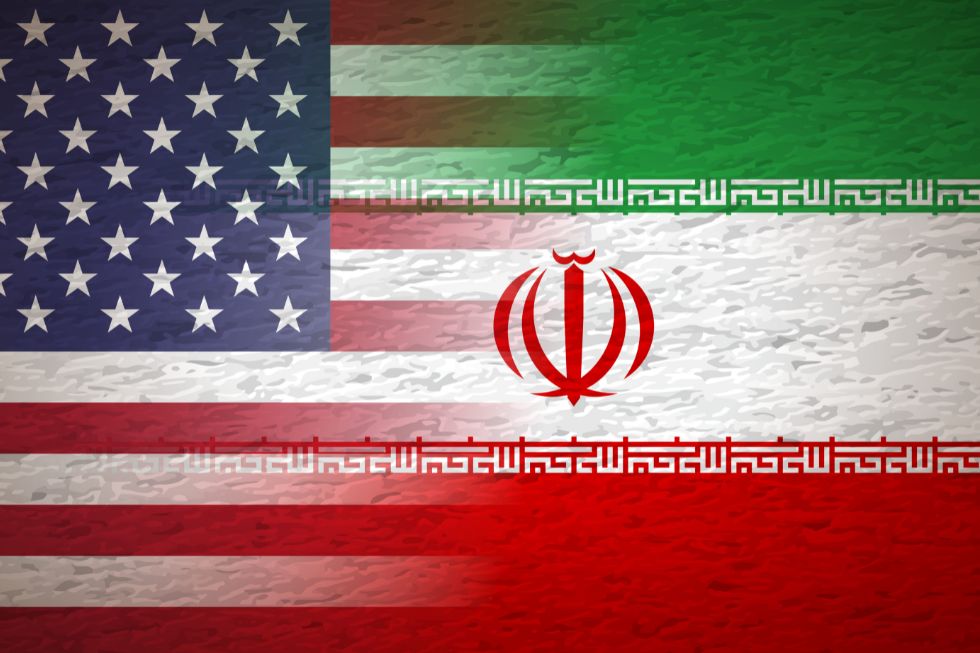



Wars rarely spiral out of control all at once. They do so gradually, when the systems designed to understand them begin to fall behind. That process now appears well underway in the Middle East. The US/Israeli–Iran War is no longer defined primarily by battlefield developments. It is being shaped by a widening gap between what decision-makers believe they understand and what is actually unfolding. For years, escalation in the region rested on a set of working assumptions.
On previous occasions, missile ranges were treated as predictable, and stockpiles were estimated within acceptable margins. Furthermore, adversaries were expected to operate within known constraints, as even confrontation followed patterns that intelligence agencies had learned to anticipate.
Such assumptions are now eroding, not in isolation but across multiple dimensions at once. This is evident in the reported long-range strike toward Diego Garcia, regardless of operational outcome, which exposed how fragile those assumptions had become. Moreover, a base was positioned deliberately beyond the reach of regional actors only to be secured by distance alone. That distance, however, no longer appears sufficient.
For years, Iran signaled that its missile range was effectively capped at around 2,000 kilometers. This was not a formal limitation, but it functioned as a strategic ceiling. It reassured European capitals while preserving deterrence within the region. It created predictability.
The intelligence gap: when strategy lags behind the battlefield
The predictability of wars has now been disrupted. Whether through technological adaptation, altered payload configurations, the use of proxy launch platforms, or external assistance, the apparent extension of reach suggests that prior intelligence frameworks were incomplete. The precise mechanism matters less than the implication. Systems built on those assumptions are no longer reliable.
This is not an isolated discrepancy. Pre-conflict estimates of missile inventories now appear increasingly uncertain. The persistence and scale of launches suggest that stockpiles were either underestimated, better concealed, or continuously replenished despite expectations to the contrary. The growing use of coordinated drones and missile attacks on shipping and infrastructure, often deployed in waves, has further complicated detection and interception. Air defense systems designed for more predictable threat patterns are being forced to adapt in real time.
At the same time, the expansion of maritime disruptions in the Red Sea and surrounding corridors has demonstrated how quickly conflict can extend beyond traditional battlefields. Commercial shipping has been rerouted around conflict zones, insurance costs have risen, and naval deployments have increased. In some areas, shipping traffic has sharply declined, yet no single actor fully controls the escalation dynamic. These developments reflect not just tactical adaptation, but a broader shift in how pressure is applied across domains. Each of these trends points to the same conclusion, as the war is evolving faster than it is being understood.
Furthermore, when intelligence lags behind reality, strategy becomes reactive. Decisions are made on shifting assessments rather than a stable understanding. Under such conditions, escalation is not always intentional. It emerges from miscalculation, misreading, and compressed timelines. This aforementioned structural uncertainty is being amplified by political inconsistency
The perils of strategic ambiguity: when signals fail to constrain
In recent weeks, Washington has moved between signaling restraint and preparing for expanded engagement. Statements suggesting de-escalation have been accompanied by continued military positioning and readiness. The coexistence of caution and coercion within the same strategic posture does not create flexibility but ambiguity.
However, ambiguity at this level is not stabilizing as it complicates coordination and incentivizes worst-case assumptions for allies and adversaries, respectively. Additionally, in the case of the conflict itself, it narrows the space in which de-escalation can be credibly pursued. When words and actions diverge, signaling ceases to function as a constraint.
The result is not one of controlled pressure, but cumulative instability. An instance in this regard constitutes Israel’s operational approach, symbolizing a parallel dynamic. The expansion of the battle-space to include infrastructure, proxy networks, and indirect targets may generate short-term tactical advantages. But it also increases the number of variables in play as each additional domain introduces new risks, new actors, and new pathways to escalation. Therefore, expansion is often treated as leverage as it frequently reduces control for all practical purposes.
This volatility is further intensified by the growing role of real-time intelligence systems and automated analysis tools. While these technologies accelerate data processing, they also compress decision timelines. Leaders are required to act faster, often on incomplete or rapidly changing information. The speed of interpretation has improved, but the stability of understanding has not. As a result, decision-making becomes more reactive, not more informed.
On a different note, the conflict is no longer confined to direct military exchanges. Energy infrastructure and maritime routes have become central to global energy flows and to the logic of escalation. Threats surrounding the Strait of Hormuz, disruptions in the Red Sea, and the vulnerability of desalination and energy networks are no longer peripheral concerns. They are central to how escalation is being conducted. This is how wars expand without formal declarations.
At the same time, more actors are being drawn in indirectly. The UK’s recalibration of its regional posture following heightened tensions illustrates how quickly geographic distance is losing its protective value. European states may not seek direct involvement, but they are increasingly exposed through energy dependence, trade flows, and strategic vulnerability.
Beyond control: when war outruns its structures
Exposure is expanding faster than control. This is evident in the growing role of external support networks, whether technological, logistical, or informational, further complicating the landscape. The conflict is no longer defined solely by its principal actors. It is shaped by a broader ecosystem that is more difficult to track and even harder to manage. This diffusion makes escalation less visible, but more unpredictable. The most dangerous phase of a war is not when it becomes more intense. It is when it becomes less intelligible.
Such a threshold is approaching. When intelligence assessments become uncertain, when political signaling becomes inconsistent, and when operational boundaries expand faster than they can be managed, the conflict begins to lose its structure. It does not collapse into chaos. It becomes unpredictable.
As for unpredictability, it alters the nature of risk. In predictable conflicts, escalation can be managed, even if imperfectly. In unpredictable ones, miscalculation becomes more likely, reactions accelerate, and feedback loops tighten. Actions taken for deterrence may be interpreted as preparation for escalation. Defensive moves may trigger offensive responses.
War ceases to be guided by strategy and begins to be driven by momentum. The assumption that this escalation remains controllable depends on the belief that the systems managing it are still keeping pace, which is not the case. War is no longer just being fought. It is outrunning the intelligence, leadership, and structures meant to contain it. When such is the case, even powerful states lose control over outcomes they believe they are shaping.
[Ainesh Dey edited this piece]
The views expressed in this article are the author’s own and do not necessarily reflect Fair Observer’s editorial policy.
A War to End All (Middle East) Wars?
The US and Israel’s strike on February 28 eliminated Iran’s Supreme Leader Ali Khamenei and other top leaders, revealing deep...
US Intervention Could Spark Chaos in Iran
US threats of military intervention in Iran amid protests risk unintended consequences, including regime destabilization and regional fragmentation. While some...
The Emergence of the New World Order and the Decline of the US
The current world order is undergoing several geopolitical upheavals that are reshaping world politics to carve out a new order...
The Middle East 2025: The Good, the Bad and the Tragically Ugly
In the last hundred years, the Middle East has been persistently unstable, shaped by shifting power dynamics and external interference....
Support Fair Observer
We rely on your support for our independence, diversity and quality.
For more than 10 years, Fair Observer has been free, fair and independent. No billionaire owns us, no advertisers control us. We are a reader-supported nonprofit. Unlike many other publications, we keep our content free for readers regardless of where they live or whether they can afford to pay. We have no paywalls and no ads.
In the post-truth era of fake news, echo chambers and filter bubbles, we publish a plurality of perspectives from around the world. Anyone can publish with us, but everyone goes through a rigorous editorial process. So, you get fact-checked, well-reasoned content instead of noise.
We publish 3,000+ voices from 90+ countries. We also conduct education and training programs
on subjects ranging from digital media and journalism to writing and critical thinking. This
doesn’t come cheap. Servers, editors, trainers and web developers cost
money.
Please consider supporting us on a regular basis as a recurring donor or a
sustaining member.
Will you support FO’s journalism?
We rely on your support for our independence, diversity and quality.





Comment