


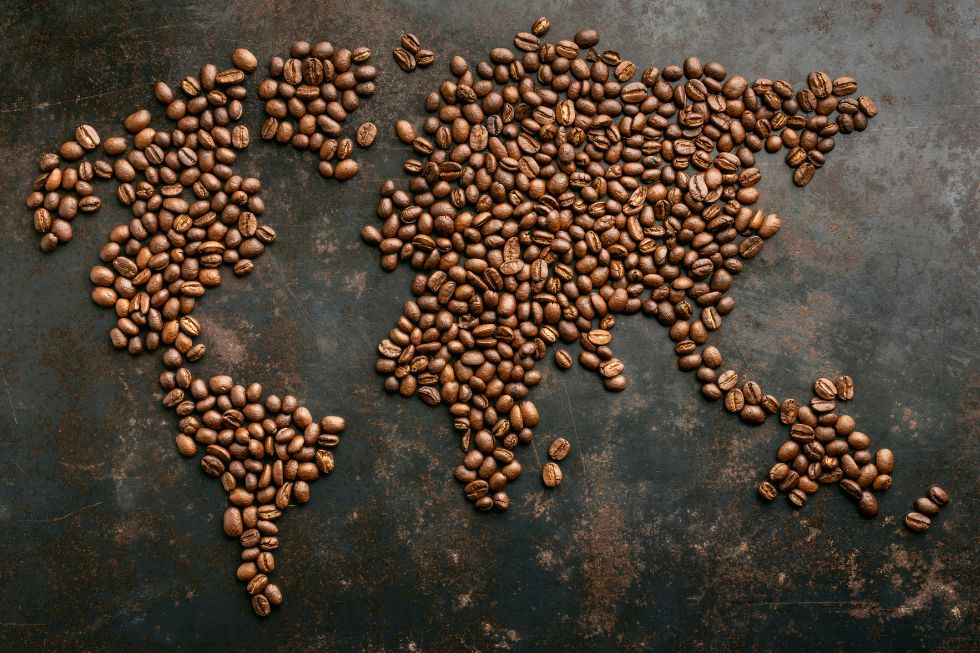



The world’s daily coffee ritual is rarely presented as a foreign policy issue. Nevertheless, it should be. The pleasant aroma of a morning cup hides a larger story. Coffee connects public health, climate vulnerability and global trade across borders. Coffee is a $70 billion industry that provides a living for around 120 million people, many of whom live in weak economies already vulnerable to climatic shocks and health disparities.
To regard coffee as a commodity — or worse, as a transitory health fad — is to ignore its strategic importance to global security and human well-being.
From cancer scare to cellular resilience
Science has quietly altered coffee’s health narrative. Coffee was once thought to be carcinogenic, but the World Health Organization’s (WHO) International Agency for Research on Cancer reclassified it as “not classifiable” as a carcinogen in 2016 after examining over 1,000 studies. The transition was not cosmetic. It represented a more thorough understanding of how coffee interacts with human biology — not as a threat, but as a nuanced regulator of cellular resilience.
Compounds like chlorogenic acid and caffeine activate antioxidant pathways, including the Nrf2 pathway (the system the body turns on when it wants to make its “in-house antioxidants”), thereby increasing the body’s ability to neutralize carcinogens and repair DNA damage. Epidemiological data now suggest beneficial correlations, particularly against liver and endometrial malignancies, with some research associating regular use with a considerable reduction in disease risk.
Small health gains, big global implications
This is not a miracle treatment, and it should not be framed as such. The true discovery is more complicated and, in many respects, more powerful: Coffee represents a unique convergence in which a globally traded commodity contributes slightly but meaningfully to public health. In an era where noncommunicable illnesses account for more than 70% of global deaths, even small advances are significant.
According to some meta-analyses, a reduction in type 2 diabetes risk by up to one-third among regular coffee drinkers has tremendous downstream implications for cancer prevention and health-care burdens.
The climate threat brewing behind every cup
However, this health dividend is unevenly distributed and increasingly threatened. Climate change is already transforming the topography of coffee production. Rising temperatures, irregular rainfall, and the introduction of pests like coffee rust are reducing yields throughout Latin America, Africa and Southeast Asia.
The World Bank has warned that adequate land for coffee farming may become scarce in the next few decades, jeopardizing both supply and the economic security of millions of people. The implications are not abstract. Coffee is more than just an export in Ethiopia and Uganda; it is an essential component of rural livelihoods, government revenue and social stability.
There is a subtle irony here. The same beverage linked to reduced inflammation and enhanced metabolic health in wealthy consumer markets is manufactured in areas with limited access to health care and high climate risk. This disparity raises unpleasant concerns about global equity. Who benefits from coffee’s health benefits, and who pays the environmental and economic costs of its production?
Why sustainable coffee still falls short
The gap between certified coffee production and actual market demand is finally starting to narrow. In 2017, only 29% of certified coffee was sold as certified, with the majority of its value lost in the supply chain; by 2023, that proportion had risen to roughly 51%, indicating significant momentum. However, this progress contrasts with what we already know — shade-grown systems can improve biodiversity and climate resilience, and major financial commitments, including a $450 million green credit facility, reflect a growing recognition that agricultural resilience is inextricably linked to economic and health stability.
Nonetheless, these initiatives remain fragmented and insufficient in light of the enormity of the situation. What this time requires is not just progress, but purposeful, planned action.
Coffee as a health, climate and development strategy
The true opportunity, according to strategists, is to approach coffee as a convergence point — where health, climate and development all quietly connect. Public health guidelines already acknowledge that moderate consumption — about three to five cups per day — can be harmless and even beneficial. Including this in broader health programs, while opposing excess sugar and ultra-processed chemicals, provides a surprisingly low-cost approach to population-wide benefits.
At the same time, foreign policymakers must adopt a more deliberate approach to the sustainability of coffee supply chains. This isn’t just about ethical consumption. It is concerned with mitigating the destabilizing effects of climate-induced agricultural decline. Investments in climate-resilient coffee varietals, agroforestry systems and fair pricing mechanisms can increase rural economies, reduce migratory pressures and indirectly benefit global health by preserving livelihood prospects.
Australia’s flat white diplomacy
Australia doesn’t just drink coffee — it lives it. With a market worth $2.44 billion in 2025, heading toward $3.37 billion by 2031, and a staggering 16.3 million cups consumed daily, the country holds quiet but undeniable power over global coffee futures. Behind every flat white in Melbourne or Sydney sits a vast, import-driven supply chain tied directly to producer economies across the Indo-Pacific. As demand grows at 5.55% annually, Australians are increasingly choosing premium and sustainably sourced coffee, turning everyday consumption into a signal the world can’t ignore.
This isn’t just café culture — it’s influence. In a system where coffee anchors billions in revenue and shapes livelihoods across continents, Australia’s daily coffee habits can be understood as a form of consumer soft power, capable of nudging entire supply chains toward sustainability with every cup poured.
Coffee, diplomacy and the limits of the cure narrative
There is also a diplomatic dimension that deserves greater attention. Coffee has long been embedded in cultural rituals and informal diplomacy — from Ethiopian coffee ceremonies to negotiations conducted over espresso in European capitals. It functions as a social lubricant, a facilitator of dialogue. In a fractured geopolitical environment, these small, humanizing elements carry weight. They remind us that global interdependence is not only transactional but deeply cultural.
However, caution is advised against overkill. Coffee alone will not reduce the worldwide burden of cancer or metabolic disorders. Tobacco usage, alcohol intake and sedentary lifestyles remain considerably more powerful drivers. The danger is allowing the story to lapse into complacency or economic exploitation. Decades of evolving research have taught us the value of scientific integrity and transparent communication.
Early links between coffee and cancer were sometimes complicated by smoking and other lifestyle variables, resulting in public confusion and, at times, unwarranted panic. Rebuilding trust necessitates consistency, transparency, and a willingness to accept uncertainty.
Coffee as a prism for global policy
What emerges is a more sophisticated view of coffee — not as a hero or villain, but as a quietly significant actor in the global system. It is a daily practice that links cellular biology to international trade, personal wellness to global stability. In this sense, coffee serves as a prism through which to evaluate larger policy concerns.
The stakes are not insignificant. As climate pressures worsen and health-care systems struggle under the weight of chronic disease, the interconnections between agriculture, nutrition and sustainability will only become more important. Coffee is just at that intersection. Treating it as such — through integrated policy, responsible consumption and long-term investment — provides a unique opportunity to link economic, environmental and public health objectives.
There is something deeply human about this. A simple cup shared by civilizations and continents, including traces of dirt, climate, work and science. It quietly but consistently explores if global systems might be designed not just for efficiency or profit, but also for resilience and well-being.
[Luna Rovira edited this piece.]
The views expressed in this article are the author’s own and do not necessarily reflect Fair Observer’s editorial policy.
Why Coffee Is Becoming Southeast Asia’s Quiet Foreign Policy Tool
In Southeast Asia, coffee plays a crucial role in foreign policy and economic stability for major producers like Vietnam and...

Ethiopia’s Chance to Become the World’s Coffee Lighthouse
With approximately 11.6 million 60-kg bags forecast and exports nearing 288.2 billion Birr ($200.8 billion), Ethiopia must either transform its...
Climate Change Will Impact the Human Rights of Millions
In this edition of The Interview, Fair Observer talks to professor Ashok Swain, UNESCO Chair of International Water Cooperation at...


Support Fair Observer
We rely on your support for our independence, diversity and quality.
For more than 10 years, Fair Observer has been free, fair and independent. No billionaire owns us, no advertisers control us. We are a reader-supported nonprofit. Unlike many other publications, we keep our content free for readers regardless of where they live or whether they can afford to pay. We have no paywalls and no ads.
In the post-truth era of fake news, echo chambers and filter bubbles, we publish a plurality of perspectives from around the world. Anyone can publish with us, but everyone goes through a rigorous editorial process. So, you get fact-checked, well-reasoned content instead of noise.
We publish 3,000+ voices from 90+ countries. We also conduct education and training programs
on subjects ranging from digital media and journalism to writing and critical thinking. This
doesn’t come cheap. Servers, editors, trainers and web developers cost
money.
Please consider supporting us on a regular basis as a recurring donor or a
sustaining member.
Will you support FO’s journalism?
We rely on your support for our independence, diversity and quality.





Comment