







 | ||
| ||
| ||
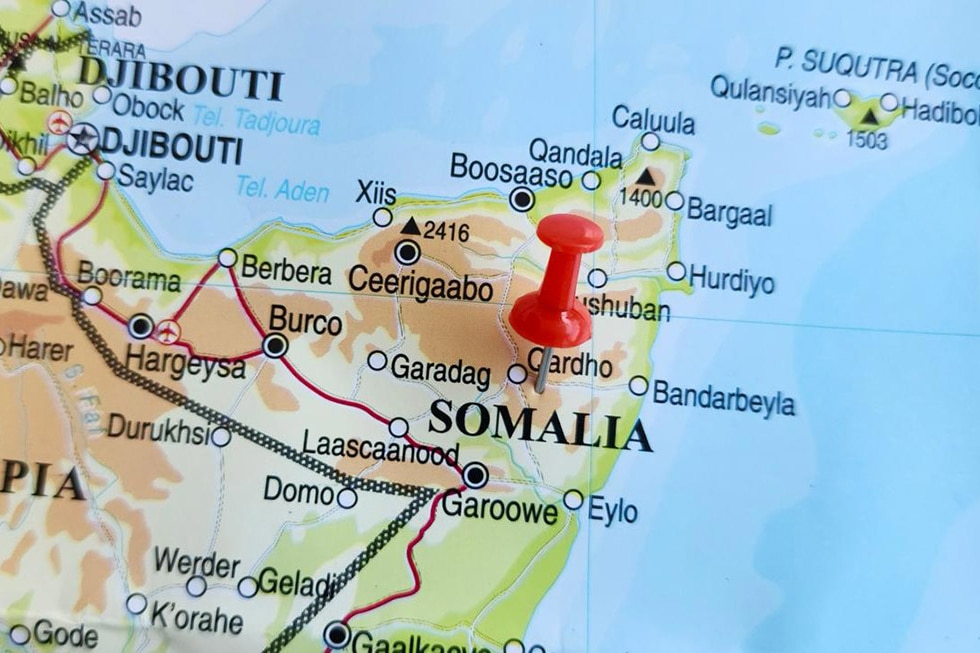
Dear FO° Reader, Greetings from Pennsylvania and California. This week, we are discussing Somalia. The US has been involved in Somalia for 34 years, starting in the early 90s during Somalia’s civil war. Now, the US became entangled in a sticky situation that has changed Washington’s foreign policy and military intervention strategies. In an attempt to target ISIS troops, the US has been aggressively conducting airstrikes in Somalia. President Trump, in his second term, is already close to reaching the total number of strikes conducted during his first term. Despite the rise in airstrikes, media coverage remains limited, and other conflicts have become more prominent. American involvement began in 1992 during Somalia’s civil war. Following the fall of Somali dictator Mohamed Siad Barre in 1991, the US joined a United Nations humanitarian mission responding to widespread famine, violence and state collapse. The humanitarian operation quickly escalated into a military intervention as US and UN forces became increasingly involved in Somalia’s internal conflict. The mission culminated in the 1993 Battle of Mogadishu, known as Black Hawk Down, when Somali militants shot down two US Black Hawk helicopters, killing 18 American soldiers. The battle significantly shaped how future US administrations approached foreign policy and military intervention abroad.
via shutterstock Following Black Hawk Down, Somalia increasingly symbolized the dangers of foreign intervention in Washington. The conflict shaped US policymakers’ attitudes for decades and fostered a general hesitancy to deploy large American forces to unstable conflicts overseas. Yet while the memory of Mogadishu shaped public perceptions of Somalia, it did not end US involvement in the country. American strategy gradually shifted toward conducting intelligence operations, deploying special forces, and launching air campaigns with a smaller public footprint. Sources: Shift towards counterterrorism in Somalia Following the attacks on September 11, 2001, US involvement in Somalia increasingly shifted toward counterterrorism operations targeting Islamist militant groups such as al-Shabaab. Over time, Somalia became part of the broader War on Terror, though with far less public attention than conflicts such as Iraq or Afghanistan. Despite receiving relatively little sustained media coverage inside the United States, US military activity in Somalia has expanded significantly in recent years. According to AFRICOM announcements and independent monitoring groups, the United States conducted roughly 125 airstrikes in Somalia during 2025 alone. During President Joe Biden’s four years in office, the US carried out approximately 51 strikes. Under President Donald Trump’s second term, that number has already risen to roughly 190. The pace of operations highlights how counterterrorism policy in Somalia has increasingly transcended party lines. The Bush Administration first expanded counterterrorism operations in the Horn of Africa after September 11. The Obama Administration increased the use of drone warfare across multiple theaters, including Somalia, though at a slower pace than in recent years. Both the Biden and Trump administrations continued operations against al-Shabaab and ISIS-Somalia, despite broader promises from both parties to reduce America’s involvement in long-running foreign conflicts. Much of this has unfolded with minimal public scrutiny. Unlike Iraq or Afghanistan, parties conducting the war in Somalia primarily use airstrikes, drones, intelligence operations, and support for Somali government forces rather than deploying large conventional troops. As a result, the conflict rarely dominates headlines despite the pace of ongoing operations. Somalia has increasingly become one of the clearest examples of how the United States conducts modern counterterrorism campaigns: prolonged military operations carried out across multiple administrations with relatively little domestic political debate or sustained public attention. Somalia nevertheless remains strategically important. Located along the Horn of Africa near major shipping routes connecting the Red Sea and Indian Ocean, instability in Somalia carries broader implications for regional security and international trade. US officials also continue to view al-Shabaab as one of al-Qaeda’s strongest affiliates in Africa, capable of carrying out attacks throughout East Africa. Despite years of airstrikes and counterterrorism operations, however, al-Shabaab remains deeply embedded inside the country and continues to launch bombings and attacks against Somali government forces and African Union troops. Human rights organizations have also repeatedly raised concerns about civilian casualties linked to US airstrikes. Amnesty International accused the US military of showing “appalling disregard” for civilians following several reported strikes that killed noncombatants. Critics argue that the limited number of journalists operating inside Somalia, combined with the nature of modern drone warfare, has made independent verification difficult and contributed to the lack of sustained international attention surrounding the conflict. More than 30 years after the first US intervention in Somalia, the conflict continues with no clear end in sight. What began as a humanitarian mission evolved into part of America’s post-9/11 counterterrorism strategy and has since become one of the country’s longest-running but least publicly discussed military campaigns. Sources: The War in Somalia | New America Somalia: America’s Forever War | The Geopolity What airstrikes in Somalia show about the war on terror | Atlantic Council U.S. Forces Conduct Strike Targeting ISIS-Somalia | United States Africa Command Why Trump is on the warpath in Somalia | BBC Continued U.S. Airstrikes in Somalia Demonstrate Relentless Nature of the Threat | The Soufan Center Somalia/US, Airstrikes in Somalia | International Committee of the Red Cross The power to kill anyone, anywhere But Somalia is not the only long-lasting “not-war” that the US has been involved in for the past few decades. For much of the 2010’s, drone strikes were a feature of American foreign policy in the Middle East and the War on Terror. Iraq, Afghanistan, Yemen and Syria were all hit with drone strikes many times over the course of two decades. Sometimes the attacks were focused on military targets, other times pointed at less organized militias and all too often hit civilians with no discernible ties to any violent group. Nonetheless, these strikes persisted, most notably in Pakistan, which was and still is a US regional ally. By one estimate, attacks in Pakistan killed more than 3,000 people, with 288 of these casualties being civilians. These attacks, along with strikes in Somalia, have shaped US foreign policy through the decades in the region. There are very fierce debates on the efficacy of these attacks, some saying they help protect civilians on all sides, while critics say drone attacks only increase radicalization, especially when civilians are killed. But more importantly, the fact remains that these attacks keep happening. Sources: United States intervention in Yemen | Wikipedia American drone strikes in Pakistan | Wikipedia Civilian casualties from the United States drone strikes | Wikipedia A tolerated loophole The US gives the power to declare war only to Congress, not the president. However, all recent conflicts and attacks in Somalia and other Middle East states had no such approval, despite often targeting military targets controlled by a foreign government. Essentially, all US counterterrorism operations are justified legally through the Authorization for Use of Military Force of 2001 (AUMF), an extremely controversial piece of legislation that has more or less handed US presidents a blank check in all military matters for the past 25 years. Essentially, the AUMF gives the president the power to respond to anyone connected to the 9/11 terrorist attacks. This has been interpreted extremely broadly and has yet to be repealed by any act of Congress, despite both the Afghanistan and Iraq Wars, the two wars that most directly sprang from the 9/11 attacks, both having officially ended years ago. Part of the reason for this is that drone strikes are an extremely attractive military option politically. It allows the president to act, or be seen as acting, in defense of the US while also putting no troops on the ground. This makes it very difficult to give up this power, as despite every administration since Bush saying they want to end wars, all have continued to attack targets they deem as a threat with impunity. More importantly, the nature of drone warfare also sets in a natural fog over any conflict involving them. As no troops are put at risk, there are no US casualties. Because there are no US casualties, fewer American citizens ask questions about these attacks. Because drones receive less scrutiny, it allows the executive branch to use them more broadly and continue attacking targets half a world away. Sources: How Many Times Has the United States Declared War? | Britannica Authorization for Use of Military Force of 2001 | Wikipedia The strikes on Somalia are likely to continue, as they are likely to continue in many theatres of “not-legally-war.” Despite decades of aerial strikes, many of the places the US remains in are stuck in a cycle of war, where new insurgents and militias are deemed as a threat to US national security and thus are continually attacked. While some figures about the deaths caused are shared, the true death toll for drones is not known to the public, and likely never will be. Liam Roman and Casey Herrmann Assistant Editor | ||
We are an independent nonprofit organization. We do not have a paywall or ads. We believe news
must
be free for everyone from Detroit to Dakar. Yet servers, images, newsletters, web developers and
editors cost money.
So, please become a recurring donor to keep Fair Observer free, fair and independent. 
| ||
| ||
| About Publish with FO° FAQ Privacy Policy Terms of Use Contact |





Explore More FO° Spotlight

Support Fair Observer
We rely on your support for our independence, diversity and quality.
For more than 10 years, Fair Observer has been free, fair and independent. No billionaire owns us, no advertisers control us. We are a reader-supported nonprofit. Unlike many other publications, we keep our content free for readers regardless of where they live or whether they can afford to pay. We have no paywalls and no ads.
In the post-truth era of fake news, echo chambers and filter bubbles, we publish a plurality of perspectives from around the world. Anyone can publish with us, but everyone goes through a rigorous editorial process. So, you get fact-checked, well-reasoned content instead of noise.
We publish 3,000+ voices from 90+ countries. We also conduct education and training programs
on subjects ranging from digital media and journalism to writing and critical thinking. This
doesn’t come cheap. Servers, editors, trainers and web developers cost
money.
Please consider supporting us on a regular basis as a recurring donor or a
sustaining member.
Will you support FO’s journalism?
We rely on your support for our independence, diversity and quality.





Comment