




 | ||||||
| ||||||
Dear FO° Reader, Greetings again from the United States. For the past two weeks, we at Fair Observer have been writing in our weekly newsletter about the latest war against Iran by the US and Israel, and we decided to cap it off with another article about the US. But instead of writing more about our country outwardly projecting strength against another nation, this week we will focus on the nation’s fears of inward sabotage. More specifically, through election laws, and Republican fears of illegal voting. This has been a semi-consistent beat on the right-wing Republican Party’s drum for several decades now, and it is only getting louder under current President Donald Trump. The latest rallying cry is regarding a newly proposed law, the Safeguard American Voter Eligibility (SAVE) Act, which, if passed, would enact sweeping changes to the country’s voting laws.
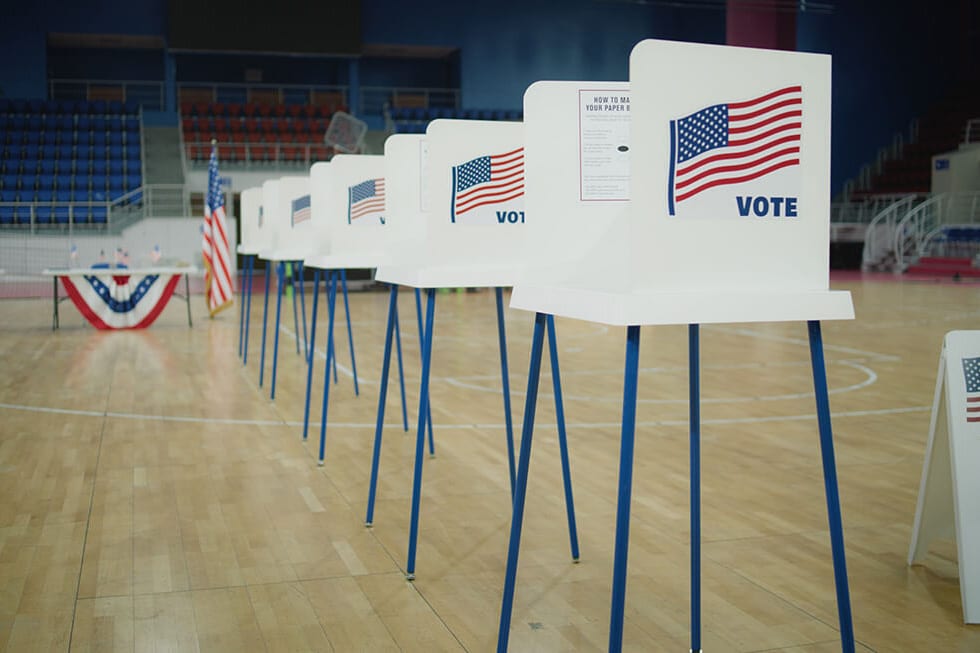
via Shutterstock Republicans, especially those in the White House, say this law will make elections more secure. Democrats fervently oppose the bill, calling it draconian and an attempt to suppress voting across the country. More importantly, some Democrats are also calling this another step in an increasingly corrupt and authoritarian administration to seize control before the midterm elections, in a moment when the current administration is losing popularity. Mass voter fraud: constantly declared, chronically absent To put things into perspective, the Republican Party under Trump has been very concerned with election security. In 2016, despite winning the election due to America’s Electoral College system, Trump claimed there was widespread voter fraud despite there being no evidence that it cost him the popular vote, a margin he lost by 3 million. Despite the lack of evidence, Trump still pushed ahead and assembled a commission to investigate the supposed fraud, only to disband it a year later, before it could deliver its report. Much more infamously, after losing the 2020 election to Joe Biden, Trump continued to insist that the election was rigged and stolen from him, fighting frivolous lawsuits in an attempt to reverse the election results, all while riling up his base with conspiracies and outright lies, going so far as to call election officials personally and insist they reexamine their votes. All of Trump’s legal attempts to alter the election’s results failed. Still, he rallied his base, culminating in a counter-rally on January 6, 2021, in Washington, DC, while Congress held the formal vote-counting ceremony under the Vice President’s stewardship. Trump, who believed that his Vice President Mike Pence had the power to change Democratic electors to Republican ones, viewed Pence’s failure to do so as a betrayal. One should note that the Vice President has no such power. This led to the crowd of Trump supporters attacking the Congress building, storming the halls, killing several security officers and attempting to breach the Congress building. The attack ultimately failed, leading to the arrest of many in the crowd, and Trump received his second impeachment with only days left in office, although the Senate did not convict him of any crime. In 2024, Trump persisted in his third campaign, asserting that the election would be rigged despite everything. Sources: Electoral College | Britannica Presidential Advisory Commission on Election Integrity | Wikipedia January 6 U.S. Capitol Attack | Britannica List of conspiracy theories promoted by Donald Trump | Wikipedia The SAVE Act Responding to Trump’s concerns on election integrity, Trump’s allies in Congress have drafted a bill to help combat this perceived problem: the SAVE Act. This bill will require documented proof of US citizenship in order to vote, mostly in the form of a US passport or birth certificate. This has a host of problems, which critics immediately pounced on. Just some of these objections include the fact that roughly 50% of eligible voters do not have a valid passport, at least 10% of voters do not have access to their birth certificate, the fact that voter fraud is rarely, if ever perpetrated in the US with an extensive paper trail confirming this thanks to Trump’s numerous lawsuits during and after the 2020 election, to name only a few objections. Sources: Trump seeks to force voter ID for midterm elections | DW Five Things to Know About the SAVE America Act | Bipartisan Policy Center New SAVE Act Bills Would Still Block Millions of Americans From Voting | Brennan Center for Justice The cost of a fair election Finally, there is the problem of expense. The SAVE Act would go into effect immediately upon signing, with unclear methods of funding and enforcement. Ultimately, it seems like the bill would fall to each US state to individually verify each of its voters, essentially forcing them to reregister every voter. And given that there were 264 million eligible voters in the 2024 election, this would be a huge undertaking. And even if the states could reenroll voters in time for the general election in November, to say nothing of the special elections and primaries happening over the summer, the cost of this operation would be enormous, compounding an already explosive debt fueled by budget cuts and the war with Iran. The US’s financial situation under the Trump administration is already so dire that it appears to be insolvent, according to some analyses. Despite everything, Trump remains unfettered, saying that voter ID is going to be a part of the 2026 elections, “whether approved by Congress or not!” A statement only fanning the flames of Democrats’ darkest fears: that Trump plans to use this to accelerate a feared authoritarian takeover by the president. Sources: Voter turnout in United States presidential elections | Wikipedia The Treasury just declared the U.S. insolvent. The media missed it | Fortune Trump pushes voter ID ‘whether approved by Congress or not!’ | POLITICO Politicians picking the voters The SAVE America Act passed the House of Representatives in February of this year and is now before the Senate, renewing debate over who has authority over voting access. This raises the issue of politicians picking voters rather than voters picking politicians. The idea behind the SAVE Act is that for voters to be able to vote in federal elections, they need to provide documentation proving they are US citizens. Voter fraud in modern terms has not been a focus of elections until Trump became President in 2016. While there are cases of voter fraud, they are far and few between. Studies have not found evidence of widespread voter fraud. The bill’s critics argue that by raising the documentary bar for voter registration, Congress is making a deliberate calculation about who will find it easiest to comply. The Americans least likely to have a passport or an easily accessible birth certificate are disproportionately low-income, elderly, rural and minority voters. Democracy, at its foundation, is premised on the idea that elected officials are accountable to voters. When legislation consistently disadvantages the same groups of people, it is fair to ask whether this is really about election security or about protecting their own electoral prospects. Sources: SAVE Act Reaches Senate | Brennan Center for Justice Q&A on the SAVE America Act | Factcheck.org Five Things to Know About the SAVE America Act | Bipartisan Policy Center Problems for the people For many Americans, pulling out a passport or birth certificate is no big deal. For millions of others, it is not that simple. While Democrats are more likely to have a valid passport, Republicans are more likely to have a birth certificate. In short, birth certificates are less reliable as legal proof than passports. Because Republicans tend to rely on them more than Democrats do, they could face greater disadvantages due to documentary-proof requirements. To start with, obtaining a birth certificate is not free. Costs vary by state but typically range from $10 to $30 or more, and that figure does not account for the time, travel and additional paperwork that the process may require. For low-income Americans, these are not trivial barriers. There is also concern that a birth certificate, while often cited as the primary form of documentation, may not be sufficient. The reasons behind this are that individuals whose legal name is different from their birth certificate, for example, after marriage, may need additional forms of identification. The other reason is that a birth certificate must meet statutory requirements: The certificate must be issued by a state, local, or tribal government authority; have been filed with the office responsible for keeping vital records in the state; include the applicant’s full name, date and place of birth; list the name of one or both parents; include the signature of an authorized official; and bear the official seal of the issuing authority. For elderly Americans in rural areas without reliable transportation, a trip to a state vital records office may not be feasible. Sources: Unintended consequences Even some Republicans and state election officials have raised concerns about what actually happens when this law gets put into practice. Verifying citizenship documents at the point of voter registration is not a simple task. It requires trained staff, secure systems and a process for handling disputes when documents do not check out. That infrastructure does not exist at scale, and building it costs money that would fall on states and counties that are already stretched thin. There is also the question of what happens to people who are already registered. If the law takes effect, officials could require millions of currently registered voters to reverify their citizenship or face removal from the rolls. Previous voter purges have removed eligible voters as well as ineligible ones; these are often done with little notice and limited opportunity to correct before election day. “According to the US Election Assistance Commission, over 19 million voters were removed from the rolls between 2020 and 2022.” The voter purge from 2020 to 2022 saw a 21% increase compared to the purge from 2014 to 2016. Critics also argue that the SAVE Act raises serious constitutional concerns. The 24th Amendment prohibits poll taxes in federal elections, and the 14th Amendment guarantees equal protection under the law. Opponents of the bill contend that requiring documents such as a passport or birth certificate, both of which carry a cost to obtain, amounts to a financial barrier to the constitutional right to vote. Perhaps most importantly, the bill arrives at a time when trust in elections is already fragile. If eligible Americans show up on Election Day in November and find out they were purged not because they did anything wrong, but because the paperwork did not line up, that does not restore confidence in the system. It chips away at it. Sources: New SAVE Act Bills Would Still Block Millions of Americans From Voting | Brennan Center for Justice A democracy still deciding While debate continues in the Senate, this remains a very important question about the kind of democracy Americans want to live in. Election security is a legitimate concern, and no serious person argues otherwise. But security measures that systematically burden the same groups of citizens demand scrutiny regardless of intent. On Thursday, March 26, Senate Democrats voted 52-47 to defeat a standalone photo ID amendment, highlighting the battle lines as the fate of the broader SAVE Act remains unresolved. Whatever the outcome, the underlying tension it exposes will not go away. Sources: Senate Democrats defeat amendment to require photo ID to vote | The Hill Liam Roman and Casey Hermann Assistant Editor Related readings
| ||||||
We are an independent nonprofit organization. We do not have a paywall or ads. We believe news
must
be free for everyone from Detroit to Dakar. Yet servers, images, newsletters, web developers and
editors cost money.
So, please become a recurring donor to keep Fair Observer free, fair and independent. 
| ||||||
| ||||||
| About Publish with FO° FAQ Privacy Policy Terms of Use Contact |





Support Fair Observer
We rely on your support for our independence, diversity and quality.
For more than 10 years, Fair Observer has been free, fair and independent. No billionaire owns us, no advertisers control us. We are a reader-supported nonprofit. Unlike many other publications, we keep our content free for readers regardless of where they live or whether they can afford to pay. We have no paywalls and no ads.
In the post-truth era of fake news, echo chambers and filter bubbles, we publish a plurality of perspectives from around the world. Anyone can publish with us, but everyone goes through a rigorous editorial process. So, you get fact-checked, well-reasoned content instead of noise.
We publish 3,000+ voices from 90+ countries. We also conduct education and training programs
on subjects ranging from digital media and journalism to writing and critical thinking. This
doesn’t come cheap. Servers, editors, trainers and web developers cost
money.
Please consider supporting us on a regular basis as a recurring donor or a
sustaining member.
Will you support FO’s journalism?
We rely on your support for our independence, diversity and quality.





Comment