Dear FO° Reader,
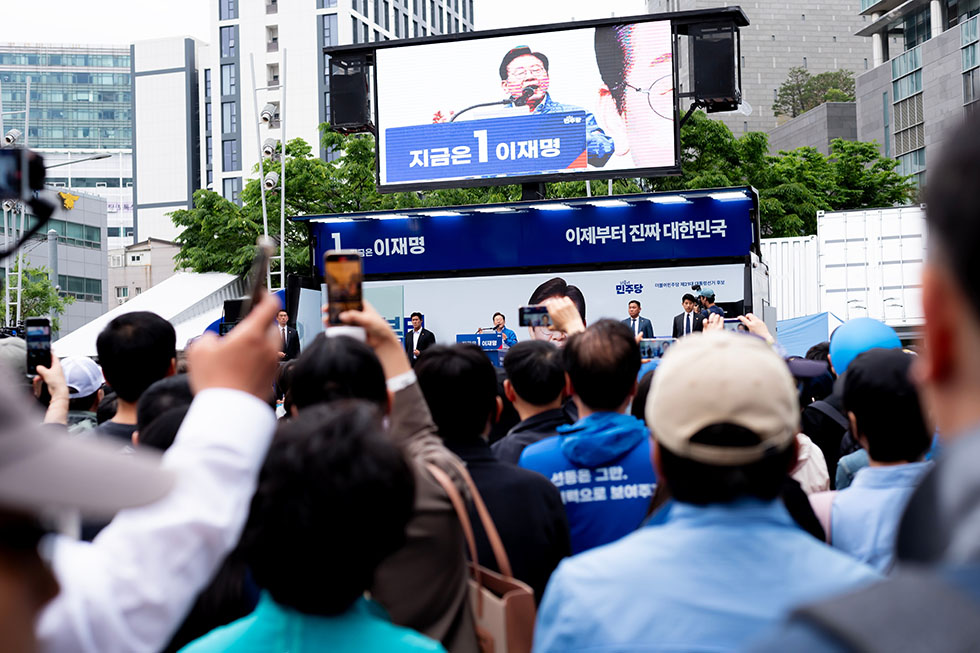
Greetings again from the United States. This week, we will turn our attention across the Pacific and towards the nation of South Korea. Specifically, at the results of an internal election within Korea’s ruling Democratic Party (DP) for its leadership. Former Prime Minister Kim Min-seok — who was prime minister from July 2025 to June 2026 — won the race with 54% of the vote in a narrow election against Jung Chung-rae, the former party leader. This election was close enough to trigger a ranked-choice runoff for the first time in the DP’s history.
More importantly, some believe this election is a fight over the direction of the party and how much control current President Lee Jae Myung has amassed since the beginning of his presidency in 2025. Kim, an ally of Lee, started his campaign by attacking Jung for weak leadership and weakening prosecutorial powers, a key goal of Lee’s administration and the DP as a whole. However, in the party’s supreme council race, Kim supporters won three of the five seats available, demonstrating the clear divide within the party.
 via shutterstock
This all comes at a tumultuous time in Korean politics, as US President Donald Trump seeks to undermine the long-held alliance between the two countries in favor of North Korea. The Korea Composite Stock Price Index (KOSPI) has experienced extreme swings that have put many people in dire straits. And while the DP controls a majority of the legislature, their internal divisions appear to run quite deep, calling into question just how much control they can exercise over the country and over themselves.
Sources:
Kim Min-seok Wins Democratic Party Chair in Ranked-Choice Runoff | The Diplomat
South Korea parliament passes bill stripping prosecutors of investigative powers | Reuters
Kim Min-seok (politician) | Wikipedia
Lee Jae-Myung | Britannica
Trump says US-South Korea exercises are ‘insulting’ to North Korea’s Kim | ABC News
A tale of presidents, dictators, and chaebols
To give a bit of context, South Korean democracy is relatively young, with the current sixth republic being the first to last more than two decades since the country’s founding in 1948. Until 1987, dictatorships plagued the country, each promising to be better than the last before facing overthrow or collapse.
Throughout these decades, another institution emerged, which survived even when governments did not: a number of small, mostly family-owned conglomerates known as chaebol. These groups make up the largest companies in South Korea, and some are amongst the largest in the world, including Samsung, LG and Hyundai. They have immense wealth, with one estimate in 2023 saying the top 30 chaebols accounted for nearly 77% of the Korean GDP, and the top four accounting for over 40%.
These chaebols have also accumulated immense political power within Korea, and the government has frequently been quite cooperative with these giants. So much so that multiple presidents have faced criminal charges for corruption, allegedly taking millions of dollars’ worth of bribes from companies, with four of the past six presidents all facing corruption charges.
Sources:
South Korea – History | Britannica
Chaebol | Britannica Money
Chaebol | Wikipedia
Prison, exile, impeachment: The scandalous history of South Korea’s presidents | BBC
Yoon Suk-Yeol | Britannica
Recent economic troubles
Despite the steady hands guiding it, the South Korean economy has also been somewhat turbulent. Though the market reached record highs in the past year, the country’s economy has been fluctuating due to a number of internal and external factors. One of these factors was chaebols heavily investing in AI. The market swelled when retail investors also traded aggressively on speculative and leveraged stocks and average South Koreans were increasingly willing to take on more risk to chase gains in high-performing semiconductor and technology stocks.
Perhaps the most dramatic turn of events was a surprise downturn at the end of July, when the KOSPI faced a precipitous drop that lost the exchange roughly $2.18 trillion worth of value in about two days, prompting emergency meetings from top financial officials. Some believe the crash was due to a global cooling on AI technology investment. While the market quickly recovered, the damage to ordinary investors was complete with roughly one in thirty working-age Koreans facing margin calls and forced selling in July.
Sources:
South Korea’s stock market plunges as AI-driven boom fades | Economy | Al Jazeera
South Korea’s Stock Market Crash Is Now Officially Worse Than 1997 and 2008 | Yahoo Finance
Investors hit by Korean stock market’s wild swings | BBC
KOSPI Composite Index (^KS11) | Yahoo Finance
Korean Chaebols Reshape Portfolios Toward AI and Semiconductors | Businesskorea
From stock euphoria to panic: South Korea investors face painful market fallout | The Economic Times
Statements from the new leadership
But how does this connect to the DP and its new leader? Before leaving his post as prime minister, Kim made a speech for the World Economic Forum showing his intention to expand their investment in science and technology. He emphasized global economic complexities like trade protectionism, essentially implying that innovation breakthroughs require reduced regulation.
These ideas would benefit chaebol corporations in some ways and contradict the chaebol reforms previously put into action by the president. As the new DP leader, the question remains whether Kim’s proposed structural changes are just talk and president-aligned parliamentarians will continue to support plutocracy prevention, or will administrations repeat past corruption in favor of the market-driven status quo.
Source:
Summer Davos 2026: Special address by Kim Minseok, Prime Minister of the Republic of Korea | World Economic Forum
Next steps for the DP
Both liberal and opposition members called for investigations into the ruling government’s role in allowing controversial investment products blamed for market volatility. Besides the proposed probes, Kim and Lee were quick to try and demonstrate unity after the election, opening dialogues between the legislature and the president’s office. Kim also visited the city of Geoje to inspect flooding damage and call for aid for the people it affected, and then later publicly visited the grave of former President Kim Dae-jung.
Nonetheless, there are still strong headwinds against the party. The Korean public seems uncertain, with polls putting President Lee’s approval rating at 45%, matching his disapproval rating. Economic uncertainty, housing and strained US relations with Trump are the main factors.
Kim has pressed that he wants to focus on the livelihoods of ordinary Koreans, but it is unclear what the future may hold. While the DP has just as much power as it had before the internal election, it is not certain that it will be able to deliver on Kim’s promise, considering just how much of Korean power is outside his control.
Sources:
Calls grow for audit, investigation as leveraged ETFs engulf political arena | The Korea Herald
New South Korean ruling party chief stresses unity with Lee government | UPI.com
Lee’s Approval Rating Edges Up to 45%, Matching Disapproval | Seoul Economic Daily
South Korea vows clean break from era of state-chaebol collusion | Nikkei Asia
Lee Jae-myung’s chaebol reform plans face corporate backlash | The Korea Herald
Casey Herrmann
Assistant Editor













Comment