The psychological impact may prove just as significant as the military one. For years, much of the Russian public experienced the war as a distant conflict fought hundreds of miles from major population centers. Ukrainian strikes have brought the realities of the war closer to Russia’s political and economic heartland, undermining the perception that the Kremlin can wage war indefinitely without consequences at home.
Sources:
Ukraine hits more Wildberries sites as strike kills five in Moscow region | BBC
As Ukraine regains the initiative from Russia, Europe must seize the moment | Atlantic Council
Ukraine: Conflict at the Crossroads of Europe and Russia | Council on Foreign Relations
Ukraine strikes Moscow
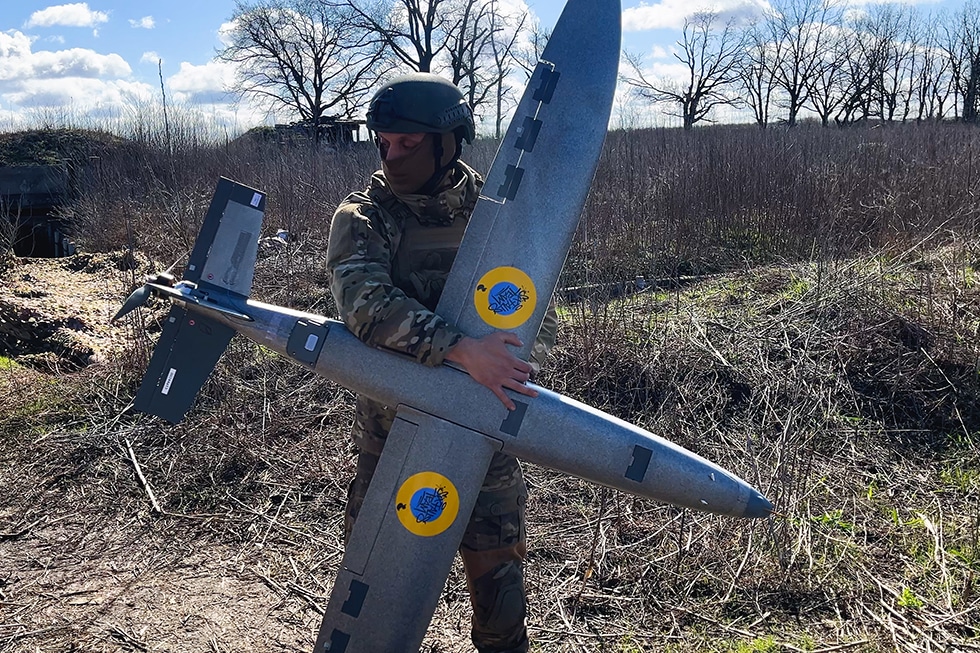
On June 18, Ukraine struck Russia’s capital with a swarm of drones, damaging oil refineries. Nearly 1,000 drones were intercepted by Russian forces, but enough got through that the damage was still done. Huge plumes of smoke rose into the air, making oil rain down on parts of the city.
This was the most headline-grabbing attack in a long series of strikes by Ukraine, and it was followed by more. The important thing to note is that this very clearly demonstrates Ukraine’s strategy: attack Russia’s energy, both military and civilian.
Ukraine has struck many Russian oil refineries with drone attacks, some as far as 2,500 kilometers (1,550 miles) from the border. This has led to a fuel shortage within Russia, with people having to wait for hours for the chance to refuel their cars, and sometimes days in more remote regions, despite Russian officials denying such a crisis exists. However, it appears Russia has adapted, as some gasoline stations began rolling back purchase limits in late July.
These attacks also extend to other parts of Russia’s civilian infrastructure. Ukrainian drones have struck over a dozen warehouses belonging to the online retailer Wildberries, an Amazon equivalent. Kyiv claims that attacks are only targeting companies supplying the Russian military, but given how closely intertwined industrial economies are, this can easily justify attacks just about anywhere.
These sorts of attacks have gotten so bad that Russia has legalized its central bank, among other financial institutions, to install their own anti-drone defenses, and arm their staff with firearms. By attacking these targets, the conflict becomes unignorable for many ordinary citizens, heightening the pressure on Russian leadership. However, this has inevitably led to the tragic deaths of a number of Russian civilians in the bombing campaigns.
Sources:
Moscow residents complain of black rain after largest Ukrainian attack hits oil refinery | BBC
Russia says seven killed and 40 injured by Ukrainian drone hitting beach | BBC
Ukraine hits more outlets of Russia’s largest online marketplace to bring the war home | PBS News
Gas queues grow as Ukraine targets Russia’s fuel supply | DW
Russian Gas Stations Begin Easing Purchase Limits as Officials Say Fuel Market Shows Signs of ‘Stabilization’ | The Moscow Times
2025–2026 Russian fuel crisis | Wikipedia
Russia allows central bank, top lender Sberbank to down drones | Reuters
Robbing your own troops: Dark affairs in the Russian military
But Russian civilians are not the only Russians fearing for their lives. Since the beginning of the war, Russia has been hounded by reports of poorly supplied troops and commanders all but throwing conscripts into a meat grinder for political, not practical, reasons, among many darker practices.
A number of wounded Russian soldiers have seemingly been sent back into battle, with a series of viral videos showing soldiers with crutches moving through a forest, though Russian authorities dispute this. More concerningly, there are reports that some Russian troops are being forced to pay for their own equipment to survive, on top of the many other brutalities they have to endure.
Essentially, officers in the Russian military are said to be able to order many of their troops around like slaves, with both parties knowing that the officers can send the troops to their deaths at a moment’s notice. While elite troops are given much better treatment, many new and unskilled recruits are ruthlessly exploited. Many deserters describe mafia-like conditions, where officers demand anything and everything the troops can give, including their paychecks and sometimes even credit card numbers.
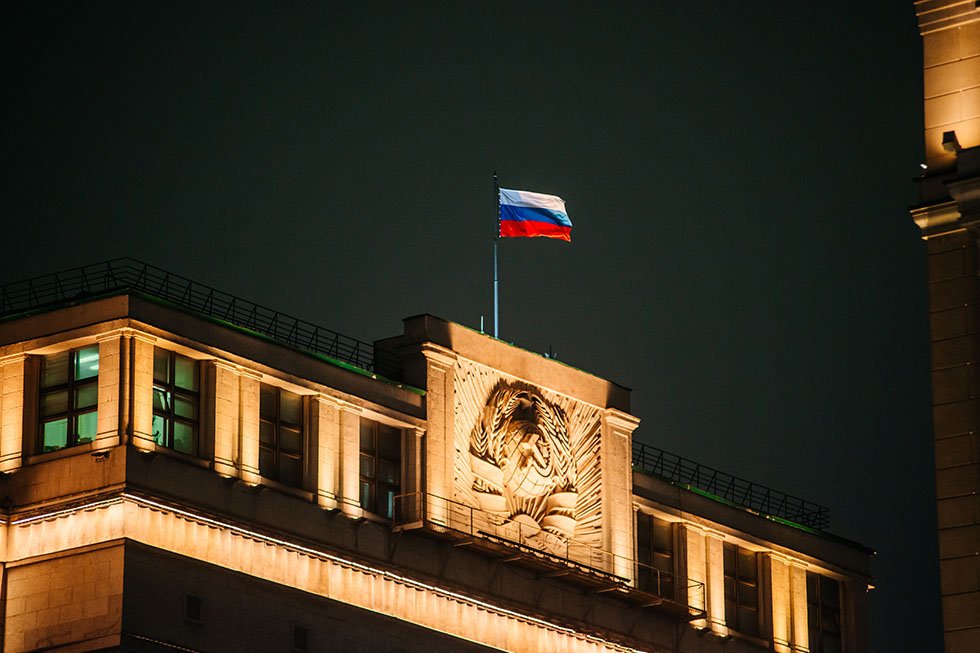
This graft appears to be institutional within the Kremlin. A wave of corruption charges and investigations has rocked Russian President Vladimir Putin’s high command. Several deputy defense ministers and generals have been sentenced to prison for embezzlement. While some might say this is one of Putin’s purges of possible opposition leaders, it could very well be true that these charges are legitimate. Russia’s many failures are forcing heads to roll.
This is not to say Ukraine does not have corruption — far from it. Just last year, Ukrainian President Volodymyr Zelenskyy’s chief of staff, Andriy Yemak, had his home raided by government officials over an alleged kickback operation in the Ukrainian energy sector estimated at $100 million. Other officials and politicians have also been charged with corruption during the war, angering Ukrainians and frustrating allies. However, while Ukraine does have major scandals, its troops are not suffering from the mafia-like conditions Russia is enacting on the front lines.
Sources:
Russian invaders have three days of supplies left, says Ukraine military | The Guardian
Ukraine war: Wounded Russian soldiers sent back to the front | DW
Russian corruption fuels massive casualties in Ukraine | PBS News
Knives Out 2.0. What’s Going On At Russia’s Defense Ministry? | Radio Free Europe/Radio Liberty
Pay or Die—How Corruption Is Reshaping Russia’s War Effort in Ukraine | UNITED24 Media
Corruption scandal rocks Ukraine as it fights for survival against Russia’s invasion | PBS News
Ukraine officials held in military drone corruption probe | BBC
Zelenskyy faces adversity at home and on the battlefield
Recently, Volodymyr Zelenskyy has caused controversy domestically with the firing of generals Oleksandr Syrskyi and Mykhailo Fedorov. Fedorov was the first to be fired primarily due to “irreconcilable differences” with Syrskyi, with Fedorov claiming that many of his initiatives were blocked by Syrskyi.
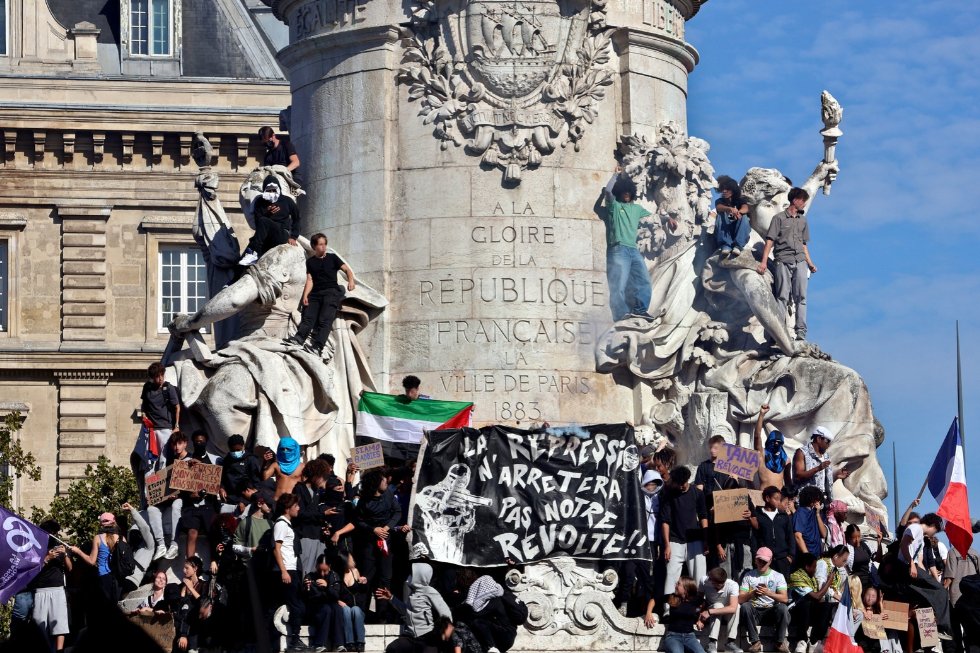
The firing of Fedorov subsequently led to mass protests on the streets of Kyiv. Protesters cited the military and technological advantages that Fedorov’s leadership had, until that point, given Ukraine on the battlefield. Ironically, as a result of these protests, Zelenskyy was forced to fire Syrskyi and appoint Mychajlo Drapatyj to take over as commander-in-chief of Ukraine’s armed forces.
Furthermore, in large part owing to the circumstances surrounding the ongoing Russian invasion of the country and Ukraine declaring martial law, Ukraine has not held regular presidential elections since 2019, despite one being scheduled for 2024. Notably, the Verkhovna Rada, the Ukrainian parliament, has voted to extend martial law on several occasions, most notably in 2023 and in July of 2026.
Sources:
Firing of Ukraine’s Top General Signals the End of an Era | The New York Times
Who is Mykhailo Fedorov, Ukraine’s drone war architect sacked as defence minister? | BBC News
Ukraine: Why Was Army Chief Syrskyi Fired? | Kyiv Post
Zelenskiy Signs Laws Extending Martial Law, General Mobilization As Russia Hits Civilian Targets | Radio Free Europe/Radio Liberty
Shift in Ukraine–US relations
Washington’s approach to Ukraine has also undergone a significant transformation. Throughout much of his presidency, Joe Biden sought to balance military support for Ukraine with concerns that strikes deep inside Russia could trigger a broader confrontation between NATO and a nuclear-armed Russia. As a result, restrictions were placed on how American weapons could be used, limiting attacks on Russian territory even after Moscow launched repeated missile and drone strikes against Ukrainian cities.
Those restrictions gradually eased as the battlefield evolved. Late in Biden’s presidency, the administration authorized Ukraine to use certain US-supplied long-range weapons against military targets inside Russia, reflecting growing confidence that carefully calibrated strikes were unlikely to trigger the nuclear escalation many had feared. The decision marked a significant shift in US policy, acknowledging that Russia had repeatedly crossed previous escalation thresholds without resorting to strategic retaliation.
President Donald Trump entered office promising to end the war quickly while frequently expressing admiration for Putin during his political career. Yet his administration has largely continued key elements of US military support, including maintaining Patriot air defense assistance and backing Ukraine’s ability to defend itself against intensified Russian attacks. While Trump’s rhetoric toward Moscow has often differed from Biden’s, US policy has shown greater continuity than many expected.
Sources:
Biden allows Ukraine to use US arms to strike inside Russia | Reuters
Biden maintains limit on Ukrainian strikes despite Zelensky’s push | The Hill
US Envoy Whitaker Says No Patriot Missile Production Deal Yet for Ukraine | Kyiv Post
How has this affected EU strategic policy?
The war has accelerated changes in European security policy that were already underway after Russia’s full-scale invasion in 2022. European governments have increased defense spending, expanded joint procurement initiatives and invested heavily in domestic arms production as they seek to reduce long-term dependence on US military support.
Energy security has become equally important. Before the war, many European economies relied heavily on Russian natural gas through pipelines such as Nord Stream. The destruction of the Nord Stream pipelines, coupled with sanctions and Moscow’s use of energy exports as political leverage, forced Europe to diversify its energy supplies. Although dependence on Russian energy has fallen substantially, several member states continue to import Russian oil and gas. The conflict has also revived concerns surrounding nuclear safety after repeated military activity near the Chornobyl exclusion zone and continued fighting around the Zaporizhzhia Nuclear Power Plant.
Combined with Hungary’s strained relationship with Brussels over its approach toward Russia and Ukraine for much of the war, the conflict has exposed both the strengths and limitations of European unity. Nevertheless, the conflict has strengthened arguments that Europe must become more strategically autonomous while remaining closely aligned with NATO.
Sources:
Relations with the European Union | NATO Topic
Ukraine: an investment in Europe’s future | Consilium
Europe’s messy Russian gas divorce | Brookings
What is known about the Nord Stream gas pipeline explosions? | Reuters
How much of Europe’s oil and gas still comes from Russia? | Al Jazeera
How the war in Ukraine has transformed the EU’s Common Foreign and Security Policy | Oxford University Press
Conclusion: No end in sight?
Nearly five years into the war, neither side appears willing to negotiate from a position of weakness. Ukraine’s expanding ability to strike deep inside Russia has altered the battlefield, but it has not fundamentally changed Moscow’s willingness to continue the conflict.
Instead, both sides are adapting, investing in new technologies and preparing for what increasingly resembles a long war of attrition. Despite there being no end in sight, and Ukraine’s many hurdles, the battle lines appear to be shifting in its favor. What that will mean is, as always, difficult to say, but it seems clear Ukraine is not willing to settle with Russia just yet.
Liam Roman, Casey Herrmann and Alexandros Ouzounis
Assistant Editor















Comment