Dear FO° Reader,
Greetings again from the US. After the past few weeks of covering the headlines of our own home country, as well as international fallout from the war in Iran, we thought to turn our attention to a less talked-about corner of the world, South Africa.
Many people know of South Africa’s struggle and ultimate victory over apartheid, of white dominance over native Africans and other ethnicities brought by British imperialism. Many more people would remember the charismatic Nelson Mandela leading the nation through a period of reconstruction before gracefully retiring. Some might remember the dramatic Rugby World Championship that helped unite the country after decades of fighting.
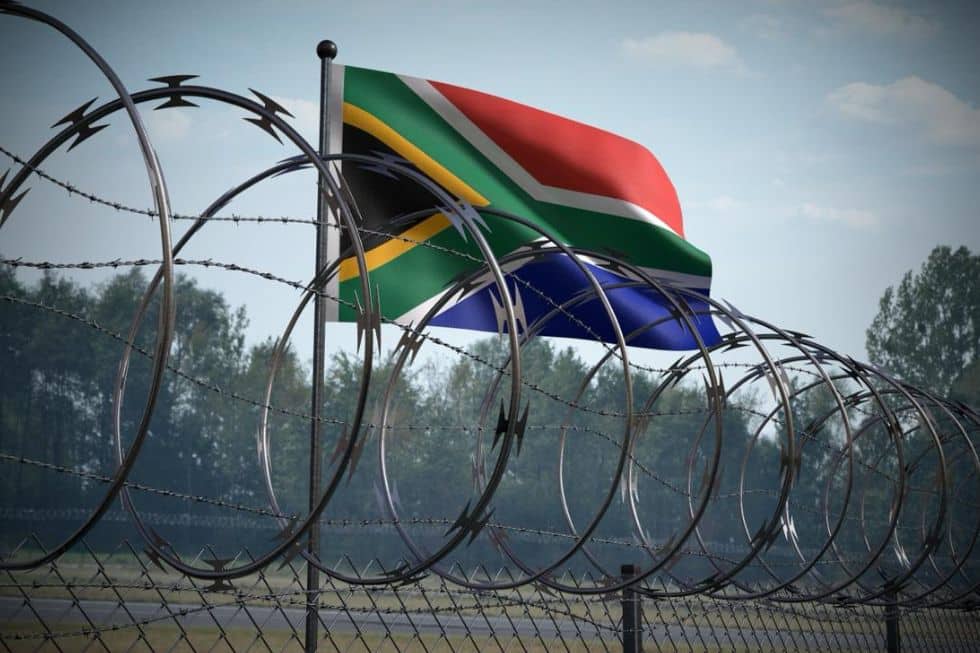
But time has continued marching since the 1990s. South Africa has had its ups and downs, successes and failures. It has continued to flourish on the globe as Africa’s most developed economy, and it has endured a decade of domestic corruption under former President Jacob Zuma. And recently, the country has been shocked by waves of protests and even vigilante action against immigrants.
 Via Shutterstock
The numbers are staggering, with deportations exceeding 53,000. South African protesters cite fears about jobs, security and many other issues. But ultimately, this, like almost all other immigration crises, has more to do with the tide of domestic policy rather than the flow of international relations.
Sources:
South Africa | Britannica
More than 53,000 immigrants have been deported or repatriated by South Africa in a crackdown | PBS News
Is the ANC out of touch with ordinary South Africans?
The political trajectory of the African National Congress (ANC) Party has determined to a crucial degree the societal and political trajectory of South Africa in general. Once thought of as the party responsible for the end of the apartheid system in South Africa in 1994 under the leadership of Nelson Mandela, the ANC has recently been riven with scandals implicating Zuma and the current president of South Africa, Cyril Ramaphosa, in the act of state capture.
From 2018 to 2022, the South African Commission of Inquiry into State Capture, also known as the Zondo Commission after its chairperson, investigated a wide variety of state-run enterprises including Eskom, Transnet, South African Airways (SAA), as well as the Passenger Rail Agency of South Africa. The Zondo Commission found damning evidence of grift and cronyism among politicians, including former president and ANC leader Jacob Zuma, as well as the high-profile Gupta Family. In summary, the ANC, which has governed South Africa almost exclusively since 1994, is seen as a corrupt and out-of-touch political party.
The ANC’s role in the current violence targeting minority immigrant communities in South Africa is multifaceted. Ramaphosa is seen as trying to “calm tensions,” but he is also seen to have capitulated to some of the demands of the anti-immigrant protesters. Recently, the anti-immigrant organization March and March staged a march toward Ramaphosa’s offices in Pretoria demanding that “undocumented migrants” leave the country by June 30.
There has also been a recent controversy surrounding rumored reports of an Igbo (Nigerian) king, Solomon Ogbonna Eziko, being crowned in the Eastern Cape province in March of 2026; this subsequently degenerated into violent street protests. Angry South Africans “took out their anger on Nigerian businesses and individuals of Nigerian descent.”
Sources:
The Origin of the Commission of Inquiry into State Capture in South Africa | Governance & Integrity Anti-Corruption Evidence
The Zondo Commission: A bite-sized summary | Public Affairs Research Institute
South Africans march against migrants, despite President Ramaphosa’s warning | DW
Nigeria apologises over controversial ‘king’ coronation in South Africa | TRT Afrika
South Africa’s “Other” Problem | Council on Foreign Relations
March and March | Wikipedia
Jacob Zuma | Britannica
Gupta family | Wikipedia
Immigration in South Africa
As a fairly developed economy with a strategic position for sea trade, South Africa has naturally attracted many immigrants and migrant workers, especially from other African countries and especially after the end of apartheid and the beginning of Nelson Mandela’s “rainbow nation.” As of the 2022 census, roughly 2.4 million out of 62 million people in South Africa were immigrants.
As one might expect, this has created tension over the years. While apartheid ended, much of the money and property was still controlled by the white minority, keeping income inequality high. Unemployment has been a persistent problem, consistently resting at over 20%. This has led to hostility against foreigners over the years, with many claims of foreigners stealing jobs that should go to native South Africans.
Previous waves of large-scale riots and unrest occurred in 2008, 2015, 2019 and 2021–2022. This latest rise of violence fits comfortably on this timeline, as South Africa’s employment rate has worsened dramatically post-COVID, with several governments failing to bring unemployment below 32% since 2021.
Sources:
First group of Nigerians returns home after anti-immigration protests in South Africa | AP News
Beaten, robbed and driven out: violent demonstrations target immigrants in South Africa | The Guardian
South Africa’s recurring waves of xenophobic violence | DW
South Africa Unemployment Rate (1991-2025) | Macrotrends
South Africa’s unemployment rate rises in first quarter | Reuters
Elon Musk Claims a “White Genocide” Against Afrikaners
Not to be outdone, Elon Musk, current CEO of X (formerly Twitter) has also started to stir the pot. Musk has made false claims that the Afrikaner community in South Africa is facing a “white genocide.” In particular, Musk has alluded to the usage of the isiXhosa protest song “Kill The Boer” as an alleged call for attacks against Afrikaner farmers.
The chant is first attributed to Julius Malema, the leader of the Economic Freedom Fighters (EFF) party and a staunch critic of the ANC. A former member of the ANC’s Youth League (ANCYL), Malema has often made headlines for his distinctive wardrobe, including the wearing of red berets, as well as for his luxurious lifestyle.
He made headlines again when, in 2023 at a rally, he shouted “Kill the Boer!” The chant was in reference to white Afrikaans-speaking farmers, descendants of European settlers. It was the white Afrikaner ethnic minority who led the apartheid government in South Africa. Malema is an advocate of redistributing land belonging to white farmers to Black South Africans.
Sources:
‘Kill the Boer’: The anti-apartheid song Musk ties to ‘white genocide’ | Elon Musk News | Al Jazeera
Kill the Boer, Kill the Farmer | Ramaphosa defends the chant, says no one will be arrested
Who Is Julius Malema, the South African Politician in the White House Video? | The New York Times
Will South Africa recover from this paranoia?
History is often cyclical, and South Africa has been caught in an ugly spiral for years now. Apartheid’s end was a fundamental shift for the better that ripped out many of the country’s most poisonous tendencies, but it ultimately did not address wealth disparity and unemployment nearly enough. The ANC, made up of activists who helped free the nation, corroded into another corrupt organization that could not provide nearly enough for the average civilian.
Things do seem to be changing. The ANC is slowly losing its grip on power after repeated failure and scandal. But until a government in South Africa can rally for the people to provide them with security and opportunity, immigrants will likely be stuck again by people who cannot find a solution to their own problems.
Casey Herrmann, Aliyah A. Omar & Alexandros Ouzounis
Assistant Editors















Comment