Dear FO° Reader,
Greetings again from North America. Today, we once again turn our eyes towards Africa, specifically Ethiopia. The last time we wrote about the country, it was to discuss the successful completion of the Grand Ethiopian Renaissance Dam. In that piece, we briefly touched on some of the country’s recent violence, specifically the Tigray War, where the central Ethiopian government attacked the Tigray region of Ethiopia in a war that lasted from 2020 to 2022, a bloody conflict.
After a lengthy peace process, a ceasefire was eventually declared with no clear victor, at least 100,000 deaths, many more displaced, and millions more going hungry. Things mostly settled, but tensions remained. And now, the war may be restarting.
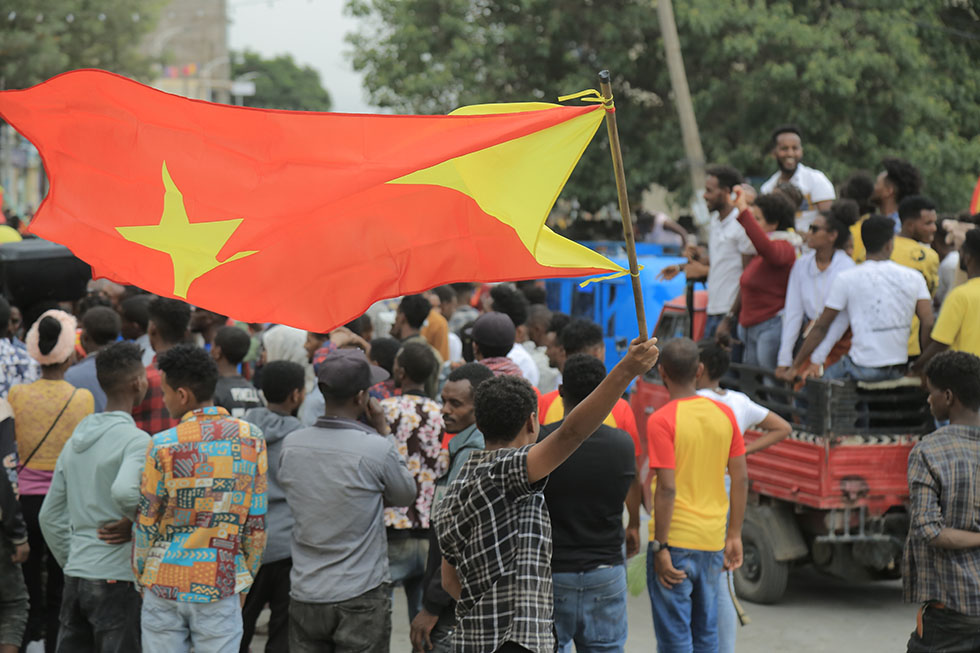
 via shutterstock
In early August, Tigray’s regional government stated that it had pushed back an attack from federal Ethiopian troops. Officials in Addis Ababa claimed that the Tigray People’s Liberation Front (TPLF), Tigray’s ruling political party, had started the fight. Troops were deployed in Alamata, a city bordering the country’s Tigray and Amhara regions. Hundreds of people have fled the region into Sudan, a country in the midst of a bloody civil war. Most recently, Tigray claimed that the federal government carried out a drone strike, killing people.
Many of the details are disputed, but what is clear is that relations between Ethiopia and Tigray sit on a knife’s edge. Without a serious intervention and de-escalation, the region risks exploding back into open warfare. This is the result of a long chain of history going back nearly a century that has pitted Ethiopia’s ethnicities against each other in a struggle for dominance, something that can only end in reconciliation or tragedy.
Sources:
The Weight of Water: Climate, Conflict and the Grand Ethiopian Renaissance Dam | Fair Observer
Tigray war | Wikipedia
Ethiopia drone strike in north kills three, Tigray sources say | BBC News
In Ethiopia, clashes trigger fear of return to civil war | DW
Hundreds flee Ethiopia to war-torn Sudan, following new fighting in Tigray | RFI
A very brief history of Ethiopia’s imperial past
Ethiopia has a royal history, with its empire lasting roughly from 1270 to 1974. During that time, the Amharic culture and language became the central pillars of the empire and remain the second-largest ethnic group and spoken language.
Tigray was part of the empire for many centuries. Still, for much of that time, the empire’s rulers granted regions some autonomy, allowing local rulers to manage many of their own affairs. This changed in the late 1800’s, when Ethiopia began to centralize power in response to European colonialism and expand into territories it had not previously controlled.
These divisions between central authority and vassal minorities were further enforced under the rule of Emperor Haile Selassie I, who attempted to unite Ethiopia under one language and culture through force and persecution. Selassie also undermined local economies in an attempt to make them subservient to his central authority.
As these sorts of things often go, rebellion was the eventual response. After years of unfair treatment, students, teachers, other civilians and many military personnel began a general strike to protest. This led to a group of mid-level army officers forming an organization called the Derg, which overthrew Selassie’s government and took control of the nation.
Then, tragically, things took a turn for the worse when the Derg turned even more tyrannical than Selassie had ever been. What followed was a truly catastrophic series of events and decisions that plunged Ethiopia into a 17-year-long civil war, with numerous ethnic militias and organizations rising against the Derg, colored by hundreds of thousands of deaths due to violence and famine.
Sources:
History of Ethiopia | Britannica
Ethiopian Revolution | Wikipedia
Ethiopian Civil War | Wikipedia
Tigray war: Modern geographies of mass violence and the invisibilization of populations | ScienceDirect
How the TPLF dominated Ethiopia
Rising up as one of the many factions fighting against the Derg, the TPLF eventually managed to overthrow the Derg and place itself at the head of the new ruling coalition, the Ethiopian People’s Revolutionary Democratic Front (EPRDF). From there, the TPLF played a leading role in Ethiopia’s democratization and reconstruction, and very importantly, divided the country’s administration along ethnic–linguistic lines.
This incensed many of Ethiopia’s elite, who feared Ethiopia would fracture further after Eritrea gained independence in 1993 following the civil war. Furthermore, this also angered many Amhara people, who were used to being in control of Ethiopian politics, and not one of many people all belonging to an Ethiopian nation.
Corruption and favoritism for Tigray also increased tensions, as well as the draconian laws put in place by the EPRDF to silence opposition. These practices continued well into the 2000s and 2010s, with opposition groups constantly accusing the EPRDF of harassing, intimidating and otherwise choking out non-EPRDF candidates and independent journalists. These claims were backed up by some international observers.
Sources:
Ethiopia History | Britannica
Tigray People’s Liberation Front | Wikipedia
Tigray war: Modern geographies of mass violence and the invisibilization of populations | ScienceDirect
The rise of Abiy Ahmed and the fall of the TPLF
This culminated in a popular backlash against the EPRDF, but this time through the ballot box. After grappling with crisis after crisis, the EPRDF’s Prime Minister Hailemariam Desalegn chose to step down, making way for a new, young candidate to step in. Abiy Ahmed, then 41 years old, had a reputation as a strong speaker who fought for reform. He is from the largest ethnic group in Ethiopia, the Oromo, and was the first from this group to serve as Prime Minister.
Abiy got to work quickly, and a flurry of political and economic reforms took place and were applauded by many in the country. He helped peel back many of the harsh punishments on opposition parties and press freedom. Perhaps most significantly, Abiy negotiated an end to the 20-year-long war between Ethiopia and Eritrea, securing him a Nobel Peace Prize.
But not everyone was happy with Abiy’s reforms. When Abiy moved to try and break up the EPRDF into separate parties, the TPLF strongly opposed this, as even diminished, they were still the leaders of the coalition. Abiy’s reforms went ahead, and he formed the Prosperity Party, made up of the three non-TPLF parties in the EPRDF and other small parties. All that remained for Abiy was to test his new coalition in a general election.
Sources:
Abiy Ahmed sworn in as Ethiopia’s prime minister | Al Jazeera
Abiy Ahmed | Biography, Nobel Prize, Facts, & Accomplishments | Britannica
Abiy Ahmed Ali | NobelPrize.org
Massacres and hate speech color the 2020–2022 Tigray War
Shortly after his administration began, Abiy’s government repeatedly postponed elections due to the COVID-19 pandemic, fomenting distrust from Tigrayan authorities. The Tigray State Council held one anyway in September 2020, and the TPLF secured 98% of the votes according to their administration. The federal government froze the region’s federal budget transfers in response, which started the decline in quality of life in Tigray.
The Tigray War broke out in November 2020 when the Ethiopian government accused Tigrayan troops of attacking the federal army. The federal government then launched a military offensive against the local governing body. At the time, Abiy framed his orders as a targeted operation against TPLF leadership. The campaign lasted for two years, ending in November 2022 after the Ethiopian government and the TPLF signed a fragile peace accord in Pretoria, South Africa.
The war was utterly catastrophic to the region as 5.1 million Ethiopians became internally displaced in 2021 alone, breaking the record for the largest internally displaced population in a single year. With a death toll of 100,000 to 600,000 people, the war in Tigray was one of the deadliest in recent history. This count includes deaths caused by famine and lack of healthcare in addition to direct warfare fatalities.
Dehumanizing rhetoric and hate speech, among other factors, contributed to the high death toll and influenced heightened tensions throughout the war. In 2021, the mayor of an Ethiopian city said Tigrayans were not “created as humans.” Besides this example, there are many other instances of genocidal language from prominent Ethiopians and social media posts inciting violence in Tigray.
Sources:
Fighting reported in Ethiopia after PM responds to ‘attack’ by regional ruling party | The Guardian
Ethiopia chooses new leader from protest-hit region in break from past | The Washington Post
Surge of dehumanizing hate speech points to mounting risk of mass atrocities in northern Ethiopia, experts say | The Globe and Mail
In addition to inflamed public sentiment encouraging massacres in the region, the government also had a direct hand in the massive fatalities. The International Crisis Group analyzed the Ethiopian government’s crime of using starvation as a warfare method. During the war, the federal government used siege tactics, blockading humanitarian aid, banking, transport, trade, telecommunications and electricity in Tigray. These actions severely affected everyday people and, as authorities like UN Secretary-General António Guterres said, civilians were paying “a horrific price.”
Innocent civilians lay trapped between warring military powers and faced indiscriminate attacks from federal authorities in residential areas. The last phase of the conflict reached unprecedented levels of violence, and while the concerned parties eventually reached a peace agreement, the state and federal governments’ critical differences continued.
Sources:
Government of Ethiopia – TPLF | Uppsala Conflict Data Program (UCDP)
Conflict in Ethiopia | Global Conflict Tracker
Tensions reignited throughout the year
Since the beginning of this year, various media outlets have reported renewed clashes and a deteriorating security environment in Tigray. Guterres addressed the rising tensions in February 2026, warning that they risk plunging the area back into conflict. He urged all sides to exercise restraint and maintain commitment to the 2022 Pretoria Agreement.
Due to the peace agreement, the TPLF and the federal government jointly appointed the Tigray Interim Administration (TIA) to govern the region until the next election. The TPLF ousted several senior TIA officers by September 2024. Though the Ethiopian government declared an extension of the interim administration in April 2026, the TPLF disregarded the decision, removed the TIA and reinstated its 2020-elected government. Tigray’s current regional parliament remains unrecognized by the federal government as a result of reinstating its pre-war political party.
Sources:
UN warns of renewed conflict in Ethiopia’s Tigray region | CGTN
The Tigray Region in the Grey Zone between War and Peace | Stiftung Wissenschaft und Politik (German Institute for International and Security Affairs)
Ethiopians voted in national elections on June 1, 2026, for the first time since the Tigray War, though civilians in Tigray did not participate. Amid the election season, the TPLF and local military increased their aggressive acts, forcibly recruiting men and underage boys for their forces according to civilian testimonies. The political party then declared mandatory military service for civilians in the region.
This month, clashes between regional fighters and the Ethiopian army broke out in the northwest of Tigray. The groups were armed with heavy artillery and drones. The violent conflict caused hundreds to seek refuge in nearby Sudan who themselves are at war. Soon after, the federal government allegedly conducted drone strikes in the southern region of Tigray near the Amhara border using Turkish drones carrying 12 bombs. In these fights, both sides claim the other political and military groups were preparing for war.
Abiy’s sweeping political reforms prompted new waves of tensions between ethnic groups. His administration repeatedly clashed with Tigray’s forces and currently remains prepared to use military force to secure power in the region. The TPLF upholds their “zero tolerance” policy toward media outlets covering the agenda of opposition parties, signalling a potential lack of clarity during future crises.
Recent events have mirrored the historical pattern of the central power in Ethiopia fighting against groups inside its own borders along ethnic lines. This history, coupled with the massive attacks in the past, suggests the region is at serious risk of accelerating atrocities and renewing the devastating conflict.
Sources:
Ethiopia drone strike in north kills three, Tigray sources say | BBC News
Ethiopia: Tigray Authorities Forcibly Recruiting Civilians | Human Rights Watch
Ethiopia: Tigray residents at renewed risk of human rights violations as violence returns to the region | Amnesty International
Hundreds flee Ethiopia to war-torn Sudan, following new fighting in Tigray | RFI
Aliyah A. Omar, Casey Herrmann
Assistant Editor














Comment