







 | ||
| ||
| ||
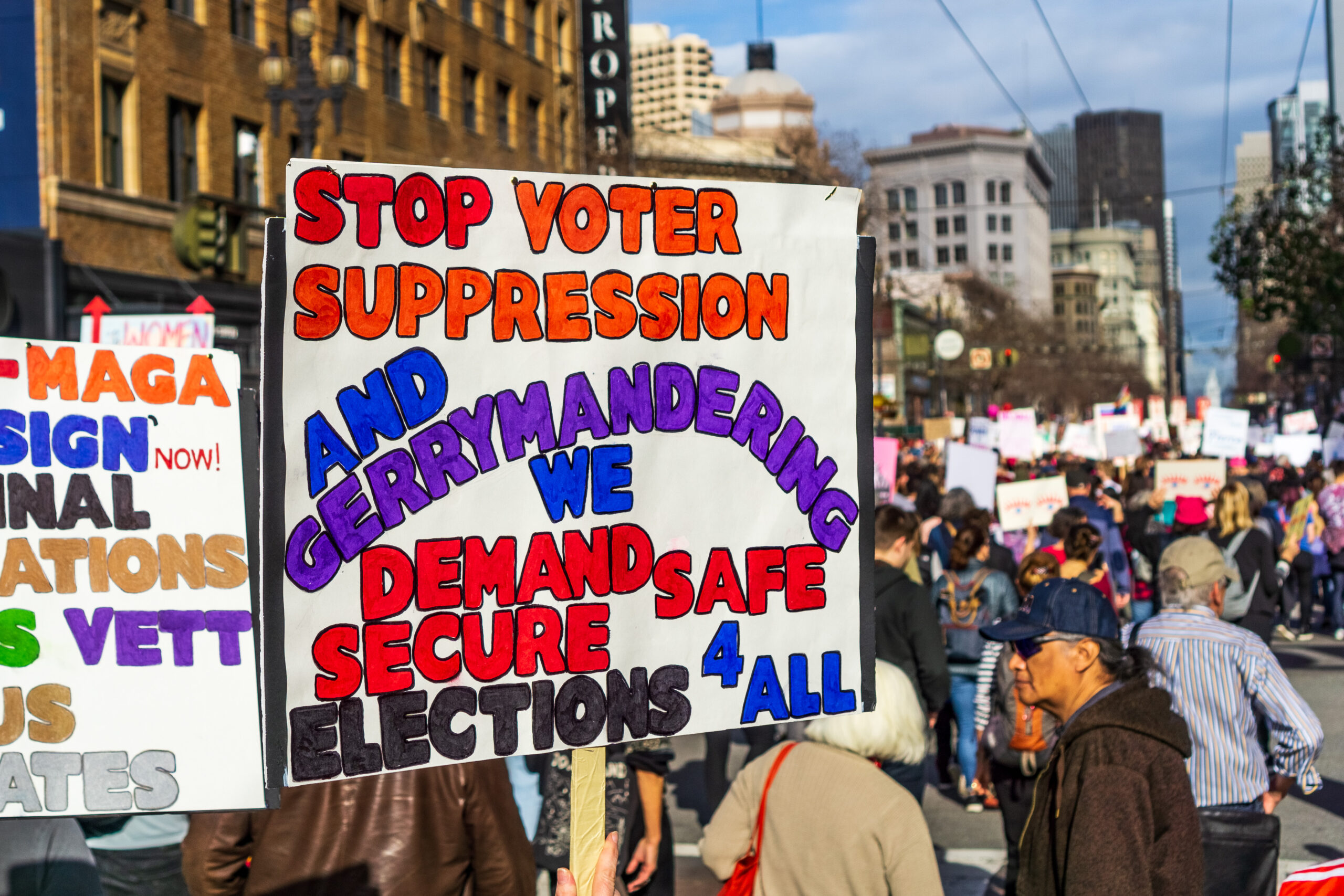
Dear FO° Reader, Hello again to all our readers. We once again focus on the United States, and instead of breaking open a new topic, we are going to do a follow-up on an article we wrote a few months back: the US state of California’s gerrymandering measure. Sources: What Gerrymandering in California Means for American Democracy | Fair Observer 2025–2026 United States redistricting | Wikipedia Last November, Californians went to the ballot box and approved a controversial new voting district map that favors Democrats in the upcoming federal elections this coming November. This map was made in response to the Texas state legislature imposing their own new district map that favored Republicans. We previously discussed how that seemed to be setting off an arms race between red and blue states to see who else could redraw district maps to favor their party, a practice commonly known as gerrymandering. And since then, multiple states have done just that, quietly and loudly moving lines on a map to favor the party in power. Furthermore, multiple Supreme Courts have now weighed in with decisions directly connected to these redistricting efforts. The first is from the State of Virginia, which has shot down the gerrymander map approved by Virginia voters. The second, and likely the more impactful, is the Federal Supreme Court striking down key parts of the landmark 1965 Voting Rights Act, which will allow for even more gerrymandering.
via Shutterstock But whichever party wins this battle, something more is being lost. In our original article, aside from mentioning the chance of this practice spreading to other states, we also argued that this should not be happening in a functioning democracy. And as current President Donald Trump seems to be becoming more and more authoritarian, it seems both parties are following in his footsteps.Notes on the state of Virginia On April 21, 2026, Virginia voters passed a referendum allowing the state to be redistricted to boost Democrats in Congress in the upcoming November midterm elections. Passing this redistricting plan is a significant win for the Democrats, who aim to take back a majority in Congress next year to place more checks on the Trump Administration’s agenda and file articles of impeachment against Trump. Redistricting has become a tit-for-tat battle between red and blue states. What started as a plan in Texas initiated by President Trump to pick up five seats to protect his majority led Gavin Newsom and California to retaliate. They proposed their own plan, Prop 50, aimed at canceling out any advantage Republicans would gain from their lead in Texas. Since Texas, Republicans have continued to redraw maps in other states, including Missouri, North Carolina and Ohio. After redrawing these states, Republicans believe they can win up to nine seats in the House of Representatives next year. Democrats thus far have managed the initial five seats in California and one seat in Utah. Throughout the country, more and more states are redistricting for what is already a razor-thin majority for Republicans in Congress. Virginia Governor Abigail Spanberger campaigned on the new map and looks forward to November campaigning with candidates across the commonwealth. Virginia Democrats currently hold six of the 11 seats in the House. The district boundaries were redrawn by the state Supreme Court in 2021 after a bipartisan commission failed to agree on a new map based on the most recent census data. The new plan could enable Democrats to gain up to 10 seats. Five of these are in northern Virginia’s Democratic stronghold, with one extending outward to encroach on Republican-leaning rural regions. On May 8, the Virginia Supreme Court rejected the updated voting map in a 4–3 vote, a decision Democrats had hoped would pick up four seats. The ruling was a significant blow to Democrats, leaving them scrambling to figure out what is next. The Virginia Supreme Court held that the process used to create the referendum violated the state Constitution. Justice D. Arthur Kelsey, in the majority opinion, wrote: “The Commonwealth submitted a proposed constitutional amendment to Virginia voters in an unprecedented manner that violated the intervening-election requirement.” After the Court’s decision, Virginia Democrats filed an emergency appeal with the US Supreme Court, but the appeal was rejected. Sources: Court rejects Virginia redistricting in a blow to Democrats’ counter to Trump, GOP | NPR Supreme Court rejects Virginia’s bid to restore congressional map favoring Democrats | AP news Supreme Court Rejects Virginia Democrats’ Effort to Reinstate New Voting Map | New York Times Rule-following, legal precedence, and political consistency Speaking of the federal courts, the US Supreme Court has struck down key parts of the landmark Civil Rights Act, which helped end segregation in the 1960s. In the new ruling, much of section 2 of the act, which prevented racial discrimination in government and private businesses, has been gutted. This is expected to lower racial and sexual minority representation in government at all levels, commonly known as Jim Crow laws. This ruling may not affect the midterms, as most voting districts and primary filing deadlines have passed for this upcoming November, but we are already seeing its effects. Most experts lambast the ruling, saying it hollows out the landmark bill into an empty shell. Protests have sprung up in many places, but none perhaps more symbolic than in the state of Tennessee. Governor Bill Lee, a Republican, quickly called for a special session of the state legislature, in large part to gerrymander away the state’s single federal House seat held by a Democrat. Tennessee Democrats, outnumbered 3 to 1 in the legislature, protested loudly, calling the act the new Jim Crow. One representative went so far as to burn a Confederate flag within the state capital. In a direct response, the Republican Speaker of the House stripped many Democratic lawmakers of their committee assignments, saying they blocked the halls and used prohibited noisemakers. Representative Steve Cohen, the Democrat whose district is being gerrymandered, suspended his reelection campaign on Friday, May 15. Throughout the US, especially in the south, similar redistricting efforts are playing out in Republican-majority states. Civil Rights Act of 1964 | Britannica The U.S. Supreme Court strikes another severe blow to the Voting Rights Act | NPR The Supreme Court’s indefensible evisceration of the Voting Rights Act | SCOTUSblog Congressional redistricting targets Memphis, sparks protests | Nashville Banner Tennessee Democrats stripped of House committee seats over redistricting protests | CNN Rep. Steve Cohen ending campaign in Tennessee after redraw of his Memphis district – ABC News Backsliding into the past We could try and prognosticate what this all means for the upcoming midterms. And in the case of the Voting Rights Act, what this means for future representation across the nation in the coming years. To give a succinct, if unhelpful answer: Nothing democratic. To more accurately summarise, in the first article, we said it was wrong for politicians to choose their constituents. That even if there was a world of difference between the Democratic Party’s approach to redistricting in comparison to the Republican Party’s, and there is, it still spoke to something fundamentally wrong with the nation. Gerrymandering has been with the US almost since the nation’s inception. It has been used to disempower minorities for a very long time. This latest blow at the national level is not the worst it has been, and the Virginia Supreme Court’s ruling may be partisanly motivated. But the very fact that both parties are openly racing to disenfranchise voters, for whatever reason, speaks to a deep, underlying sickness in American Democracy, and must be addressed before it becomes terminal. Casey Herrman and Liam Roman Assistant Editors | ||
We are an independent nonprofit organization. We do not have a paywall or ads. We believe news
must
be free for everyone from Detroit to Dakar. Yet servers, images, newsletters, web developers and
editors cost money.
So, please become a recurring donor to keep Fair Observer free, fair and independent. 
| ||
| ||
| About Publish with FO° FAQ Privacy Policy Terms of Use Contact |





Explore More FO° Spotlight



Support Fair Observer
We rely on your support for our independence, diversity and quality.
For more than 10 years, Fair Observer has been free, fair and independent. No billionaire owns us, no advertisers control us. We are a reader-supported nonprofit. Unlike many other publications, we keep our content free for readers regardless of where they live or whether they can afford to pay. We have no paywalls and no ads.
In the post-truth era of fake news, echo chambers and filter bubbles, we publish a plurality of perspectives from around the world. Anyone can publish with us, but everyone goes through a rigorous editorial process. So, you get fact-checked, well-reasoned content instead of noise.
We publish 3,000+ voices from 90+ countries. We also conduct education and training programs
on subjects ranging from digital media and journalism to writing and critical thinking. This
doesn’t come cheap. Servers, editors, trainers and web developers cost
money.
Please consider supporting us on a regular basis as a recurring donor or a
sustaining member.
Will you support FO’s journalism?
We rely on your support for our independence, diversity and quality.





Comment